










South Caucasus riding the wave of logistics Connecting Eurasia
Amid sharply rising demand for freight transport between China, the countries of Central Asia, and Europe, the development of transport hubs across the Eurasian region has become increasingly urgent. Azerbaijan, as a key beneficiary of these trends, is modernising its railway and port infrastructure while strengthening the logistics of the Middle Corridor.
A significant step in this direction took place on January 29 in Tbilisi, where the railway authorities of Azerbaijan and Georgia signed two agreements to facilitate the full launch of the joint enterprise on the Baku–Tbilisi–Kars (BTK) railway line. On the same day, representatives from the Ministry of Transport of Azerbaijan and the European Commission discussed integrating the Zangezur Corridor into the Trans-European Transport Networks.
The geopolitical crisis surrounding Ukraine, which triggered a sanctions confrontation between Russia and the collective West, has fundamentally reshaped the transit and logistics map of Eurasia. Over the past four years, this shift has led to a significant increase in freight flows from China and the countries of Central Asia, as well as in the reverse direction from Europe and Türkiye, along alternative Trans-Caspian routes—where Azerbaijan holds an almost unrivalled position. The country is a key participant in the Transport Corridor Europe-Caucasus-Asia (TRACECA), initiated by the EU three decades ago, as well as in the Trans-Caspian International Transport Route (TITR) and the Lapis Lazuli Corridor, established in 2018–2019. Additionally, alongside Bucharest, Tbilisi, and Ashgabat, Azerbaijan is actively involved in developing the promising Black Sea–Caspian Sea route.
Meeting the goal of increasing freight volumes on the TITR to 10 million tonnes in the medium term requires close coordination among the key partners—Baku, Tbilisi, Astana, and Ankara—to expand the transport and logistics capacity of the route. In line with this, a Roadmap for 2022–2027 was signed in Aktau in November 2022, aimed at synchronously eliminating bottlenecks and developing port and railway infrastructure.
Among the priorities, the modernisation of the 184-km Georgian section of the Baku–Tbilisi–Kars (BTK) “steel corridor” is particularly urgent. The route traverses highly challenging terrain, including mountainous and forested areas, and freight delivery from Baku to Kars often took more than 70 hours, with winter snowfalls causing even longer delays. Work financed by Azerbaijan, with over $100 million allocated, was completed in 2024. On the Marabda–Kartsakhi section, overhead contact lines were installed, signalling and interlocking systems commissioned, several railway stations and passenger platforms built, snow protection galleries and tunnels constructed, new traction substations put into operation, and the 110-hectare Akhalkalaki railway hub completed.
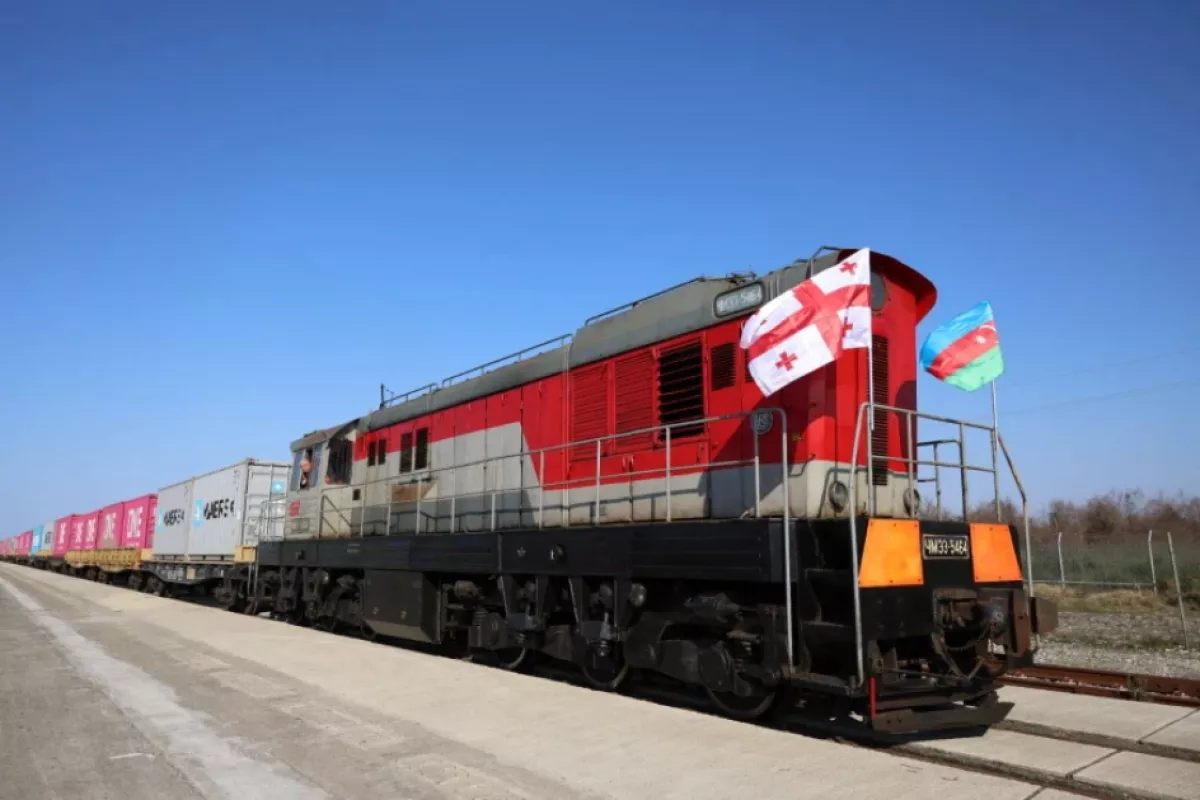
The main goal of these works is to establish a stable and predictable operating regime on the BTK, improve conditions for freight owners, increase cargo volumes, and enhance the route’s competitiveness. As a result, the annual throughput of the line has increased from 1 million tonnes to 5 million tonnes. According to calculations, transit time (excluding customs and border procedures) is now set at no more than 24 hours for the Alat–Boyuk Kasik and Gardabani–Akhalkalaki sections, and no more than 48 hours for the Yalama–Boyuk Kasik section. In Türkiye, delivery times should not exceed 60 hours for the Kars–Mersin section and 70 hours for the Kars–Istanbul section. This means that cargo shipments from the port of Alat to the Turkish port of Mersin will take approximately 4–4.5 days.
Meanwhile, tariffs on the BTK route will be determined based on mutual agreements, with plans to implement a single long-term tariff across the entire TITR route. Among other priorities is the creation of a joint digital platform or interface for tracking cargo and managing logistics documentation.
With the completion of key infrastructure and organisational works, two agreements were signed on January 29 in Tbilisi between the joint venture (JV) of the subsidiaries of JSC Azerbaijan Railways and LLC Marabda–Kartsakhi Railway—BTKI Railways—and JSC Georgian Railways (GR) to ensure the full operation of the JV on the BTK line. According to Azerbaijan Railways, “One of the agreements covers the use of the Marabda–Akhalkalaki railway infrastructure, while the other concerns the provision of terminal services at the Akhalkalaki hub station.”
The JV, LLC BTKI Railways, established in August 2024, has been tasked with improving transport efficiency, ensuring uninterrupted freight operations on the BTK, attracting new carriers and cargo, and enhancing the overall competitiveness of the route.
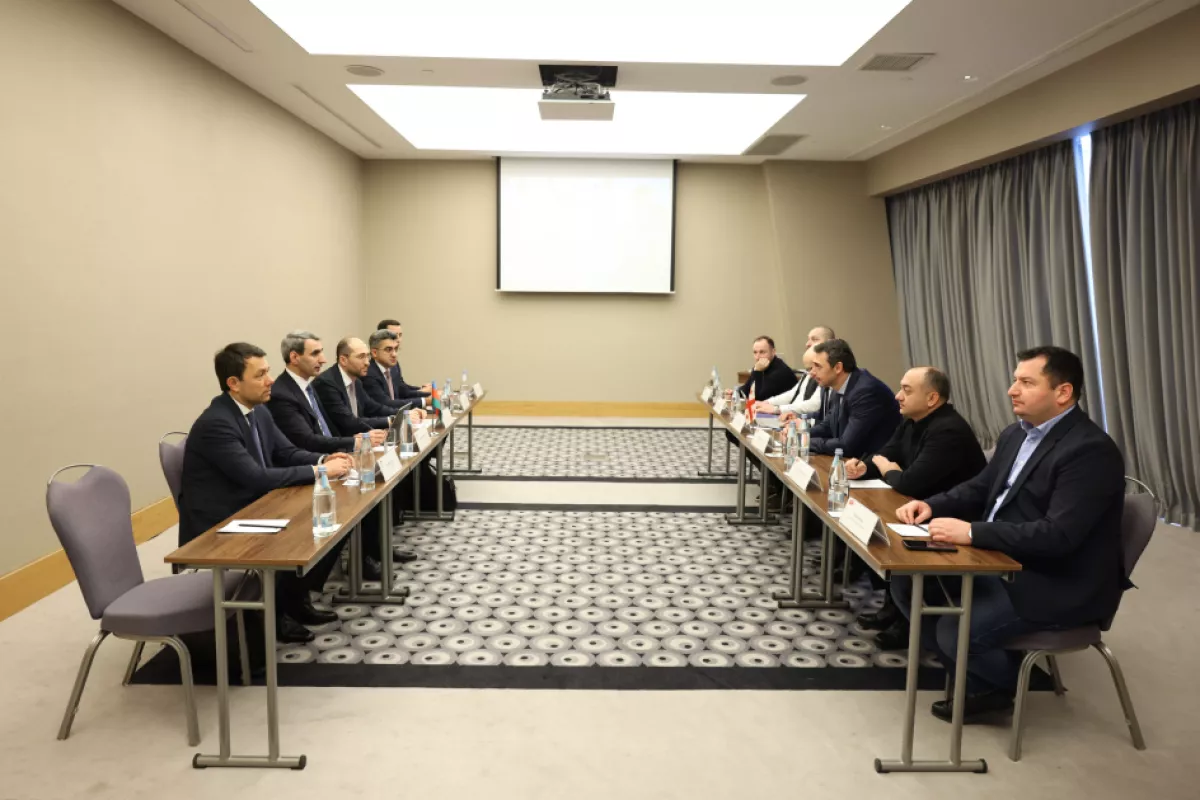
Meanwhile, in Tbilisi, a meeting took place between Rovshan Rustamov, Chairman of JSC Azerbaijan Railways, part of AZCON Holding, and Lasha Abashidze, CEO of JSC Georgian Railways, along with Tamar Ioseliani, Deputy Minister of Economy and Sustainable Development of Georgia. The participants discussed prospects for partnership in railway transport, considered issues related to signing the final acceptance certificate for the BTK railway line, and explored ways to attract additional cargo to the route.
Thus, the modernisation of the BTK and the implementation of an accelerated cargo transport regime, together with the development of the promising Zangezur Corridor, will enhance the region’s transit capabilities, creating a unified, robust railway network that supports steadily growing trade flows year by year.
Demand for these transport networks is expected to be high, as evidenced by the interest of EU countries in initiatives being implemented in the South Caucasus. “Azerbaijan and the European Union discussed the inclusion of the Zangezur Corridor in the Trans-European Transport Networks (TEN-T). We held a meeting with Gert Jan Koopman, Director-General for Enlargement and Neighbourhood at the European Commission, and discussed issues related to the development of transport infrastructure in Nakhchivan and the initiation of a feasibility study in this direction,” wrote Rashad Nabiyev, Azerbaijan’s Minister of Digital Development and Transport, on his X social media page.
According to the minister, the parties also exchanged views on enhancing the capacity and digitalisation of the Middle Corridor, as well as cooperation with the EU in aviation, maritime transport, and other areas.
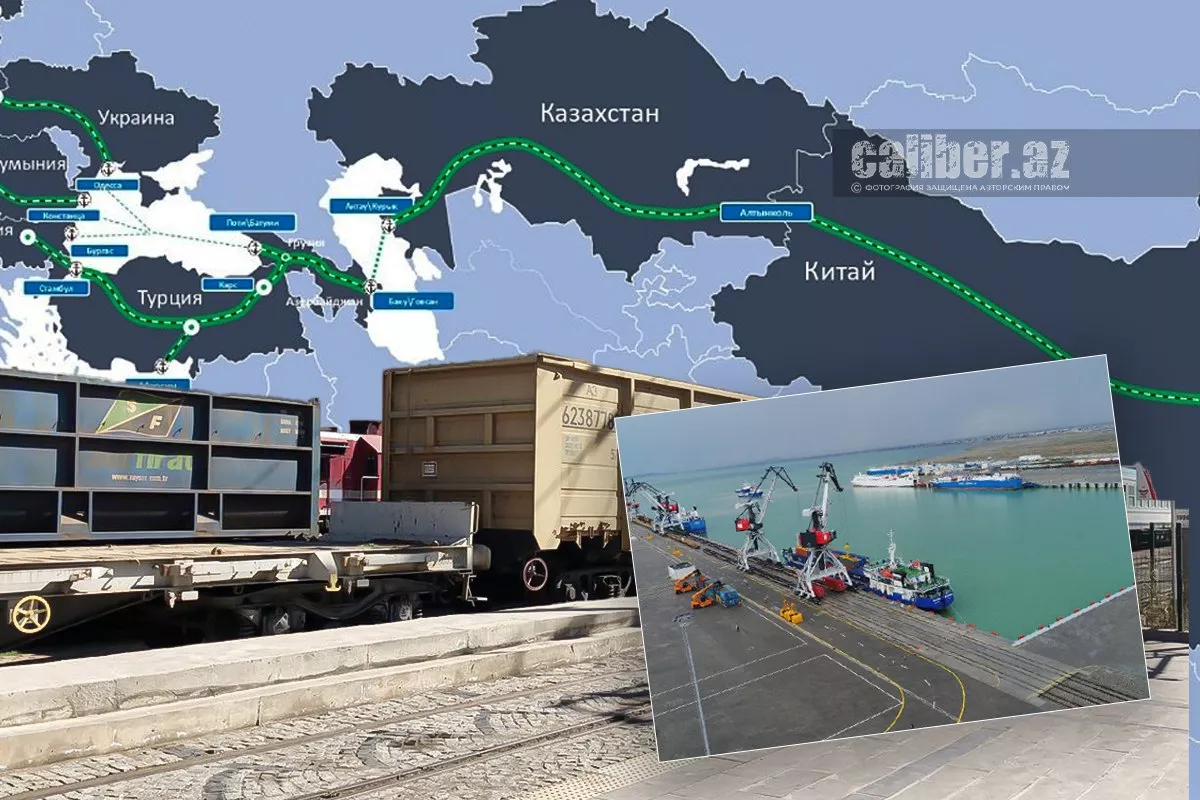
The European Commission’s (EC) interest in initiatives in the Nakhchivan Autonomous Republic (NAR) is unsurprising, as projects are now underway to establish a regional transport and logistics hub. In NAR, design work for the reconstruction and modernisation of the 188-km Nakhchivan section of the Zangezur Corridor has already been completed. Earthworks are currently underway at the border with Armenia, at the Salammalik station in the Ordubad district.
As the TRIPP project (The Trump Route for International Peace and Prosperity) progresses in Armenia, and the NAR railway infrastructure is connected to Türkiye via the under-construction Kars–Igdir–Aralik–Diliucu line, spanning 224 km, together with the modernisation of the “steel corridors” in NAR, the total freight handling capacity of the Zangezur Corridor’s railway lines is expected to reach 15 million tonnes.
The European Union has a direct interest in utilising this potential, having opted out of using the transport infrastructure of the Northern Corridor. As early as 2019, the European Commission announced its participation in transport initiatives in Azerbaijan with a total investment of €1.1 billion under the “Indicative TEN-T Investment Action Plan,” prepared jointly by the EU and the World Bank.
In subsequent years, the EU pledged $10 billion to develop the port and railway infrastructure of the Middle Corridor across the wider Caspian region, as well as to support the implementation of digital solutions to ensure seamless cargo transit and to expand container and ferry fleets. In its long-term plans, the European Commission aims to expand cooperation with Eastern European and Asian TRACECA member states within the Trans-European Transport Network, creating a Southeast axis to increase multimodal transport and align the TEN-T network with the infrastructure capacity of the TITR.







 editor@caliber.az
 +994 55 444-88-98
 Азербайджан, Баку, ул. Низами, 203, Af Business House, 5-й этаж