










When Moscow undermines trust, the CIS loses its meaning Time to draw conclusions
Events of recent months are forcing Azerbaijan to take an increasingly careful look at the prospects for further cooperation with Russia, as well as at the real value of participation in organisations created at the Kremlin’s initiative. This is not a knee-jerk reaction to isolated incidents, but a systemic reassessment of the nature of relations—one that has been maturing for a long time and has now reached a point where silence would be tantamount to consent to the status quo.
Philosopher and publicist Alexander Dugin, who in the West—and even within Russia itself—is often portrayed as something close to an ideologue of the Kremlin, has once again allowed himself statements in recent appearances that call into question the sovereignty of post-Soviet states. In an interview with the YouTube channel Infotselina, he stated that if Moscow does not establish control over the countries of the South Caucasus, they will become a “forward outpost of other poles.”
“Therefore, one cannot agree with the existence of a sovereign Armenia, or a sovereign Georgia, or a sovereign Azerbaijan, or sovereign Kazakhstan, sovereign Uzbekistan, Tajikistan, or Kyrgyzstan. There can be nothing sovereign in this new model of existence. That’s it—sovereignty is over; nation-states belong to the past. It is rubbish,” Dugin said.
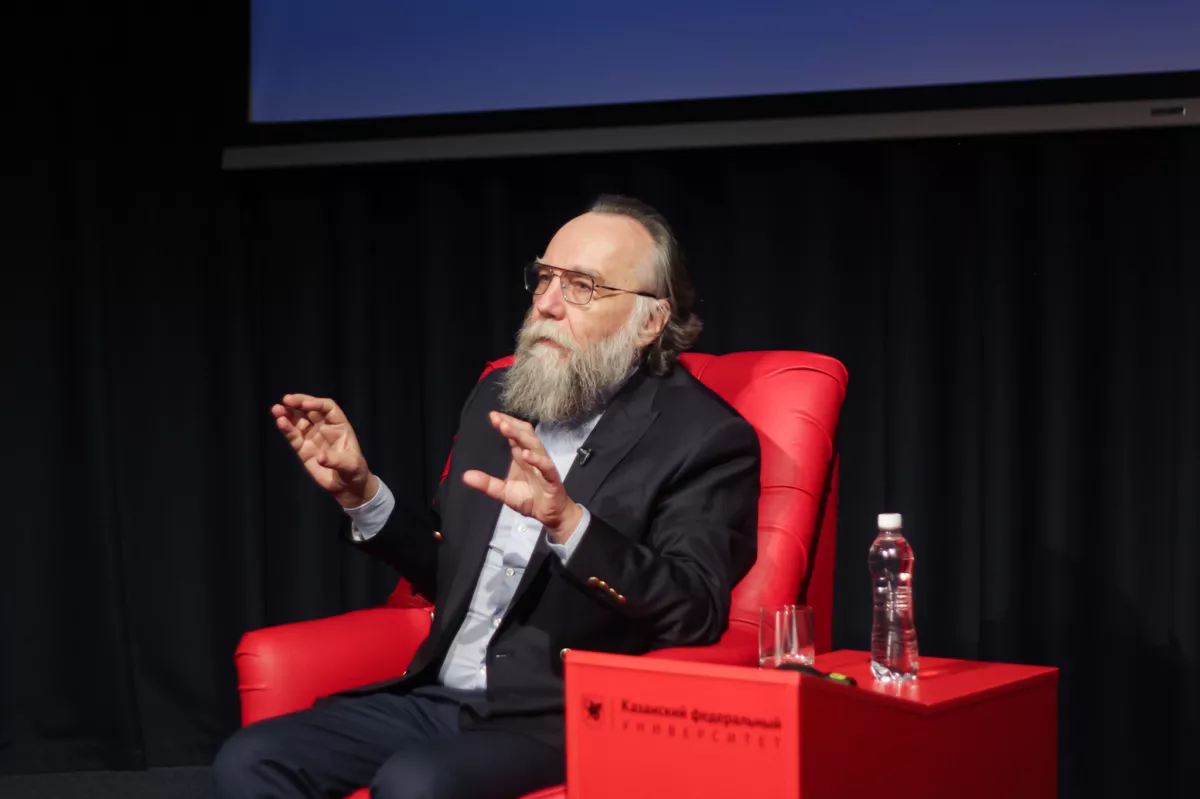
And this is not the personal opinion of a marginal publicist writing for a narrow circle of like-minded followers. Dugin is the ideologue of the “Russian world” concept and the father of “Eurasianism” (in today’s Russia, even such a combination of the incompatible is possible). He occupies a certain place within Russia’s intellectual and political hierarchy; his ideas regularly find their way into official discourse, and his platform is broad enough to influence the formation of public opinion in Russia. Reflections by a figure of such status on the “end of sovereignty” of independent post-Soviet states should therefore be viewed as a marker of specific political attitudes.
Russia’s state media not only picks up on these sentiments but actively amplifies them. Federal television channels routinely broadcast content in which the sovereignty of the member states of the Commonwealth of Independent States (CIS) is presented as conditional, while their foreign policy choices are viewed exclusively through the prism of loyalty to Moscow. Azerbaijan is no exception in this regard. Moreover, the successes of Azerbaijani diplomacy, the strengthening of the country’s international standing, and its ability to pursue an independent foreign policy provoke barely concealed irritation in the Russian media. Federal-level media figures such as Vladimir Solovyov allow themselves sharp attacks against states neighbouring Russia.
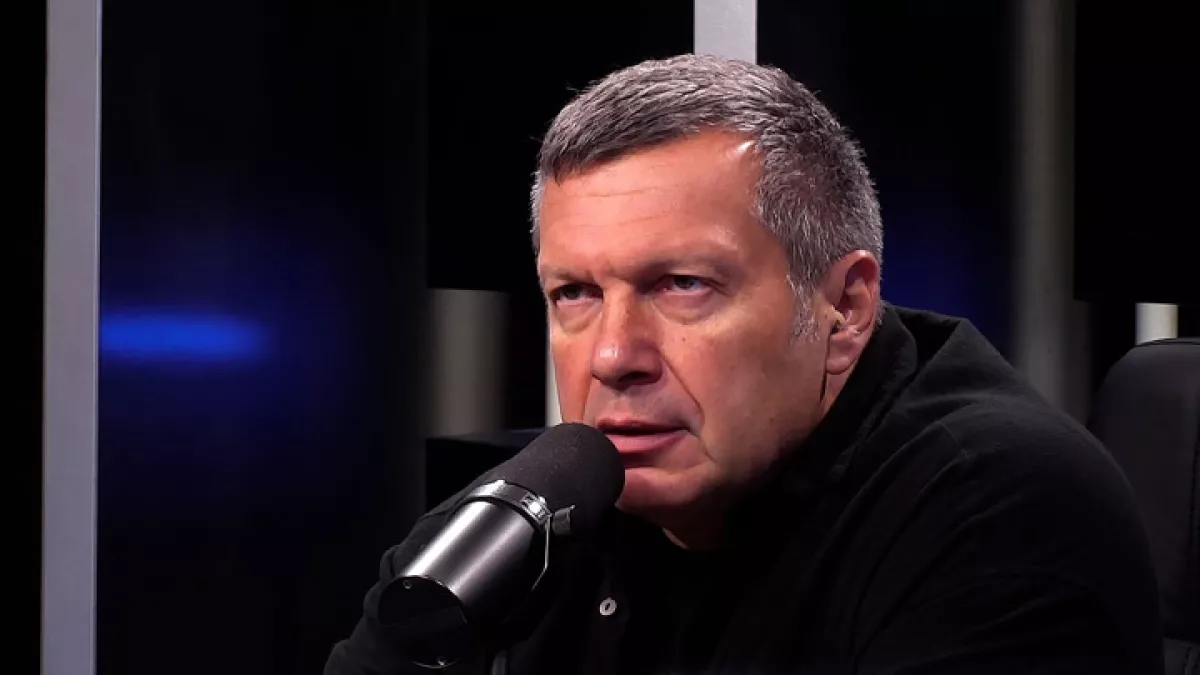
At the same time, such statements meet with no official condemnation and carry no consequences, creating a persistent impression of tacit consent on the part of the Russian authorities. This was the case quite recently, when the same Solovyov stated on his programme Solovyov. Live that Russia “could carry out a ‘special military operation’ in Armenia and Central Asia.” Several days later, the official representative of Russia’s Foreign Ministry, Maria Zakharova, said that “the statements of TV host Vladimir Solovyov regarding foreign policy are merely a private opinion and do not represent Russia’s official position.”
“These phrases were clearly and absolutely obviously presented in a provocative manner by armchair analysts almost as if they were Russia’s official stance. Frankly, it is simply unacceptable to engage in such manipulations,” Zakharova said. At the same time, one key fact is conveniently left unmentioned: Vladimir Rudolfovich Solovyov is a presenter on one of Russia’s state television channels.
And this is not about an “ordinary” TV host. The Director General of the Rossiya Segodnya media agency and host of the programme Vesti Nedeli, Dmitry Kiselyov, has also noticeably hardened his rhetoric over the past couple of years. Whereas his public speeches and broadcasts once emphasised “Eurasian brotherhood,” today the dominant theme is the priority of Russia’s security and “cultural sovereignty.” Migrants receive particular criticism, as Russia, he argues, has entered an era in which “hospitality without obligations” has come to an end.
“Our adversaries use Russia’s attractiveness against us. Through this flow, they send here people who are not prepared to align with our values and resist them—or who come here on assignments from intelligence services,” Kiselyov said. In other words, he frames the issue of labour migration as an “instrument of Western intelligence services.” Kiselyov has also supported State Duma initiatives to restrict the admission of migrants’ children to schools if they do not have a sufficient command of the Russian language. His argument boiled down to the claim that “Russian children should not become hostages to others’ incompetence,” and that budget funds should primarily serve the interests of Russian citizens.
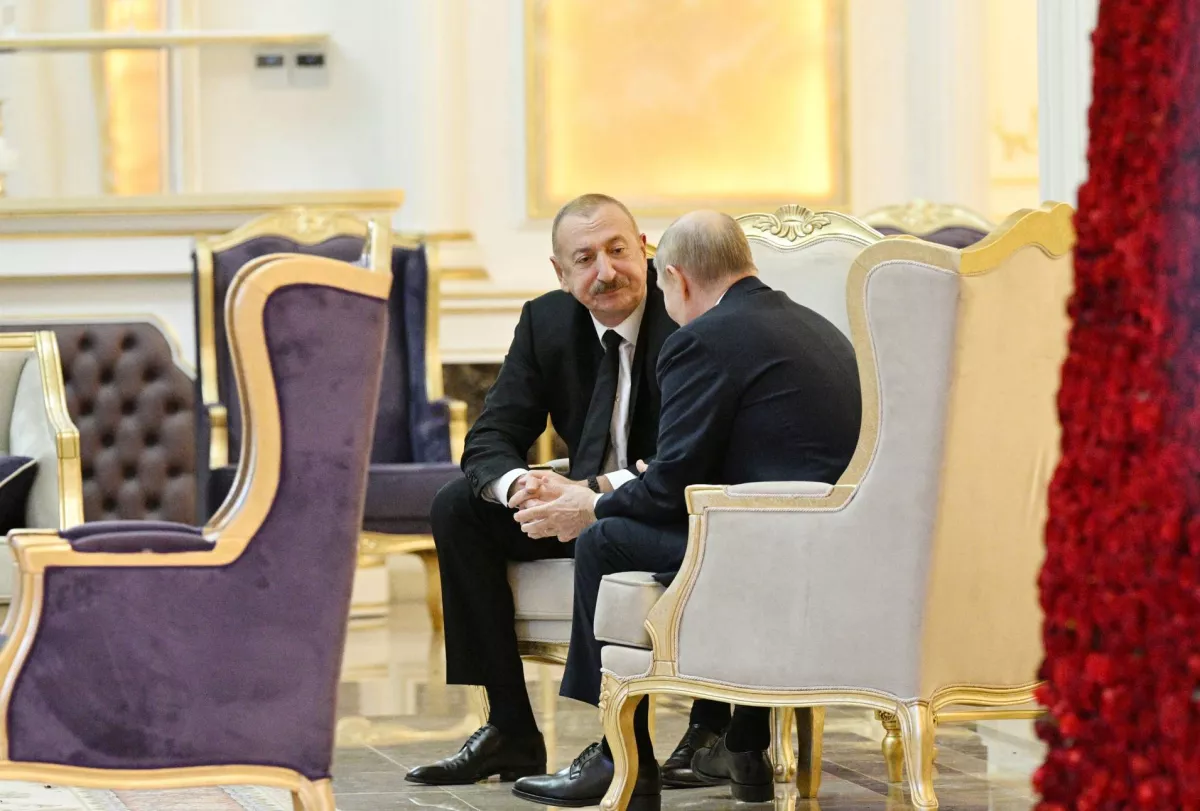
Against this backdrop, the meeting of the presidents of Azerbaijan and Russia on the sidelines of the CIS summit in Dushanbe on October 9, 2025 was perceived as an opportunity to reverse the negative trend. During the talks, Vladimir Putin made a number of statements concerning the resolution of accumulated problems in bilateral relations caused by the crash of an Azerbaijani passenger aircraft.
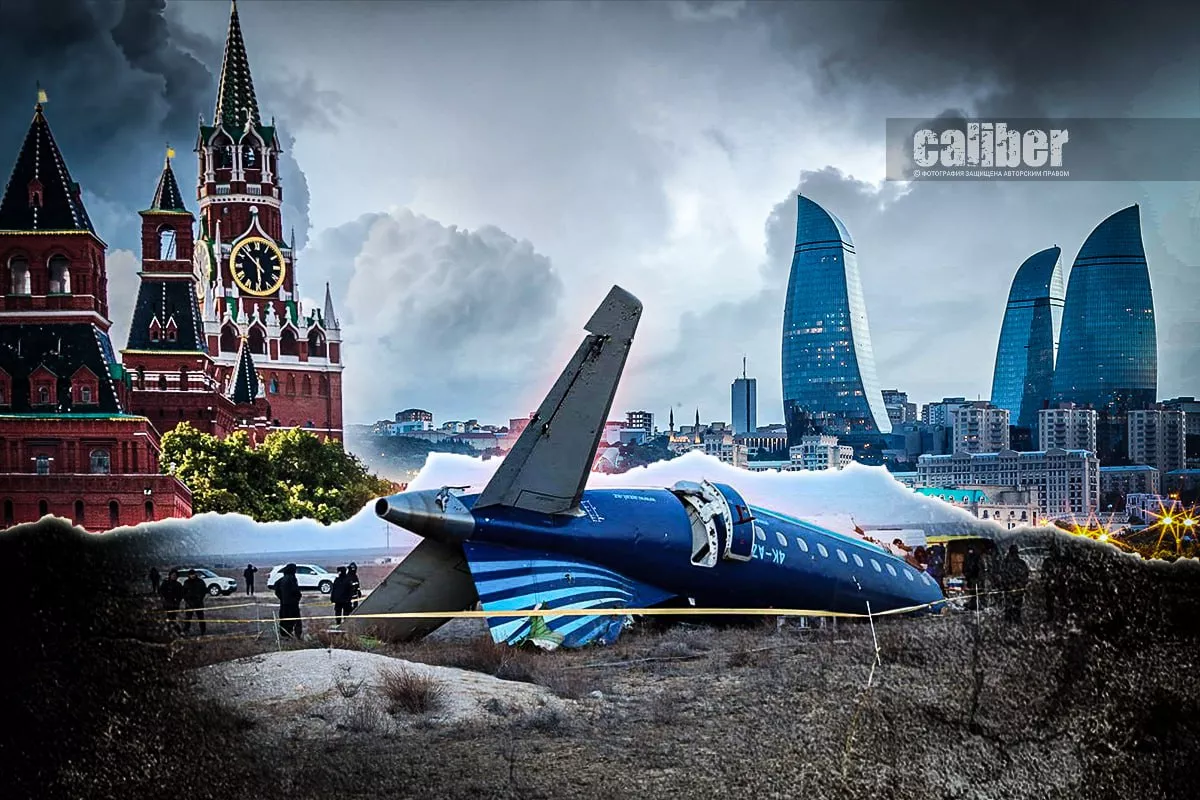
Let us recall that on December 25, 2024 a tragedy occurred which ultimately turned into a diplomatic knot, the unravelling of which exposed deep-seated contradictions within the Russian state apparatus. An Embraer-190 passenger aircraft operated by Azerbaijan Airlines (AZAL), flying from Baku to Grozny, was struck in Russian airspace and crashed while attempting an emergency landing at Aktau airport in Kazakhstan. Thirty-eight people were killed and twenty-nine sustained injuries of varying severity. Almost immediately after the tragedy, it became clear that the aircraft had been hit by fragments from a missile fired by a Russian Pantsir-S1 air defence system.
President Ilham Aliyev spoke openly and forcefully in his public statements, demanding a full and honest investigation from Russia. For Azerbaijan, this is a matter of national dignity. Moscow, however, initially adopted an ambiguous position: officials expressed condolences, spoke of an investigation having been launched, and promised to clarify all the circumstances, yet no concrete details followed. This silence, combined with a growing body of evidence pointing to external impact, fuelled tensions in bilateral relations.
But let us return to the meeting between Aliyev and Putin in Dushanbe, where the Russian president made a statement that many—including in Azerbaijan—interpreted as an acknowledgment of responsibility for the crash of the Azerbaijani aircraft. Putin explicitly spoke of technical malfunctions in the operation of Russia’s air defence systems and said that two missiles had been launched. According to the Russian leader, the missiles exploded at a distance of about ten metres from the aircraft, possibly in a self-destruct mode, and their fragments struck the fuselage of the Azerbaijani plane.
“Of course, the Russian side will do everything that is required in such tragic situations in terms of compensation. A legal assessment will also be given to the actions of all officials,” Putin promised.
However, expectations that these statements would be followed by concrete action proved unfounded. Weeks and months passed, yet the situation remained unchanged. The Russian media continued to broadcast the same narratives, ideologues kept promoting the same ideas, and law enforcement agencies continued to act toward Azerbaijani citizens as they had before.
Particularly telling in this context is the role of the head of Russia’s Investigative Committee, Alexander Bastrykin. He has long been known for his nationalist and chauvinistic views, which are reflected in the work of the agency he leads. The Committee’s structures regularly become tools of pressure against ethnic minorities, migrants, and people from the Caucasus and Central Asia. Azerbaijanis living in or temporarily in Russia have repeatedly faced arbitrariness, inspections, and intimidation. In December of last year, it became known that the Investigative Committee had closed the criminal case into the plane crash, even though the investigation had not yet been completed, leaving questions about responsibility and the mechanisms of the incident unresolved.
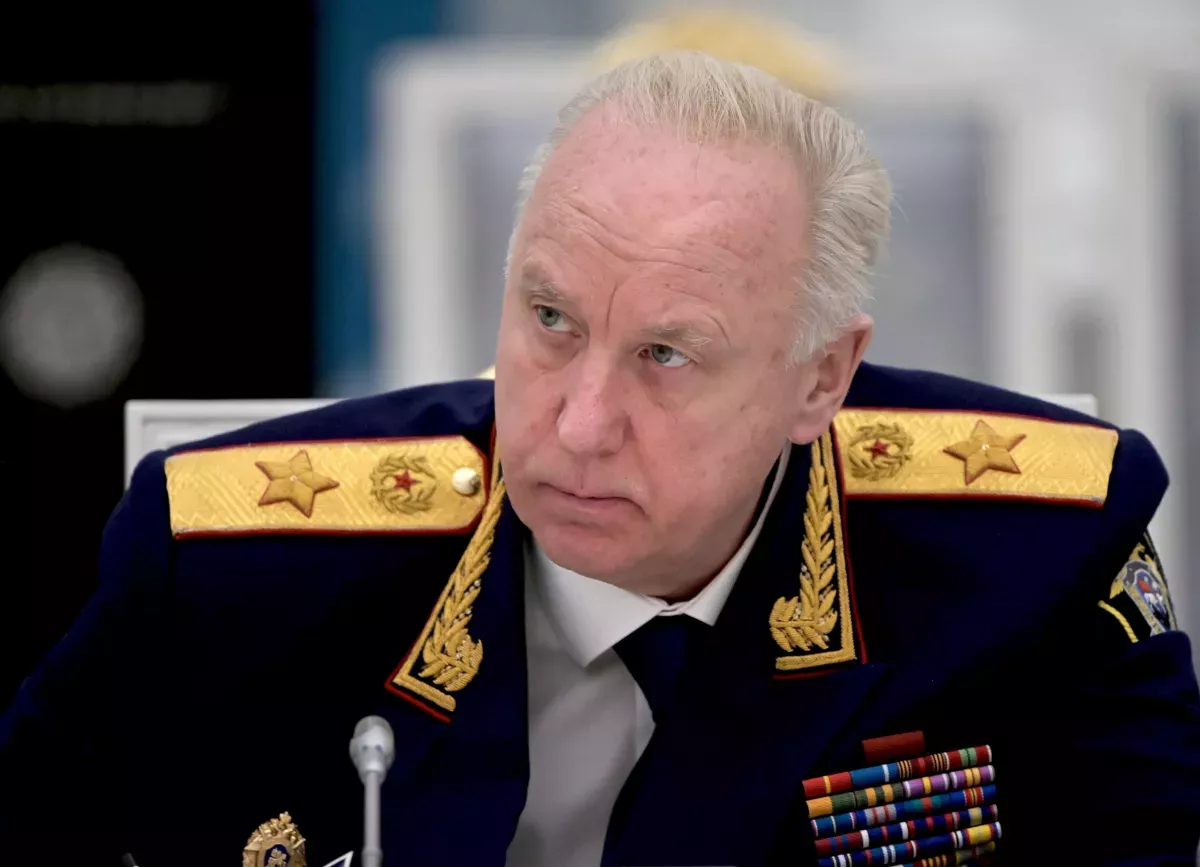
When promises made by the Russian president are effectively ignored by the head of one of the key law enforcement agencies, a natural question arises about the real controllability of processes and the value of such promises. It creates a persistent impression that what was stated in Dushanbe will remain nothing more than declarations. This calls into question not only Russia’s seriousness as a partner but also the very viability of the CIS platform itself.
Incidentally, if in the early 1990s, under Boris Yeltsin, the CIS was called a structure for the “civilised divorce” of former Soviet republics, under Putin, Moscow has come to see the Commonwealth as a method of preserving its geopolitical, economic, and military influence in the post-Soviet space. But that’s not the main point here. What matters is this: if statements made within CIS summits are not backed by practical actions and can be ignored without consequences, then a logical question arises: “What real function does this organisation serve today, and why does such a format even exist?”
For Azerbaijan, the question of participation in the CIS has always had a particular specificity. The Republic of Azerbaijan does not recognise the international legal personality of the CIS or its executive bodies and does not view the Commonwealth as a supranational structure. For Baku, the CIS is purely a format for multilateral regional cooperation between independent states and a mechanism for political consultations. That is why Azerbaijan joined a number of its fundamental documents—including the Charter and development concepts—with special opinions and reservations, reflecting the principled position of a state that does not intend to limit its foreign policy freedom or transfer elements of sovereignty within this framework.
Azerbaijan consistently prioritises the development of bilateral relations with CIS countries, as it does in other foreign policy directions. The Azerbaijani state builds its diplomacy on concrete interests, projects, and partnerships, rather than on abstract loyalty to blocs. It is precisely this pragmatic approach that has enabled the country to strengthen its position on the international stage.
However, developments in recent years increasingly force even formal membership in the CIS to be viewed as a potential risk. Russia’s inhumane treatment of citizens of member states calls into question the very expediency of participating in this platform. Azerbaijanis, who number significantly in Russia, regularly face nationalism and pressure from law enforcement agencies. Attempts to dismiss these incidents as isolated “excesses” are unconvincing; such cases occur systematically across different regions and affect thousands of people.
Russian ideologues and members of the elite must clearly understand that positive cooperation cannot be imposed by force. The old saying, “You can’t make someone love you by force,” remains just as relevant today. Attempts at coercion—whether through threats of a “special military operation,” economic pressure, or manipulation of migration issues—only accelerate the process of post-Soviet countries drifting away from Moscow.
Azerbaijan, having endured aggression and decades of struggle to restore its territorial integrity, fully understands the value of sovereignty. It is impossible to speak to Azerbaijan in the language of force—it has proven its ability to defend its rights in 2020, in 2023, and in the period since.
A normal and expected step from the Russian leadership would be to fulfil the promises made. If Moscow is truly interested in maintaining stable relations with Baku, this must be reflected in concrete actions: an end to anti-Azerbaijani rhetoric in state media and discriminatory practices by law enforcement agencies, the punishment of those who engage in arbitrariness, and the curbing of destructive statements by ideologues. And, of course, in the fulfilment of the promises made in Dushanbe, namely: “Of course, the Russian side will do everything that is required in such tragic situations in terms of compensation. A legal assessment will also be given to the actions of all officials.”
Otherwise, Azerbaijan will reassess its approach to engagement with Russia and evaluate the advisability of its participation in CIS mechanisms. Azerbaijan is not interested in confrontation, but partnership can only endure where words are backed by deeds.







 editor@caliber.az
 +994 55 444-88-98
 Азербайджан, Баку, ул. Низами, 203, Af Business House, 5-й этаж