










Aliyev in Aghdam and Zelenskyy on the brink of compromise Caliber.Az weekly review
The editorial team of Caliber.Az presents the latest edition of the programme Events with Murad Abiyev.
Azerbaijan – Armenia
President of Azerbaijan Ilham Aliyev and First Lady Mehriban Aliyeva took part in the opening of the second residential complex in the city of Aghdam and met with residents who have been resettled there. During the meeting, Ilham Aliyev addressed those present with a speech in which he touched upon several aspects of the concluded Karabakh conflict.
In particular, the President recalled the discreditable role of the OSCE Minsk Group, whose objective, he said, was to make the conflict perpetual. Describing the group as “loathsome”, Aliyev also pointed out that certain forces in the West are still attempting to revive the Karabakh issue. This is being done through the use of wording that refers to the alleged forced expulsion of Armenians from Karabakh in September 2023. Here it is important to recall the strategic partnership agenda previously signed between Armenia and the EU, which mentions “Karabakh Armenians displaced following Azerbaijan’s military operation.”
Ilham Aliyev stated that despite progress on the peace agenda, the Azerbaijani people must remain vigilant. “In order to achieve eternal peace, we must always be several times stronger than our potential enemies. We are doing and will continue to do it,” he said.
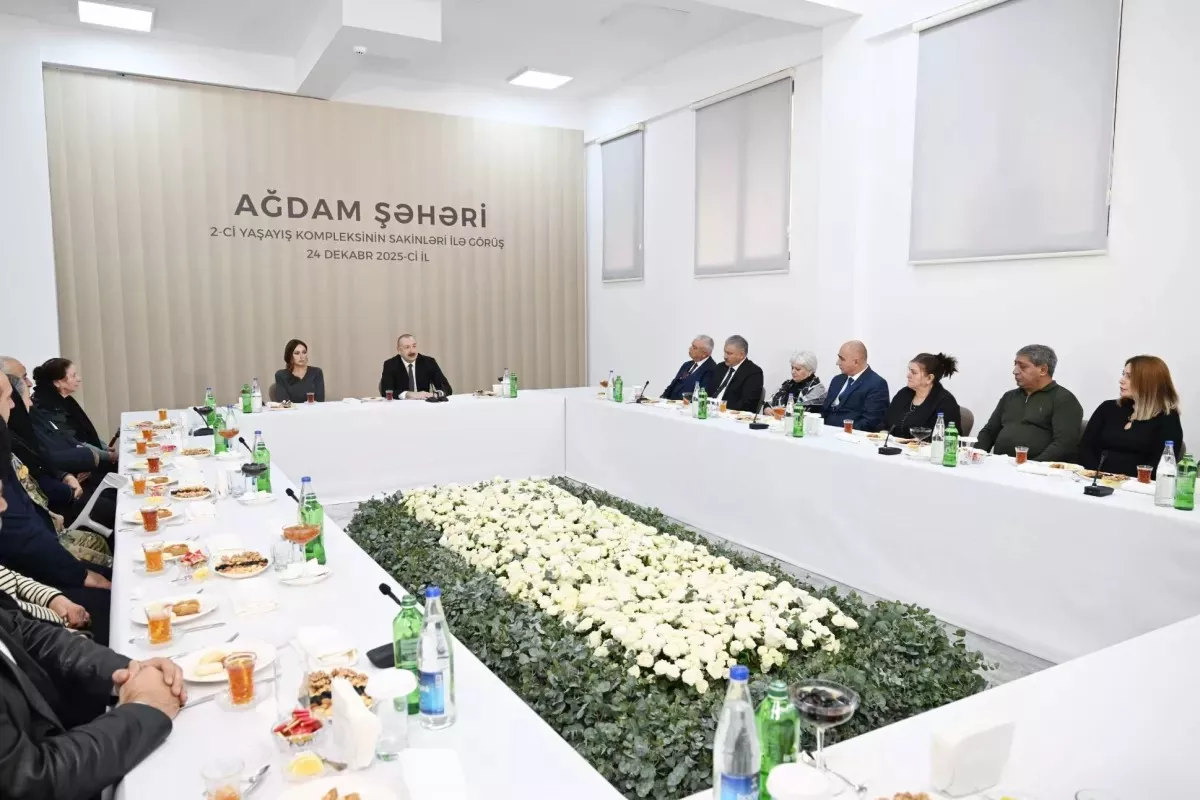
Here, Ilham Aliyev outlined his vision of an issue that concerns Azerbaijani society—specifically, the concern that the peace process with Armenia could lead to the erasure of crimes committed against the Azerbaijani people and the state, thereby creating fertile ground for future provocations and crimes by the neighbouring country.
One point is essential to understand: even if an iron wall were erected along the border with Armenia, the two countries would remain neighbours. Moreover, such a wall would be powerless against information and political pressure. It is not total distancing from a former adversary that ensures security, but rather a policy focused on strengthening sovereignty, the armed forces, intelligence capabilities, diplomacy, international legal frameworks, and the state as a whole. This appears to be the broader message conveyed by President Aliyev.
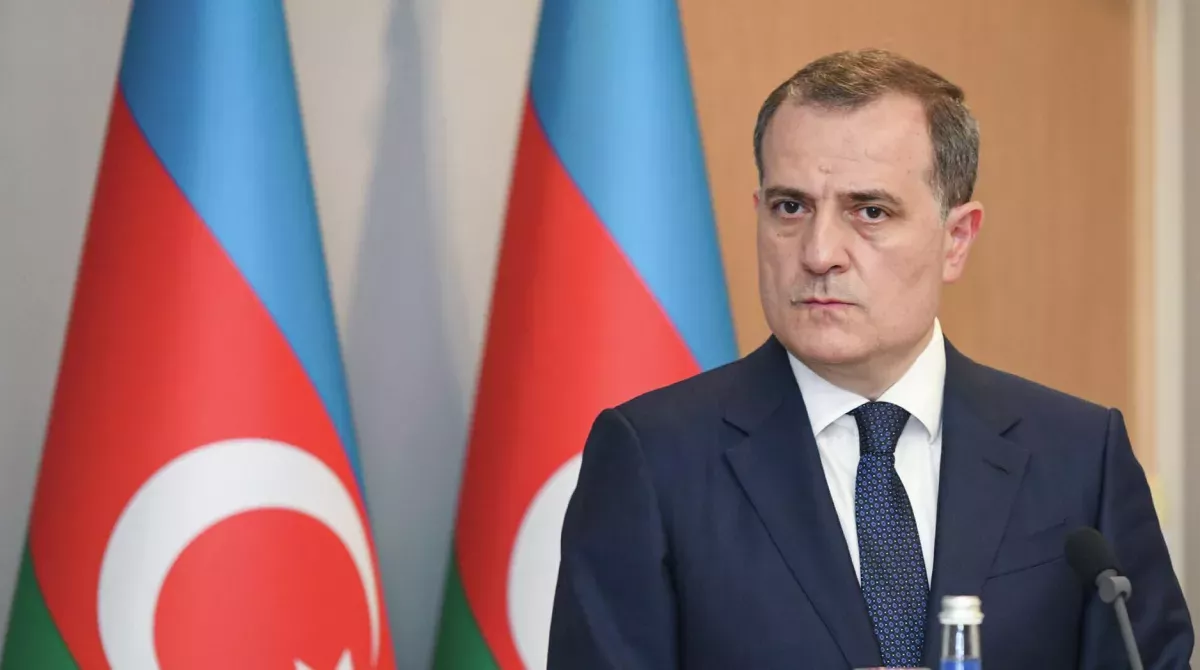
During the past week, Azerbaijan’s Foreign Minister Jeyhun Bayramov held a year-end briefing. While offering an overall positive assessment of progress in the peace talks between Baku and Yerevan, the minister stressed that the signing of a final peace agreement requires Armenia to fulfil the conditions put forward by Azerbaijan. In this context, Bayramov once again reaffirmed Baku’s firm demand for amendments to Armenia’s Constitution as a prerequisite for concluding a peace treaty.
The foreign minister also touched upon another important issue — the crisis in relations between Baku and Moscow. Bayramov considered it necessary to stress that this tension is linked to the downed Azerbaijan Airlines (AZAL) aircraft and the developments surrounding this incident, and has nothing to do with the Russia–Ukraine war.
The minister stated that the decision by Russia’s Investigative Committee to terminate the criminal case into the AZAL plane crash raises serious questions for Azerbaijan. He added that Azerbaijan expects Russia to fulfil its obligations in connection with this incident. This makes it reasonable to assume that tensions between Moscow and Baku will persist until those obligations are met.
Ukraine – Russia
Ukrainian President Volodymyr Zelenskyy presented twenty points of Ukraine’s draft ceasefire proposal, accompanied by his own commentary. Overall, due to the somewhat vague wording, the document gives the impression of a certain scope for compromise — or, alternatively, an attempt to buy time, depending on how one looks at it.
Naturally, the issue of greatest interest is the key territorial question. Here, in essence, there are no concrete proposals, only Zelenskyy’s comments. He said that Kyiv insists on freezing military hostilities along the current front line. The president then noted that the Russians want the Ukrainian Armed Forces to withdraw from the Donetsk region, while the Americans are trying to find a compromise solution — “so that it would not be a ‘withdrawal’, because we are against withdrawal”. The United States has proposed creating a demilitarised or free economic zone in the Donetsk region. To take a decision on such a zone, a referendum would be required, and for a referendum, 60 days are needed, Zelenskyy concluded in his remarks on the territorial issue.
In effect, for the first time the Ukrainian leader has voiced a certain possibility of compromise on the territorial issue. And there are, of course, reasons for this. The problem is that holding on to Donbas is becoming a black hole for Ukraine, one in which people are dying, while at the same time it is being told from all sides that the Russians will take these territories sooner or later anyway. If we assume that, say, in two years Russia takes the whole of Donbas by force, this would become not only a political but also a personal catastrophe for Zelenskyy. No one in Ukraine would remember that back in 2025 they opposed handing over territories. Everyone would blame Zelenskyy for failing to save the lives of tens of thousands of soldiers in a battle that was lost in advance.

Two Damoclean swords hang over the president — the anti-corruption agencies NABU and SAPO, which are accountable to Washington, and former Commander-in-Chief of the Armed Forces of Ukraine Valerii Zaluzhnyi. All of them are waiting for the slightest mistake by Zelenskyy to strike. Zelenskyy finds himself in a situation close to stalemate. On the one hand, theoretically there may never be better conditions for relinquishing Donbas than now. On the other hand, this could trigger unrest within the army, with all the consequences that would entail.
Let us assume that Zelenskyy is ready to make concessions regarding the part of Donbas currently under Kyiv’s control. The main task, then, is how to present this correctly. For this purpose, it would be logical to actively emphasise the issue of pressure from the United States. On December 28, Zelenskyy is flying to the US, where he is due to be received by Donald Trump at the Mar-a-Lago estate. The question is: what is the point of doing this if the two previous meetings were marked by an unwelcoming reception—especially against the backdrop of Volodymyr Zelenskyy’s recent cynical remark suggesting that Donald Trump is not particularly young and that, therefore, time is not on his side.
But what if Zelenskyy is deliberately seeking a poor reception from Trump, in order to present it as evidence of Washington’s pressure on Kyiv and thus explain to his own society the necessity of compromises? Another option is also possible — or rather, it does not exclude the first, but merely creates a favourable background for it. If Zelenskyy is, on the whole, ready for a compromise, the Americans will surely take care to ensure that the image of the Ukrainian president does not suffer and that unrest does not emerge within Ukrainian society. In that case, Zelenskyy is flying to the United States precisely to discuss the details of such a plan.







 editor@caliber.az
 +994 55 444-88-98
 Азербайджан, Баку, ул. Низами, 203, Af Business House, 5-й этаж