










American power vs. Chinese money How Marco Rubio is reclaiming Latin America
US Secretary of State Marco Rubio’s three-day South American tour of Colombia, Ecuador and Peru offered a clear demonstration of how President Donald Trump’s administration is seeking to rebuild Washington’s shaken influence in Latin America. In Washington, the US has managed to find common ground with the leaders of all three countries by focusing on two issues that are currently the easiest to turn into practical cooperation: joint efforts to dismantle drug cartels and ensuring economic security.
“It's part of a trend that you're seeing in the Western Hemisphere of alignment with the US and US interests,” Rubio said ahead of the trip.
In Colombia, Ecuador and Peru, this trend is indeed taking shape rapidly. All three countries are actively joining US defence initiatives. Colombia has already joined the regional military alliance Shield of the Americas, Ecuador has become, in Rubio’s words, the “most involved and aggressive partner” in the coalition, while Peru officially joined it during the US delegation’s visit. The partnership is backed by concrete measures: joint combat operations against drug trafficking, operational intelligence sharing, training of local security forces by US instructors, and expanded supplies of American weapons and military equipment.
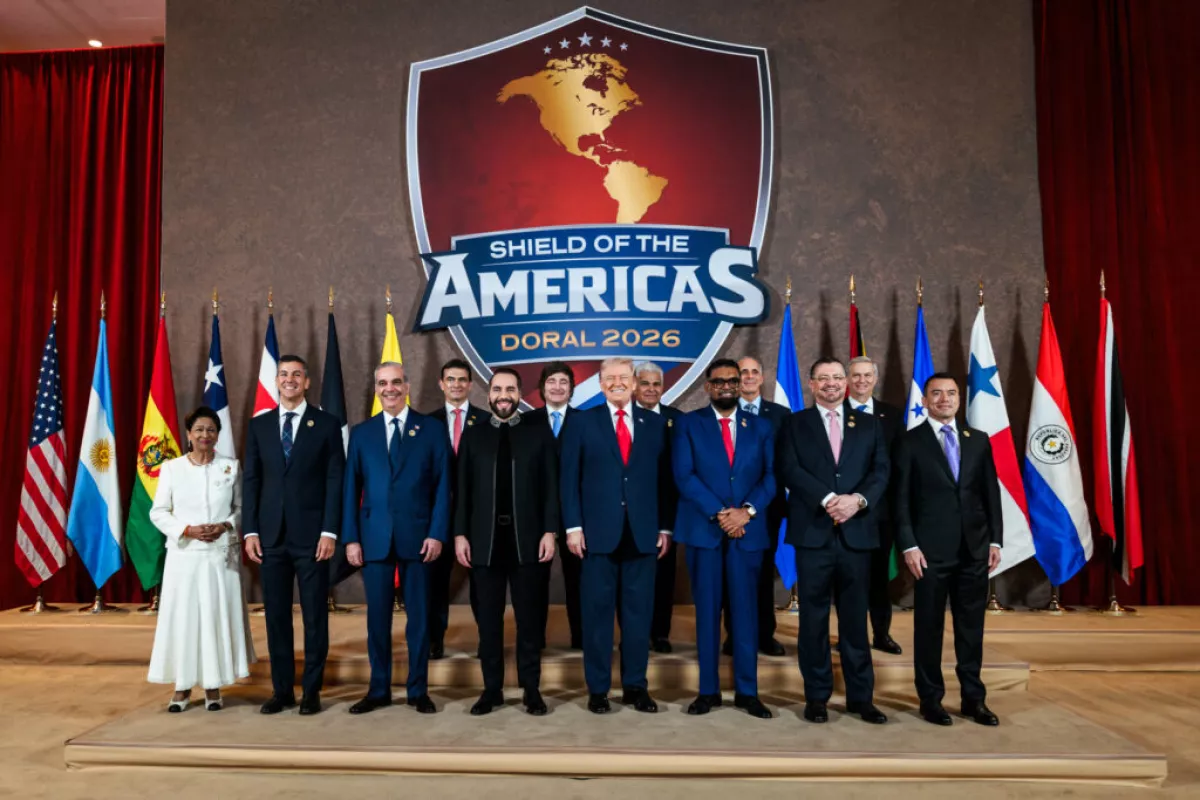
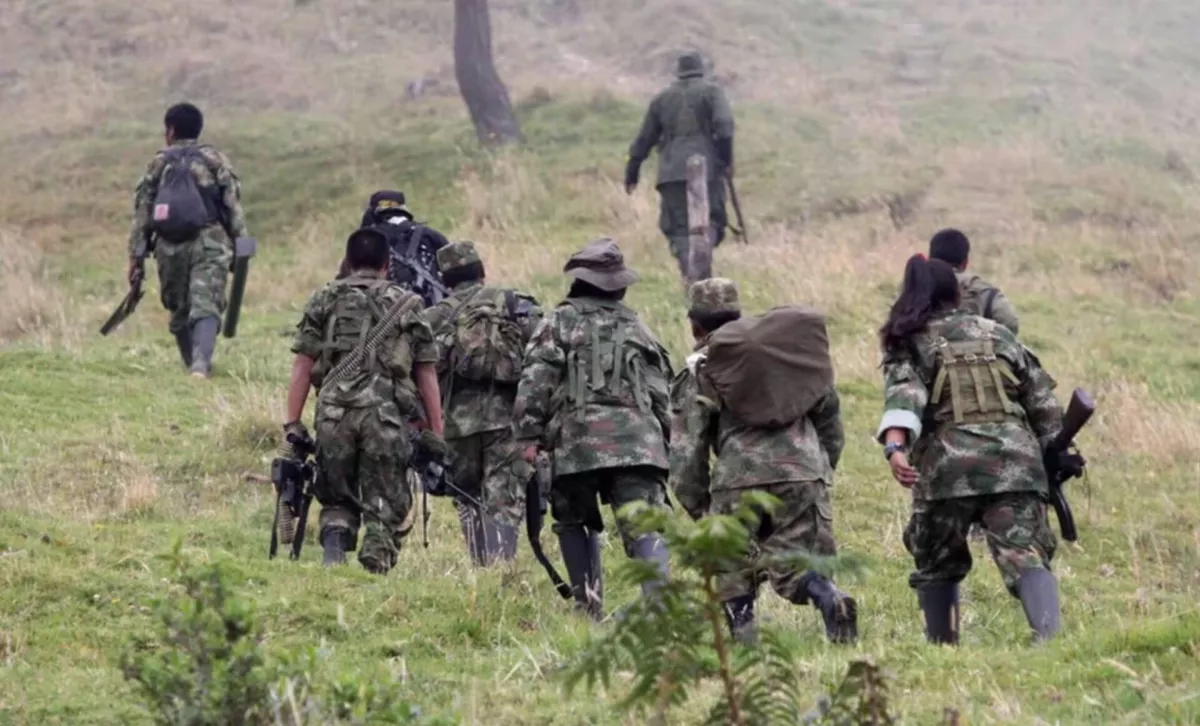
The example of Ecuador is particularly telling, where cooperation has already moved beyond paper declarations to actual combat operations. US military personnel and Ecuadorian security forces are working together against transnational criminal organisations and illegal mining operations. In particular, US aircraft and naval forces are helping intercept semi-submersible boats and vessels transporting cocaine. During Rubio’s visit, he announced that the White House intends to ask Congress to approve an additional $45 million in financial assistance for Ecuador’s security forces. Washington has also officially designated the Ecuadorian criminal group Los Tiguerones (“The Tiguerones”) as a foreign terrorist organisation.
At the same time, the US side has stressed separately that the deployment of regular US troops to participate in ground combat is completely ruled out.
“The Colombians have never asked for American soldiers to come into Colombia and take on drug cartels; they've asked for our help and training,” Rubio explained.
The second strategic thrust of the tour is the systematic push to displace Beijing from the region. Here, Washington is offering Latin America a new geopolitical bargain: American protection and military support in exchange for closer economic ties with the United States. In Colombia, for example, Rubio signed agreements on critical minerals extraction and the development of civilian nuclear energy. These include rare earth elements, lithium and other raw materials that the US would like to remove entirely from Chinese supply chains in order to deprive Beijing of its monopoly over the technologies of the future. The White House also expects to sign new trade agreements with all three South American capitals in the near future.
However, it is precisely on the economic front that the US strategy is facing a harsh reality. China has already put down deep roots in Latin America. Today, China is Peru’s largest trading partner, a key market for Ecuadorian seafood exports, particularly shrimp, and a major player in building the region’s largest infrastructure projects — from the metro system in Colombia’s capital, Bogotá, to the giant deep-water megaport of Chancay in Peru. On the eve of Rubio’s visit, China’s Foreign Ministry effectively responded to the US activity with an official statement: “The Western Hemisphere is no one’s backyard.”
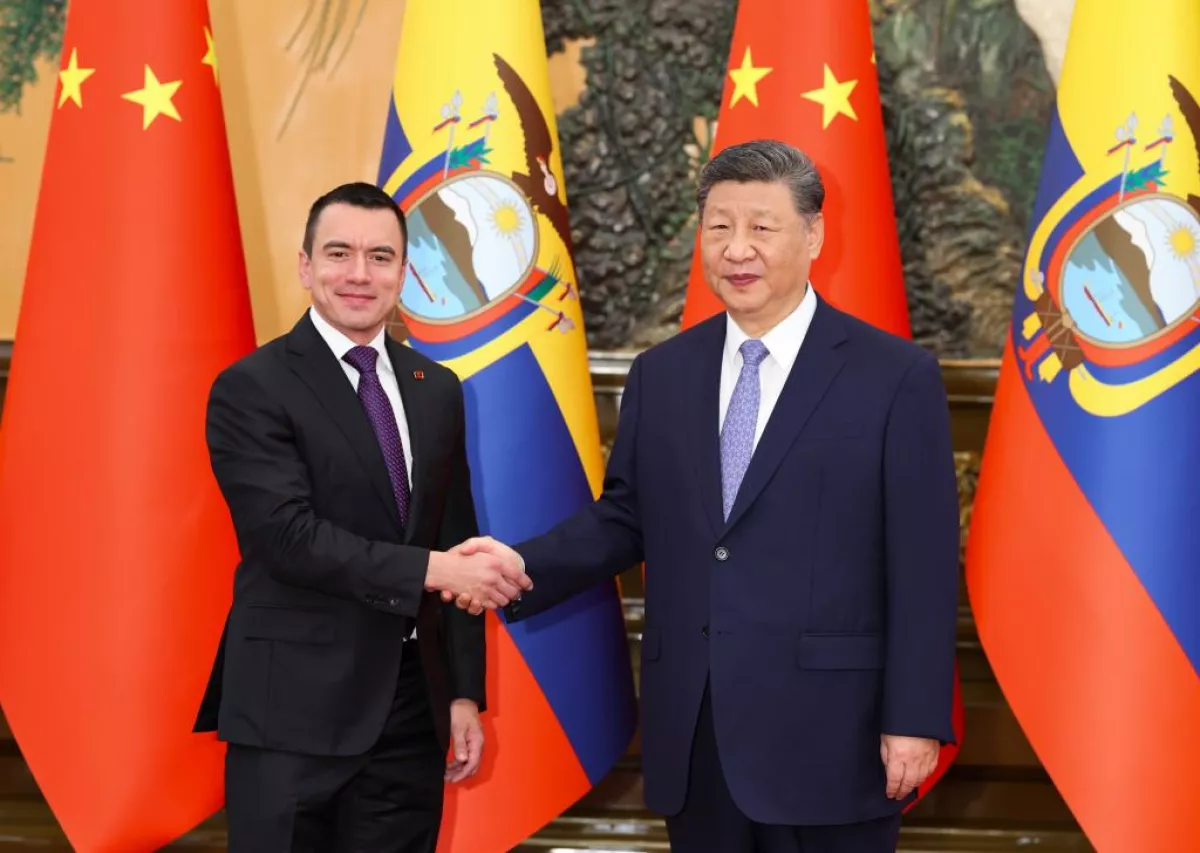
Although the region’s new right-wing governments are ready to cooperate with Washington, they are in no hurry to tie their foreign policies exclusively to the United States. Even Ecuadorian President Daniel Noboa flew to Beijing shortly before Rubio’s visit, where he concluded seven major agreements with Chinese President Xi Jinping. Peru’s newly elected president, Keiko Fujimori, has explicitly stated that Lima intends to maintain diversified trade relations and has no plans to turn away Chinese buyers. Former Peruvian Foreign Minister Manuel Rodríguez Cuadros put the issue even more bluntly for the country’s political elites: friendship with the United States “should not mean replacing national interests with those of another superpower.”
There is also a serious domestic obstacle — public sentiment within Latin American societies themselves. The conservatives’ victories in elections in Colombia and Peru were a response to the catastrophic rise in street crime and the weakness of previous left-wing governments, rather than evidence that Latin Americans broadly support Trump’s political agenda. According to fresh polling data from the respected AmericasBarometer research project, in all three South American countries, ordinary citizens continue to have greater trust in the Chinese government than in the US administration. In Peru’s capital, the US secretary of state’s visit was even accompanied by street protests by left-wing activists carrying placards reading: “Latin America is not the US backyard.”
For this reason, Marco Rubio’s tour can be considered a success for Washington, but it is only the first stage of a long geopolitical confrontation. US diplomacy has gained loyal political partners, expanded the anti-drug coalition and launched negotiations over strategic resources. China, however, already possesses in the region what the United States is only trying to secure through promises: actual ports, roads, factories, billions of dollars in investment and stable export markets.
As noted by prominent US Latin America expert and former diplomat Benjamin Gedan: “The election of pro-Trump leaders is clearly not enough to move the needle in U.S.-China competition.”
For Washington, the key question now is this: can the Shield of the Americas evolve into an economic umbrella capable of sheltering American interests from the torrential Chinese rain?







 editor@caliber.az
 +994 55 444-88-98
 Азербайджан, Баку, ул. Низами, 203, Af Business House, 5-й этаж