










Asian knot of contradictions On the South Korean leaders’ visit to China
Rising tensions around the world are creating conditions for increased diplomatic and political activity among countries located near existing or potential hotspots. In this context, the four-day state visit of South Korean President Lee Jae Myung to China—the first in six years—should be seen as an important step toward restoring relations between the two countries.
It is necessary to take a brief historical digression. After the founding of the PRC in 1949, South Korea recognised rebellious Taiwan as the sole legitimate Chinese state, while Beijing established diplomatic relations with North Korea. This cemented the division of the Korean Peninsula and set two opposing blocs: PRC–DPRK and the Republic of Korea–USA.
The normalisation of interstate relations began in the 1970s, when China—partly in defiance of the USSR, after normalising relations with the United States—adopted a more pragmatic approach toward Seoul’s alliance with Washington. In 1992, Beijing and Seoul established diplomatic relations. Economic cooperation began to grow. China became South Korea’s main trading partner for both exports and imports, while South Korea became China’s second-largest trading partner.
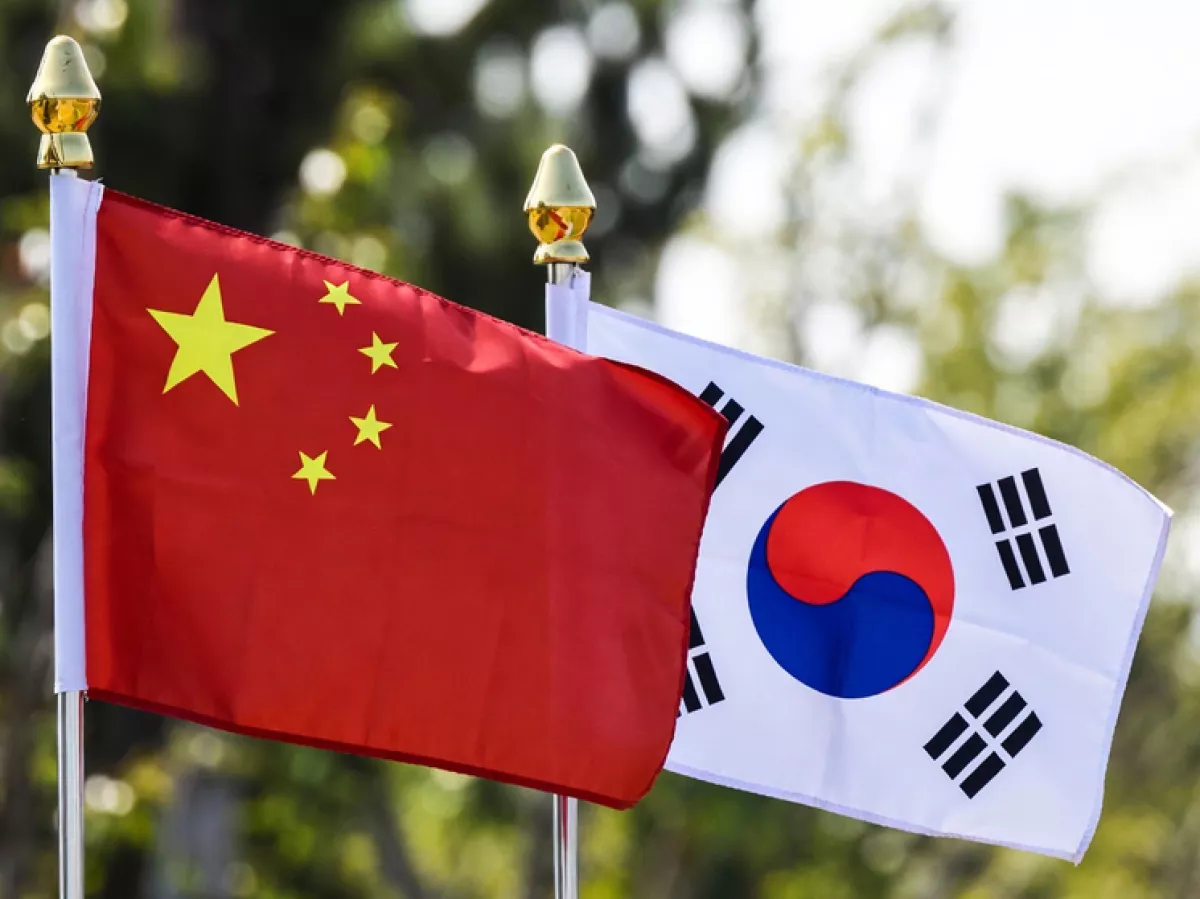
Nevertheless, contradictions persisted, driven by rising geopolitical tensions due to the rivalry between Beijing and Washington, as well as the military risks associated with North Korea. China remains South Korea’s main political and economic partner—and even more, the patron of North Korea. Despite calls from South Korea and the United States to leverage this influence, Beijing has traditionally avoided applying pressure and has advocated restraint, blocking new sanctions against the DPRK.
South Korea, in turn, has strengthened military cooperation with the United States. The decision to deploy the U.S. THAAD missile defence system on South Korean territory in 2016 was perceived by Beijing as a threat to its own security, which sharply cooled relations between the two countries.
The main objective of Lee Jae Myung’s visit to China was Seoul’s effort to restart dialogue with Beijing and strengthen cooperation in the economy, technology, environmental protection, and trade. The visit also symbolised a departure from the harder line of former President Yoon Suk Yeol and demonstrated South Korea’s readiness to fully restore bilateral ties amid rising regional tensions.
The main geopolitical challenge remains the situation on the Korean Peninsula: South Korea hopes for China’s help in curbing North Korea’s nuclear program. In the wake of North Korea’s new missile tests, Lee Jae Myung called on China to act as a mediator and bring Pyongyang back to the negotiating table. The South Korean president proposed the idea of “freezing” North Korea’s nuclear program in exchange for certain concessions or compensation, arguing that even a pause in further development would be a step forward. He also reaffirmed Seoul’s continued commitment to achieving a nuclear-free Korean Peninsula.
China, however, responded with a call for “patience,” diplomatically noting the need to consider the heightened tensions between the two Koreas.
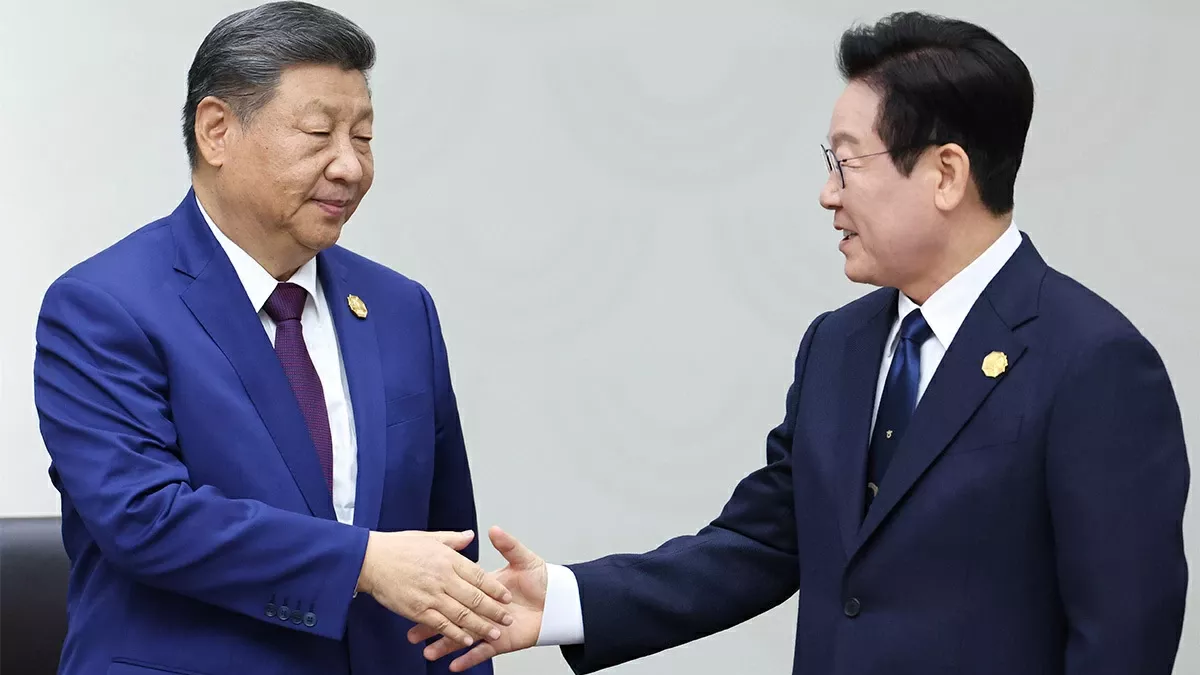
At the same time, a call for patience does not necessarily mean a polite refusal. It could literally mean waiting and exercising restraint before any action is taken. It is important to understand that China’s priority is to prevent South Korea from participating in military operations against it in coalition with the United States and Japan, should Beijing decide to conduct a military operation to reclaim Taiwan. However, completely avoiding conflict is unlikely, given that the large U.S. base Camp Humphreys is located on South Korean soil.
An additional layer of intrigue is added by the fact that both South Korea and China share common ground when it comes to countering Japan on territorial disputes.
In any case, the absence of consensus on the North Korean issue was offset by a wealth of agreements on bilateral cooperation. Following the meetings, the two sides signed 14 memorandums of understanding between government agencies and institutions of the two countries. Afterward, the leaders issued a joint statement reaffirming their commitment to strengthening trade and economic ties and expanding cooperation within the framework of the Asia-Pacific Economic Cooperation (APEC).
Additionally, a document was formalised to gift China a pair of Qing-era stone lions. Symbolically, it can confidently be said that the countries demonstrated a desire to ease tensions. Whether they will be able to translate this symbolic gesture into concrete political outcomes remains an open question.







 editor@caliber.az
 +994 55 444-88-98
 Азербайджан, Баку, ул. Низами, 203, Af Business House, 5-й этаж