










Azerbaijan and Russia: resetting partnership amid global turbulence Analysis by Khazar Akhundov
Today, amid a tense global geopolitical situation and the fragmentation of the world economic system, the risks of a new recession and a slowdown in global GDP are increasing. In these challenging circumstances, Azerbaijan is making every effort to strengthen trade and economic ties with partner countries in the post-Soviet region. An important direction in this regard is seen as the development of Azerbaijani-Russian business relations.
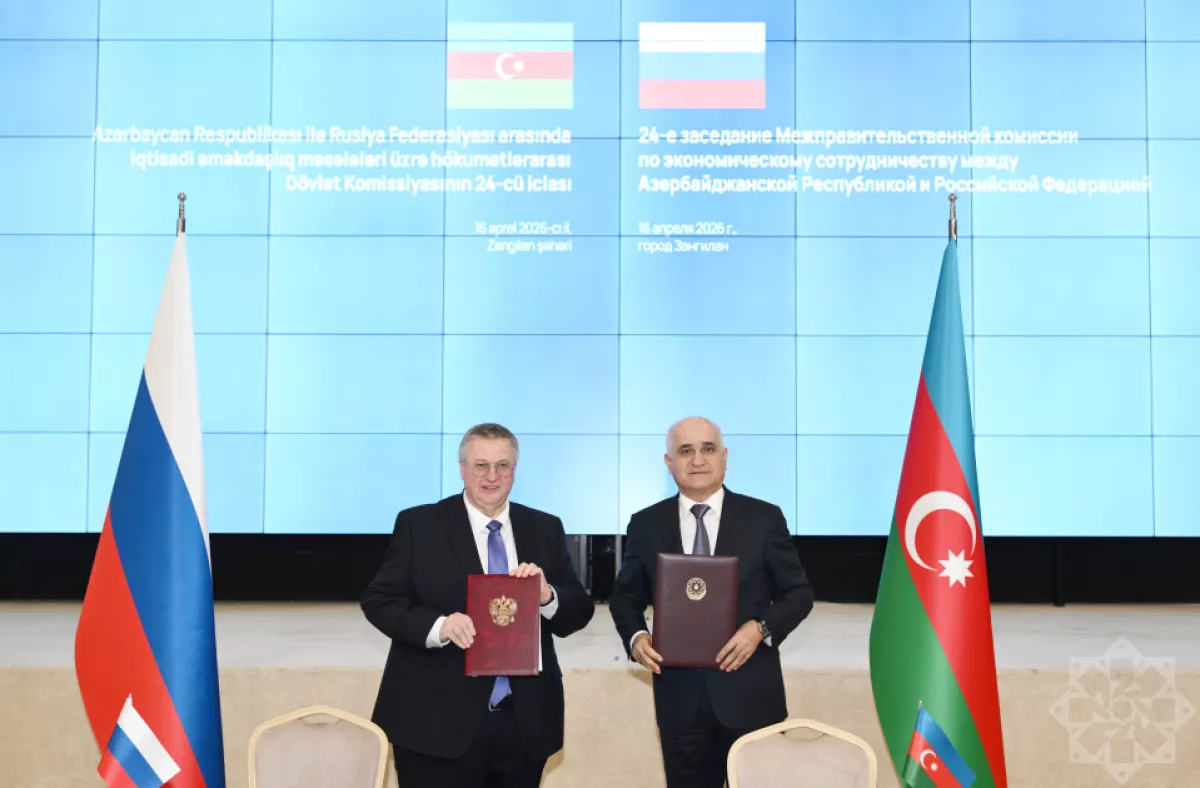
Having overcome a difficult period of last year’s disagreements, the two neighbouring states are now seeking to increase mutual trade, expand cooperation in the transport and logistics sector, and boost reciprocal investments. Another step in this direction was the visit to Azerbaijan by Russian Deputy Prime Minister Alexey Overchuk, who took part in the 24th meeting of the Intergovernmental Commission on Economic Cooperation between the Russian Federation and Azerbaijan.
Over the past quarter of a century, Moscow and Baku have built a solid economic foundation based on mutually beneficial trade and dynamically developing investment and technological cooperation. The resilience of these ties rests on a substantial legal and contractual framework comprising more than 170 interstate, intergovernmental, and interagency agreements, covering key economic areas. Interregional relations are a priority component of business ties: more than 70 Russian regions cooperate with Azerbaijan, with Moscow, St. Petersburg, Astrakhan, Dagestan, and Tatarstan being particularly active in this area.
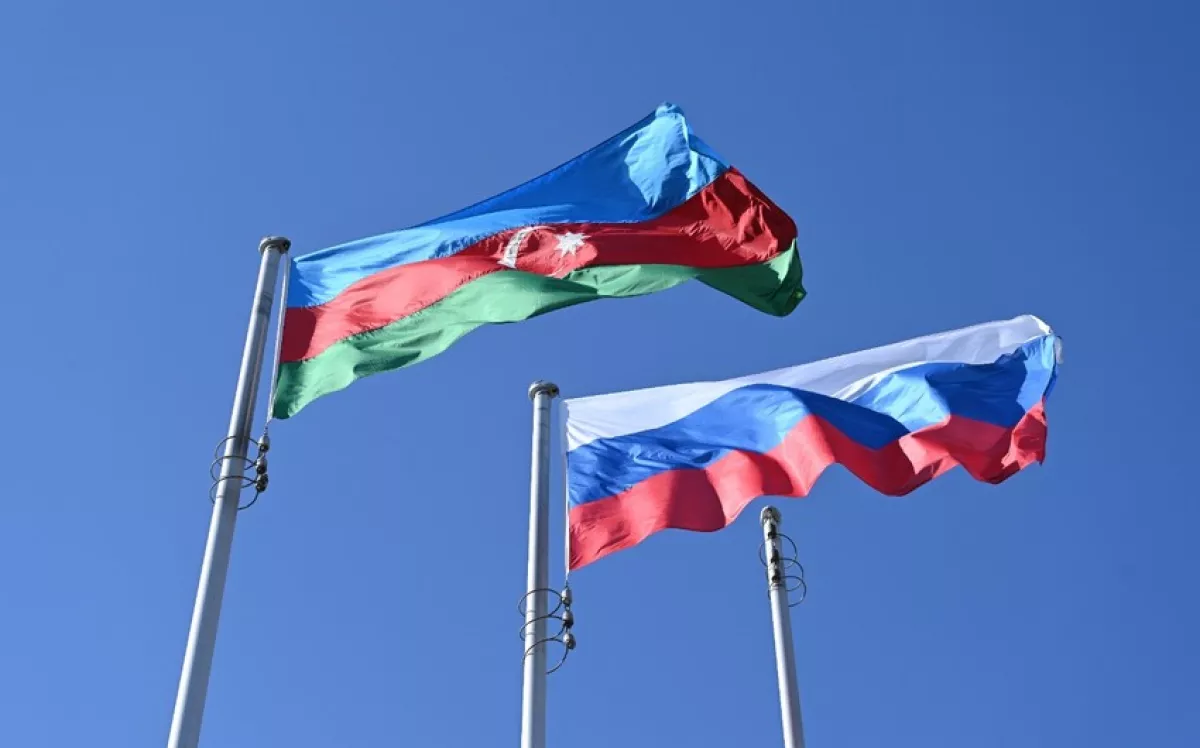
The past year was overshadowed by a certain cooling in the political agenda due to differing interpretations regarding the crash of an Embraer 190 aircraft belonging to Azerbaijan Airlines (AZAL). However, in accordance with agreements reached by the heads of state during their meeting in Dushanbe on October 9, 2025, the sides came to an appropriate settlement of the consequences, including the issue of compensation payments. As a result, in a joint statement by the Russian and Azerbaijani Foreign Ministries dated April 15, the sides noted their “mutual intention to build further mutually beneficial cooperation within the framework of allied interaction.”
Notably, despite everything, the past year was marked by an increase in mutual trade turnover, reaching $4.920 billion, with a growth rate of 2.5%. As a result, Russia ranked third among Azerbaijan’s trading partners at the end of last year, after Italy and Türkiye. Unfortunately, this high position could not be maintained in 2026: according to data from the State Customs Committee (SCC) of Azerbaijan, Azerbaijani-Russian trade significantly decreased in the first quarter, amounting to $746.78 million. For comparison, in January–March of the previous year, this figure stood at $1.431 billion, indicating a 47.80% decline in trade volumes. As a result, Russia dropped to fourth place, overtaken by Italy, Türkiye, and China. It is noteworthy that the sharpest decline was observed in Russian imports, which fell 2.3 times to $523 million, while the reduction in Azerbaijani exports to the Russian market was much smaller—4.7%, totalling $223.8 million.
Nevertheless, Baku and Moscow have set the goal of making up for the lost ground, planning to increase trade turnover to more than $5 billion in the near future. This objective, along with other tasks aimed at expanding business cooperation between the two countries, became the leitmotif of the negotiations during the 24th meeting of the Intergovernmental Commission (IGC), held at the congress centre in the Azerbaijani city of Zangilan.
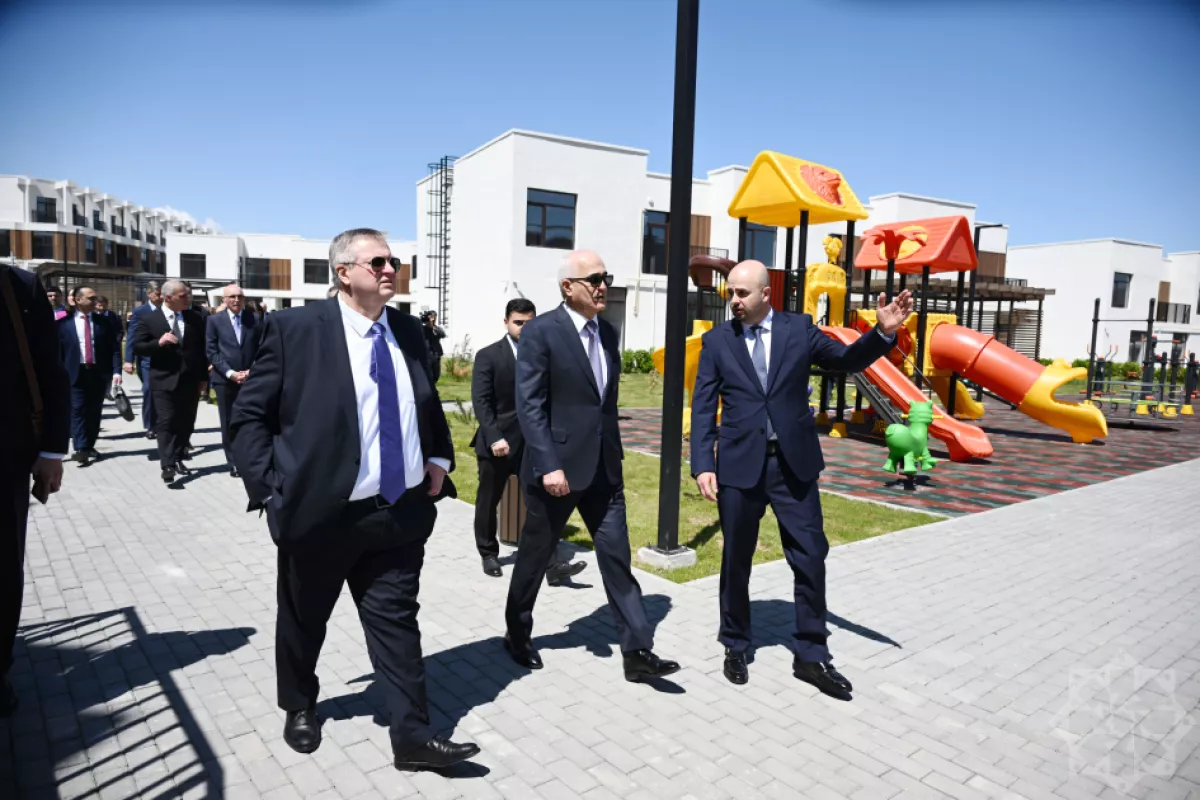
According to official data, the members of the IGC will also discuss the progress in implementing the decisions of the 23rd meeting of the commission, held in Astrakhan on August 22, 2025. In addition, a broad range of issues related to trade, economic, cultural, and humanitarian cooperation between the two countries will be considered, both in bilateral and multilateral formats.
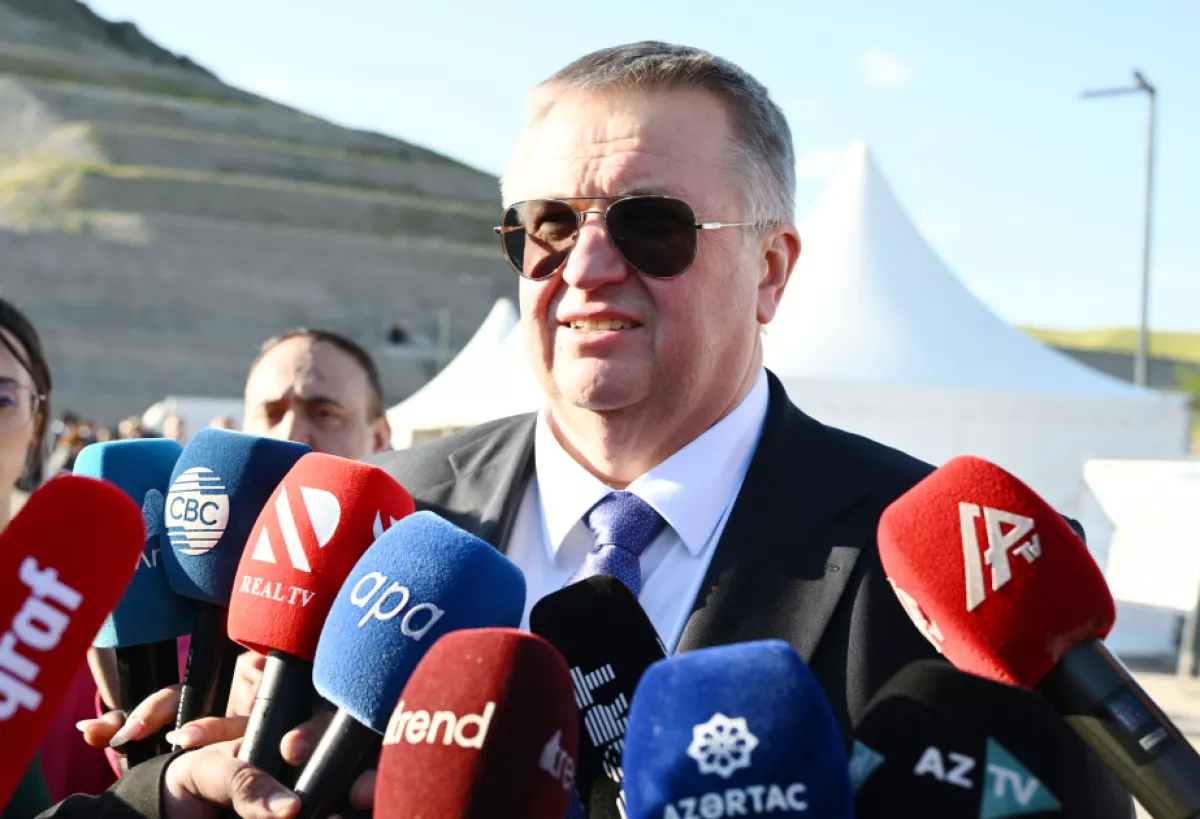
“The current meeting is being held in Azerbaijan’s East Zangezur economic region, which reflects a new stage of cooperation in the region,” noted Russian Deputy Prime Minister and co-chair of the IGC Alexey Overchuk during the session, emphasising that the Russian side supports more active participation of Russian businesses in investment and infrastructure projects being implemented in Azerbaijan.
There is also a growing interest among business communities in both countries in participating in mutual business missions and international exhibitions, which ultimately contributes to the deepening of economic ties. The Russian delegation was introduced to the village of Aghali in the Zangilan district, where extensive reconstruction and rehabilitation works have been carried out as part of the “Smart Village” project, alongside the introduction of green energy elements as well as digital production systems and utilities management.
“The ancient city of Zangilan is one of Azerbaijan’s liberated regions, and holding this meeting here contributes to establishing a tradition of organising such events in the regions and strengthening interregional ties,” noted Azerbaijan’s co-chair of the IGC, Deputy Prime Minister Shahin Mustafayev. He also emphasised that large-scale reconstruction efforts are being implemented in the liberated territories, with modern infrastructure and new enterprises being developed, and that more than 75,000 people now live, work, and study in the area.
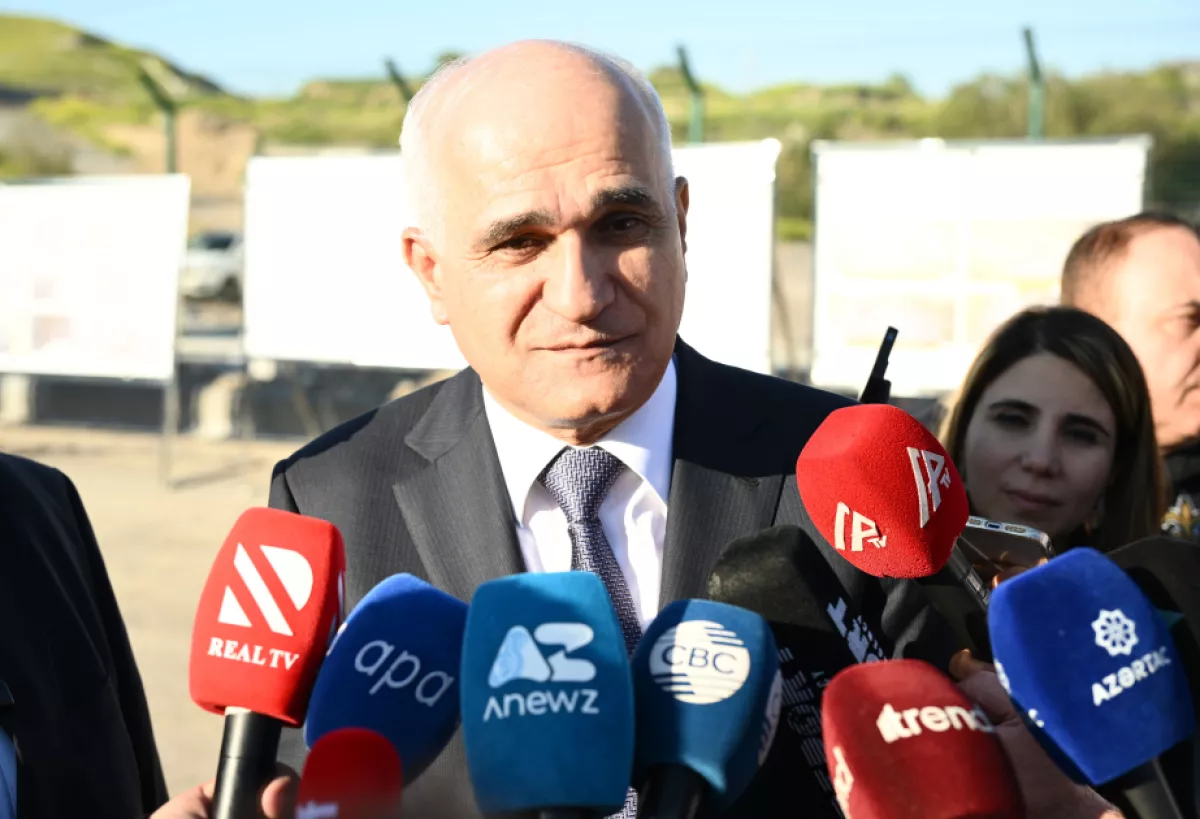
Azerbaijan welcomes the participation of international investors in the restoration and development of the economy of the country’s territories liberated from occupation, and over time this trend could also become an important direction in Azerbaijani-Russian relations. “Azerbaijan invites Russian companies to take a more active part in investment projects within the special tax regime operating in the liberated territories,” said Deputy Prime Minister Shahin Mustafayev. “In these territories, exemptions apply from profit, property, and land taxes, as well as from simplified tax, VAT on imports, and customs duties for a period of 10 years.”
In this context, industrial clusters in Azerbaijan play an important role in the development of joint ventures with Russian capital. In particular, as of April 1, 2026, more than 2,100 commercial entities with Russian capital are registered in Azerbaijan, of which over 1,400 are actively operating. These companies are engaged in key sectors of the economy, including industry, agriculture, transport, construction, trade, and the services sector.
According to the Deputy Prime Minister, cooperation with Russian companies is expanding in the production of construction materials and pharmaceuticals. Among such successful initiatives are the pharmaceutical plant R-Pharm, the insulation materials manufacturing enterprise Penoplex, and the Abrau-Durso project based on Aghsu Sharab. In addition, within joint automotive production projects with KamAZ, Ural, GAZ, AvtoVAZ, and Sollers, thousands of vehicles are being produced.
The Russian-Azerbaijani service centre project in the Jabrayil district is also being implemented successfully, along with the Khimgrad project in the Sumgayit Chemical Industrial Park, as well as two production projects by Russian companies in the Alat Free Economic Zone. Overall, Russian investments in Azerbaijan amount to $10.7 billion, while Azerbaijani investments in Russia stand at $1.2 billion, with investment cooperation between the two countries being strategic and diversified in nature.
A promising direction of business cooperation has also been identified in the transport sector, according to Deputy Prime Minister Shahin Mustafayev. “The transport and logistics sector is rapidly increasing its strategic importance in Azerbaijani-Russian cooperation, while the International North–South Transport Corridor is strengthening its position as one of the main transit routes in the region,” he said.
In particular, transit shipments along this corridor increased by 23% in January–February 2026, with railway transportation growing by 61% and road transport by 13%. Continuous freight movement is ensured through the effective operation of four border crossing points along the Azerbaijani-Russian state border. Thus, in 2025, the volume of road freight transportation exceeded 5.4 million tonnes, increasing by 9%.
Members of the Intergovernmental Commission (IGC) emphasised the importance of joint efforts to digitalise the North–South Corridor, which would significantly accelerate logistics processes along the entire route. A key step in advancing these trends was the signing in Zangilan by the co-chairs of the IGC of a joint roadmap on the implementation of the electronic international consignment note (e-CMR). Alongside expanding transport and trade-economic cooperation between the two countries, this document is intended to encourage mutual investments and the implementation of joint projects across various sectors.
Azerbaijani-Russian cooperation in the tourism sector is also developing quite dynamically, according to Alexey Overchuk. “In 2025, the mutual tourist flow amounted to 701,500 people. Around 500,000 Russian citizens visited Azerbaijan, while approximately 200,000 Azerbaijani citizens travelled to Russia,” he noted. He also highlighted the potential for developing cruise tourism in the Caspian Sea.







 editor@caliber.az
 +994 55 444-88-98
 Азербайджан, Баку, ул. Низами, 203, Af Business House, 5-й этаж