










Azerbaijan’s defence logic in an era of broken rules Peace through strength
A recent interview of Azerbaijani President Ilham Aliyev with local television channels once again highlighted the programmatic nature of his statements, responses, and discussions with journalists, regardless of the platform. This is underscored by the attention his remarks have received from leading global analytical centres, particularly regarding the military aspects of his statements. Notably, special emphasis has been placed on the president’s assertion that the country’s economy must create opportunities, including those necessary to support investments in the state’s defence capabilities.
The president’s emphasis on this perspective reflects his broader commitment to strengthening the country’s defence. He made this position explicit as early as November 2025, noting that at the current historical juncture, “global rules have completely changed,” particularly due to the paralysis affecting many international organisations. To illustrate this, Aliyev highlighted the need for Baku to implement—through military means and in accordance with international law—four UN Security Council resolutions that have remained unfulfilled for thirty years. This is the very law that has long been ignored by the world’s major powers. Consequently, the global landscape has become increasingly defined by the dynamics of power, underscoring the critical importance of enhancing security, defence capabilities, and military strength.
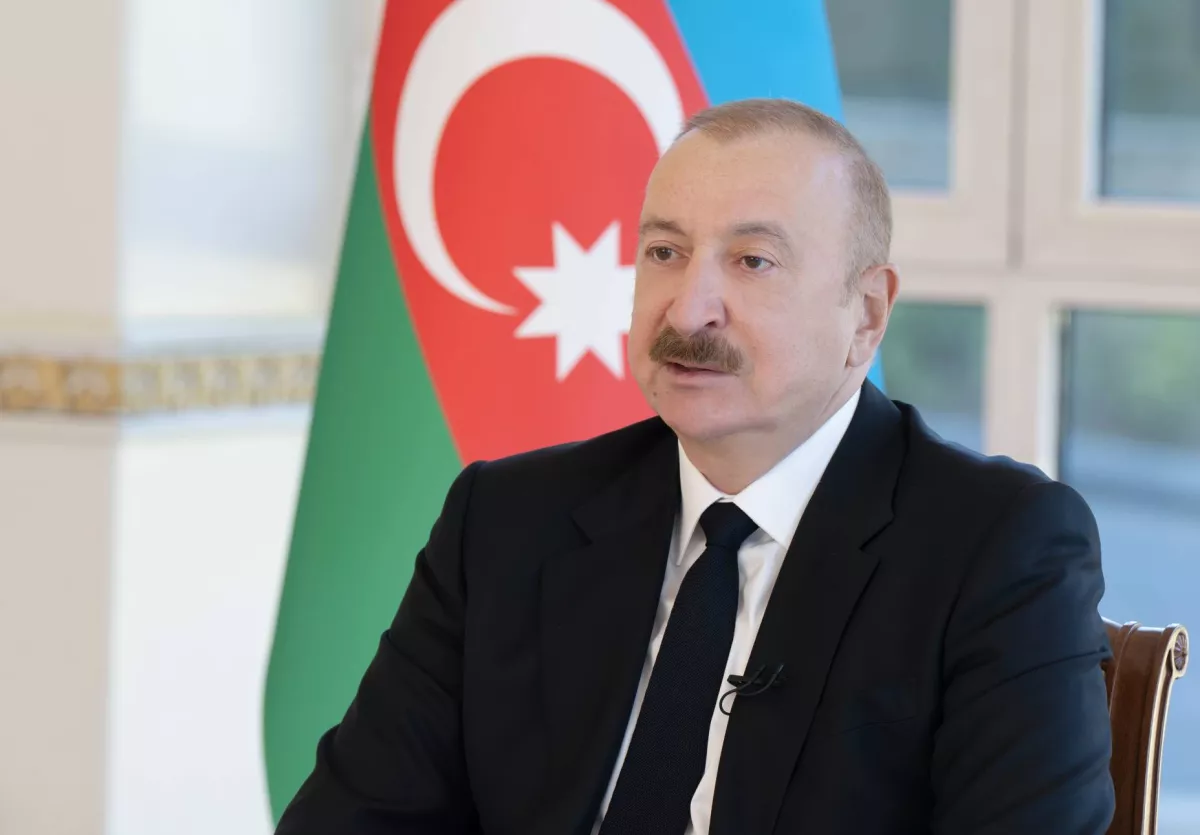
In his interview, Aliyev drew attention to Azerbaijan’s production of military equipment in 2025, which reached a total of 1.4 billion manats ($824 million). While the majority of this output was allocated to the country’s Armed Forces, certain items were also exported.
Azerbaijan currently exports military products to nearly 20 countries. Moreover, joint ventures have been established in Azerbaijan in cooperation with major global defence companies. The development of this sector is driven both by the need to meet domestic requirements and by the goal of creating a substantial industrial base to strengthen the country’s export capabilities, particularly in light of the growing global demand for military products.
For example, in the summer of 2025, NATO leaders endorsed a significant increase in defence spending. According to data from the Stockholm International Peace Research Institute (SIPRI), European countries’ imports of heavy weapons grew by 155 per cent during the period 2020–2024 compared to the previous five years.
In September of the same year, Türkiye’s Minister of National Defence, Yaşar Güler, stated that regional and global tensions require Ankara to continuously modernise its Armed Forces and adapt its defence capabilities to contemporary challenges, describing the army as “an instrument of deterrence against numerous threats.”
Meanwhile, on the eve of these developments, U.S. President Donald Trump characterised increasing the American military budget to $1.5 trillion for 2027 as a boon for the country, “especially in these very troubled and dangerous times.”
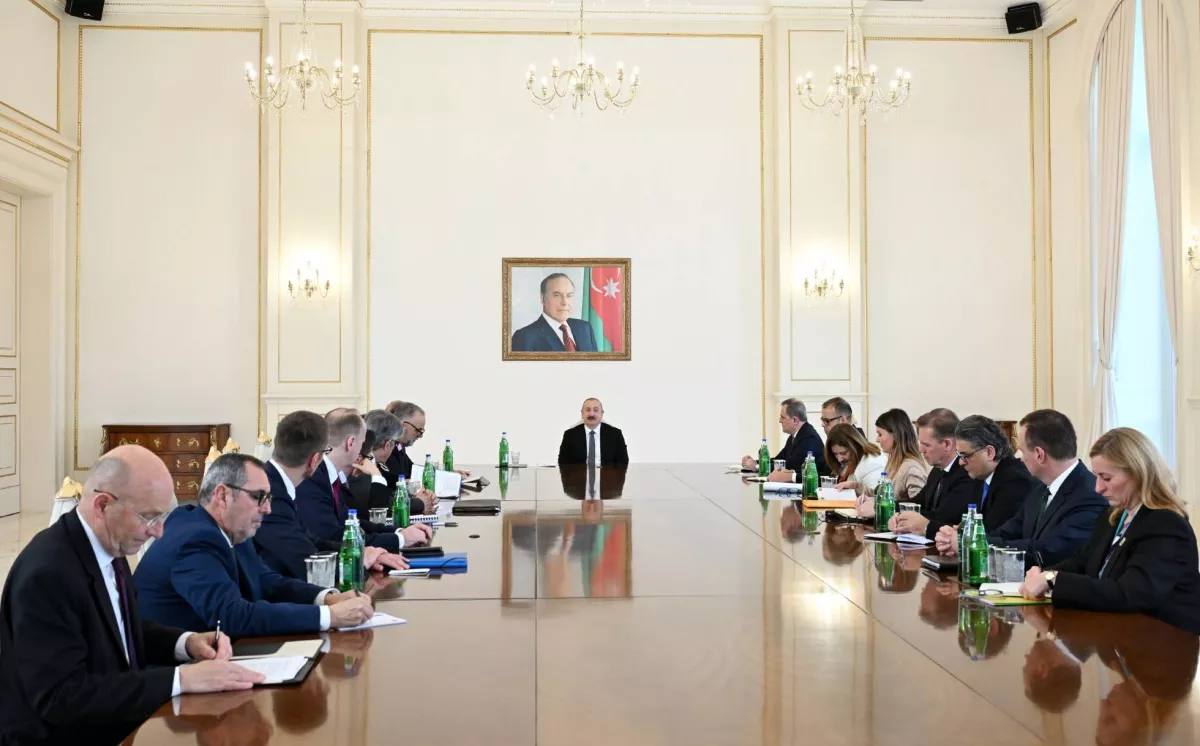
Thus, Azerbaijan’s defence policy aligns closely with the demands of the current geopolitical climate. In this context, on November 6, 2025, during a reception for members of a high-level NATO delegation, President Ilham Aliyev noted that the Azerbaijani army “has been brought into conformity with NATO standards, highlighting the close collaboration with the Turkish army within this framework,” and spoke about the continuation of its modernisation process.
This approach encompasses not only equipping the army with advanced foreign weaponry but also ensuring that its arsenal includes significant domestically produced defence equipment. As President Aliyev specified, “[...] one billion manats were invested in 2024-2025 to create new production sites and expand existing ones.” Furthermore, the country’s 2026 state budget allocates 8.7 billion manats ($5.11 billion) for defence and national security—nearly 4 per cent higher than the previous year.
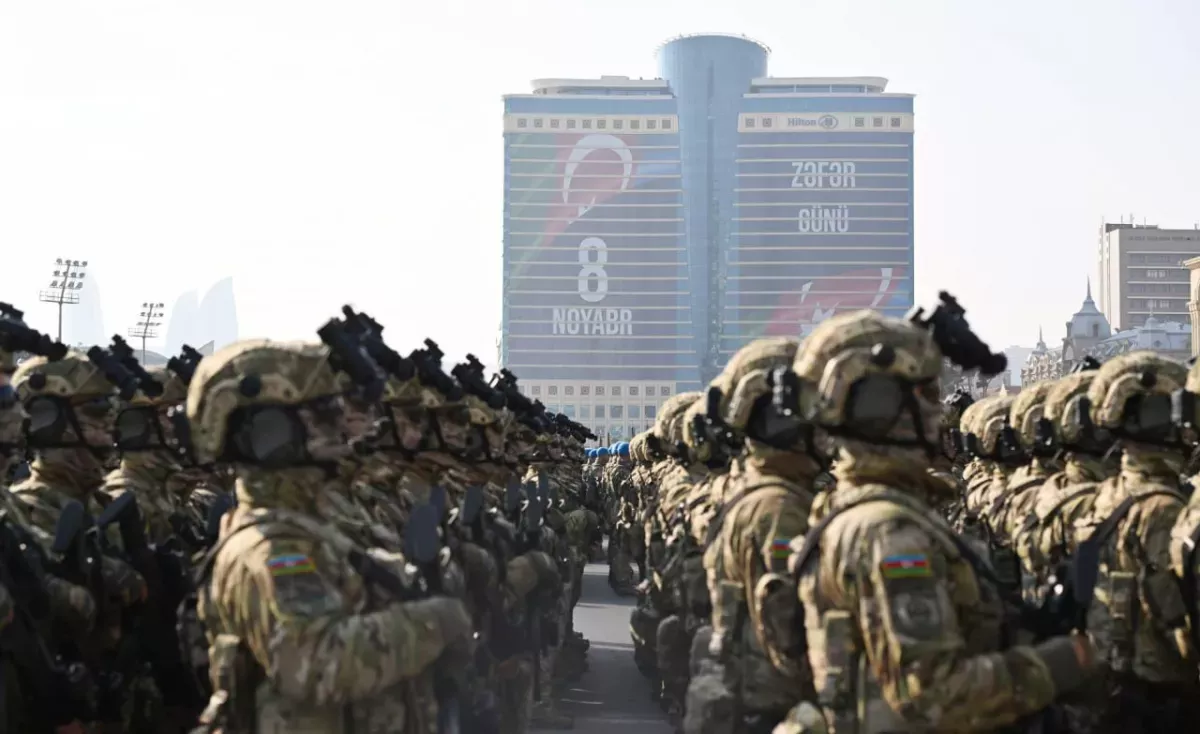
These figures were even cited by the prominent Chinese news agency Xinhua, highlighting the level of attention leading global powers pay to Azerbaijan’s defence capabilities. Against this backdrop, Aliyev’s statement at the military parade in 2025 takes on added significance. He emphasised the creation of strong Armed Forces through equipping the army with the most modern weapons and equipment—an effort that, alongside other factors, “paved the way for our Victory, for our glorious Victory” and the defeat of the separatist stronghold on Azerbaijan’s historic lands.
On the night of January 1, 2026, the President highlighted that, having significantly strengthened its capabilities over the past five years, the Azerbaijani Armed Forces are now able to carry out any mission, including with domestically produced weapons and equipment. He made a crucial clarification: “We are not preparing for a new war. For us, wars are a thing of the past.”
Meanwhile, he noted that, given the disregard for international law by many actors, some countries operate on the principle that “might is right.” In this context, Baku—which restored its territorial integrity precisely by adhering to international law—must always be prepared to defend its sovereignty. In his latest interview, the president reinforced this point, stressing the importance of remaining strong to safeguard the homeland. As he stated, “ Our strong political will, the unity between the people and the government, our military strength, economic potential, energy policy, transport capabilities, and other key factors have made Azerbaijan so strong that no one can dictate their will to us.”
In light of the above, it is also important to underscore the defence and security dimension of the Organisation of Turkic States (OTS) member states. At the 10th summit of the organisation, President Ilham Aliyev, pointing to both the widespread flagrant violations of international law and the prevalence of bloody conflicts, identified defence capability as the primary guarantor of the countries’ security. Against this backdrop, he emphasised the importance of strengthening cooperation among member states in this area and in the defence industry.
At the 12th OTS summit, taking into account the deepening collaboration of the Turkic states in defence and security, the President proposed holding joint military exercises in Azerbaijan in 2026. He justified this initiative by noting that, in the current historical context, military strength has become the key factor in safeguarding a country’s independence and territorial integrity.
Thus, the Azerbaijani president continues the course laid down by Heydar Aliyev, who back in 1993 stated that “we are advocates of peace, but at the same time we are strengthening our defense forces.” In this context, the phrase “If you want peace, prepare for war,” which has been frequently cited in various international circles in recent times, takes on a somewhat modified meaning when applied to Azerbaijan’s position. This is because official Baku demonstrates that it is possible not only to seek peace but also to actively promote it while simultaneously strengthening its own defence capabilities. At the same time, it is essential to remain in a state of combat readiness to decisively repel any actions by external forces directed against the country’s national interests. Azerbaijan has already demonstrated this lesson—and stands ready to do so again if necessary.







 editor@caliber.az
 +994 55 444-88-98
 Азербайджан, Баку, ул. Низами, 203, Af Business House, 5-й этаж