










Azerbaijan’s peace agenda vs. Europe’s political shortsightedness Davos highlights the real priorities
During his participation in the World Economic Forum in Davos, President of Azerbaijan Ilham Aliyev spoke with Euronews, one of Europe’s leading television channels, known for covering the continent’s evolution, the Mediterranean region, and the workings of European institutions. In the interview, the Azerbaijani leader, representing a key regional power in the South Caucasus, offered his insights on the development of the European Parliament—an institution historically noted for its biased stance toward Azerbaijan—expressed in his trademark eloquent manner.
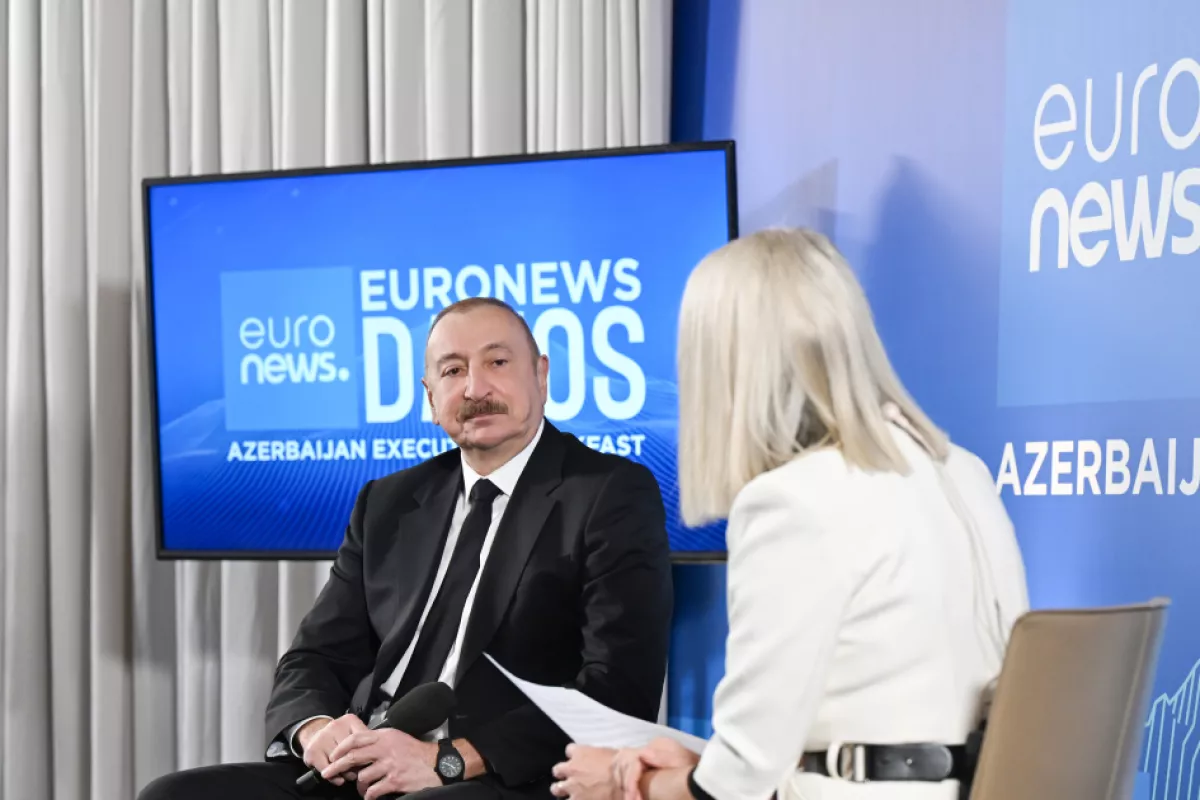
“We stopped reacting. We did react in the past, but of course, it is so obvious that this biased situation towards Azerbaijan is generated by special lobbying groups, by special forces that cannot digest Azerbaijan's independent policy. So actually, we have for many years already stopped any cooperation with the European Parliament and also with the Parliamentary Assembly of the Council of Europe. We cooperate with the European Commission, and for us, it is enough,” stated the Azerbaijani leader.
President Ilham Aliyev has repeatedly offered this clear and fair assessment of the European Parliament’s activities, emphasising that the resolutions adopted by this body ignore the real processes in the region and do not contribute to peace, stability, or constructive dialogue in the South Caucasus. Time, as always, has confirmed the accuracy of the Azerbaijani President’s conclusions, a point that was particularly evident in Davos.
On January 20, as part of the forum, a panel session titled “Defining Eurasia’s Economic Identity” took place, during which the President of Azerbaijan reminded attendees that the country had lifted all restrictions on the transit of goods to Armenia through its territory:
“Now we have received a request from the Armenian side to provide transit from Armenia to Russia. So we de facto, unilaterally opened the corridors. Yes, the transportation goes through Georgia, but one day it will go through Armenia. One day Armenia will go directly through Azerbaijan, and that day is not too far away.”
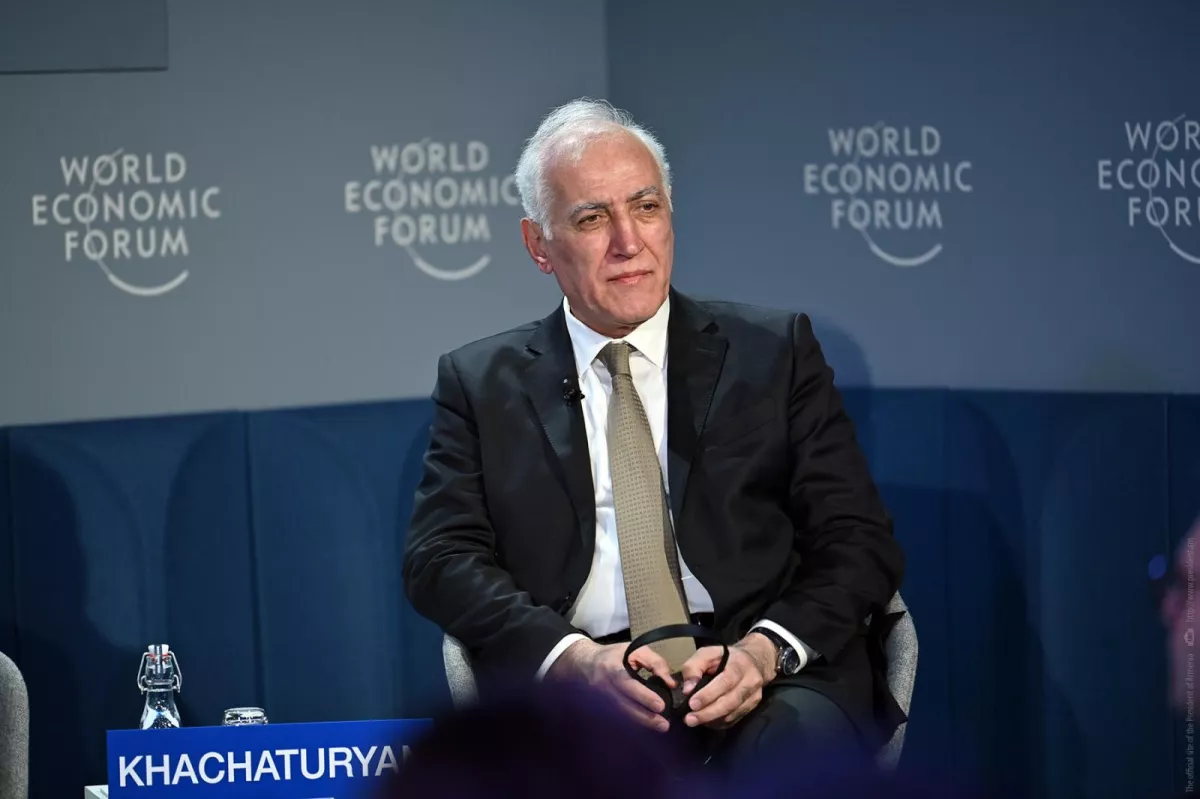
In turn, Armenian President Vahagn Khachaturyan expressed his gratitude to the President of Azerbaijan for his political will and efforts aimed at achieving peace in the region, emphasising that the future of the South Caucasus depends on the leaders of the two countries, who have already shown readiness for peaceful steps and demonstrated political courage.
“Just a year or two ago, it was hard to imagine that we could reach the current level of cooperation. Today, Armenia receives goods from Azerbaijan through Georgian territory, and I am confident that in the future these shipments will move directly through our territories,” said Khachaturyan.
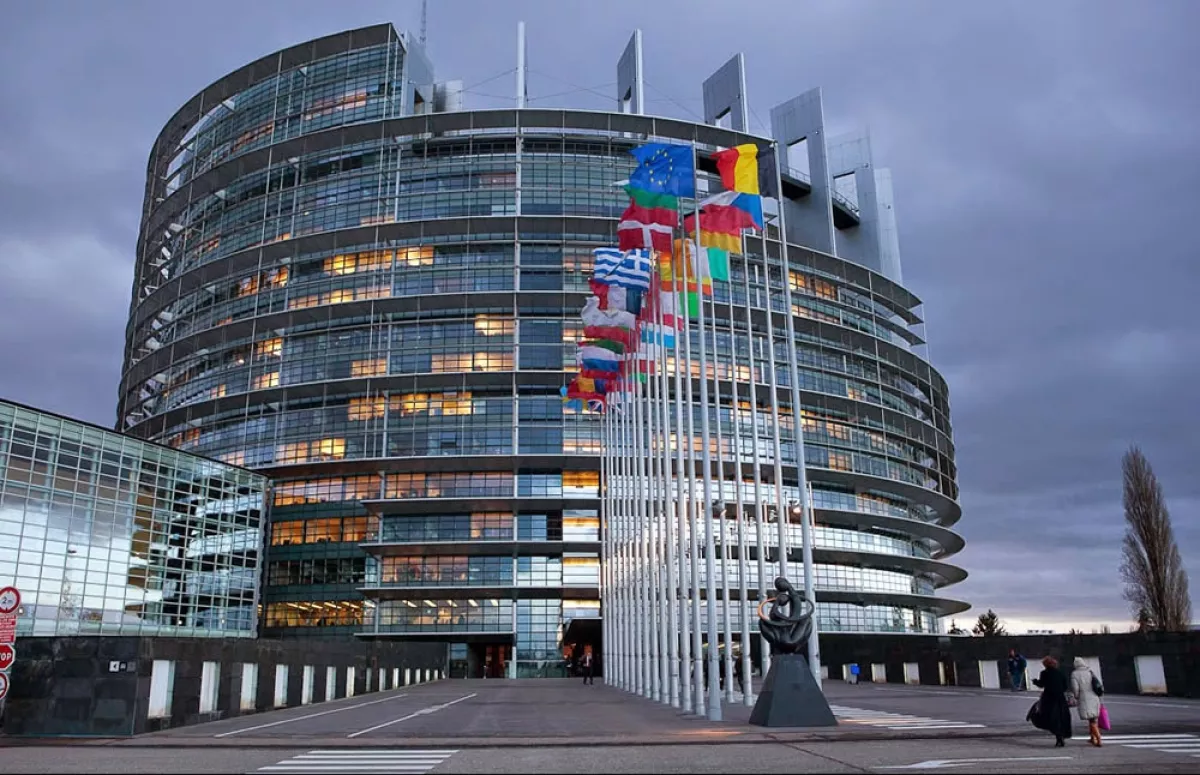
These are the present-day realities of the South Caucasus—realities shaped by Baku’s consistently advanced peace agenda, which the European Parliament has persistently sought to undermine with a tenacity better suited to more constructive purposes. As for the European Parliament’s anti-Azerbaijani “resolutions,” riddled with absurdity, they merit a separate discussion altogether.
Thus, in its paper dated October 5, 2023, the European Parliament went so far as to condemn what it described as Azerbaijan’s “pre-planned, unjustified military attack against Nagorno-Karabakh.” To recognise the sheer fallacy of this claim, it is enough to recall that the one-day anti-terrorist operation conducted in September 2023 took place in the Karabakh region of the Republic of Azerbaijan in full accordance with the UN Charter—an inherent sovereign right of any state possessing international legal subjectivity.
Moreover, in the same “resolution,” the European Parliament called for reducing the EU’s energy dependence on Azerbaijani gas.

However, as we can clearly observe today, Azerbaijan stands as one of the most reliable guarantors of Europe’s energy security, while the launch of Azerbaijani gas supplies to Austria and Germany has become a truly landmark development. As a result, the number of countries importing Azerbaijani gas has reached 16. The Czech Republic may well be added to this list. As in the case of Austria, supplies could be organised via Italy, which since the end of 2020 has been one of the key gas reception hubs of the Southern Gas Corridor.
Thus, regardless of the efforts of European parliamentarians, it is Azerbaijan that is making a tangible contribution to the very evolution of Europe referenced in Euronews’ editorial guidelines. In this context, the European Parliament—an institution that for years has adopted one-sided and often unfounded “resolutions” targeting Azerbaijan—should fundamentally reassess both its position and its approach. The time has come to establish clear priorities and place the emphasis where it rightly belongs.







 editor@caliber.az
 +994 55 444-88-98
 Азербайджан, Баку, ул. Низами, 203, Af Business House, 5-й этаж