










Azerbaijani fuel in Armenia and an abandoned Europe Caliber.Az weekly review
The editorial team of Caliber.Az presents the latest episode of the programme Events with Murad Abiyev.
Azerbaijan – Armenia
The first railway convoy carrying Azerbaijani petrol departed from Baku to Yerevan via Georgian territory. The shipment of Azerbaijani petrol to Armenia is becoming a kind of starting point for a new stage of economic contacts. Official Tbilisi instructed Georgian Railways to carry out the transportation free of charge on a one-off basis. However, this commendable gesture in itself only sharpens the outlines of another long-term decision by the Georgian government. Let me remind you that earlier Tbilisi had set a transit tariff for cargoes from Azerbaijan to Armenia that is several times higher than the market norm.
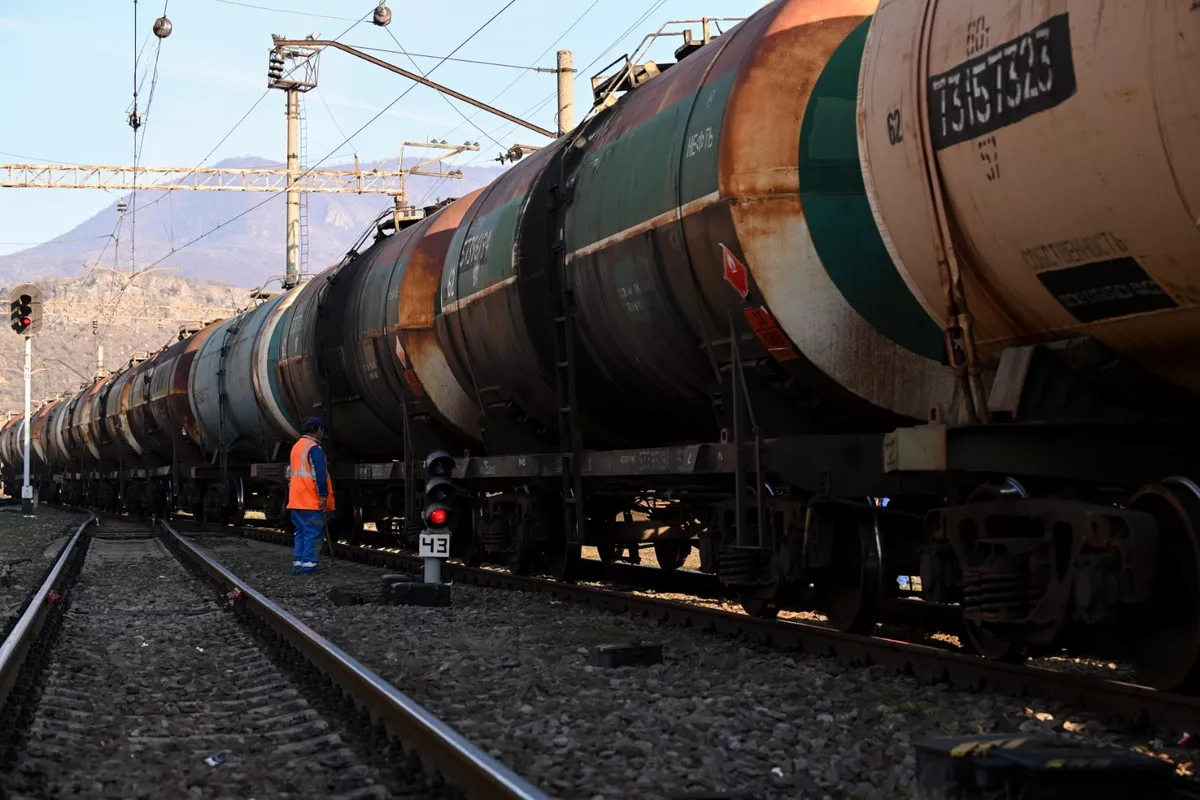
In Yerevan—and, according to some reports, already in Baku—there has been talk of the possibility of finding an alternative route to the Georgian one. For example, the Soviet-era Gazakh–Ijevan railway branch could be restored. Should this happen, Georgia would lose its transit revenues. In this light, the actions of the Georgian government can hardly be described as anything other than hasty.
It is clear that in the emerging new regional realities, which imply fresh logistical solutions, Tbilisi is seeking to carve out a profitable niche for itself. However, this would be better achieved through a joint search for optimal ideas with all stakeholders, rather than by methods bordering on an ultimatum. When an event is inevitable, one should make proper use of the opportunities it offers, rather than obstruct the flow of change.
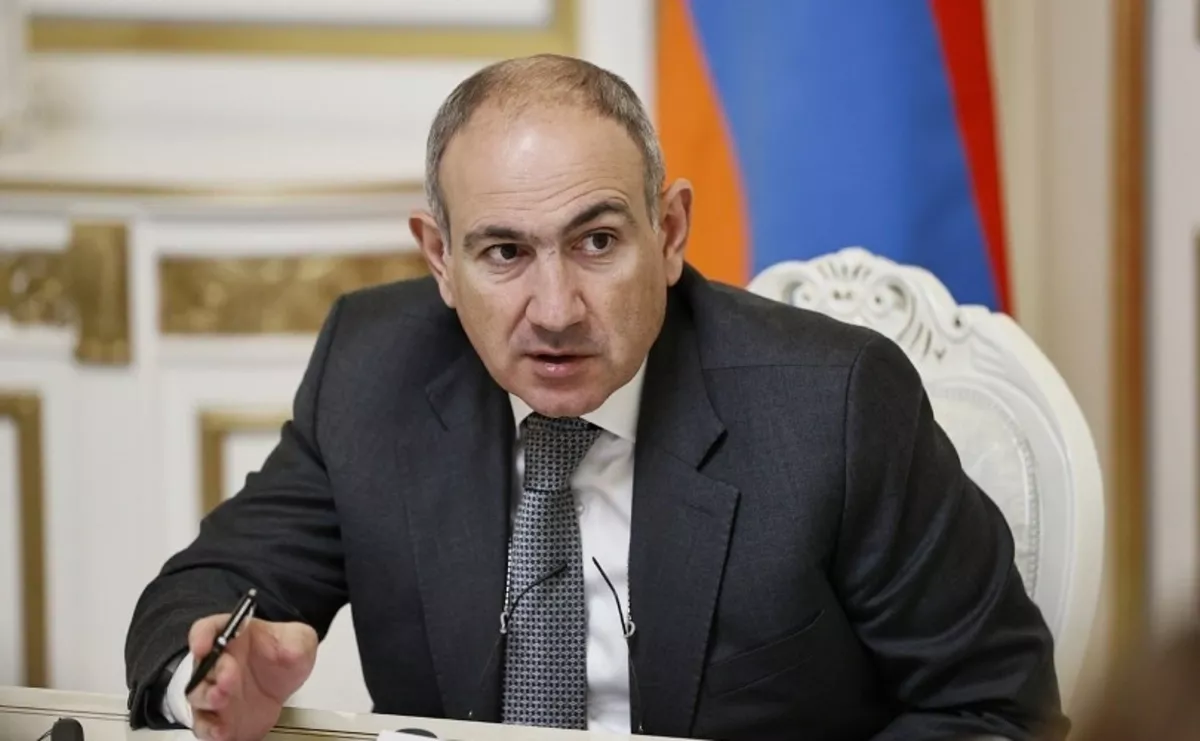
Meanwhile, Armenian Prime Minister Nikol Pashinyan addressed journalists. Among other things, he stated that the agenda of returning Karabakh Armenians would not benefit them and would only lead to “eternal wandering.” He urged people to learn lessons from historical mistakes. According to him, the only guaranteed address for Armenians who have relocated from Karabakh is the sovereign territory of Armenia, and he called on them to accept Armenian citizenship.
This is a very serious and important statement, effectively demonstrating the position of the ruling party ahead of the elections. Pashinyan confirmed that he does not intend to exploit the issue of Armenians displaced from Karabakh, either during the election campaign or in relations with Azerbaijan.
Ukraine – Russia
Talks between representatives of the United States, the EU and Ukraine were held in Berlin. The same Trump plan was discussed, with Ukrainians and Europeans introducing their own amendments. Following the talks, the American side reported that significant progress had been made on a “package of measures to ensure peace.” The Americans also noted that this package includes strong security guarantees for Ukraine, comparable to the provisions of NATO’s Article 5.
Moscow’s reaction to these changes is already partly known. Speaking at an annual meeting with Russia’s senior military leadership, Putin rejected any possibility of the Kremlin accepting the revised peace plan proposed by the United States. However, it remains unclear what exactly constitutes the revised plan, and why, if the original plan suited Moscow, it was not accepted immediately. From the overall context, one can conclude that Putin is referring less to American proposals and more to European initiatives—especially since at the same meeting the Russian president used the derogatory term “little pigs” to describe European politicians.
And already these days, in Miami, following discussions of the Trump plan, a series of separate talks is taking place between the American side and the Ukrainian and Russian delegations. The negotiations are due to conclude soon, and it is possible that we will hear about specific agreements on a cessation of hostilities.
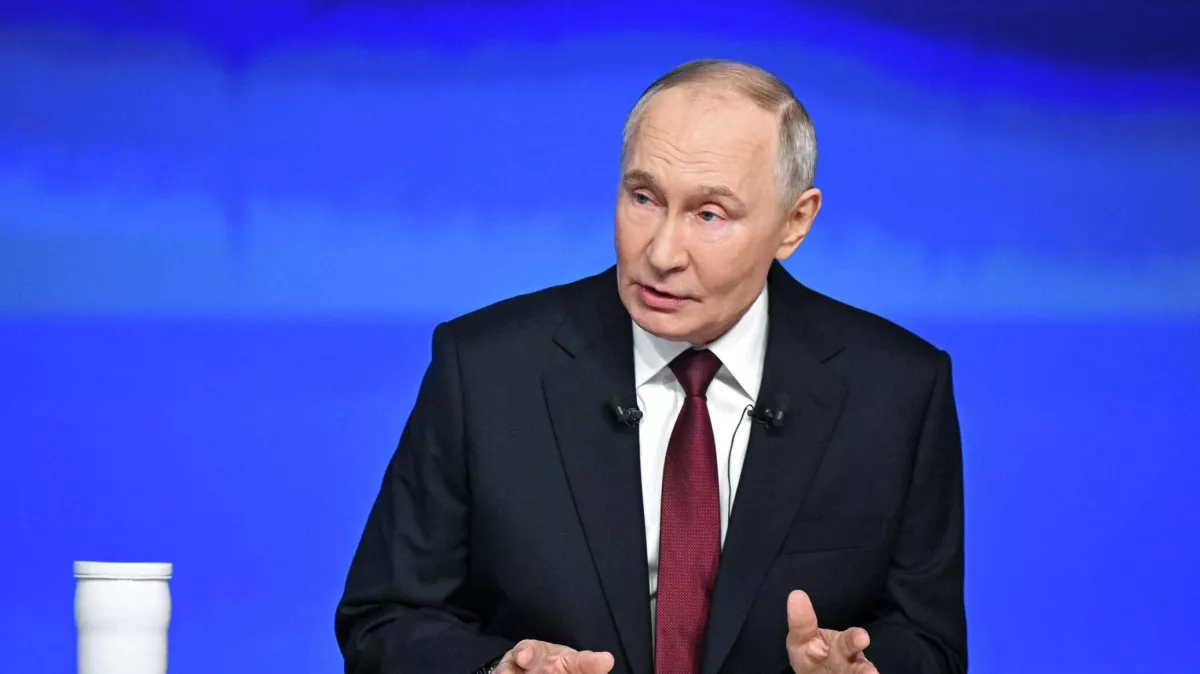
Meanwhile, on December 19 during a live broadcast, Putin for the second time used the aforementioned zoological term to refer to Europeans. In contrast, his tone towards the United States was deliberately restrained and respectful; he even stated that Moscow had been ready for difficult compromises proposed by the Americans in Anchorage. By all appearances, the Kremlin is signalling that it and the White House are currently acting in a single ensemble against Europe. There are grounds for this conclusion if we recall both the new US National Security Strategy and Trump’s latest interview, which we discussed in the previous article, as well as, more broadly, the entire sequence of actions taken by the forty-seventh president of the United States.
Belarusian President Alexander Lukashenko also delivered his share of criticism of Europe in an interview with the conservative American television channel Newsmax. At the same time, the Belarusian leader was not overly complimentary towards Russia and its military potential. He suggested that among the factors weighing on Russia and pushing it towards ending the war is the authorities’ fear of the unpredictable risks associated with mobilisation, which would become inevitable if the war were to drag on indefinitely. In this way, Lukashenko appears to be hinting to the Americans that, in the forthcoming decisive negotiations with Moscow, they do have leverage at their disposal.
United States
So, it is becoming increasingly clear that, in a broad geopolitical sense, a process of Europe’s isolation is under way. This perception has been further reinforced by a recent publication in Defense One, which reported on the alleged existence of secret provisions in the new US National Security Strategy. According to the outlet, citing a former senior White House official, the Trump team has once again floated the idea of forming a so-called Core 5 (C5) group—that is, a key quintet comprising the United States, China, India, Japan and Russia. In his view, such a grouping would be better equipped to deal with global security challenges than either the UN or the G7. The White House has officially denied the existence of any secret provisions. However, let us imagine for a moment that all this is true. In that case, the plan looks entirely logical.
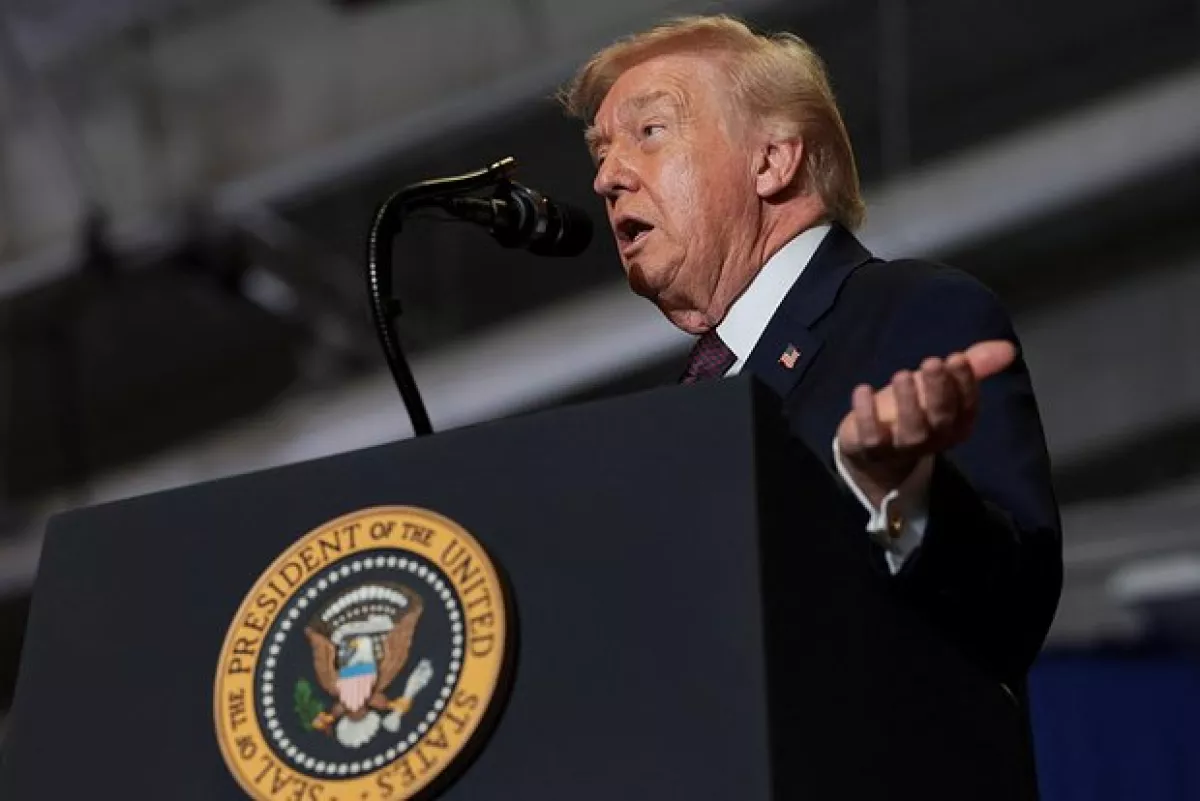
In the eyes of Americans, Europe no longer measures up to the role of global leader. Russia, although far behind economically and technologically, has demonstrated itself militarily as a power willing to engage in large-scale combat operations. Moreover, Washington is deeply concerned about the risk of chaos erupting in Russia, which makes it more advantageous to keep Moscow within a partnership framework. Japan, at first glance, may not appear to qualify as a superpower. But what exactly prevents it from becoming one again? First, Japan is the most powerful US ally in the Asia–Pacific region—a region that is rapidly becoming the centre of the global economy. Japan is also needed within this alliance as a force to contain China. Finally, including China, Russia and India in a common framework with the United States would help constrain them within initiatives such as BRICS and the SCO, which Washington views as anti-American.
Thus, everything appears to suggest that Trump is seeking to reset Pax Americana, but with outward attributes of greater respect for other centres of power. America no longer wishes to carry Europe’s authority on its own shoulders. Yet this, too, may be temporary. It is reasonable to assume that these developments—significantly undermining Europe’s prestige—could push voters in European countries to support right-wing, conservative political forces at elections. In that case, Europe might be incorporated into a new configuration.
In reality, Trump does need Europeans to strengthen his voice on the global stage. But he does not need the Europeans who currently hold power; he needs different Europeans. Not supporters of liberal globalisation, whom he regards as adversaries, but those who would agree, together with Trump’s new America, to form a new Western bloc rooted in tradition.
The outcome of this experiment remains one of the main intrigues of contemporary politics. And that means that, whatever the appearances, despite Europe’s apparent decline, it—thanks to its historical and cultural legacy—still remains a centre of the world.







 editor@caliber.az
 +994 55 444-88-98
 Азербайджан, Баку, ул. Низами, 203, Af Business House, 5-й этаж