










Baku, Bucharest strengthen business partnership Analysis of Caliber.Az
The strategically important geographical position of Azerbaijan, its oil and gas, agricultural and industrial potential have long attracted the attention of the states of Southern Europe, which have begun to fully support Baku's efforts to form a regional transport, logistics and energy hub. Romania occupies a special place among Azerbaijan's partners in the Balkans, business relations with which have acquired the character of a promising partnership in recent years. New vectors of Azerbaijani-Romanian economic relations were discussed recently in Baku during the sixth meeting of the joint intergovernmental commission on trade, economic and scientific cooperation.
This year Baku and Bucharest celebrate the 30th anniversary of the establishment of diplomatic relations. It is very symbolic that all the relationships were based on a high level of complementarity of elites and peoples, common views on current challenges of our time, respect for mutual interests, the primacy of the principles of independence and territorial integrity of the two countries. And it is not surprising that the past years have proved to be very fruitful in terms of the formation of a stable and long-term business field designed for the implementation of long-term initiatives. The energy and transport sectors have become the foundation of mutually beneficial Azerbaijani-Romanian relations, and together with trade, transit and intermediary services, there is a significant investment component here.
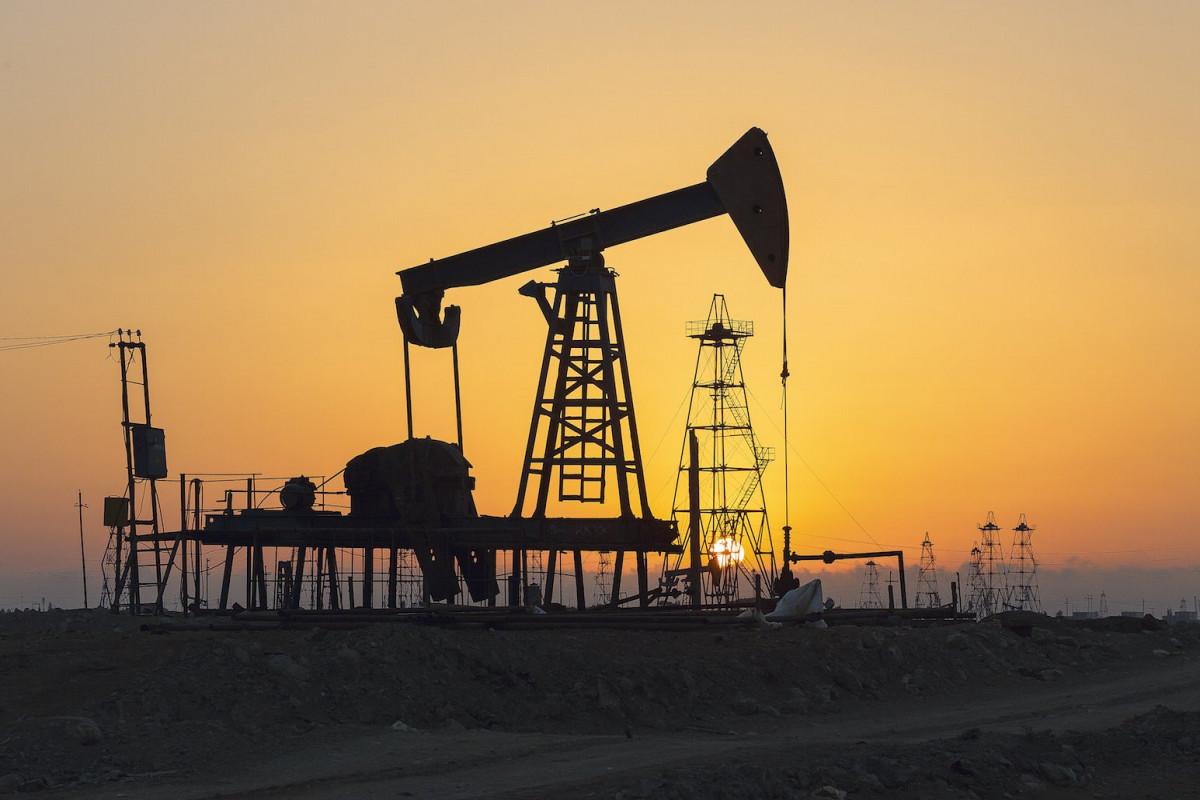
In particular, Deputy Economy Minister Sahib Mammadov, who took part in the intergovernmental commission's work, noted that Azerbaijani investments in Romania today amount to $125 million, and Romanian companies have invested $30 million in the economy of our country. The main volume of Azerbaijani investments falls on the energy sector, and most of the capitalisation belongs to the State Oil Company of Azerbaijan (SOCAR), which owns a retail network of 67 gas stations and three fuel storage facilities in Romania. A certain amount of Azerbaijani capital is involved in logistics, port infrastructure, oil refining, and real estate. In the near future, it is possible to expand investment and technical cooperation between the countries, given SOCAR's intentions to strengthen cooperation with Romanian partners in the field of Azerbaijani gas supplies to Romania. As the supply of "blue fuel" along the Southern Gas Corridor (SGC) expands and the construction of a network of interconnectors in the Balkan region is completed, Azerbaijani gas is planned to be exported to the Romanian market, and significant attention was paid to these aspects at the sixth meeting of the intergovernmental commission.
At the same time, over the past period, the two states have consistently expanded trade in non-oil products, and transport cooperation, and despite the pandemic and a series of global crises in recent years, the dynamics of relations in such industries has grown rapidly. Thus, last year the mutual trade turnover increased by 31.3 per cent, and in January-April of this year, it increased by 2.77 times. Like others, these successes are based on a strong regulatory framework - a total of 61 documents have been signed between Azerbaijan and Romania and a number of interstate cooperation agreements are currently being prepared.
"Romania is one of the first European states to recognise the independence of Azerbaijan, and today the two friendly states are determined to achieve success not only in the field of energy but also to develop cooperation in other areas", the intergovernmental commission's co-chairman, Romanian Energy Minister Virgil-Daniel Popescu said in Baku. According to him, efforts are being made today to deepen cooperation in agriculture, logistics, transport and education, and expand mutual investments.
The prospects of increasing Azerbaijani-Romanian interstate cooperation and diversification of trade and economic ties were also discussed at the talks of Azerbaijani President Ilham Aliyev with the Romanian delegation that arrived in Baku, headed by Energy Minister Virgil-Daniel Popescu, Agriculture Minister Adrian Chesna and the Special Representative of the Romanian President for Strategic Projects Anna Birchal. During the meeting, issues of cooperation in the oil and gas sector, energy supply, food security, as well as the exchange of experience in the application of new technologies in the agricultural sector and the digitalisation of agriculture were discussed. Following the meetings and the meeting of the intergovernmental commission, Azerbaijan and Romania signed a protocol covering the areas of further cooperation between the two countries.
"The grain production and processing sector are quite well developed in Romania, and we are ready to share our experience and new technologies in this area, which can be used in the liberated territories of Azerbaijan. In turn, Azerbaijan's high-quality fruit and vegetable products are well known in the post-Soviet region, and there are good prospects to expand its exports to the European market," Romanian Agriculture Minister Adrian Quesnoi said, stressing that the potential of the Romanian port of Constanta, which is the main gateway of the Black Sea region for the European market, is very promising for expanding trade in non-oil products.
These proposals fit perfectly into the new strategy of Azerbaijan, which seeks to gradually increase non-oil and food exports to the countries of the Old World. In recent years, a number of steps have been taken in this direction: trade and wine houses of Azerbaijan have been opened in Eastern European countries, which have become hubs for re-export to European markets of fruit and vegetable and wine products, juices, jams, canned fruit, tea, narsharab, seafood, cotton and textiles, fertilisers, polymer products. Similar steps are being taken through trade missions, the Economy Ministry and the Azerbaijan Export and Investment Promotion Fund (AZPROMO). And in this regard, Romania could become a good intermediary for increasing supplies to the EU of products under the brand "Made in Azerbaijan".
Another equally important area of the Azerbaijani-Romanian business agenda may be cooperation in the field of electric power. In particular, within the framework of the intergovernmental commission's meeting, the countries held a separate meeting on the production of "green" electricity, and preparations are underway to sign a memorandum of understanding and accelerate joint projects. Among other things, we are talking about the project of laying an underwater cable through Azerbaijan, Georgia along the bottom of the Black Sea to Romania, as well as the establishment of electricity exports through the realisation of the wind energy potential of the Azerbaijani sector of the Caspian Sea.
To recap, there is already a very positive experience between the countries in the field of electricity supplies: since May 2019, Azerenergy [Azerenerji] has managed to organise swap electricity supplies to a number of Southern European countries, including Romania, but these operations were interrupted during the pandemic. Nevertheless, the subsidiary of Azenerji operating in Türkiye, GlobalPower, resumed swap electricity supplies last year. Over time, this trend may become a key one, and already in 2024, Azerbaijan, in partnership with Türkiye, plans to significantly expand the volume of exports to EU countries.
It pushes European states, including Romania, to reorient transport and logistics routes, increasing the emphasis on the possibilities of the "middle" corridor, and sanctions pressure on transport corridors passing through Russia. And in this regard, the positions of Azerbaijan, which is a key participant in the Europe-Caucasus-Asia transport corridor (TRACECA), as well as its components, the Trans-Caspian International Transport Route (TMTM) and Lapis Lazuli, have significantly strengthened. In particular, together with Bucharest, Tbilisi and Ashgabat, Baku participates in the formation of a promising Black Sea - Caspian Sea route. All these initiatives are supported by the European Union and are included in the portfolio of projects with the countries of the Eastern Partnership. In the future, taking into account the geopolitical consequences of the war in Ukraine, the development of these trends will only increase: the EU plans to expand transport cooperation between the states of Eastern and Southern Europe with the regions of the South Caucasus and Central Asia participating in the TRACECA project by gradually integrating the "middle" corridor into the Trans-European Transport Network (TENs). Given the involvement of Baku and Bucharest in almost all major transit routes in the Black Sea-Caspian region, the partnership of our friendly countries today is truly unique and invaluable, especially with regard to integration with TENs, and the creation of the South-Eastern Axis and a multiple increase in multimodal transportation.







 editor@caliber.az
 +994 55 444-88-98
 Азербайджан, Баку, ул. Низами, 203, Af Business House, 5-й этаж