










Budapest — Baku: the energy of trust Caliber.Az review
Azerbaijan and Hungary have long enjoyed a high level of mutual understanding, supported by steady political dialogue on key global issues. This strong foundation has helped foster business discourse, both bilaterally and in multilateral formats involving Central Asian states and Türkiye. As a member of the EU and NATO, Hungary has been steadily deepening its energy cooperation with Azerbaijan while also diversifying trade, economic, investment, and transport links.
A significant step in advancing these ties was the recent 3rd Strategic Dialogue Meeting between Azerbaijan and Hungary in Budapest, co-chaired by the foreign ministers of the two countries, Jeyhun Bayramov and Péter Szijjártó.
Speaking in a joint press statement following the 3rd meeting of the Azerbaijan–Hungary Strategic Dialogue, the foreign ministers of the two countries noted progress in cooperation across politics, economy, energy, transport, environment, and humanitarian fields, emphasising the achievements in strengthening strategic partnership between the nations.
“The sides underlined the importance of opening new horizons for cooperation, focusing on trade, investment, energy, transport, and logistics. Special attention was given to Hungary’s involvement in the reconstruction of Azerbaijan’s liberated territories, in particular the restoration of the village of Soltanli in the Jabrayil district,” the Azerbaijani Foreign Ministry statement said. “Azerbaijan highly values Hungary’s active role in the Turkic world, as well as the close coordination between the two countries within the UN, OSCE, and other international platforms.”
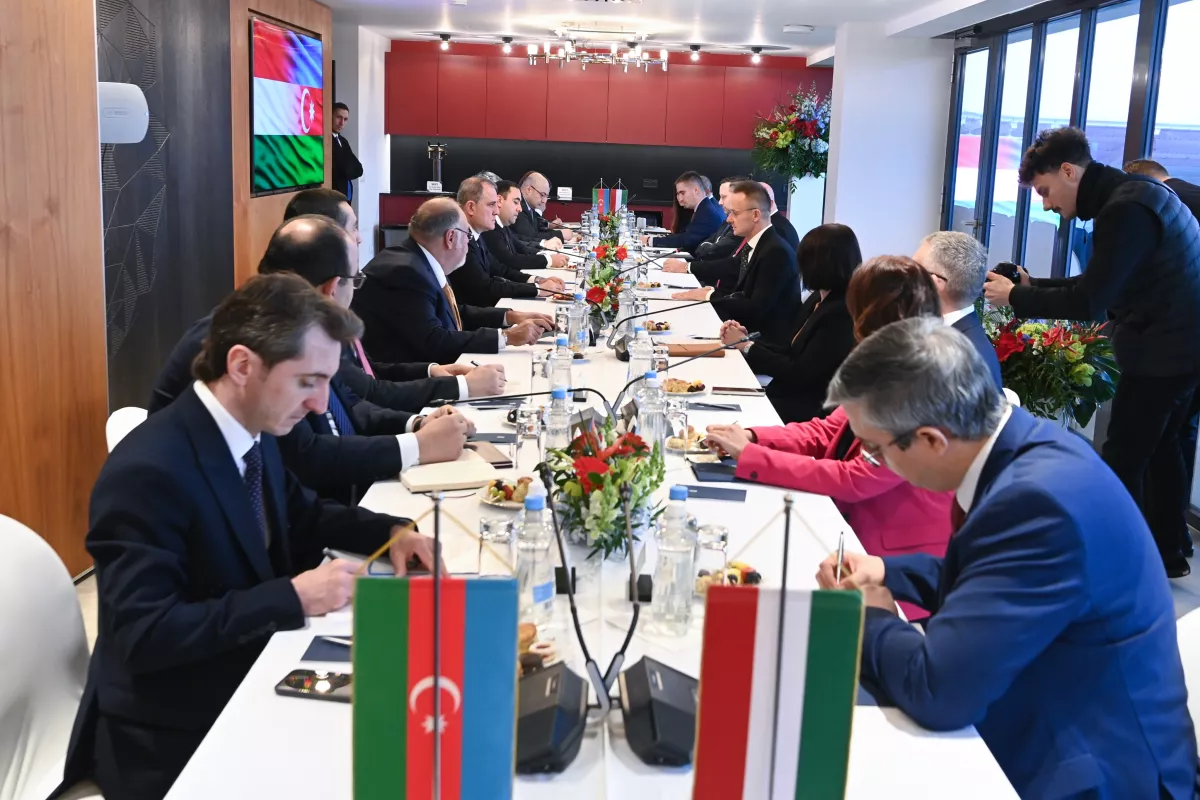
Following the meeting, a Memorandum of Understanding on cooperation in environmental protection was signed between the Hungarian Ministry of Energy and the Azerbaijani Ministry of Ecology and Natural Resources, along with the protocol of the third Strategic Dialogue meeting.
The meeting between Foreign Minister Jeyhun Bayramov and Hungarian President Tamás Sulyok was equally productive. It was noted that Hungary is the third-largest foreign investor in Azerbaijan’s economy, particularly in the energy sector. Achievements in air transport partnerships were highlighted, and prospective investment projects between the countries were discussed, including in the pharmaceutical industry. The importance of expanding strategic cooperation in green energy, transit and communication links, and educational scholarship programs was emphasised.
“The post-conflict realities in the region, the process of normalisation with Armenia, as well as restoration and reconstruction works in Azerbaijan’s liberated territories, were also discussed,” the Foreign Ministry stated.
Notably, Hungarian companies are very active in sectors such as trade and services, transport, and industry. Currently, around two dozen Hungarian companies operate in Azerbaijan, primarily in the pharmaceutical sector. In particular, Hungarian pharmaceutical firms Scandens Pharmaceutical Industries and Gedeon Richter are exploring various options for industrial and trade cooperation with Azerbaijan.
In 2022, a Memorandum of Understanding was signed between the Alat Free Economic Zone (FEZ) and the Hungarian Export Promotion Agency, and a joint project is now being implemented in this FEZ. The Hungarian Hell Energy Group, with participation from the Azerbaijan Investment Company (AIC), is building a plant in the Alat FEZ to produce 700–800 million aluminium beverage cans per year. This $211 million project is expected to create over 330 jobs.
In the longer term, another Azerbaijani–Hungarian industrial initiative could involve a bus assembly project. To expand export and investment initiatives, the Hungarian state-owned Eximbank is ready to finance exports to Azerbaijan worth several hundred million dollars. Additionally, a new Hungarian foreign investment programme, launched last year, is planned to support these initiatives. Finally, another potential source of financing for new joint projects could be Hungary’s $100 million contribution to the Turkic Investment Fund.
Partnership in the non-oil sector is considered the most promising area for the development of bilateral business cooperation. However, today the foundation of Azerbaijani–Hungarian economic ties remains the energy sector.
A major breakthrough in the oil industry occurred in 2019, when the Hungarian energy company MOL Group became the third-largest investor in the consortium developing the Azeri-Chirag-Gunashli (ACG) field, acquiring a 9.57% stake from the multinational company Chevron. In April 2020, MOL Group also purchased an 8.9% share in the Baku–Tbilisi–Ceyhan (BTC) pipeline. As a result, at that time, MOL’s total investments in Azerbaijan’s energy sector amounted to $2 billion.
Another round of investments came with the contract signed on June 5, 2024, with the MVM Group to purchase a stake in the Shah Deniz gas-condensate field project. Yet another step along the investment track was the agreement signed on September 20, 2024, with MOL Group for the exploration, development, and production of gas at the Shamakhi–Gobustan onshore block.
Baku and Budapest are also actively cooperating in the supply of gas through the Southern Gas Corridor (SGC), including via the upgraded “Solidarity Ring” (STRING) system, aimed at delivering additional volumes of natural gas from the SGC to Southern and Eastern Europe. The construction of the Niš–Dimitrovgrad Interconnector (Bulgaria–Serbia Interconnector Gas Pipeline, IBS) created the technical capacity to export larger volumes of Azerbaijani gas to Hungary.
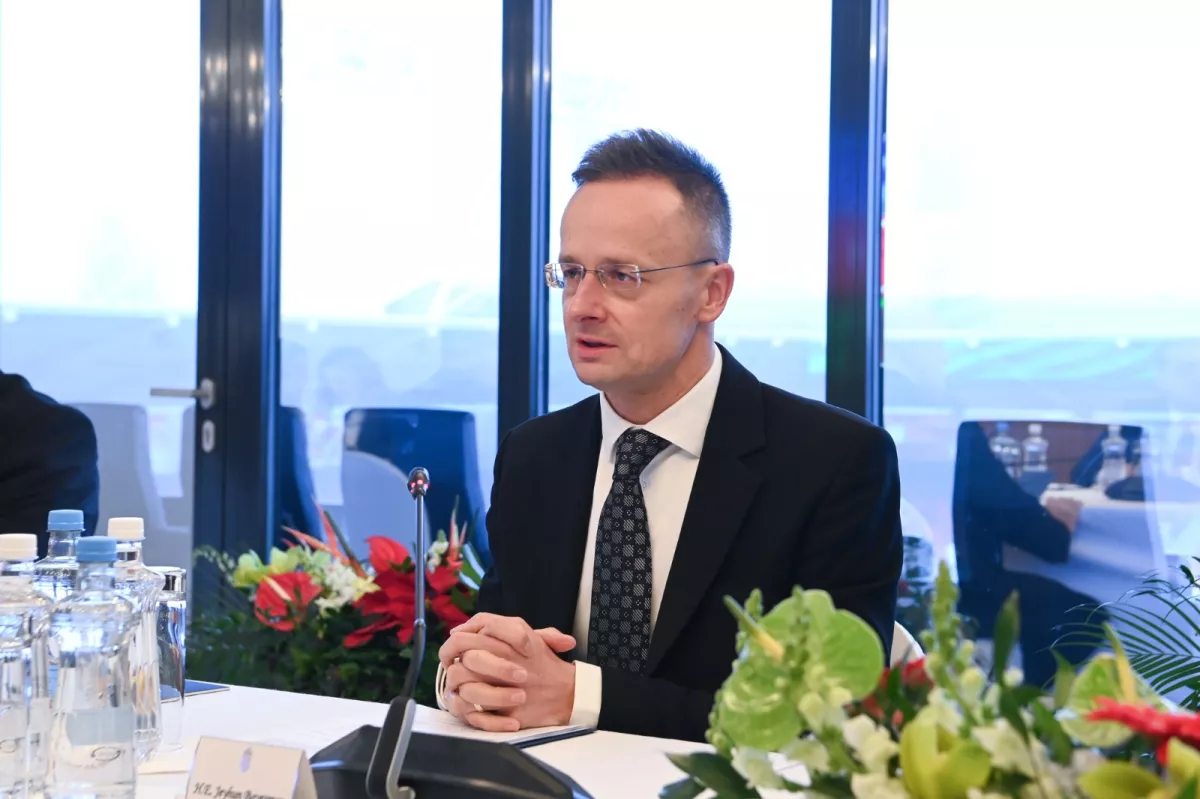
Hungary–Azerbaijan cooperation reduces risks to Budapest’s energy security and strengthens long-term supply diversification, Hungarian Foreign Minister Péter Szijjártó stated, as quoted by Zoltán Kovács, State Secretary for International Communications at the Prime Minister’s Office, on X. “Hungary and Azerbaijan have signed a framework agreement for the purchase of 800 million cubic meters of natural gas over two years, a key step toward diversifying Hungary’s energy supply, announced Foreign Minister Péter Szijjarto following the visit of Azerbaijani Foreign Minister Jeyhun Bayramov to Budapest.”
The deal between MVM and SOCAR, which comes into force on January 1, 2026, provides for a daily import of 1.1 million cubic metres of gas. Szijjártó emphasised that this is a key step in diversifying Hungary’s energy supply and contrasted it with the costly and narrowly focused position of Brussels: “EU policies pose a threat to Hungary’s energy security, while cooperation with Baku reduces that risk.”
Notably, bilateral energy cooperation is not limited to the oil and gas sector: Baku and Budapest are partners in the joint “Green Energy Corridor” project with Georgia, Bulgaria, and Romania, which involves laying the 1,195 km, 1 GW-capacity Black Sea Energy underwater power cable along the seabed of the Black Sea.
Partnership in the development of renewable energy (RES) also extends to building infrastructure for storing electricity generated from renewable sources. In the spring of this year, representatives of the Hungarian Battery Association held talks with a SOCAR subsidiary active in the green energy sector, and a year ago, Hungarian companies were invited to participate in an auction for the construction of a 100 MW solar power facility in one of the districts of Baku.







 editor@caliber.az
 +994 55 444-88-98
 Азербайджан, Баку, ул. Низами, 203, Af Business House, 5-й этаж