










Chinese investments under fire Who is behind the attacks on the Afghan–Tajik border?
Recently, tensions have escalated on the Afghan–Tajik border. Media reports suggested that the Tajik government had appealed to the Collective Security Treaty Organization (CSTO) for assistance; however, the organisation’s secretariat denied these claims.
Attacks on Tajikistan from Afghan territory intensified in late autumn.
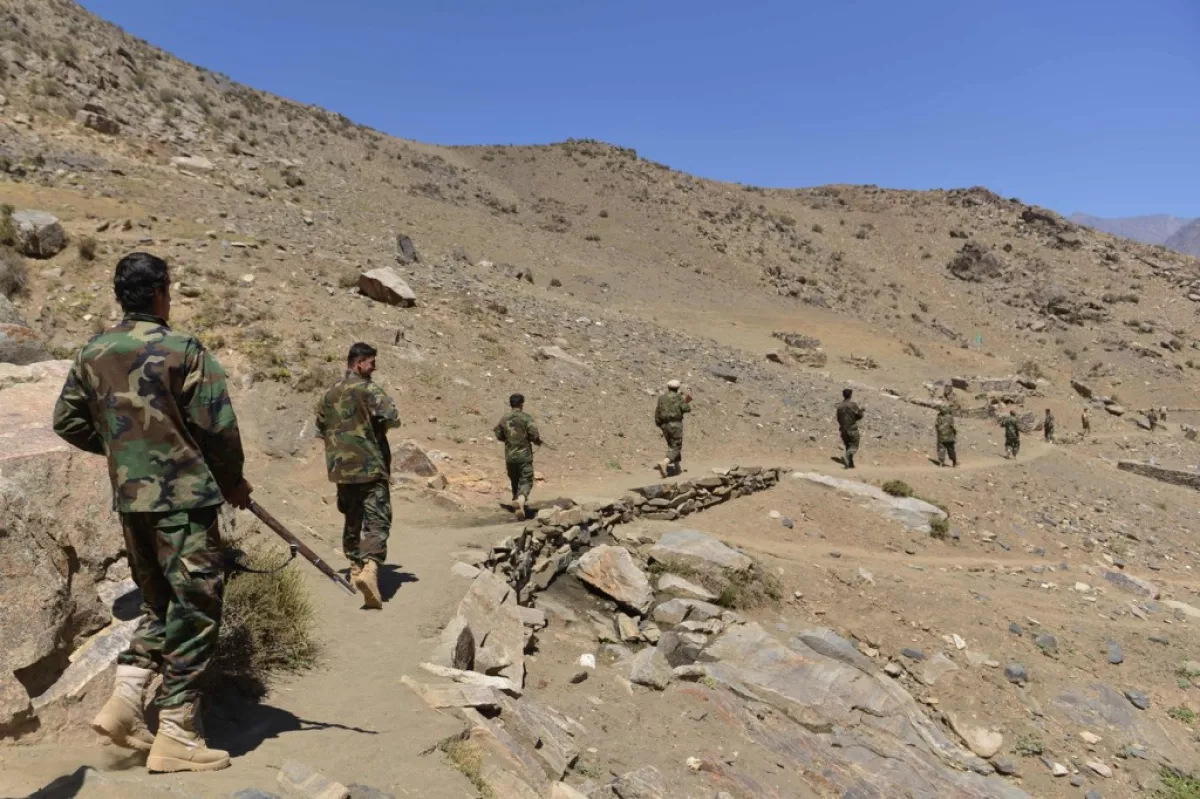
On November 26, in the Shamsiddin Shohin area of Tajikistan’s Khatlon region, an attack was carried out from Afghan territory on the headquarters of the Chinese gold mining company Shohin SM. Three Chinese citizens were killed, and one was seriously injured. The assault involved a drone equipped with a mine, as well as firearms.
The Tajik Ministry of Foreign Affairs strongly condemned this incursion by criminal groups and called on the Taliban authorities of Afghanistan to ensure border security.
On the evening of November 30, 2025, near the village of Shodaki in the Darvoz district of the Gorno-Badakhshan Autonomous Province, a terrorist group crossed into Tajikistan from Afghanistan. The militants shot two Chinese workers involved in the Kalai-Khumb–Vanch–Roshan road project, implemented with Chinese support. It is believed that American M4 rifles with laser sights were used in the attack.
That same evening, Chinese Ambassador to Dushanbe, Guo Zhijun, held a phone conversation with Tajik Foreign Minister Muhriddin and First Deputy Chairman of the National Security Committee Kamalzoda. The ambassador demanded that Tajikistan take all necessary measures to ensure the safety of Chinese enterprises and citizens in the country.
Earlier, the Chinese embassy in Dushanbe urged its citizens to refrain from investing or working in the border regions and advised those already there to leave immediately.
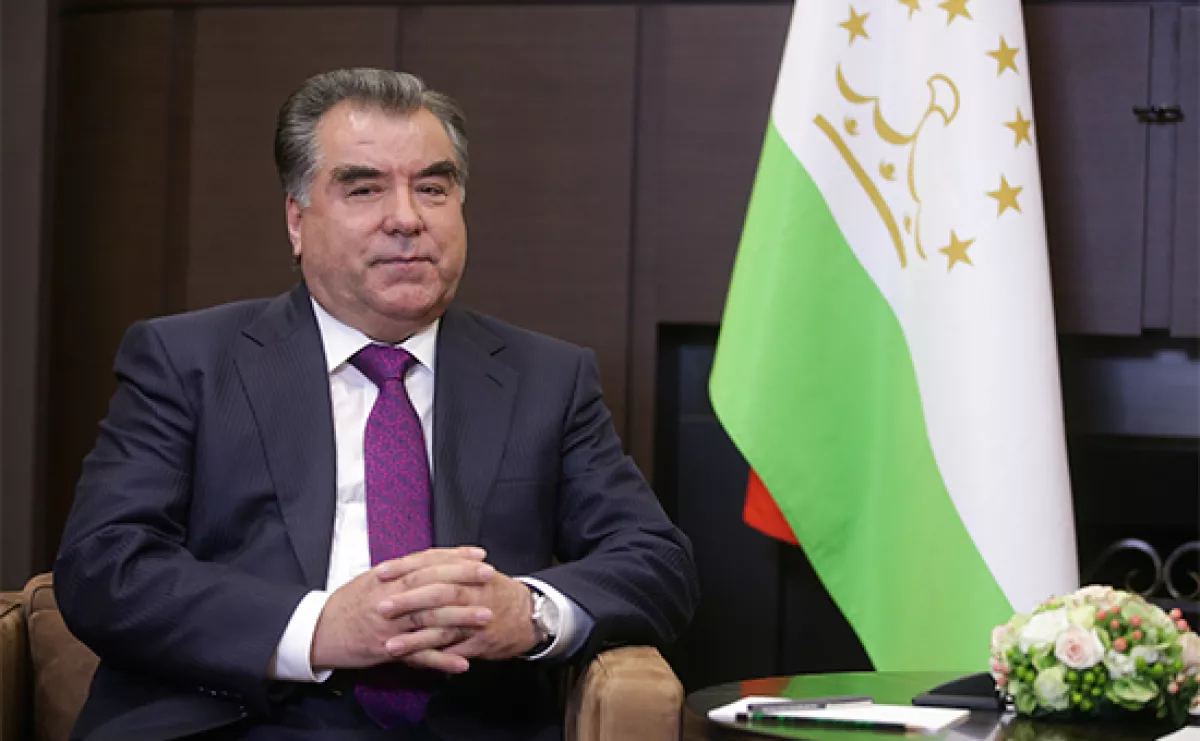
On December 1, Tajikistan’s President Emomali Rahmon held a meeting with the leadership of the security forces and instructed them to take all necessary measures to prevent similar incidents.
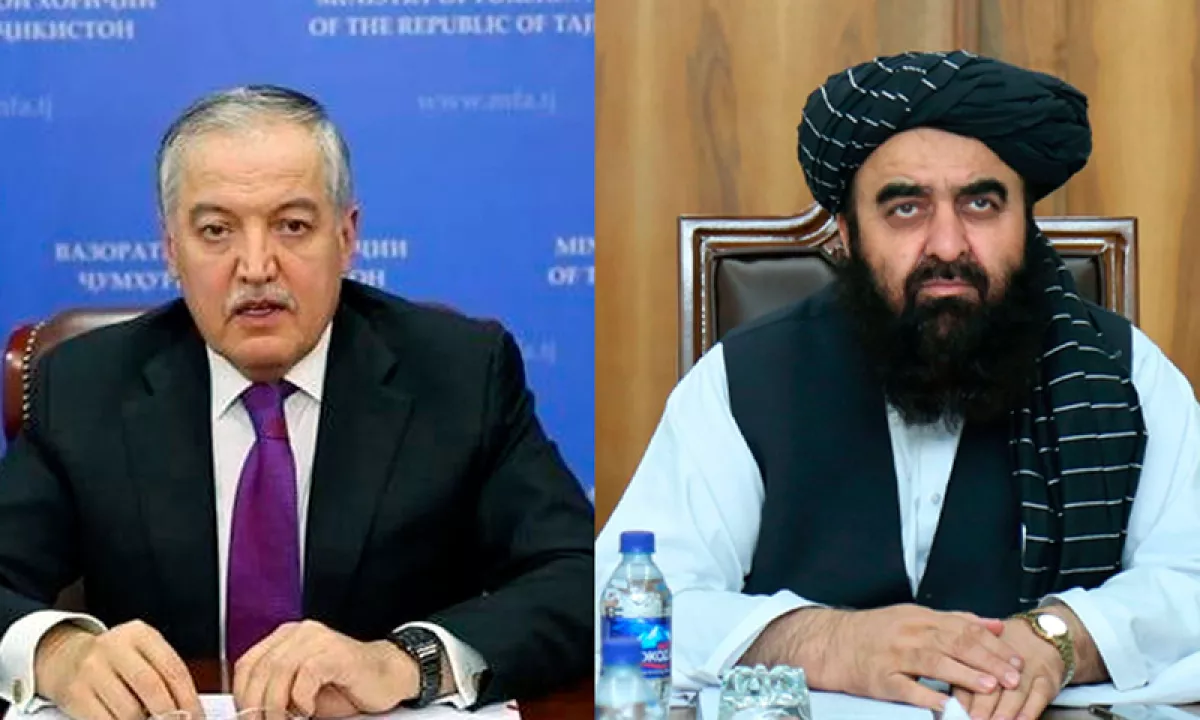
On December 2, the first-ever telephone conversation took place between the foreign ministers of Tajikistan and the Taliban government. On December 10, a Chinese representative raised the issue of security on the Afghan–Tajik border at the United Nations.
However, on the night of December 23–24, a group of terrorists again crossed the border near Shamsiddin Shohin. According to the state news agency Khovar, the militants intended to attack the Sarchashma border post.
The terrorists were promptly detected by Tajik border guards and, when asked to surrender, responded with gunfire. In the ensuing shootout, three militants were killed, but two Tajik Border Troops officers also lost their lives.
At the scene, authorities found three American M-16 rifles, one Kalashnikov assault rifle, three foreign pistols with silencers, ten hand grenades, a night-vision device, explosives, and other combat equipment. Kabul claimed that smugglers had been involved in the shootout, but the seized arsenal is more characteristic of a terrorist group.
The State Committee for National Security (SCNS) of Tajikistan stated: "The Taliban government demonstrates serious and repeated incompetence and irresponsibility in fulfilling its international obligations and previously made promises to ensure security and stability on the state border with the Republic of Tajikistan, as well as in combating members of terrorist organisations…"
About a year ago, in November 2024, an unknown armed group in the Shamsiddin Shohin area also killed one Chinese citizen. At that time, four more Chinese nationals and one Tajik citizen were injured.
So far, however, CSTO intervention in the situation on the Afghan–Tajik border is not on the agenda.
But who is behind these terrorist incursions? Currently, no group has claimed responsibility for the attacks. At first glance, the logic seems straightforward: if the attacks are regularly carried out from the territory of the “Islamic Emirate of Afghanistan”, does that mean the Taliban government bears responsibility?
According to Afghanistan International, the killing of two Chinese road workers near the village of Shodaki may have involved Taliban border units.
In addition, throughout 2025, a number of shooting incidents were reported on the Afghan–Tajik border, linked to illegal border crossings by smugglers as well as the diversion of water from the Panj River along the border.
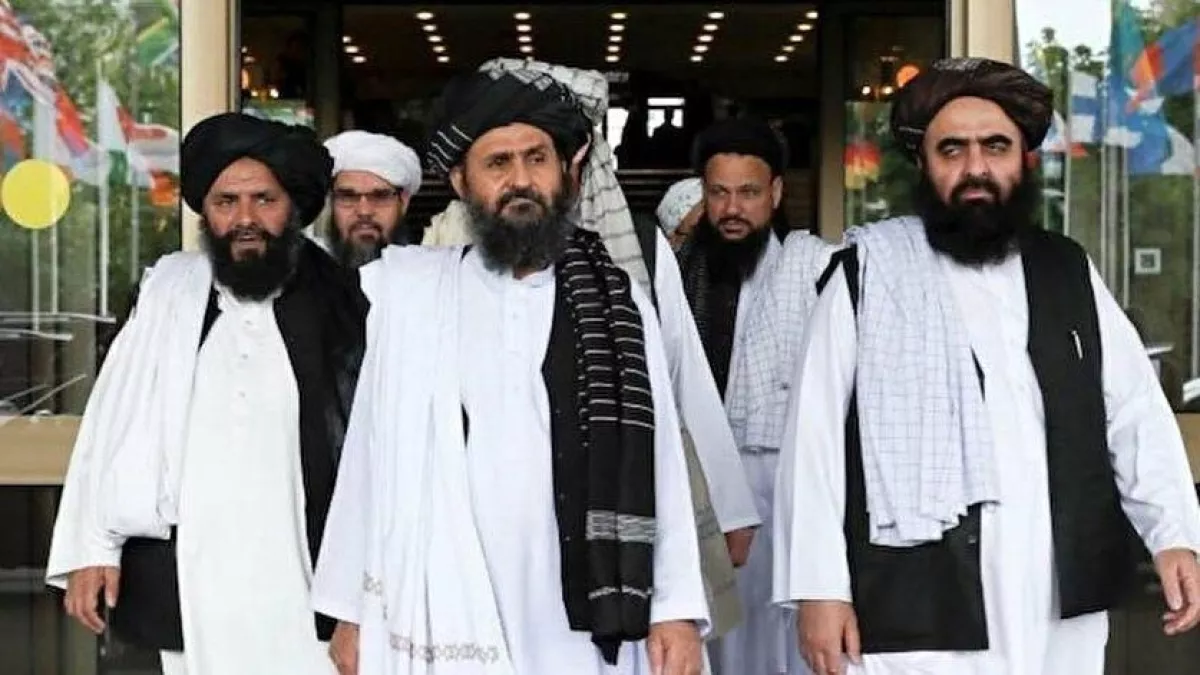
However, the situation is not so straightforward. On November 27—the day after the first attack near Shamsiddin Shohin—a delegation led by the governor of Afghanistan’s Badakhshan province and a senior commander of the Taliban border forces visited Tajikistan to discuss security coordination.
On November 28, Afghanistan condemned the terrorist attack and expressed deep regret. Hafiz Zia Ahmad Takal, Deputy Press Secretary of the Taliban Foreign Ministry, stated: "This incident involves elements trying to sow chaos, instability, and distrust between the countries of the region."
He added that Afghanistan was ready to cooperate in the investigation.
According to some reports, the Taliban arrested two people suspected of involvement in the attack after the first incident near Shamsiddin Shohin. Following the killing of the two Chinese road workers in Darvaz, the intelligence unit of the 4th Brigade “Omer-e-Salis” of the Afghan Ministry of Defence detained four more suspects.
The terrorist attack was also condemned by Pakistan and Iran. Pakistan’s Special Representative for Afghanistan, Mohammad Sadiq, called the incident a “cowardly attack” and said that Pakistan, “as a neighbour that has repeatedly suffered terrorist attacks orchestrated from Afghan soil,” understands the pain and suffering of Tajikistan and China and shares their grief.
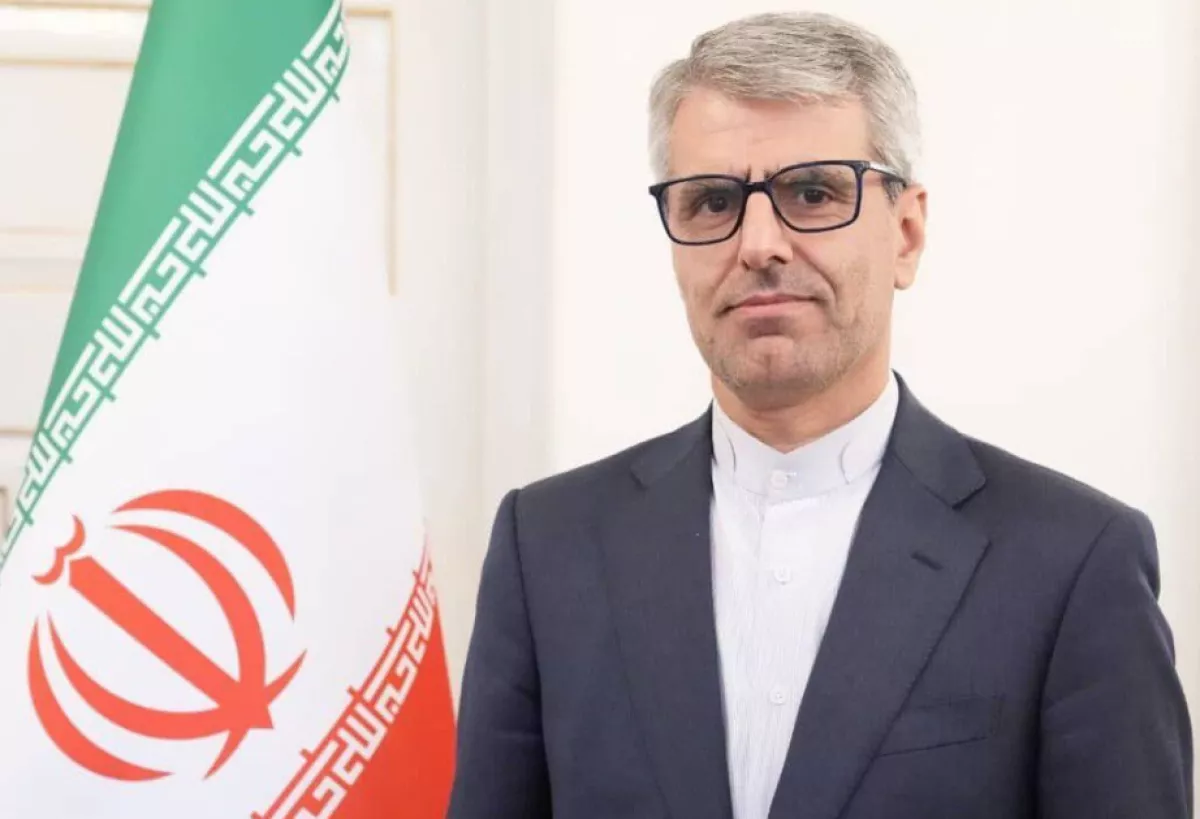
Iranian Foreign Ministry representative Esmail Baghaei expressed condolences to the families of the victims and stated Iran’s solidarity with the governments of Tajikistan and China.
At the same time, the Kabul government does not have full control over the areas of northern Afghanistan bordering Tajikistan, which are predominantly inhabited by ethnic Tajiks. These territories were previously strongholds of the Northern Alliance of mujahideen led by Ahmad Shah Massoud, and today they are dominated by drug producers and traffickers. The region is marked by high levels of corruption and tribalism, while widespread poverty and unemployment provide fertile ground for recruiting youth into armed extremist groups as well as drug and smuggling networks.
The Republic of Tajikistan did not recognise the Taliban’s rise to power in 2021 and severed all official ties with Afghanistan. However, recently, relations have begun to gradually improve: border markets have started opening, and a Tajik delegation visited Kabul. Apparently, the normalisation process does not please everyone, as forces in the region continue to seek its disruption.
Meanwhile, the main targets of the recent terrorist attacks were Chinese citizens and Chinese projects. It is clear that Chinese–Tajik cooperation was the primary focus of the unknown attackers.
China is the main investor in Tajikistan’s mining sector and the development of related infrastructure. The country has also become Tajikistan’s largest trading partner. Disrupting strategic cooperation between Beijing and Dushanbe could be a logical objective for certain global actors.
At the same time, some experts point to more local scenarios. Gold mining in this area is conducted on both sides of the border, and roughly a week before the first attack, a verbal altercation occurred between miners from both sides. The conflict was reportedly triggered by the flooding of a gold-bearing site on Afghan territory—allegedly due to the construction of a cross-border road.
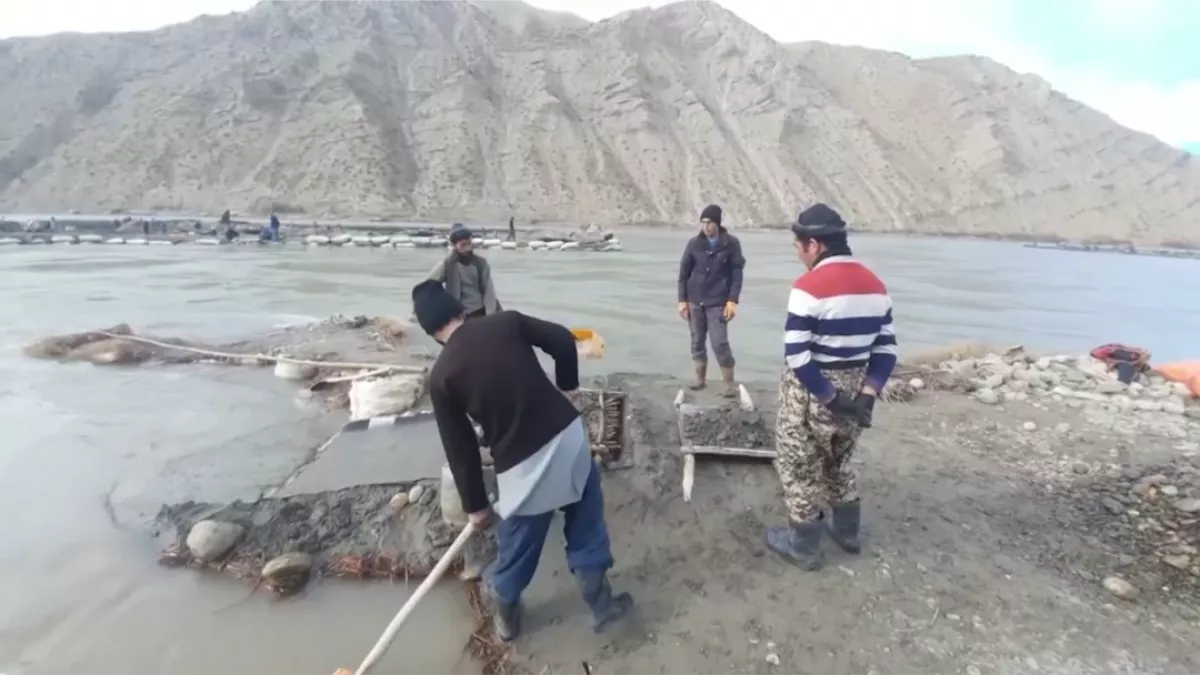
Gold mining on the Afghan side is conducted by private companies and the Badakhshan Mining Administration. Recently, many local authorities in Badakhshan have been replaced by people from southern, predominantly Pashtun regions of Afghanistan, including local border units. According to some reports, gold mining in Afghan Badakhshan is now controlled by drug trafficker Haji Bashir Noorzai, who has been dubbed the “Pablo Escobar of Central Asia.”
According to one version, the first attack on November 26 targeting Chinese gold miners near Shamsiddin Shohin may also have been an act of revenge for a Tajik border operation on November 20, during which two smugglers were killed and a large shipment of narcotics seized with the help of a drone.
An official representative of the Taliban governor of Badakhshan, Zabiullah Amiri, said:
"There is a certain disorder around mining. Armed groups acting outside government control are heavily interfering in mining operations, which can provoke conflicts. Therefore, the government has decided to create organised forces, possibly including those already guarding the sites, as well as recruiting unemployed youth."
The motive for targeting China could also involve militants from the East Turkestan Islamic Movement (ETIM). The aim of such attacks may be to undermine the rapprochement between Tajikistan and Afghanistan and to erode China’s trust in both countries. At the same time, the Taliban government, which faces international sanctions, is also seeking to attract Chinese investment to Afghanistan.
The Tajik radical organisation “Jamaat Ansarullah,” allied with the Taliban and based in Afghanistan, could also come under suspicion. However, as relations between the Taliban and the Tajik government have improved, tensions have been rising between the Taliban and Jamaat Ansarullah.
Additionally, the hostile-to-Taliban group ISIS–Khorasan (IS–K) has previously attacked a hotel hosting Chinese specialists in Kabul and carried out rocket fire into Tajikistan. An important nuance is that radical organisations usually claim responsibility for such actions.
It is possible that the recent attacks were carried out on orders—or on the initiative—of local Taliban units, which are weakly controlled by the Kabul government, or by other groups operating in coordination with foreign militants.
In any case, under conditions of instability, the intertwining of local criminal networks, radical groups, hostile external actors, terrorism, corruption, and drug trafficking inevitably creates a highly explosive situation, capable of triggering serious repercussions for the entire region.







 editor@caliber.az
 +994 55 444-88-98
 Азербайджан, Баку, ул. Низами, 203, Af Business House, 5-й этаж