










Kobakhidze’s Vatican thesis: Georgia could have shared Ukraine’s fate Expert opinions on Caliber.Az
“Specific forces used Ukraine as cannon fodder. There was also an attempt against Georgia, but thanks to our unwavering stance and relentless resistance, we managed to prevent this negative scenario from unfolding in our country, ” Georgian Prime Minister Irakli Kobakhidze stated in the Vatican after his meeting with the Pope.
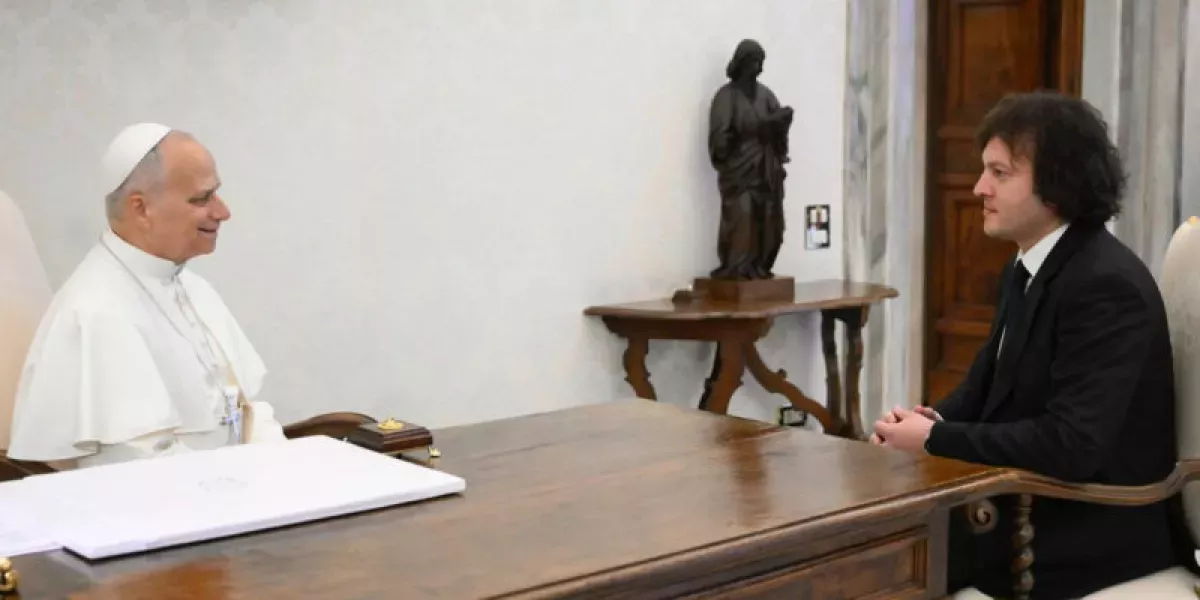
“It was a very challenging experience, one that demanded immense effort. You could see the huge pressure placed upon us, the injustices we faced simply because we were fighting to maintain peace within our borders. What we managed to achieve, unfortunately, our neighbouring country, Ukraine, was unable to do, which is a tragic reality.
The humanitarian consequences, human sacrifices, and the economic and infrastructural damage of this war are evident. The country was pushed to the brink of ruin; a revolution was organised, and yet no one has taken responsibility for the events that followed. This is a tragic chapter. Nevertheless, we succeeded in preventing this scenario from becoming a reality in Georgia, a victory that required tremendous effort. But even today, we cannot afford to relax. We must continue fighting to preserve peace and to promote the ongoing development of our country,” Kobakhidze emphasised.
He also commented on U.S. President Donald Trump’s statement regarding Europe’s trade with Russia. According to him, what the Georgian Dream party has been saying all these years is now being echoed by the U.S. administration.
“What we have been stating for years is now being echoed by the official U.S. administration, the administration of President Trump. Accordingly, the assertions we have been making since 2022 are being confirmed. We were criticised for a lack of sanctions and for having very limited trade relations with Russia, whereas, for example, the Baltic states, which are among the most hawkish in this regard, sell four times more wine to Russia. This applies to Latvia and Lithuania. Such double standards exist; in other areas, these countries engage in far more active trade with Russia than Georgia. Therefore, their complaints are unfounded,” the prime minister said.
How can Kobakhidze’s speech at the Vatican be characterised? Was Georgia really facing the danger of being drawn into a war against Russia? And how did it manage to avoid this scenario?
Well-known Georgian experts responded to these questions in comments to Caliber.Az.
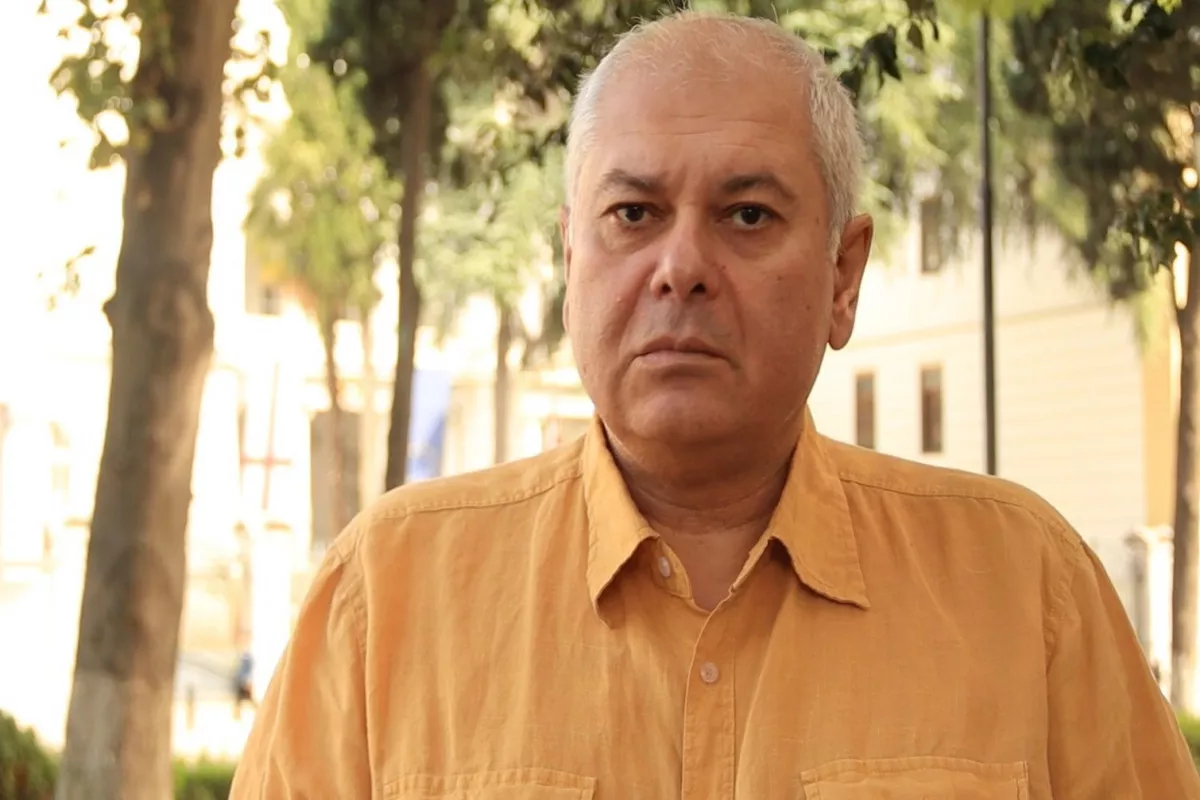
Professor of Political Science and Honoured Journalist of Georgia Badri Nachkebia noted that Georgia’s situation was indeed dire.
“On several occasions, Ukraine’s leadership stated that Georgia had an opportunity to restore its territorial integrity by entering into a war against Russia. On the other hand, we could clearly see what consequences this might lead to, as double standards on the part of the West were evident. After the war began, Ukraine received, to put it mildly, very limited assistance, which effectively pushed it toward bankruptcy. The country has been devastated, millions of people have left Ukraine, and the scale of human casualties speaks for itself.
Former Prime Minister Garibashvili spoke about this as well — during Biden’s presidency, he was subjected to pressure from certain circles in the U.S. As for Europe, we saw that even before the war there were attempts to destabilise the situation in Georgia. One need only recall the idea of smuggling former President Saakashvili into the country hidden in a container with dairy products.
There were several attempts to organise a ‘Maidan,’ a coup — none of them succeeded. And the determination of Georgian Dream, despite the critical attitude of many toward it, ultimately prevailed. Its main goal was to convince the people that the authorities were fighting to preserve peace in Georgia and would in no way allow the country to be drawn into this war,” the professor said.
As for trade relations with Europe, the expert recalled Donald Trump’s recent statement that Europe continues to purchase Russian oil.
“This is yet another example of double standards, when Europe effectively says one thing and does another. On the one hand, it finances Ukraine, and on the other, it pays for Russia’s aggression. This leads nowhere. Dragging out the war will be extremely dangerous for Ukraine. Ukraine cannot win this war.
It could only have a chance of victory if it received maximum support from the United States and somehow found additional human resources, which it critically lacks. As we know, the West’s limited assistance makes its position ambiguous: declarative support for Ukraine in words, but minimised aid in practice. This is not about victory, but about a creeping aggression that continues at a sluggish pace.
Incidentally, on this point, former Putin aide and former Minister of Culture Vladimir Medinsky recalled that Russia is capable of waging war for a very long time, citing as an example the war with Sweden during the era of Peter I, which lasted for twenty years.
So, I believe Georgia had grounds to criticise the West and still has reason to be sceptical of European bureaucrats who today are pursuing an extremely unfriendly policy toward Georgia,” Nachkebia concluded.
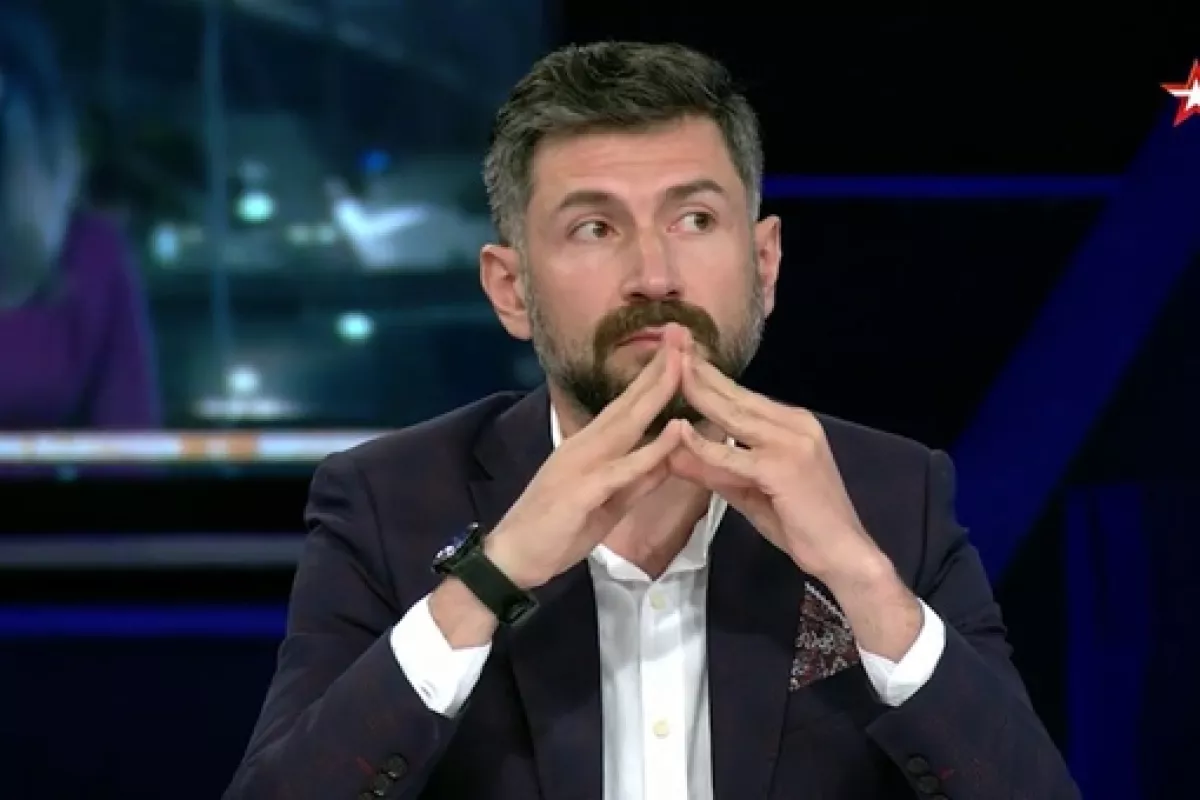
Director of the Center for Islamic Studies of the Caucasus, Shota Apkhaidze, noted that Russia had no plan to wage a prolonged war — including with Ukraine — yet a large-scale military conflict nevertheless broke out.
“Russia did not intend to fight Georgia either, just as Georgia neither intended nor intends to fight Russia. In other words, there were initially no fears on this score at all.
But if Georgia had started a war with Russia — which would, in effect, have meant opening a second front — it would have been a disastrous step for the country. Georgia has neither the military, nor the financial, nor the human resources to wage a war against Russia.
I cannot imagine what kind of mind could even conceive of such an absurd idea, yet there are still certain individuals who continue to repeat it. Frankly speaking, these are feeble-minded individuals who fail to grasp the full danger of such a step. However, they do not represent the majority.
It is a liberal minority — people who are biased, subjective, who deny objective reality and are capable of calling for war either for their own selfish interests or out of ideological schizophrenia.
The danger lay precisely in this: if these people had come to power, they could have unleashed something themselves, and five minutes later it would all have been over, with them fleeing — just as it happened in 2008, when the entire leadership ran away, leaving the people and the army to their fate,” the researcher explained.
As for Kobakhidze’s statement at the Vatican, Apkhaidze said he does not fully share the Georgian Dream party’s position toward the West.
“It turns out that with one hand they criticise the West, while with the other they extend a hand of friendship. If the Western political system, as they themselves claim, is based on double standards; if, by their own account, these very people have condemned Ukraine to extinction and destruction — then why seek integration there at all? What is the point? Where is the logic?
Kobakhidze formulated everything correctly, but I do not understand where Georgia is heading. If things are so bad there, why do we continue to enshrine this course in our Constitution and keep moving in the same direction?
At the same time, it is also true that Georgian society has matured — and today it is strong enough to make clear that it does not want any new war,” Apkhaidze concluded.







 editor@caliber.az
 +994 55 444-88-98
 Азербайджан, Баку, ул. Низами, 203, Af Business House, 5-й этаж