










Memory and will on guard of sovereignty Following Aliyev’s speech in Aghdam
On December 24, the President of Azerbaijan, Ilham Aliyev, and the First Lady, Mehriban Aliyeva, participated in the opening of the second residential complex in the city of Aghdam and met with the residents who had relocated there. During the meeting, Ilham Aliyev delivered a speech to those gathered.
The President of Azerbaijan called this day historic — after many years of waiting, suffering, and exile, the people of Aghdam are once again setting foot on their native land. Aliyev reminded that Aghdam had fallen victim to urbicide. The Armenian state, having occupied the city, destroyed it to its foundations, dismantling buildings stone by stone and selling them, including to some neighbouring countries. This was not merely looting — the aim was to erase Azerbaijan’s historical heritage and make the return of its people impossible.
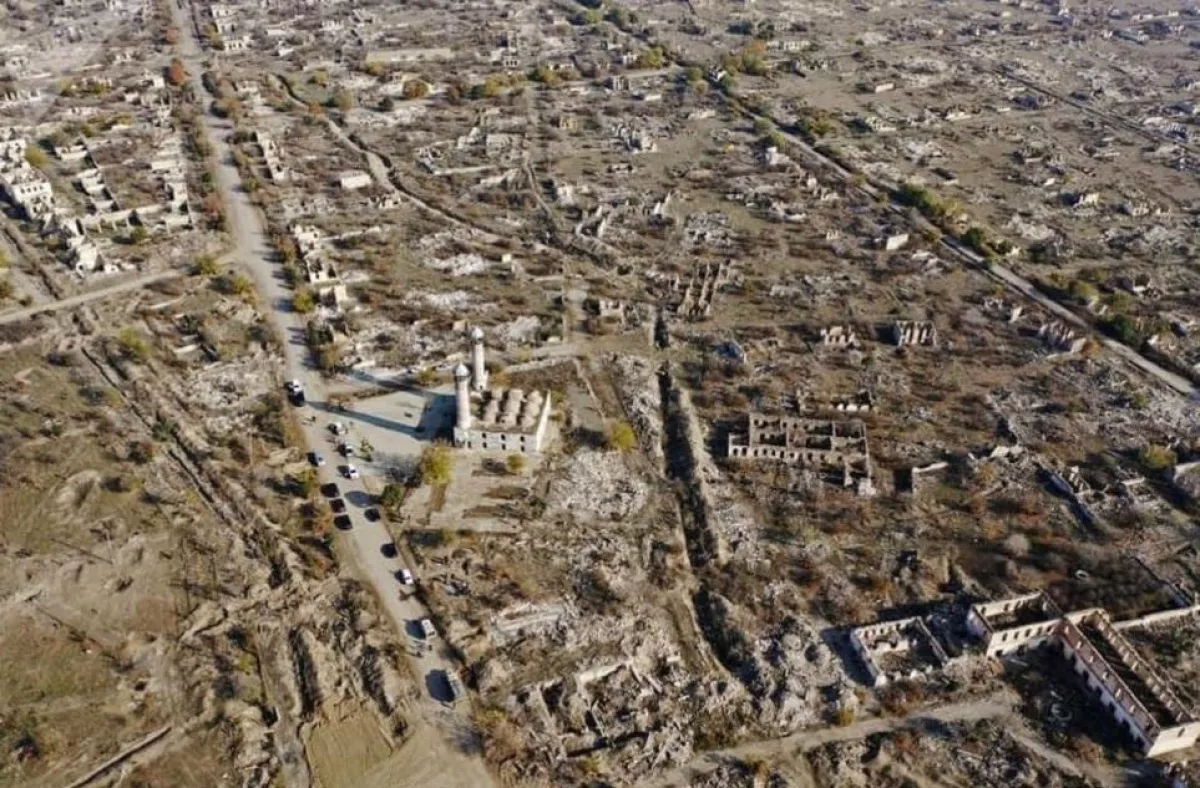
The president’s words are confirmed by video materials shown to the world since 2020, documenting the scale of destruction in the liberated territories. The systematic destruction of cultural heritage sites, desecration of mosques and sacred places, dismantling and removal of buildings, structures, and any property of material value to Armenia and other countries, the plundering of Azerbaijan’s natural resources—including forests, gold deposits, and other minerals—massive landmining intended to prevent the return of peaceful residents, which caused numerous human casualties even after the end of hostilities, not to mention the mass ethnic cleansing of hundreds of thousands of people involving torture and killings—all these acts serve as clear examples of crimes committed against Azerbaijan and the Azerbaijani people.
However, the president emphasised, the Armenian side miscalculated. The Azerbaijani people did not accept the occupation and lived with a single dream — to return and rebuild the destroyed cities.
Five years ago, the Second Karabakh War became a turning point. Over the course of 44 days, the Azerbaijani Army, forging the will of the entire nation into an iron fist, defeated the Armenian forces, restoring the country’s territorial integrity and national dignity. Aliyev reminded that this victory is immortalised on the steps of the new Triumphal Arch in Khankendi, the second such arch after Baku. Each day of the victorious march, gradually leading to liberation, is recorded there day by day.
The full restoration of sovereignty as a result of the counter-terrorism operation in 2023 became the final chord, compelling everyone to accept the new reality. “Those who once said, ‘Garabagh is Armenia, full stop,’ at the stadium in the city of Khankendi not far from here were then forced to say, ‘Garabagh is Azerbaijan!’ In other words, they did not say this of their own free will. We forced them – our people and our state did,” emphasised the head of state. Aliyev noted that this history must not be forgotten by either the older or the younger generation. It should be taught in schools, universities, and families — so that people understand the price of Victory and cherish peace.
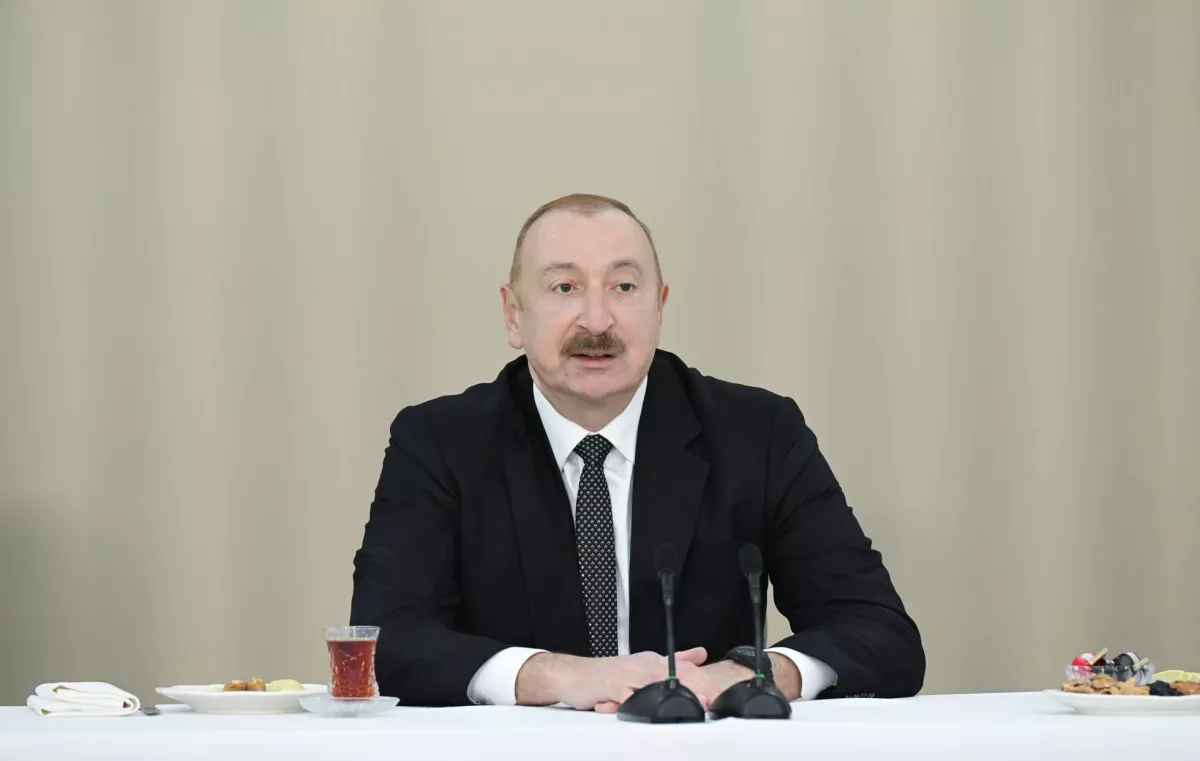
A significant part of the president’s speech was devoted to the biased attitude of the international community toward Azerbaijan in the context of the Karabakh conflict, including the pressures and threats aimed at stopping Baku from pursuing its just goal of reclaiming its lands.
Aliuyev recalled that throughout the years of occupation, international bodies, including the OSCE Minsk Group, openly demonstrated an anti-Azerbaijani stance. This group, established back in 1992, did not aim to resolve the conflict but sought only to make the occupation permanent. As he stated, over 17 years of meetings with the group’s co-chairs, it became increasingly clear that their goal was to force Azerbaijan into submission.
He also reminded that, unlike other similar cases, the international community never condemned the aggressor; no coercive measures, such as sanctions against Armenia, were imposed. On the contrary, Armenia was supplied with weapons worth billions of dollars.
For example, in 1998, Russia supplied Armenia with weapons worth around one billion dollars, and these deliveries continued in subsequent years. In particular, after the April 2016 clashes, Armenia received operational-tactical missile systems “Iskander,” which were later used during the 44-day war, including against the city of Shusha. During the war itself, arms were delivered to Armenia by air and through Iranian territory, as confirmed by published flight routes and video materials. The monetary value of the trophies captured by Azerbaijan after the war reached 5–6 billion dollars. Among them were fragments of the aforementioned “Iskander-M” missile, which Armenia should not have possessed at all. The president posed a direct question: how did this missile end up in Yerevan and get fired at Shusha?
Additionally, Ilham Aliyev also recalled that in the United States and France, “charity” telethons were held in support of the separatists, who were granted visas, while other separatists around the world are generally denied such privileges.
Considering the annual allocation of significant sums under the guise of humanitarian aid, the lobbying efforts that financed the separatist regime, the export of products from the occupied territories labelled as Armenian goods, and the involvement of foreign companies in economic activities on these lands, it is evident that global support for the aggressor occupying Azerbaijani territories was comprehensive.
The president noted that Azerbaijan has always known who its friends and enemies were. He emphasised that the only country that stood by Azerbaijan was Türkiye. “We are infinitely grateful to our Turkish brothers for that, as they always provided us with political and moral support both during the occupation and during the war,” the president added.
Yes, there were more enemies than friends, yet the victory achieved on the battlefield and solidified through the counter-terrorism operation changed much. The Minsk Group, as Aliyev noted, was dissolved at Azerbaijan’s insistence. The Armenian side resisted but was ultimately forced to concede. In August 2025, the new realities were finally confirmed at the international level with the participation of the president of a leading world power — here Aliyev referred to the historic meeting in Washington, where, through the mediation of U.S. President Donald Trump, a draft peace agreement between Azerbaijan and Armenia was initialed and a joint declaration signed, in which both parties reaffirmed their commitment to the peace process and the establishment of good-neighborly relations. “The book of separatism has been closed, and the people of Azerbaijan have been living in peace for several months now,” Aliyev said.

Today, a peace process is underway between Armenia and Azerbaijan, initiated by Baku itself. However, Aliyev added, it is impossible and unacceptable to forget the occupation, the martyrs, and Khojaly. “We must be vigilant. We must always be strong. That is why we have significantly strengthened our army in the last five years. And the whole world could see a part of this potential at the military parade last month. In order to achieve eternal peace, we must always be several times stronger than our potential enemies. We are doing and will continue to do it,” he said.
This is especially relevant given that, despite noticeable progress in the peace process, various political forces and institutions around the world are attempting to revise the outcomes of the war and pressure Azerbaijan. For example, the EU, with the silence of Yerevan, has promoted claims of an alleged “forced expulsion” of the Armenian population, which does not correspond to reality. Such actions by various international bodies and figures undermine the peace process and create fertile ground for revanchist sentiments.
Particular attention must be paid to the fact that, against the backdrop of discussions on the normalization of Armenian-Azerbaijani relations and the opening of regional communications with the active involvement of the Donald Trump administration, voices in the United States continue to call for keeping Section 907 of the “Freedom Support Act” in force, despite Azerbaijan’s demonstrated commitment to peace and the absence of any objective grounds for such restrictions.
Recently, members of the U.S. House of Representatives, Gus Bilirakis and Frank Pallone, introduced a new openly anti-Azerbaijani bill, which, in particular, proposes to prohibit the U.S. President from lifting the restrictions on Azerbaijan imposed under Section 907.
All these factors are undoubtedly taken into account by President Aliyev in the development of strategic foreign policy planning. At the same time, every citizen must remain aware of these nuances, so as not to fall into complacent optimism or harbour false illusions about the “end of history” regarding attempts by various forces to reignite the fire of war in the South Caucasus.
Concluding his speech, President Aliyev highlighted the large-scale and rapid construction taking place in Karabakh, particularly in the Aghdam district. He noted that these successes have been made possible by the enthusiasm of the people, emphasising that he personally oversees the implementation of the program and frequently visits the liberated territories.
Aliyev also mentioned that he inaugurated a new building of Karabakh University in Khankendi, built from the ground up. “Some of the teachers come here from abroad, and some from different parts of Azerbaijan. I enquired about people’s motivation and about what brings these people here,” he shared. “They tell me that it is Garabagh that attracts us.”
This is how life is being restored on the ancient land.







 editor@caliber.az
 +994 55 444-88-98
 Азербайджан, Баку, ул. Низами, 203, Af Business House, 5-й этаж