










Pashinyan’s balancing act between Europe and Russia From Hamburg to Moscow
Armenian Prime Minister Nikol Pashinyan, departing from Hamburg, Germany, headed to Moscow, Russia, to participate in a meeting of the Eurasian Economic Union (EAEU) Intergovernmental Council. Earlier, while on an official visit to Germany, Pashinyan commented on whether deepening relations with the European Union is compatible with participation in EAEU structures.
The Armenian prime minister stated that he currently sees no contradictions. “We are deepening relations with the EU, and from here I am flying to Moscow. Is there any incompatibility? Clearly not, because both processes are actually taking place. If at some point we reach a situation where incompatibility becomes evident, then we will think about what decision to make,” Pashinyan said.
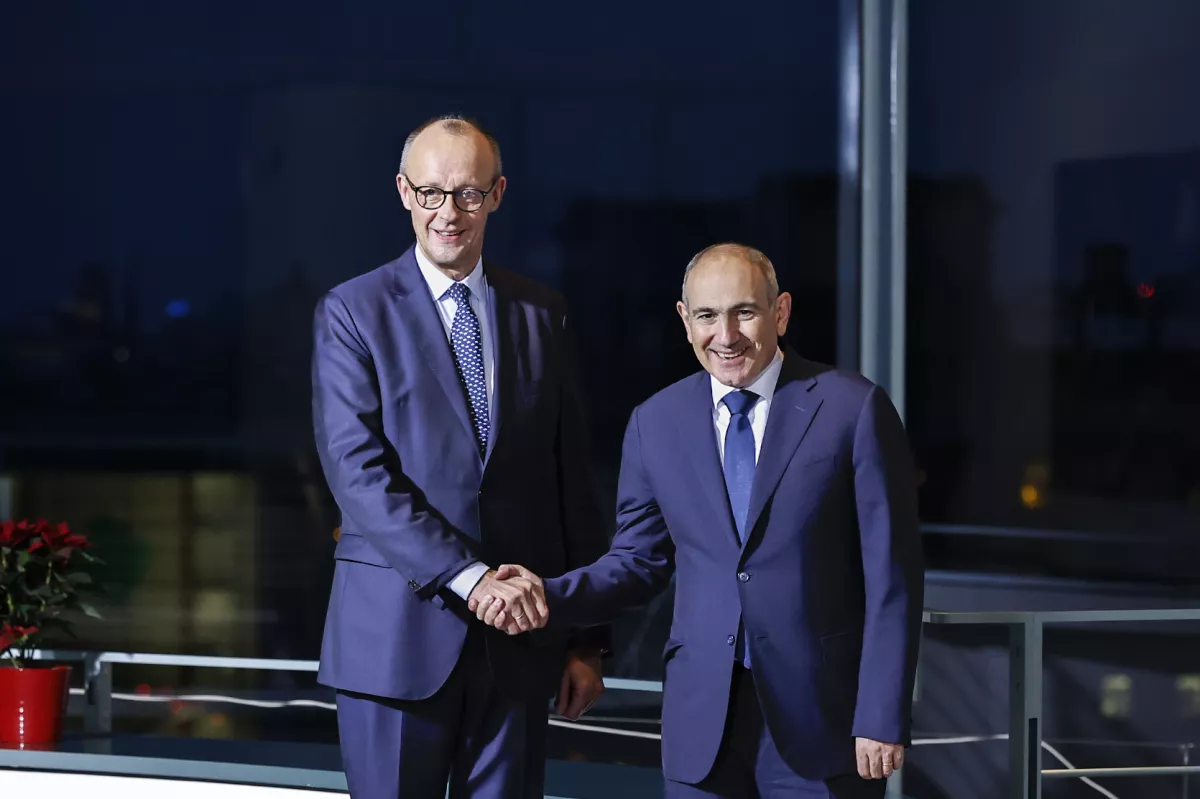
Indeed, firstly, this is not the first time that Pashinyan has participated in EAEU events after the cooling of relations with Moscow. Here, one can observe a deliberate distinction that the Armenian prime minister draws between this structure and the Collective Security Treaty Organization (CSTO). This, in turn, is understandable.
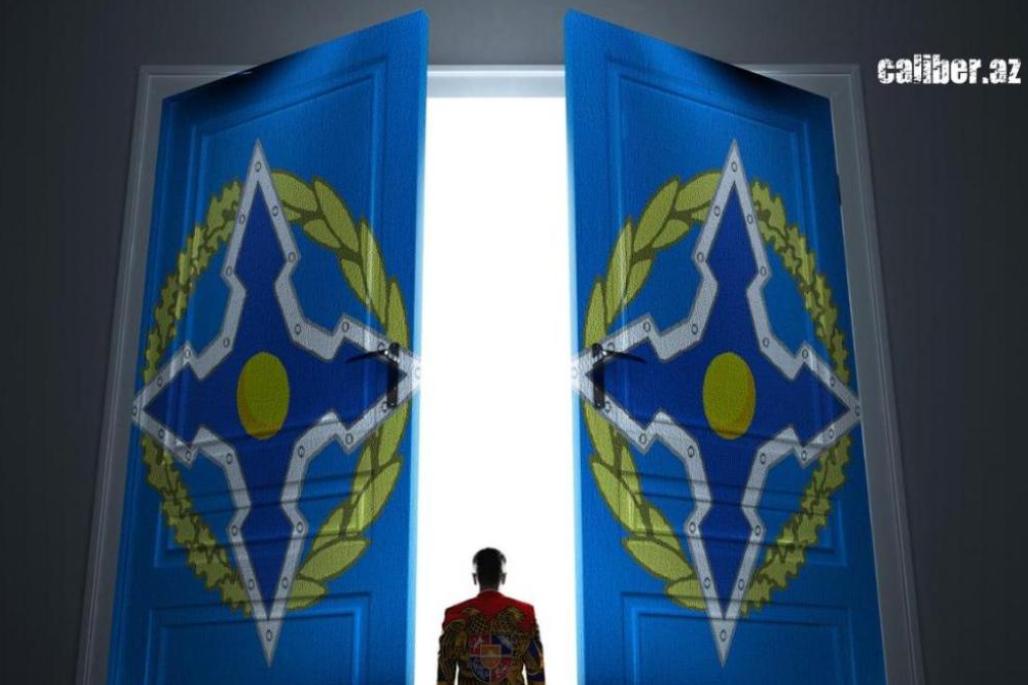
In Armenian society, following the defeat in the 44-day war, a negative attitude has formed toward the CSTO. This feeling is largely irrational, yet psychologically explainable – Armenian society was shocked that “the faithful ally and protector in the form of Russia did not provide direct military support in the war against Azerbaijan.” Although the expectation was initially unfounded – the war took place on Azerbaijani territory, and Baku did not violate the sovereign borders of the Republic of Armenia – there was no reason for the CSTO to intervene.
For Pashinyan, the CSTO’s non-intervention is also a convenient justification for distancing himself from this military-political bloc, since he is generally a pro-European politician, and continued cooperation with the CSTO would seriously hinder the development of relations with NATO. Yet, even under these circumstances, Armenia did not leave the CSTO, but merely froze its participation and stopped contributing to the common budget.
The situation with the EAEU is quite different. Membership in the single economic space provides Armenia with favourable trading conditions with its traditional suppliers and buyers. Moreover, it is well known that Armenia has taken advantage of the geopolitical situation following Russia’s invasion of Ukraine, becoming one of Russia’s important partners for the re-export of sanctioned goods. All these factors make Yerevan a stable EAEU partner.
At the same time, Armenia’s European partners have been—and continue to be—willing to overlook its re-export activities to Russia. For them, Armenia is always “something different.” We are not aiming here to explore the reasons behind this stance—they are multiple and include both pragmatic and irrational considerations. Our objective is simply to note that Europe does not (at least within certain limits) see significant problems in Armenia’s close ties with Russia. Notably, the main growth of these ties occurred after 2022, when Armenia became a key re-export corridor for sanctioned goods—both into and out of Russia.
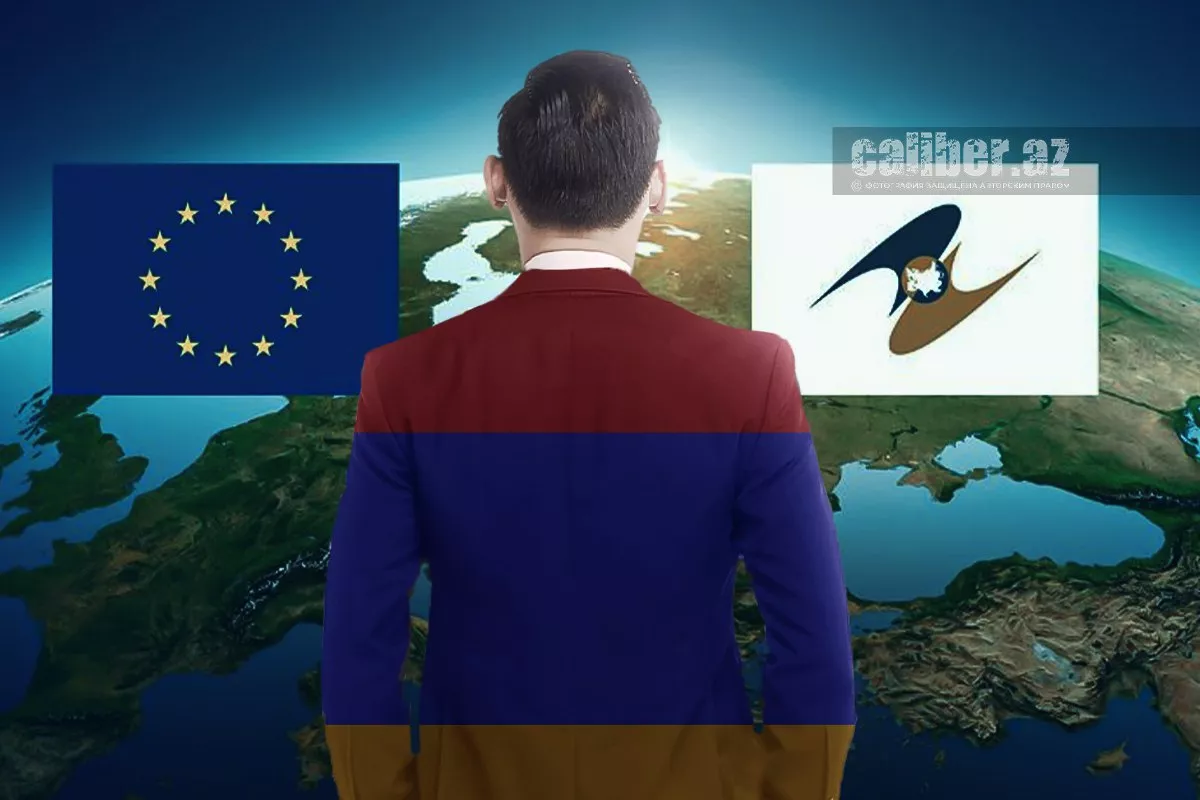
As for the symbolism of Pashinyan travelling to Moscow directly from Hamburg, this is most likely no more than a coincidence. State visits are scheduled months in advance, and the itinerary was probably arranged this way for objective reasons.
At the same time, the symbolism, it must be acknowledged, is still present. Placed within a broader context, it becomes clear that Europe is going through a period of severe institutional and foreign policy crises. The latter is primarily connected to the fact that U.S. President Donald Trump increasingly conditions support for Europe on a shift from its prevailing liberal ideology toward a more traditional one. In practical political terms, this is most evident in the situation around Ukraine, where Trump systematically refuses to share Europe’s view of the “Russian threat” and pushes for peace on the continent through compromises with Moscow.
Therefore, the Armenian prime minister’s flight from Germany to Russia — in symbolic terms — merely reflects realities that are harsh for Europe but quite favourable for Armenia.







 editor@caliber.az
 +994 55 444-88-98
 Азербайджан, Баку, ул. Низами, 203, Af Business House, 5-й этаж