










The Auschwitz stamp in a Swiss vault When a preacher needs a prosecutor
In the first week of February 2026, something that Swiss banks had kept under the seal of “top secret” for eighty years surfaced in the U.S. Senate Judiciary Committee. Former federal prosecutor Neil Barofsky, who once oversaw the Wall Street bailout program during the 2008 crisis and took part in exposing Bernard Madoff’s fraud, disclosed a figure that could not help but raise concern in Bern.
He referred to at least 890 previously undisclosed accounts at Credit Suisse linked to Nazi officials, SS officers, and their assets. Some of these accounts remained active until 2020. Seventy-five years after the fall of the Reich, they were still listed among operational accounts.
At Credit Suisse’s research department, investigators also discovered a folder bearing the title “Sale of Looted Jewish Assets,” without the slightest trace of shame. A separate batch of materials concerned the so-called “ratlines” — the system through which SS officers escaped to Argentina via Rome, Genoa, and the Vatican; parts of this route, as emerging documents now suggest, passed through the Swiss banking infrastructure.
Lawyers for UBS — the bank that absorbed the bankrupt Credit Suisse in 2023 — directly asked a federal judge during Senate hearings to shield the investigative materials from “excessive public attention.”
The myth of Switzerland is built on watches, chocolate, banking secrecy, and that much-vaunted “neutrality.” The reality of this “neutrality” does not begin with the Geneva Conventions, but with very specific decisions taken in Bern in the summer of 1938. But let us proceed step by step.
In August of that year, five months after the Anschluss of Austria, the Swiss Federal Council closed the border to refugees persecuted on racial grounds. On September 29, a protocol was signed in Berlin that European history knows by the short name of the “J-stamp” agreement. The letter “J” in the passports of German Jews was not demanded by Berlin, but by Bern: German passports in 1938 still did not distinguish race, and the Swiss border authorities needed a way to separate “Aryans” from “non-Aryans” in advance.
The initiative belonged to Heinrich Rothmund, head of the Swiss Federal Police, and through Hans Frölicher, the Swiss ambassador in Berlin, it was implemented by the Reich with satisfaction.
In November 1938, Kristallnacht took place. The Swiss stamp already existed by then. And in Switzerland, it was perfectly understood what was happening across the border.
Heinrich Rothmund himself stated in 1942: “A Jew in our country has always been regarded as a foreigner, and he is only admitted if he is prepared to adapt to our traditions and customs.” In 1943, he added: “Refugees who have become so on racial grounds, for example, Jews, are not considered political refugees in our eyes.”
In 1942, the borders were closed completely. Jews fleeing occupied France, the Netherlands, and Belgium reached Alpine checkpoints only to receive a response formulated as follows: racial persecution did not constitute grounds for asylum. According to the Bergier Commission — an international group of historians established by the Swiss Parliament in 1996 under pressure from the World Jewish Congress — between 1940 and 1945, Switzerland refused entry to between twenty and twenty-four thousand people. Some were handed over to German and French border authorities.
One case documented by the commission concerns a fifteen-year-old girl, detained in Geneva in the autumn of 1943, who was reportedly assaulted by Swiss soldiers and later returned to France as “not eligible for asylum.” She ultimately ended up in Auschwitz. The case is recorded in the commission’s materials with dates, signatures, and border statistics.
“If one proceeds from the assumption that the number of Jewish refugees denied the right to cross the Swiss border did not exceed a few thousand people, even such figures would only further confirm the conclusions once reached by the International Commission of Historians led by François Bergier. Those conclusions are clear: Switzerland should have accepted and accommodated these people as refugees, especially since doing so would have entailed no real risk whatsoever — neither in terms of food supply for the population, nor in terms of exposure to military or political sanctions,” wrote historian Marc Perrenoud.
In other words, regardless of the numerical estimates, they do not alter the assessment of the position of Switzerland’s political leadership at the time, which remained strictly negative toward accepting Jewish refugees on its territory.
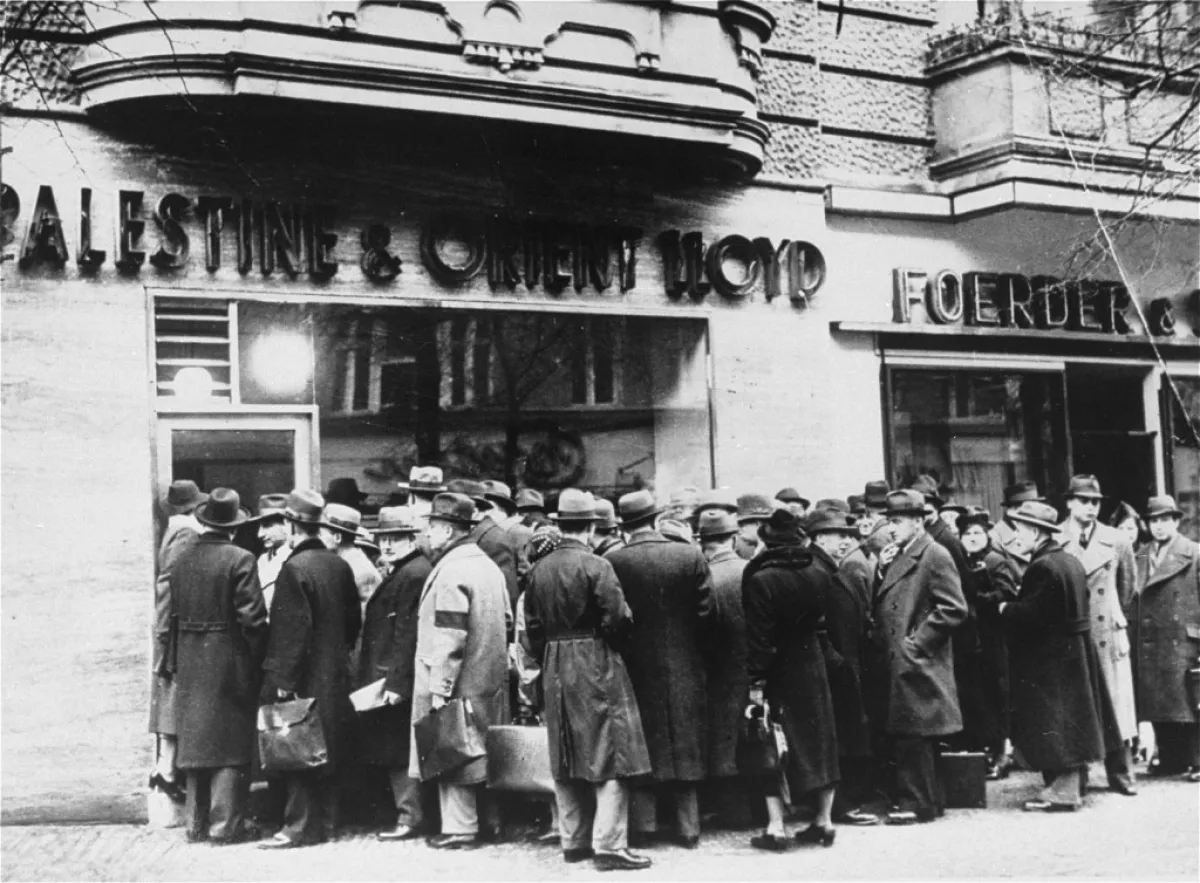
In parallel, trade was taking place. Between 1939 and 1945, the Swiss National Bank purchased gold from the Reichsbank worth approximately 1.2 billion Swiss francs at the time — roughly eight billion dollars in today’s terms. More than half of this gold had been looted.
In Nazi storage facilities, it was kept alongside gold taken from victims of the camps, and in seventy-six shipments sent to Zurich and Bern, according to archival data, there were ingots bearing the “Auschwitz” marking — not metaphorically, but literally, stamped by Reichsbank assayers.
The Bergier Commission report records this on pages 133 and 191, citing internal memoranda from the bank’s management in 1943, which explicitly discussed that deliveries from Berlin contained “gold confiscated from deported Jews.”
Bankers, in the commission’s wording, chose an “ethic of minimal effort.” The practice continued until May 1945. But even after the end of the war, the money — both that of the Nazis and that of their victims — remained in Switzerland.
After the war, everything appeared orderly and civilised. In March 1946, an agreement was signed in Washington under which the Confederation returned 250 million francs to the Allies — a symbolic repayment compared to a wartime flow measured in billions. The remainder was written off as the cost of neutrality.
Bank deposits belonging to murdered Jews — accounts opened in Swiss banks in the 1930s — were classified as “dormant,” and for decades Zurich responded to heirs with a standard reply: provide death certificates issued by the administrations of Buchenwald or Treblinka; without them, nothing can be done.
By 1996, the patience of the World Jewish Congress had run out. A lawsuit was filed in the federal court in Brooklyn, and in 1998, Swiss banks agreed to a settlement of 1.25 billion dollars. In the same year, an interim Bergier report on Nazi gold was published, followed in 2002 by the final 800-page report.
The conclusion of both was unequivocal and harsh: Switzerland did not help people in mortal danger and accepted as payment gold whose origins it knew.
According to Russian historian Leonid Mlechin, the Swiss themselves genuinely did not understand why they were being criticised: “We invested money in Adolf Hitler back in 1923, when he came to Zurich. And we have the right to receive interest.”
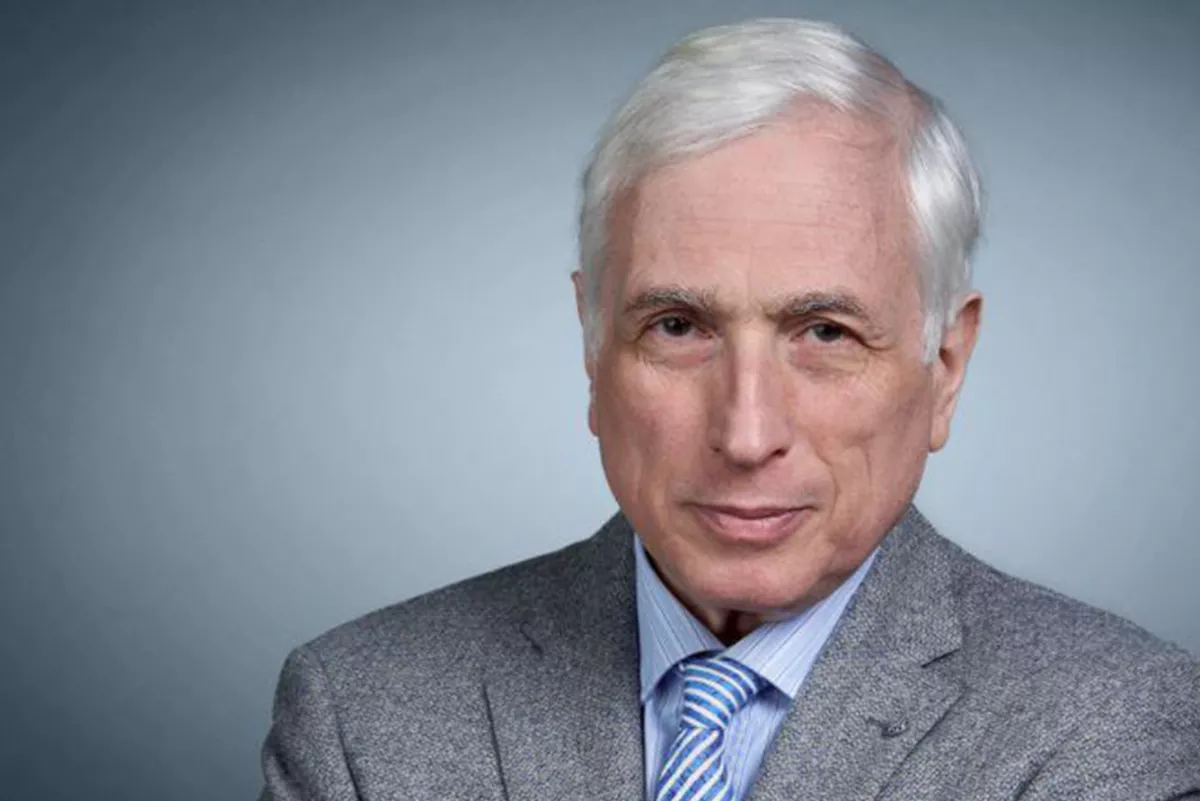
In March 2020, the Simon Wiesenthal Center passed information to Credit Suisse regarding Nazi-era accounts that had been concealed from the investigations of the 1990s. The bank agreed to an internal review and invited the same Barofsky — a figure known in New York and Zurich financial circles as a byword for rigorous auditing. He began uncovering documents.
In December 2022, he was dismissed — formally for “expanding the scope of the investigation,” and in practice because that scope had begun to produce too clear a result.
In February 2023, the Senate Budget Committee received a signal about pressure on the investigator, and Senators Grassley and Whitehouse — representing the Republican and Democratic sides respectively — launched a rare bipartisan inquiry.
Following the 2023 takeover of Credit Suisse by UBS, Barofsky returned to work. And then — February 2026: 890 accounts, a folder titled “Sale of Looted Jewish Assets,” “ratlines,” and UBS lawyers asking a judge to shield the materials from public scrutiny.
An investigation that, under the official Swiss narrative, was long closed is now ongoing in real time — and it is no longer being concluded in Bern.
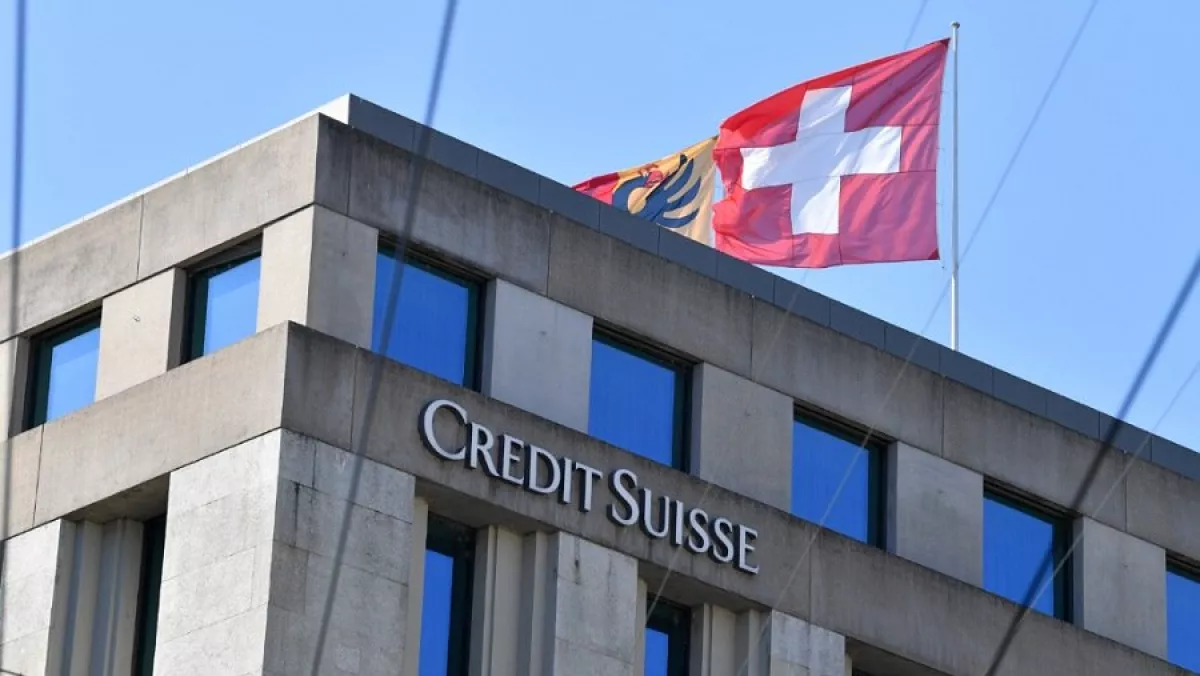
And this country — whose Nazi-era files are now being opened by U.S. senators — in December 2024 adopted, by a majority of 96 votes to 80, a resolution in the National Council on Karabakh, drafted as if the four UN Security Council resolutions of 1993 and the 44-day war of 2020 had never taken place.
The same country where, in January 2025, the upper chamber of the Federal Assembly (the Council of States) adopted draft law No. 24.4259 titled “Peace Forum for Nagorno-Karabakh: Enabling the Return of Armenians,” and where, in spring, both chambers of parliament approved the “Swiss Peace Initiative on Nagorno-Karabakh” — a name that, in diplomatic translation, signifies yet another attempt by Swiss lawmakers to “re-educate Azerbaijan.”
A country in whose Geneva cantonal parliament initiatives were born with titles such as “Annexation of Nagorno-Karabakh” and “Preservation of Armenian Cultural Heritage.”
A country where, as of January 1, 2025, a law came into force banning Muslim women from appearing in public places with their faces covered — while, at the same time, the Geneva canton submitted to Bern an initiative on the “protection of the rights of believers in Azerbaijan.”
The same country whose resolutions on Karabakh clearly reflect the wording of the Aurora Foundation — an organisation whose board of trustees at various times included the signature of Ruben Vardanyan, and whose financial and reputational networks between 2019 and 2022 intersected with names that surfaced in the released Epstein case materials.

The Swiss are not peacekeepers. They are specialists. Their expertise lies in turning into an asset everything that is poorly accounted for — and, first and foremost, the reputation of an arbiter for which they have no inherent claim.
When a Geneva deputy in the Federal Assembly in Bern speaks from the Bundestag podium about “human rights,” “aggression,” and “cultural heritage” in relation to Azerbaijan, anyone who has read the February transcripts of the U.S. Senate hears a double echo in those words: the same Confederation that, for eighty years, has still not returned everything extracted from the graves of other people, and is now, through UBS lawyers, defending itself against its own archive.
Azerbaijan will not accept lessons in international law from the cashiers of Zurich and the preachers of Geneva. Not because Baku rejects criticism — it is prepared to listen to any country that is not afraid to face its own reflection.
It is because the patience of a sovereign state has its limits, and that limit ceases to be a matter of diplomacy the moment the preacher himself requires a prosecutor.
Before lecturing Azerbaijan on morality, the Confederation might first complete the inventory of its own bank vaults. Judging by the latest Senate data, even the top shelf has not yet been dusted off.
The article can be concluded with the concise definition of Swiss policy given by Russian historian Leonid Mlechin:
“This is not only a historical question, and not only a matter of money. This story shows that political views and sympathies play an enormous role. Once Adolf Hitler appealed to the political and financial elite of Switzerland, that sympathy never disappeared. It continued to shape the country’s policy. It is a lack of moral and ethical principles. This is what the entire Swiss history demonstrates — the history of Nazi money in Swiss banks.”







 editor@caliber.az
 +994 55 444-88-98
 Азербайджан, Баку, ул. Низами, 203, Af Business House, 5-й этаж