










The military shadow of the Armenian diaspora VOMA as a flashpoint of tension
Armenian diaspora organisations continue to finance military infrastructure on the territory of Armenia, acting in defiance of Yerevan’s official course aimed at achieving a final peace in the region. The latest winter training camps of the terrorist organisation VOMA, led by war criminal Vova (Vladimir) Vartanov, held from January 31 to February 8 in the village of Atan in Armenia’s Lori Province, demonstrate that this militarised structure no longer feels the need to disguise the true nature of its activities.
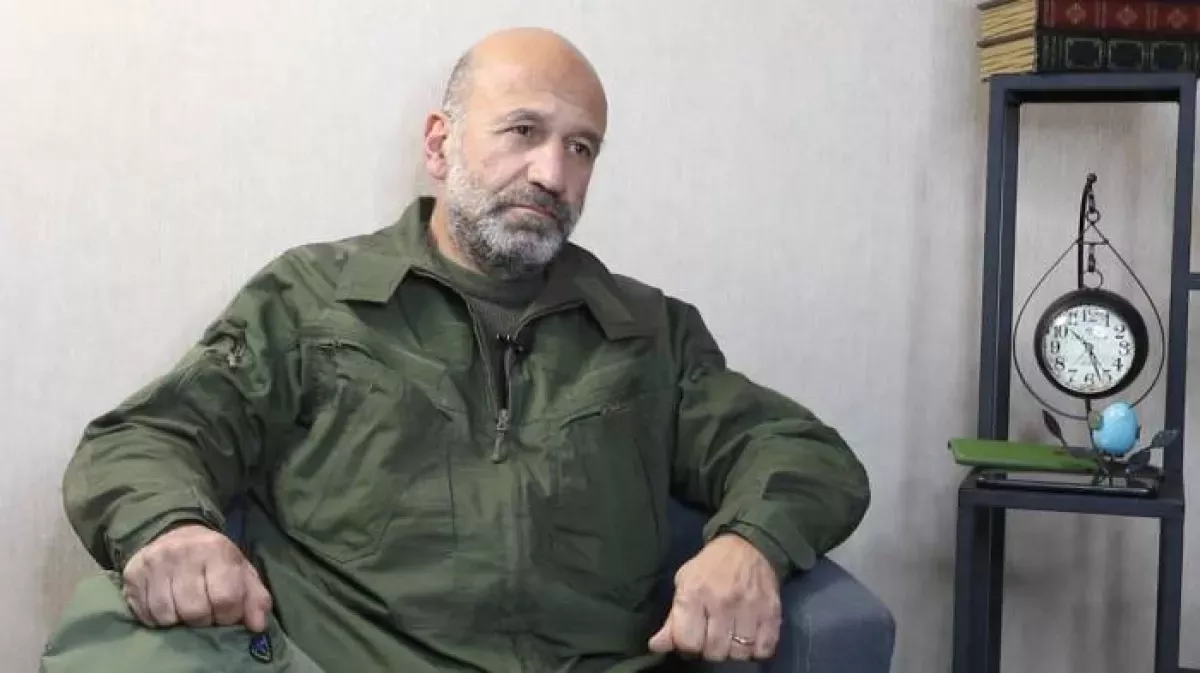
What also draws attention is the fact that the village of Atan is located 14–16 kilometres from the Azerbaijani village of Yukhari Askipara in the Gazakh district, which remains under Armenian occupation, and just 2–4 kilometres from the administrative border with Tavush Province. Accordingly, the choice of this location for a military training base is driven by strategic considerations. The mountainous, rugged, and densely forested terrain provides ideal conditions for practising tactical operations in an environment as close as possible to a hypothetical theatre of military operations.
The base was established at this location in early 2025 using funds from the Armenian diaspora. In a relatively short period, several barracks, a firing range, and a specialised obstacle course were built. Financing continues through public calls for donations to bank accounts, the organisation leader Vartanov’s personal cards, cryptocurrency wallets, and paid SMS messages.
The winter training programme includes tactical medicine, mountain and firearms training, physical and tactical field exercises, and forced marches. A comparison with last August’s programme reveals a telling transformation in the nature of the drills. “Organisation of hikes” has been replaced by “forced marches,” while “mountaineering” has given way to “mountain training.” This shift in terminology reflects a deliberate abandonment of the previous camouflage as civilian or sports-patriotic activity.
Additional information published on the organisation’s own official platforms dispels any remaining illusions about the nature of the training. The camp description explicitly states that participants are taught to assault buildings and mountain heights, survive in combat conditions, and receive instruction in emergency medical care and firearms use.
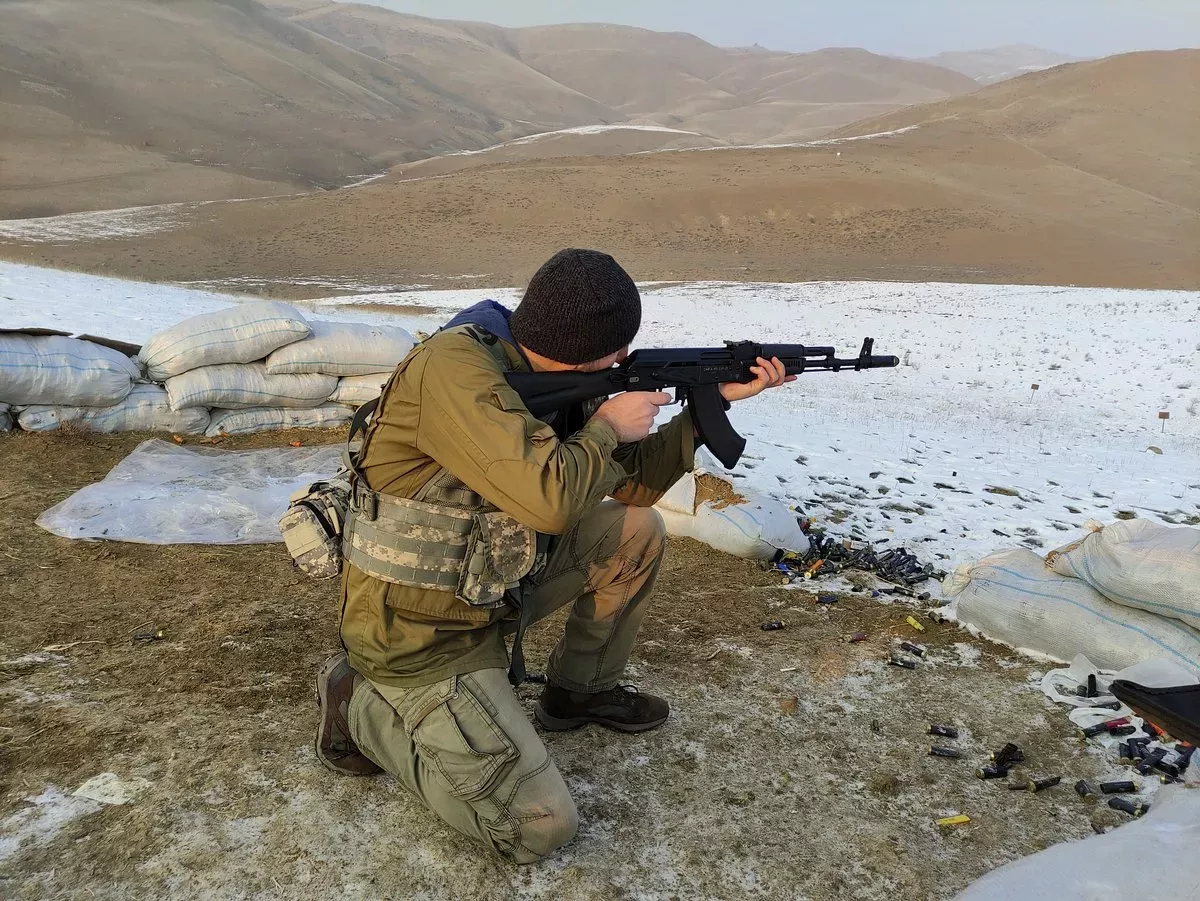
VOMA’s leadership does not conceal the fact that certain elements of its training are extended to minors. This is justified under the pretext of “patriotic youth education,” but in reality serves as a thin cover for drawing children into the process of forming a radicalised cohort. In parallel, the organisation conducts specialised training in mine-laying and demining, prepares mortar crews and snipers, and trains FPV drone operators. Some instructors featured in published materials conceal their faces with balaclavas, indicating their affiliation with a professional military environment and the presence of real combat experience.
Diaspora funding has created a situation in which destructive actors invest in infrastructure that directly contradicts the declared political course of the Armenian state, on whose territory this infrastructure operates. VOMA stands as a telling example of how unofficial structures generate systemic risks to the peace process. Registered as a “military-patriotic” organisation, it is in fact engaged in training militants under programmes that include assault operations, mine warfare, and the operation of modern weapons systems.
The geographical location of the base takes on particular significance in the context of the ongoing delimitation and demarcation process. The section in the direction of the Gazakh district has been partially delimited and demarcated, a step intended to help reduce tensions. However, the presence in immediate proximity of a base where assault operations and combat tactics in mountainous and forested terrain are practised calls into question the sustainability of the agreements reached.
The evolution of the organisation’s rhetoric—from disguising military-subversive training as sports and patriotic programmes to openly describing combat skills—points to a growing sense of impunity. VOMA’s leadership no longer considers it necessary to conceal the nature of its activities, even in open sources. Particularly revealing is information published on the terrorist organisation’s official website, which effectively puts everything in its place: “During the course, you will test yourself on forced marches and an assault fire course, undergo firearms training, learn to storm buildings and mountain heights, survive in combat conditions and in the wild, provide emergency medical aid, practise self-defence, shooting, and much more!” In other words, in the view of VOMA’s leadership, storming mountain heights and buildings is presented as a routine element of training for children and adolescents…
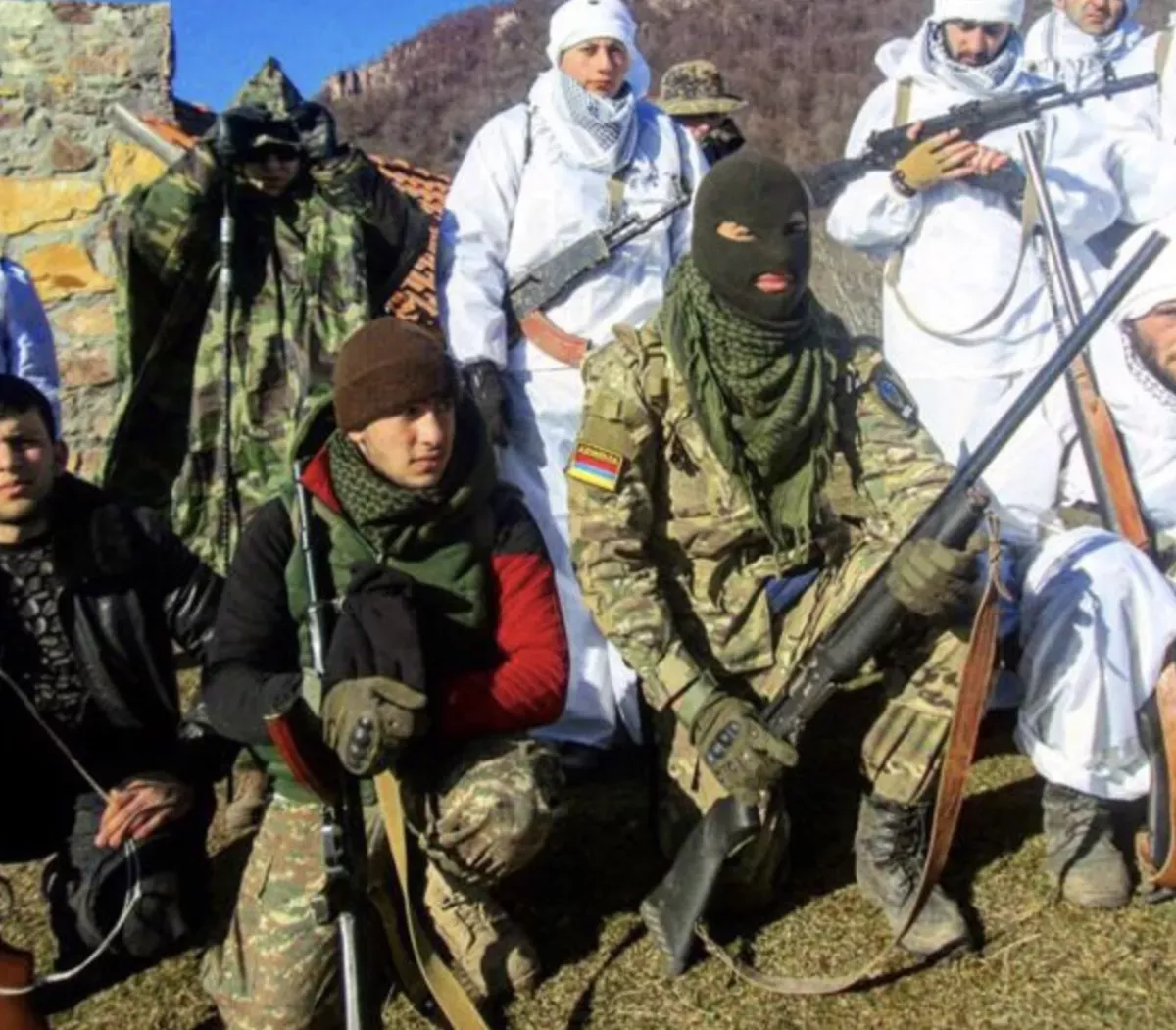
For Azerbaijan, the presence of such a base near the border constitutes a direct security threat. It is evident that all of VOMA’s activities are aimed at preparing personnel for terrorist actions against our country. And, once again, it is no coincidence that the military training camps are held at a location as close as possible to the Azerbaijani border.
The VOMA training centre in the village of Atan is funded by the diaspora, operates openly, and publicly posts announcements about training camps and calls for donations—its scale of activity rules out the possibility that official Yerevan is unaware of its existence. At the same time, no measures are being taken to restrict such activity in a strategically sensitive border area. One need only imagine the reaction if a similar piece of infrastructure were to appear on the Azerbaijani side to understand the asymmetry in approaches.
Thus, the very fact that a base for practising assault and sabotage scenarios is operating in a border zone, against the backdrop of Yerevan’s official statements on normalisation, demonstrates a gap between political declarations and realities on the ground. This cannot but raise serious questions that require immediate answers—or, better yet, concrete action—from the Armenian authorities.







 editor@caliber.az
 +994 55 444-88-98
 Азербайджан, Баку, ул. Низами, 203, Af Business House, 5-й этаж