










"Western arms deliveries may be an efficient method to deter Russia" Caliber.Az interview with Vladimir Volya
Ukrainian international political scientist Vladimir Volya in his interview with Caliber.Az shared his views on Russia's near-term and long-term intentions in the war against Ukraine.
- It seems that in order to achieve its goals, it is enough for Russia to maintain its military presence on the territory of Ukraine and continue attacks on the Ukrainian infrastructure, and Moscow does not need large territorial gains, as well as the capture of Kyiv. Is that so, in your opinion?
- Moscow's intentions towards Ukraine really matter in this case. So far, it looks as if Russia aims to annex as many of its territories as possible. Apparently, Russia will try to seize and annex most of Ukraine's territories in the southeast. The Kharkiv, Luhansk, Donetsk, Zaporozhia, Mykolaiv, Kherson, and Odessa regions, all the way to Dnipro, are Moscow's main target. It could then try to force Kyiv to appoint a Kremlin-loyal government in the rest of the country. So far, however, Russia has failed to fully realize its goals. And the destruction of infrastructure is needed to weaken the enemy's defences. If Russian troops reach some borders that the Kremlin considers sufficient, the destroyed infrastructure can be used to put pressure on Kyiv. But these are rather illusions and dreams because Ukraine will not accept the loss of its lands.
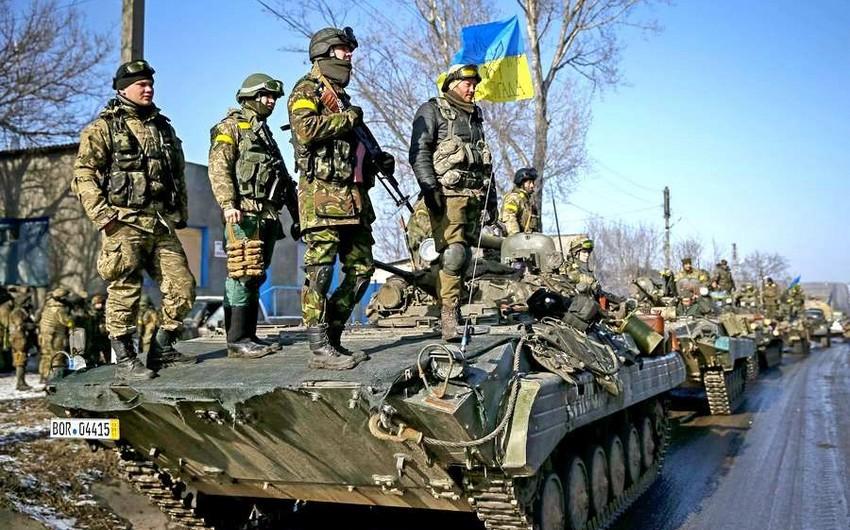
- Still, imagine a situation where Ukraine recognizes Crimea as Russian and Donbass as independent, agrees to reduce its army and promises never to join NATO. Would that end the war?
- I don't think so. The real goal of the Russian Federation in this war goes far beyond the independence of Donbass and the recognition of Crimea as Russian. These theses were merely an excuse to start a war. The real goal was to seize as much of Ukraine as possible. If Russia needed only recognition of Donbass's independence and Crimea as Russian, it would not have occupied the right-bank part of the Dnieper, tried to seize Odessa and Mykolaiv, and certainly would not have tried to move toward Zaporizhia and storm Kharkiv.
- Among other opinions, there are suggestions that the West views the Ukrainian problem in the wrong light: in seeking to stop Russia's military action, it focuses on Moscow's artificial pretexts, as if to justify an invasion of Ukraine, and overlooks the Kremlin's obsession with the so-called Western threat and its willingness to escalate tensions in order to force the West to a dialogue on Russian terms. Ukraine, on the other hand, is only a hostage in these circumstances. Do you share this judgment?
- Perhaps Putin really wanted to force the West into a dialogue on his own terms in order to show how great Russia's influence in the modern world is. That is, this is the principle of a duel with equal opponents - the stronger the opponent, the higher the status of the fighter. Moscow's rhetoric is that NATO allegedly threatens Russia by strengthening its presence in Ukraine, and that Russia allegedly defends itself. It uses the thesis that it is NATO that is trying to invade and destroy it. Moscow needs this to justify smaller, more practical tasks, namely the seizure of a large part of Ukraine's territory. In other words, according to Russian propaganda, Russia is saving Ukraine from the evil West, which is trying to turn it into a colony, remove all of its resources, etc., etc. In reality, however, Russia has not and is not confronting the West, it is dealing with specific practical imperial tasks on the territory of a weaker state, i.e. Ukraine.
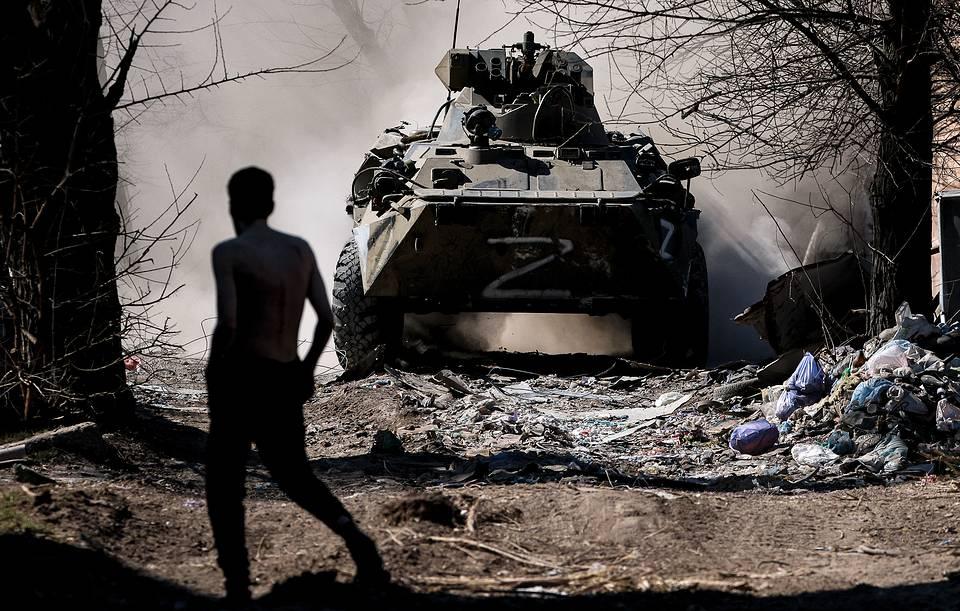
- Do you consider Western actions against Moscow to be ineffective?
- In the context of a quick end to the war, there is no effect of Western restrictions, and there probably will not be in the coming months. If we consider Western pressure in the context of the economic weakening of Russia, deprivation of its financial income from foreign economic activity, the possibility of using components to maintain its military-industrial complex, then there is certainly an effect. Sanctions do not take effect immediately; they take effect over time. But the supply of weapons by the West can be considered an effective method of deterring Russia. It prevents Russia from moving forward, and the advance of a couple of settlements in more than a month cannot be considered a strategic success. This is all a consequence of Ukraine's mobilization, the organizational restructuring of defence, the formation of new units trained according to new rules, and, of course, the arms supplies that come from Western partners. This helps Ukraine equalize its military and technical capabilities on the battlefield. Moscow expected to fight with missile systems against people running around with Mosin rifles or Kalashnikovs, but in the end, it turns out that Ukraine has something to counter Russian arms. This is undoubtedly one of the most important and effective tools for the West to support Ukraine in countering Russia.
- Is there a risk that the Ukrainian scenario could be repeated in the South Caucasus and/or Central Asia?
- The point of the Ukrainian scenario is that Russia, as it believes, gave Ukraine some territories, and now NATO forces will be allegedly deployed there, which will pose a threat to Russia. The main factor here is that Russia considers these territories as its own. From this point of view, an identical scenario is hardly possible in the South Caucasus. If we talk about Azerbaijan, a similar scenario hypothetically could be used by Armenia. Assuming, of course, that Yerevan decides to take back the Karabakh region. But this country does not have the military power to fight for Karabakh.
As for Russia's territorial claims against Azerbaijan, this has not been observed so far. Of course, Moscow can invent them, because it believes that it gave away all the territories that were part of the Russian Empire out of the goodness of its heart. Although these territories belonged to the peoples who lived on them, by deceit or force of arms they were annexed to the Russian Empire. But I do not think that now the conflict between Russia and Azerbaijan is possible. After all, this would in any case entail a serious reaction from the West. Besides, the consequences of the war in Ukraine would be so severe for Russia that it would not be able to wage such wars. The same could be said of Georgia. What could be taken away from it, Russia has already taken away.
If we talk about Central Asia, such a threat, in my opinion, hypothetically exists in relation to Kazakhstan. But it is a sufficiently independent and economically strong state, in addition, Nur-Sultan has learned lessons from the war in Ukraine. There are many historical parallels and similarities between Kazakhstan and Ukraine as far as relations with Russia are concerned. Many Russian politicians also call the northern territories of Kazakhstan a gift. Nevertheless, I do not think that any clashes are possible in the next few years. Although, given the fact that irrationality has now exceeded rationality in Moscow, nothing can be ruled out.
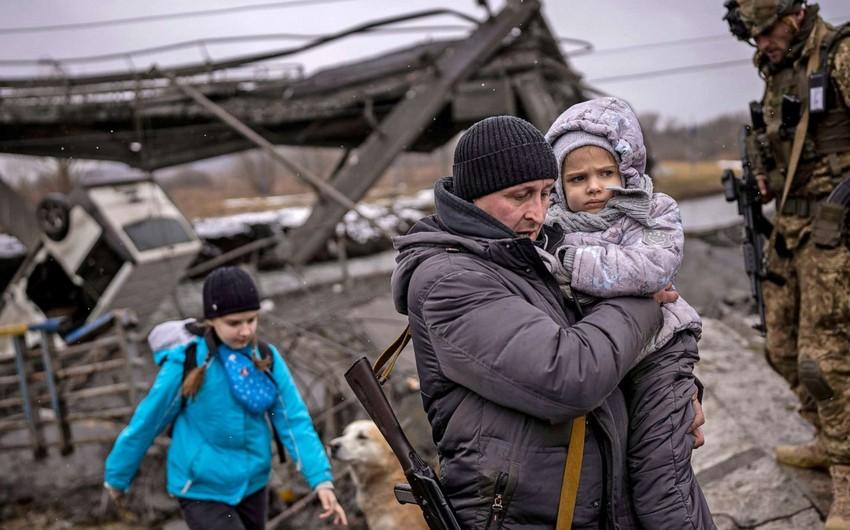
- Today many people accuse Russians of inaction, of not going to rallies, not organizing protests, not speaking out against the war in Ukraine, etc. Do you think the popular slogan "The blood of Ukrainians is on your hands" can be considered justified?
- We can talk of certain collective responsibility of the Russian people for the war unleashed by Putin against Ukraine, but one cannot claim that all Russians are to blame. However, according to polls, a significant portion of Russians support the war in Ukraine. It is possible that the polling data are falsified, but the fact remains. My guess is that some pollsters pay lip service to the war out of fear of hurting themselves. But at the same time, we see that many Russians acquiesce to what Russian troops are doing in Ukraine. Besides, there is the Russian army, there are soldiers who knowingly go to war, and war is murder. And if they consciously go to war, even as a result of propaganda, then we can assume that the blood of Ukrainians is on their hands. And most importantly, there is the fact that there are no protests against this war in Russia.
- Russia can both lose the war with Ukraine and win, that is, achieve its goals. It would be interesting to hear your opinion on what Russia can expect in one or the other case.
- In the short term, a victory for the Kremlin would be control of the territories of the Donetsk and Luhansk regions. This is a goal that Russia itself has voiced. Also by the end of this year, the Russian Federation can demonstrate to its citizens as a victory the seizure of territories in Zaporizhia, Kherson, and parts of Kharkiv Oblast, the establishment of commandant's offices under its control there, the creation of puppet administrations, and the integration of these territories into the Russian administrative system, including through a referendum. But Ukraine will not agree to the annexation of its lands. The sanctions against the Russian Federation are in effect, and their effect is intensifying over time. The Russian military campaign has stalled. In four months, Moscow failed to take complete control of even half of the Luhansk region. Therefore, the victory in no way looks unambiguous. Kyiv will not agree to demilitarization either. Ukraine will resist to the bitter end, and victory is not expected according to formal criteria either. That is why Moscow is no longer indicating the timing of its operations or any additional parameters. And without Russian troops reaching the border of the Donetsk and Luhansk regions, the Kremlin cannot declare victory, because this parameter has been set and fixed by Putin personally as one of the main tasks.
As for Russia's defeat, it is the rejection of the territories it has seized, the rejection of the recognition of the "LDPR" as an independent. Russia is unlikely to just give up Crimea, even if there is another leader instead of Putin tomorrow.







 editor@caliber.az
 +994 55 444-88-98
 Азербайджан, Баку, ул. Низами, 203, Af Business House, 5-й этаж