










Why Poland needs the “Belarusian threat” A manufactured crisis for profit and power
Poland has once again accused Belarus of “initiating a coordinated mass invasion of migrants” into its territory. The escalation between the two countries continues, despite repeated efforts by Minsk to reduce tensions. A natural question arises: who needs this confrontation, and why?
Unfriendly neighbors
Recently, the press secretary of Poland’s Minister-Coordinator for Intelligence Services issued a statement claiming: "The current situation on the Belarusian-Polish border is a result of the deliberate escalation of tension by the Belarusian side. There are large groups of migrants in the area of our border, which are fully controlled by the Belarusian security services and army. A coordinated attempt to massively enter the territory of the Republic of Poland by migrants used by Belarus for the hybrid attacks against Poland has just begun."
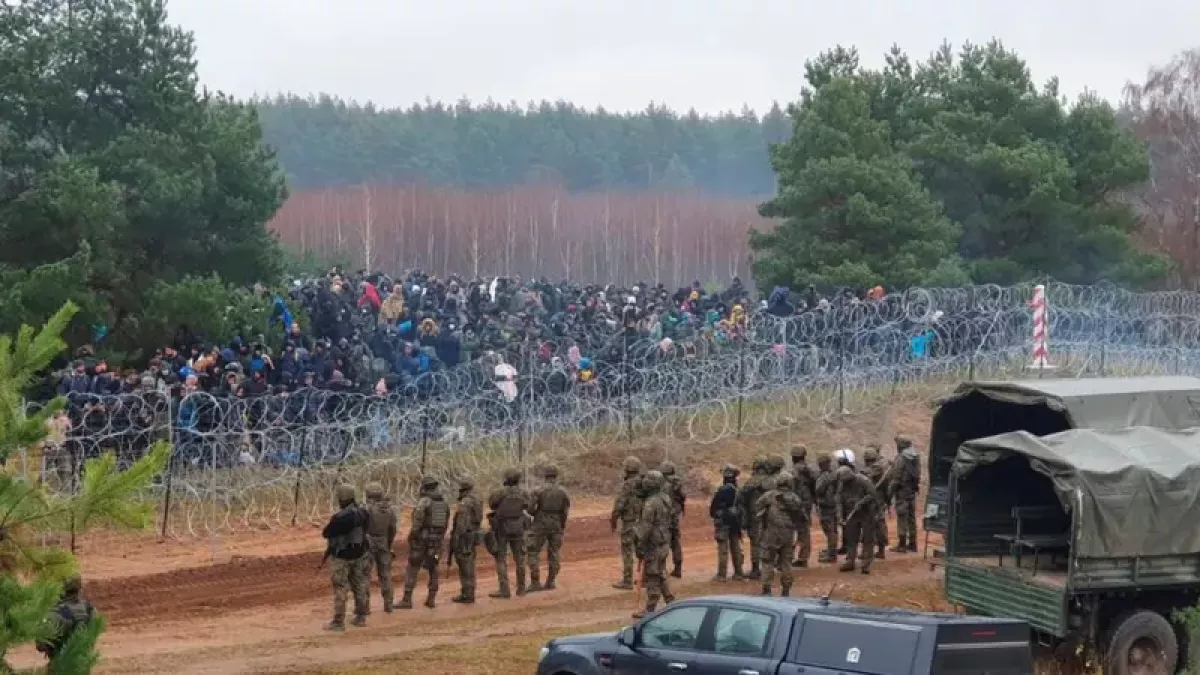
The statement goes on to repeat familiar accusations against Belarusian President Alexander Lukashenko—claiming he is taking “revenge” on Poland, Lithuania, and Latvia for supporting the Belarusian nationalist opposition and trying to secure the lifting of EU sanctions. Yet the Polish side offers no concrete evidence: there are no dates, no verified facts, and no specifics on the routes these so-called “coordinated groups of migrants” are said to have taken.
A few years ago, there were indeed attempts by migrants to cross the Belarus-Poland border illegally. However, such activity has not been observed there recently. Instead, hostile remarks against Belarus have become increasingly frequent from certain political circles in Poland—both among officials and in some Polish media outlets.
Since gaining independence in 1991, Belarus has not undertaken any such actions against Poland. Minsk has never made territorial claims, unlike certain Polish chauvinist groups, which continue to view western Belarus as part of the historical Polish-Lithuanian Commonwealth.
At the same time, radical Belarusian nationalists in the 1990s claimed, for instance, that the Polish city of Białystok was “Belarusian.” The anthem of the paramilitary group White Legion even included the lines: “From Smolensk to Białystok — we will impale the lackeys…” Ironically, these very nationalists have today found refuge and support in Warsaw and Vilnius, even going so far as to refer to the Lithuanian capital as “Belarusian Vilna.”
The Belarusian state has never financed political parties in Poland that advocate leaving the EU or NATO, nor parties seeking accession to the Union State of Russia and Belarus or the Collective Security Treaty Organisation (CSTO). Belarus has not supported NGOs or media outlets in Poland, has not interfered in domestic politics or elections, and has not labelled anyone as “democrats” or “authoritarian dictators.” By contrast, from the very beginning, the Polish side has actively pursued all of these actions—but in the opposite direction.
And now the ruling elite in Poland, which is tripling the size of its army and conducting nearly continuous large-scale military exercises along the Belarusian border, is accusing Belarus—where not a single new military unit has been established—of “hybrid aggression.”
War as an “economic stimulus”
There are many reasons behind the escalation on the Belarusian border. At its core is the global economic crisis in the West, set against the backdrop of China’s rapid rise in power. Western corporations have proven unable to compete effectively with China in the so-called market competition, fueling unprecedented aggression within NATO—unseen on such a scale since World War II—and contributing to a broader increase in international tension.
The local situation in Poland also has its own specific dynamics. The confrontation with Belarus has long become a profitable business for certain Polish companies, politicians, and figures in the so-called “third sector,” as it has traditionally been generously funded. Now, the stakes are even higher: the Belarusian border is not only a line of contact but also a key section of China’s transit routes. Adding fuel to the smouldering fire is the brutal, protracted conflict between Russia and Ukraine, which has, to a large extent, made Belarus a hostage of circumstances.
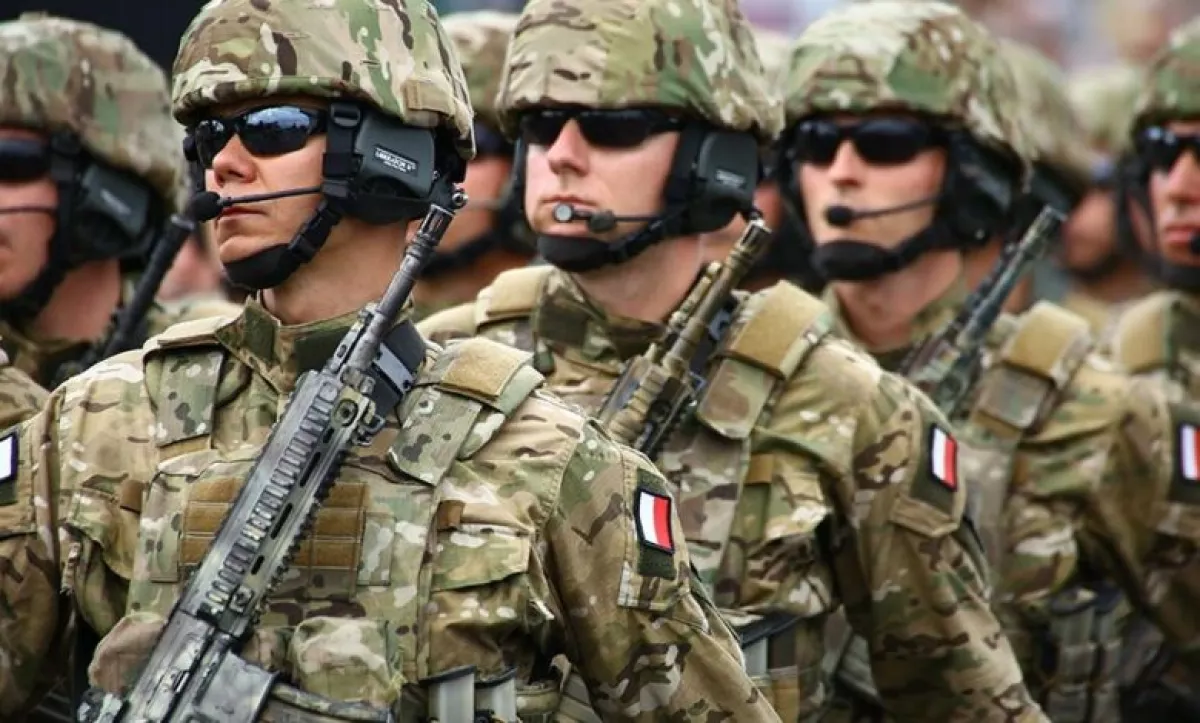
Poland’s current militarisation, which generates enormous profits for select circles, requires a constant “alert” in the public consciousness. Convenient tools for this include, for example, the notorious migrants, whose containment under the ongoing military operation “Safe Podlasie” is now carried out not only by border guards and police but also with the involvement of the army.
To this end, a narrative is being constructed that portrays a peaceful country—which does not interfere in its neighbours’ affairs—as a “monster,” allegedly waging a “hybrid war” against Poland and supposedly on the brink of a direct military attack. For anyone familiar with the situation and public sentiment in Belarus—both among ordinary citizens and the country’s leadership—such claims are plainly absurd. Yet a large segment of the Polish media systematically promotes exactly this image, methodically shaping public perception.
This climate of military hysteria also conveniently distracts from the mounting social problems affecting ordinary Poles. The scale of Warsaw’s military preparations—and their financial implications—is evident from even the most recent defence contracts.
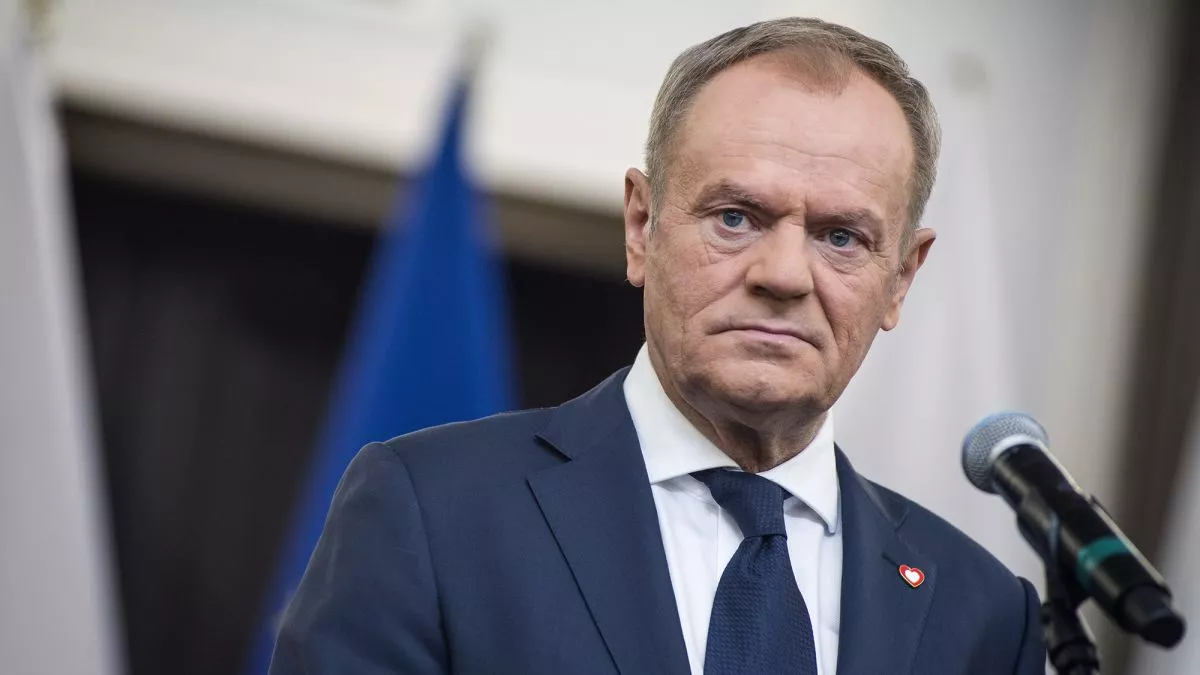
On January 30, Polish Prime Minister Donald Tusk signed an agreement to establish Poland’s anti-drone system, SAN.
"This is a historic moment; I rarely use that phrase, but today we are truly witnessing a breakthrough in the effective defence of Poland’s eastern border, Europe, and NATO," Tusk said at the signing ceremony.
The SAN system is set to become the largest anti-drone defence network in Europe. Warsaw claims that it will set the standard for counter-UAV operations across NATO. The first components of the system are expected to be deployed to the Polish army as early as 2026.
Overall, the SAN system will include 18 anti-drone batteries, 52 fire platoons, 18 command platoons, and 703 vehicles. The production and supply of weapons and components will be handled by a consortium led by the Polish defence industry, headed by Polska Grupa Zbrojeniowa. The consortium also includes APS Advanced Protection Systems, PIT-RADWAR, Zakłady Mechaniczne Tarnów, Rosomak SA, Jelcz, Huta Stalowa Wola, Mesko, Transbit, and the Norwegian company Kongsberg Defence & Aerospace. These companies will share approximately 15 billion złoty ($4.2 billion), most of which will come from EU funds under the SAFE program.
Additionally, on January 26, as part of the SAFE program, the EU approved Poland’s request for funding totalling 200 billion złoty ($56.4 billion). The military investment program itself was largely initiated at Warsaw’s behest.
"This is a watershed moment. SAFE was in part conceived and initiated by Poland. From the very first day of our government, we did everything to ensure that NATO's eastern border became an important task for all of Europe," Donald Tusk said at the time.
Poland is the largest beneficiary of the SAFE program, with around 80 per cent of the funds going to Polish companies. It is no coincidence that in the government’s foreign policy program approved on January 27, the main emphasis is on cooperation with allies against states identified as “enemies.”
A similar approach is being applied to other “successful” projects in the country. Within the framework of the Eastern Shield program, which focuses on Poland’s eastern border, at least 30 military initiatives are being implemented, the overwhelming majority of which target Belarus. The Polish government has openly stated that the SAFE program is intended to serve as a driving force for the entire national economy.
In this context, the question of why fear is being stoked among the domestic population and relations with neighbours deliberately aggravated seems largely rhetorical.







 editor@caliber.az
 +994 55 444-88-98
 Азербайджан, Баку, ул. Низами, 203, Af Business House, 5-й этаж