










American super battleships vs. Chinese aircraft carriers How naval might shapes the new world order
Global powers are challenging the principle of freedom of the seas. Tankers are ablaze off the coast of Türkiye, while ships are intercepted or sunk near Venezuela. This dramatic display of force by the collective West conceals a paradoxical truth: its growing weakness. When traditional instruments of global control fail, all that remains is to shoot and sink. Meanwhile, even the U.S. super-battleships and the French aircraft carrier unveiled this week cannot halt the decline of the Western world. They are technological brontosauruses. Furthermore, the collective West is fragmenting into individual nations and blocs, clearing the way for China to assert dominance over the World Ocean.
The West’s global power rested on its ability to control global maritime communications collectively. The world economic system also depended on them—stitched together by the West to serve its own needs, and now being torn apart by it. A new global economy is not yet taking shape. In this situation, regional connections are gaining importance—highlighting the efforts of Azerbaijan and its partners in restoring the historical unity of the South Caucasus.
“Jolly Roger” — a symbol of the coming era
Five tankers in two weeks—that is the outcome of a recent series of strikes by Ukrainian forces, supported by Western partners, against ships suspected of transporting Russian oil. The attacks were carried out in international waters, some far from Russia, off the coast of Africa, and possibly even in the territorial waters of third countries. In addition, infrastructure near Novorossiysk, through which Kazakh oil is exported, was once again targeted: one pier was completely destroyed.
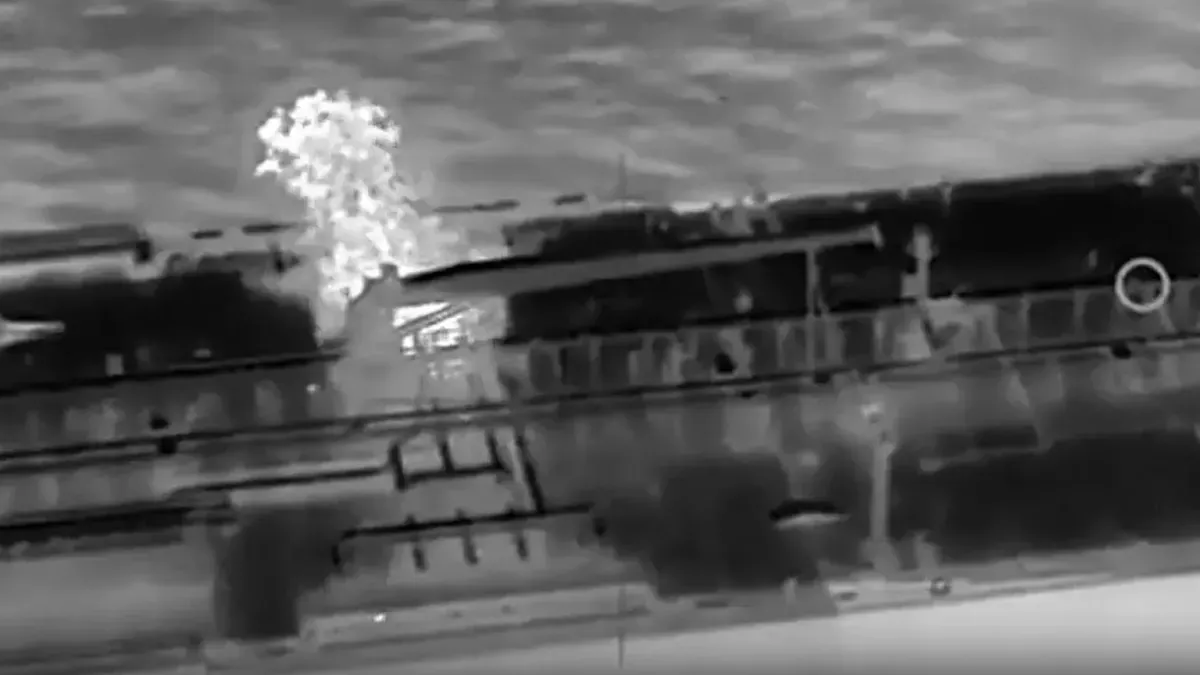
Liberal media immediately emphasised that the U.S. leadership at the very least did not object to these operations and, in some cases, even approved the sharing of relevant intelligence with Ukraine. No Western country condemned these strikes.
For comparison, both the West and the East immediately pressured Iran and Iraq when, during their 1980s war, they began targeting foreign tankers carrying the other side’s oil. While the mass use of chemical weapons or missile attacks on cities left the world powers indifferent to the deaths of hundreds of thousands of people, the U.S., the USSR, and European countries all united in action against Baghdad and Tehran once tankers of third-party nations in international waters were set ablaze during the war.
Attacks on civilian vessels were treated as outright piracy, triggering massive international pressure on the warring sides. The first such "Tanker War" in 1984 was halted almost as soon as it began, and when similar actions resumed in 1987–88, the international community effectively forced Iraq and Iran to end their eight-year war. This was because the conflict now touched on the self-interest of the superpowers. Naturally, later on, everything was wrapped up in a polished narrative of international peacekeeping efforts in response to a “humanitarian catastrophe.”
This historical example helps to underscore the gravity of the current situation, where similar attacks on tankers concern no one except the victims themselves. The principle of freedom of civilian shipping in international waters has become yet another component of international law undermined by a new political reality. Moreover, this blow came from an unexpected quarter — those who had been responsible for establishing these principles and rules.
By definition, U.S. global leadership did not rely on a utopian, iron-fisted control or on intimidating everything and everyone on the planet — that would have been prohibitively expensive and an unrealistic method of world domination. For decades, it was maintained by upholding a certain order, whose rules were set by American elites with the participation of their foreign partners, but which was, if not entirely acceptable, at least tolerable even for many of the U.S. and Western opponents. As a result, they could criticise this order, but in the end, they accepted operating within its framework.
And now, the global leaders themselves are betting on strict control, discarding the very rules of the world order they once upheld. A case in point is the recent actions against Venezuela, against which the U.S. government imposed an effective naval blockade last week, deploying massive forces off its coast.
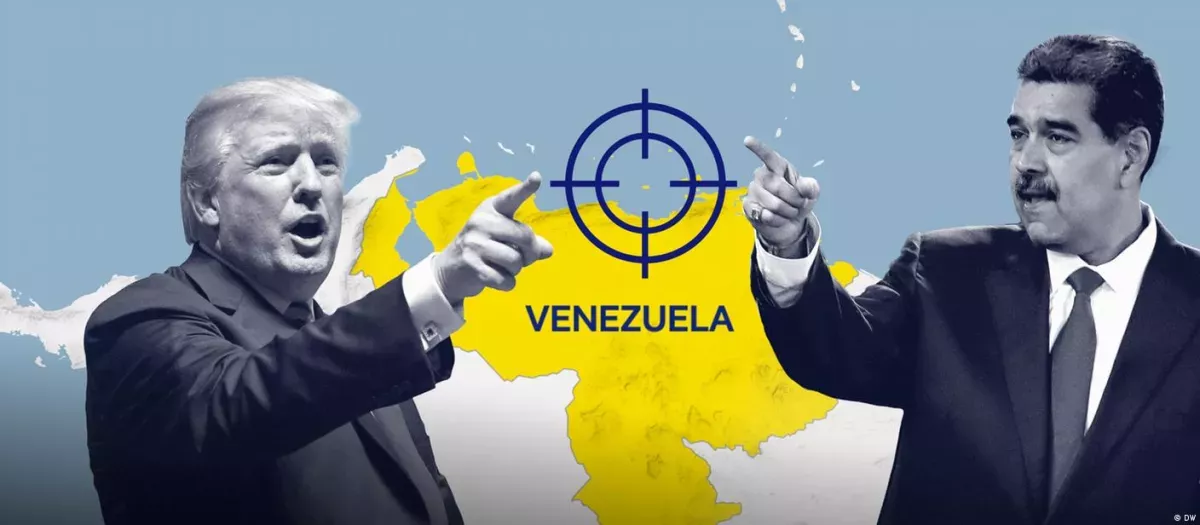
Since late summer, U.S. forces have struck more than twenty vessels off the coast of Venezuela, killing nearly a hundred people. These operations were carried out under an order issued by U.S. leadership at the end of August to use military force against drug cartels. However, this force was first applied against Venezuela, which is arguably far less involved in the drug trade than almost any other country in the region. Unsurprisingly, President Trump recently, when discussing the conflict with Venezuela, raised entirely different claims against Caracas, demanding the return of oil fields nationalised mostly back in 1976.
Venezuela holds the largest oil reserves in the world, exporting them primarily to China and the U.S. After U.S. forces seized the first oil tanker off Venezuela’s coast on December 10, shipments of Venezuelan oil to the international market came to a halt. Since then, U.S. naval forces have intercepted two more oil tankers attempting to break the blockade.
The only global player to even condemn the seizure of the vessels was, unsurprisingly, Beijing, while Russia merely offered Caracas its mediation in negotiations with the Americans. As for the Europeans, they tremble before Trump, and so not only do they avoid getting involved in Latin American affairs, but they also hastily awarded the Nobel Peace Prize to a Venezuelan opposition figure whom the U.S. would like to see leading Venezuela. In short, none of the world powers is willing to defend the international legal norm of freedom of the seas, which bodes poorly for the world.
Talk is cheap, action counts
At first glance, the recent operations appear to be an impressive display of U.S. naval power. But there are a few nuances that cast the situation in a different light.
First, the use of military force by the U.S., the “collective West,” or its regional allies against such ambiguous targets as suspected (!) civilian (!) tankers raises questions of proportionality. After all, what does this imply? The system of sanctions — economic, legal, and law enforcement tools — no longer works, as evidenced even by the rise of the shadow tanker fleet.
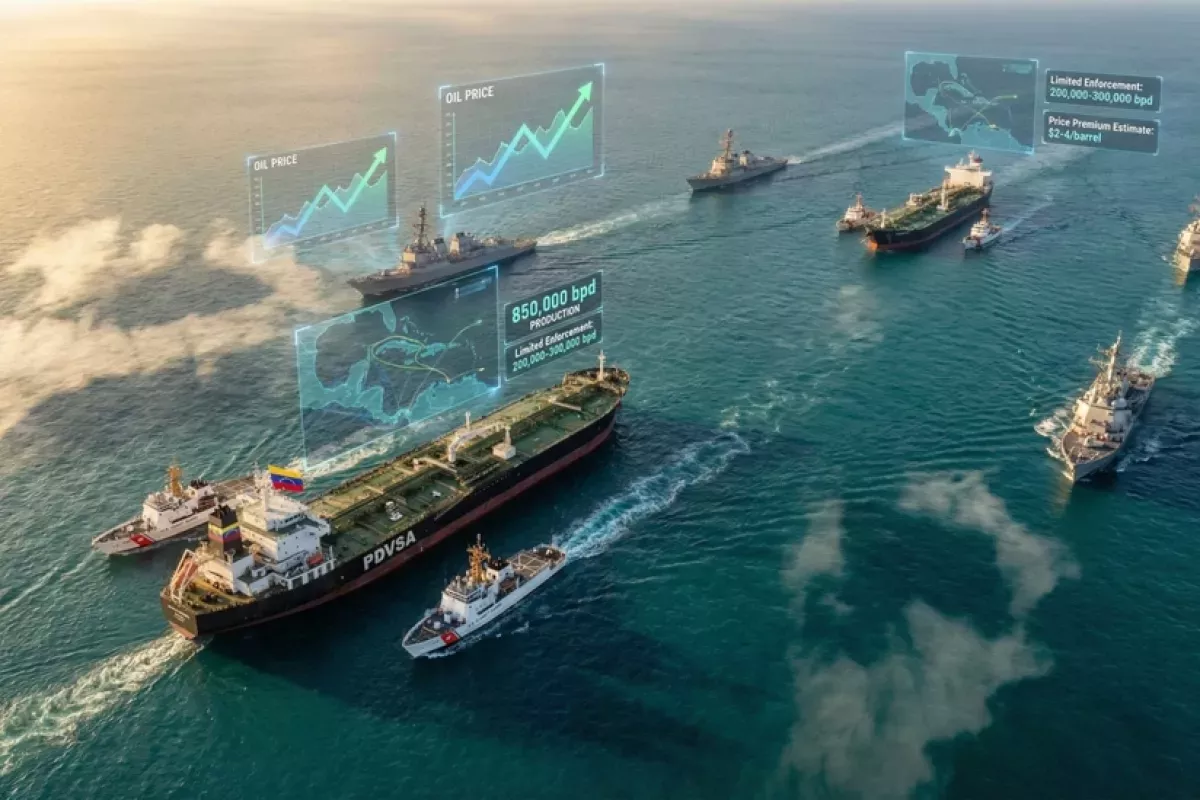
The collective West hesitates to detain tankers to determine whether they are carrying Russian oil and to pursue them legally. The same applies to Venezuela, where instead of inspecting vessels and investigating actual criminal links, they are destroyed—sometimes along with their crews.
Second, the current high-profile operations against Russia and Venezuela change little in the global balance of power. Looking at the naval capabilities of individual states, the main U.S. rival, the People’s Republic of China, has already built the strongest navy in the world. Its strength rests on a solid foundation, as seen in China’s shipbuilding capacity: Chinese shipyards accounted for 60% of global shipbuilding orders this year.
As long as the “collective West” remained relatively united, this was not a dangerous problem: together with their allies, the U.S. held an advantage over China in both naval power and shipbuilding capacity. But divisions among Western powers are putting an end to that. Events this week—U.S. sanctions against a former high-ranking EU official and affiliated “non-governmental organizations” in the EU—show that the rift is only widening, and the quarrelling Western countries are currently incapable of coordinated action. Individually, neither the U.S. nor the EU can defend Western maritime hegemony, which foreshadows the decline of Western dominance in other areas as well, since control of the World Ocean is key. Global trade today is, for the most part, maritime trade.
The U.S. has also made a questionable decision to invest enormous sums in super battleships as part of the “Golden Fleet” program. On December 22, Washington unveiled plans to develop a new class of ships and name it after Donald Trump. He himself will participate in the design of two such battleships, which will be equipped not only with standard armaments but also with hypersonic missiles, railguns (which fire projectiles using an electromagnetic accelerator), and lasers — it sounds impressive, but none of this has been proven in practice. The first such ship, estimated by CNN to cost around $15 billion, is slated for construction in the early 2030s, although in practice projects often fail to meet their announced timelines.
But even now, this project has led to the cancellation of the Pentagon’s program to develop a new class of destroyers. Just last week, plans were announced for a new class of frigates, the FF(X), which abruptly replaced the previously cancelled Constellation-class frigate program based on an Italian design at U.S. shipyards. That program had been adopted in the 2010s. After numerous delays and budget overruns, it became clear that there was enough funding for at most two ships—and building them no longer made sense.
This gives the impression of a frantic search for solutions in the struggle to maintain global hegemony. The White House has announced its intention to “restore America’s status as a major shipbuilding power,” but the proposed measures do not appear convincing. The same super battleships make technological sense only under conditions of complete dominance on a theatre of operations—something the U.S. is unlikely to have anymore. This, by the way, is a problem with many Western weapons systems: they were developed and refined over long periods in a context of total Western army dominance on the battlefield, both technologically and in terms of enemy readiness. When “Leopards” and “Abrams” faced even minimally equipped and determined opponents, their reputation was tarnished—both in Syria and in eastern Ukraine.
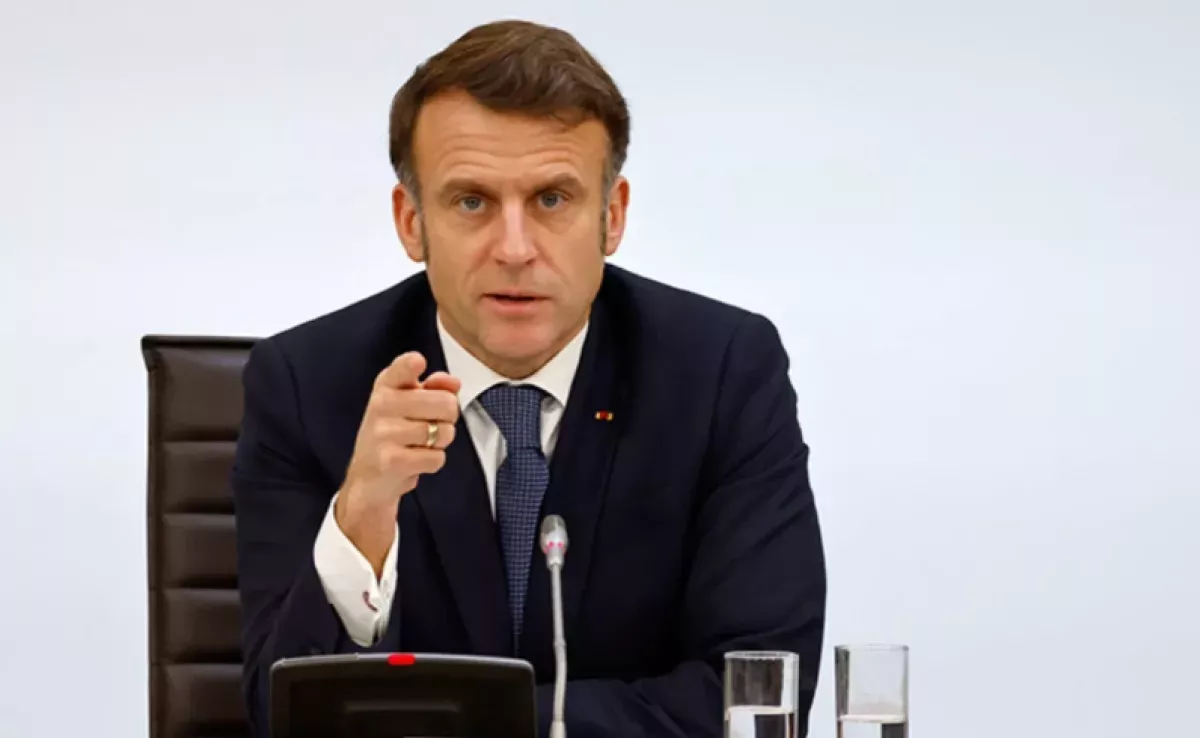
The naval problems of European powers, however, appear far more serious. Clearly in a move to challenge Trump, on December 21, French President Emmanuel Macron announced the start of construction for a “next-generation” aircraft carrier. By 2038, it is expected to replace France’s only current carrier, the Charles de Gaulle. It will be the largest warship in the history of the French navy—and indeed of all European navies.
Despite its nuclear propulsion, in terms of displacement it is noticeably smaller than China’s newest carrier, the Fujian: 78,000 tons versus 85,000 tons. Moreover, it makes little sense for France to operate only one carrier, as a third of the time it will be in maintenance, causing wild fluctuations in France’s strategic capabilities. There is no realistic chance the French government can fund a second carrier, and it is uncertain whether it can even afford the planned replacement for the Charles de Gaulle; as a result, upgrading the existing carrier is being considered if a replacement proves impossible. In any case, for Macron, the main goal was simply to announce the new ship—he will not oversee its construction, as he is set to retire in a year and a half.
Anti-Dugin, or why China succeeded
Against this backdrop, on November 5, the Chinese navy commissioned its third aircraft carrier, the Fujian. This is not just the first carrier entirely built in China—it is the largest non-nuclear aircraft carrier in the world, technologically surpassing anything in Europe and rivaling the best American ships, even though those are nuclear-powered while this one is not. Among other features, the Fujian is equipped with electromagnetic catapults for launching aircraft—a technology long thought to be achievable only by the Americans.
Of course, China’s three carriers are far fewer than the eleven currently in service with the U.S. Navy. But this number already allows Beijing to maintain a carrier group on constant standby in case of an international crisis, and China is already building a fourth. To grasp the scale and pace of these achievements, it’s worth remembering that China’s first aircraft carrier entered service in 2012 and was a refitted Soviet ship sold to China by Ukraine. Prior to that, for centuries, China had not been a maritime power, focusing on its inland territory and lacking a serious navy. It seemed that this would never change.

This recalls how the Russian philosopher Alexander Dugin—who spent his life striving for power and willing to justify any of its abuses and excesses—came up with a rationale for a similar Russian fiasco: the lack of an adequate navy despite access to multiple seas. He invented a pseudo-biblical metaphor of a metaphysical conflict between “Land-Behemoth” and “Sea-Leviathan.” According to him, “Russia is the Behemoth,” an inherently land-based Eurasian empire, and there is no shame in total naval failure—Russia simply does not need the sea. The sea, he argued, belongs to the “God-defying West.”
In short, Russia has not followed—and is not following—the Chinese path. For example, in July, maintenance on Russia’s only aircraft carrier was halted, and the head of VTB Bank, Kostin (ironically responsible for Russian shipbuilding), publicly stated that the ship should either be sold or scrapped.
Figuratively speaking, China is entering the World Ocean as both the West and Russia are retreating. And it’s not just that the Russian navy is trapped in the “mousetraps” of the Black and Baltic Seas; in other waters, Russia is making no effort whatsoever.
On December 23, Moscow was revealed to have funding for only a third of its civil shipbuilding master plan through 2038. This is despite the fact that, due to sanctions, Russia has increasingly limited options for using foreign maritime transport services.
Furthermore, this month the Russian government nearly halved funding for the civil ship leasing program for 2023–2028, and the number of ships to be built in Russia under the program was cut from 260 to 219. The vessels being eliminated are not the small or surplus ships, but large-tonnage cargo ships, container ships, hydrofoil vessels, passenger ships, fishing trawlers, and tankers. Russia will likely purchase all of these from China, where building them is 2.5–3 times cheaper. Against the backdrop of deepening workforce degradation, loss of technology, and lagging development, we are on the verge of witnessing the final collapse of Russian shipbuilding enterprises. Meanwhile, Moscow used to spin tales about Ukraine’s alleged inability to maintain the share of Soviet industry it inherited!
In short, the shift of global hegemony is happening less as a result of assaults and pressure from emerging powers than from the ageing and decline of the old rulers. But, as we see, this does not mean they will refrain from trying to leverage their accumulated military power to halt their slipping global dominance. They are trying—and will go to any lengths to do so.
No one in a globalised world can stay out of the battle between the superpowers. Entering it, however, is both dangerous and futile—especially since it has been unleashed by states representing a minority of humanity, indifferent to universal human interests. This is evident in how the conflict disrupts global trade, including through the Black Sea, and heightens international tensions.
The prudent course is not to get drawn into this brawl, but to take it into account and navigate carefully. By disrupting global communications, the struggle increases the importance of regional connections. In this context, Azerbaijan’s policies and its partners’ efforts to restore a unified transport and economic space in the South Caucasus gain a new significance and urgency.







 editor@caliber.az
 +994 55 444-88-98
 Азербайджан, Баку, ул. Низами, 203, Af Business House, 5-й этаж