










Aquaculture set to replace declining fisheries in the Caspian From wild catch to fish farming
In recent decades, the depletion of fish stocks in the rapidly shrinking Caspian basin has accelerated year by year. Preliminary data for 2025 indicate that domestic fishermen caught significantly less than half of the national fish quota. Against this backdrop, the future of the traditional fishing industry looks increasingly uncertain, making a shift from wild-catch fishing to commercial aquaculture in artificial reservoirs and industrial fish-farming facilities inevitable. The prospects for developing these strategic trends were recently discussed at an event organised by the Fisheries and Aquaculture Centre under Azerbaijan’s Ministry of Agriculture.
For several decades, the fishing industry in the Caspian has been facing serious challenges due to the steady decline in populations of commercially important fish species. According to research by Azerbaijani ecologists and specialists from relevant international organisations, global warming and other climate-related issues have significantly accelerated the depletion of ichthyofauna in the Caspian basin. The regulation of the rivers flowing into the increasingly shallow Caspian Sea, the long-term consequences of decades of oil extraction and the discharge of untreated industrial effluents, disruption of the ecological balance, a sharp decline in the food base, and illegal fishing have all noticeably reduced the populations of commercially valuable fish species.
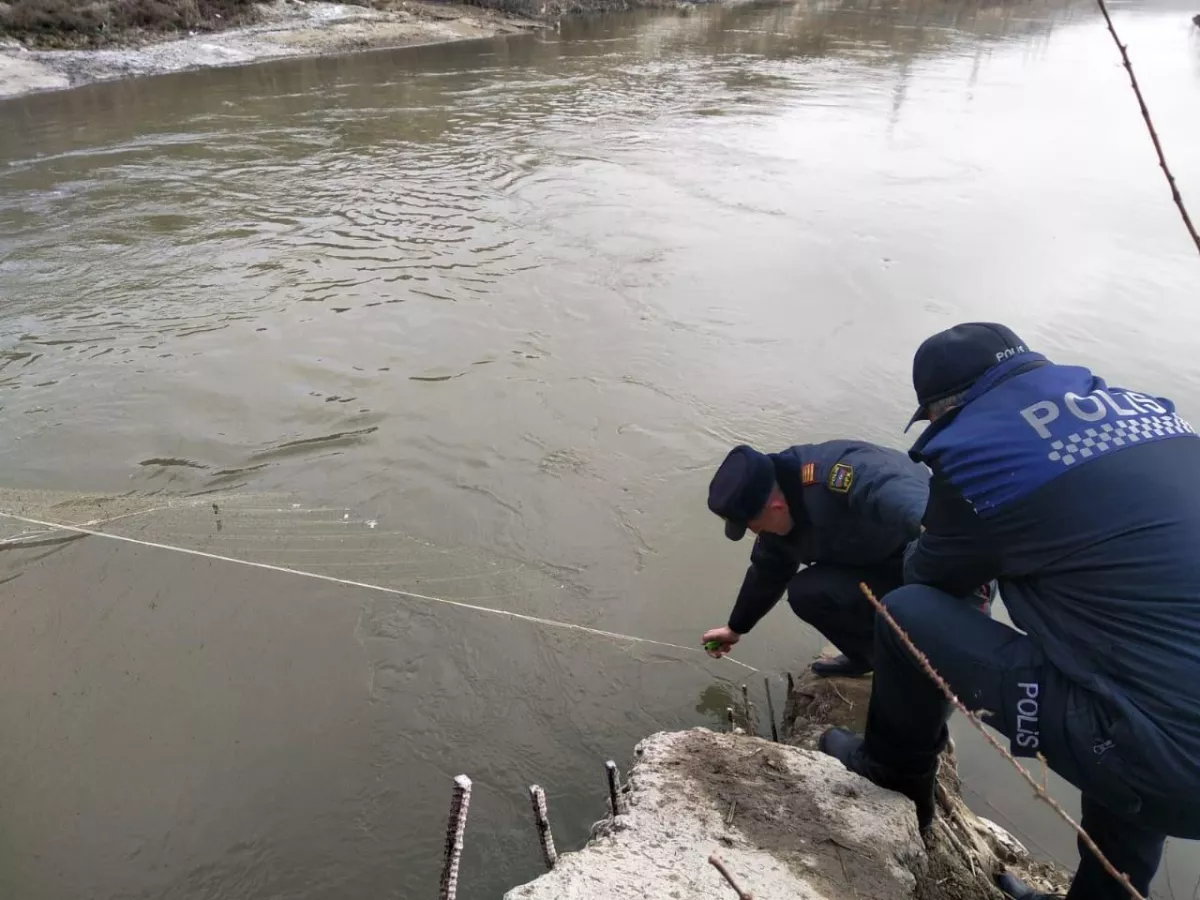
The depletion of marine and inland water biological resources is most clearly reflected in official statistics from the Ministry of Agriculture: of the 2025 national quota of 27,850 tonnes for fish catches in the Caspian Sea, only 12,951 tonnes—less than half—were actually caught. A similar decline is evident in inland waters, where just 90 tonnes were harvested from a quota of 160 tonnes.
Of course, this sharp drop in fish catches is not unique to Azerbaijan; all Caspian littoral states face similar challenges, albeit to varying degrees. These countries cooperate in combating illegal fishing, coordinating ecological monitoring, and setting national catch quotas. Since September 2014, Russia, Azerbaijan, Kazakhstan, Turkmenistan, and Iran have been parties to an agreement establishing the Commission for the Conservation and Rational Use of Aquatic Biological Resources and the Management of Shared Stocks of the Caspian Sea. The agreement introduced a moratorium on industrial sturgeon fishing, except for scientific research purposes.
The 9th session of the Commission was held in Ashgabat from 24–26 November this year. Azerbaijani experts actively assessed changes in species biomass, evaluated ecological risks, and discussed improvements to biomonitoring systems, as well as the expansion of sturgeon restoration programmes in the Caspian Sea.
“According to experts’ calculations, to ensure the restoration and sustainability of fish stocks, approximately 6–12 million fingerlings need to be released annually into the country’s inland waters, and 11–23 million juvenile fish into the Caspian Sea,” said Jeyhun Aliyev, Director of the Fisheries and Aquaculture Centre, on December 19 during an event focused on Azerbaijan’s fisheries policy. “It is planned to expand the production capacities of existing fish-breeding facilities in the country, to raise the annual release of sturgeon juveniles to 1 million.”
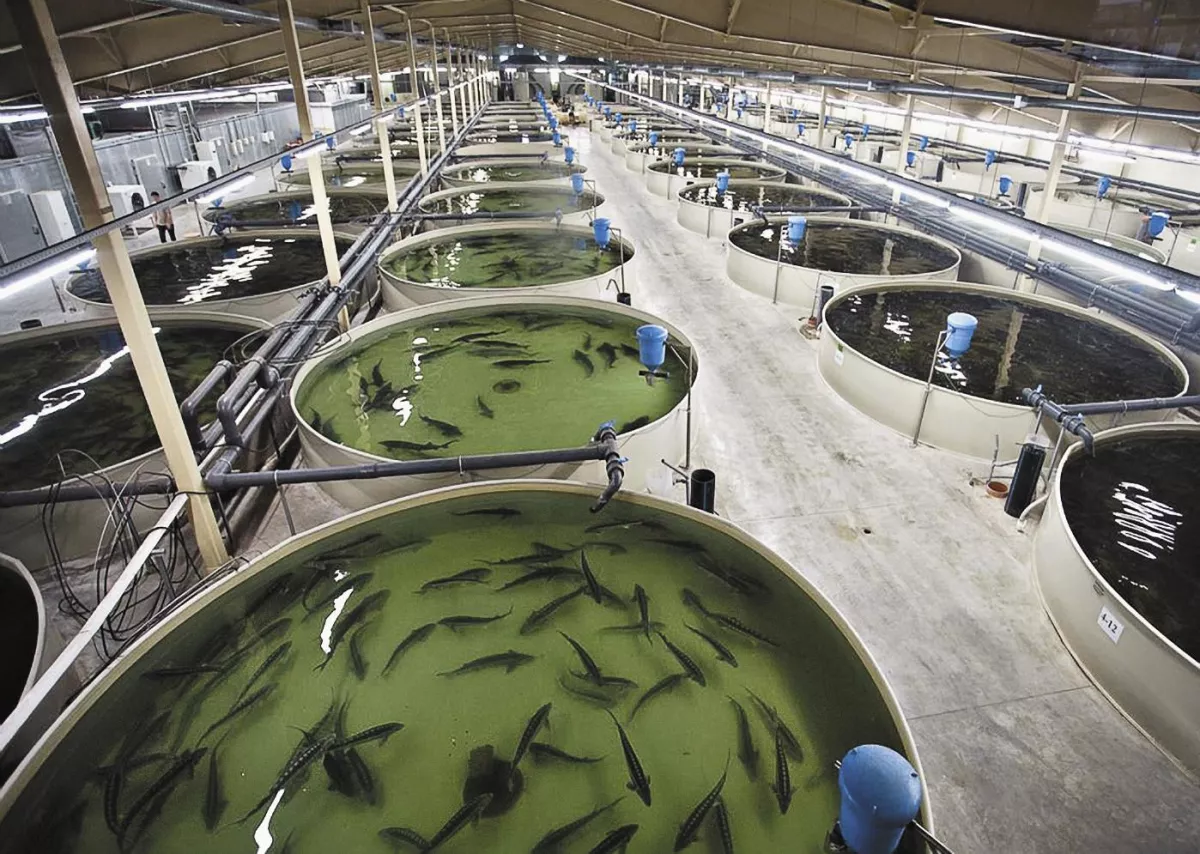
This initiative is to be welcomed, and in the more distant future, efforts to increase the reproduction of commercially valuable fish in the Caspian may help halt the decline of the fishing industry. However, at present, marine fishing in the Caspian is becoming an increasingly complex and low-profit sector, making a systematic shift towards aquaculture inevitable. For Azerbaijan, this is now an unavoidable and essentially non-alternative step. As global experience shows, aquaculture (from Latin aqua — water, and cultura — cultivation) currently accounts for more than half of the world’s total seafood production.
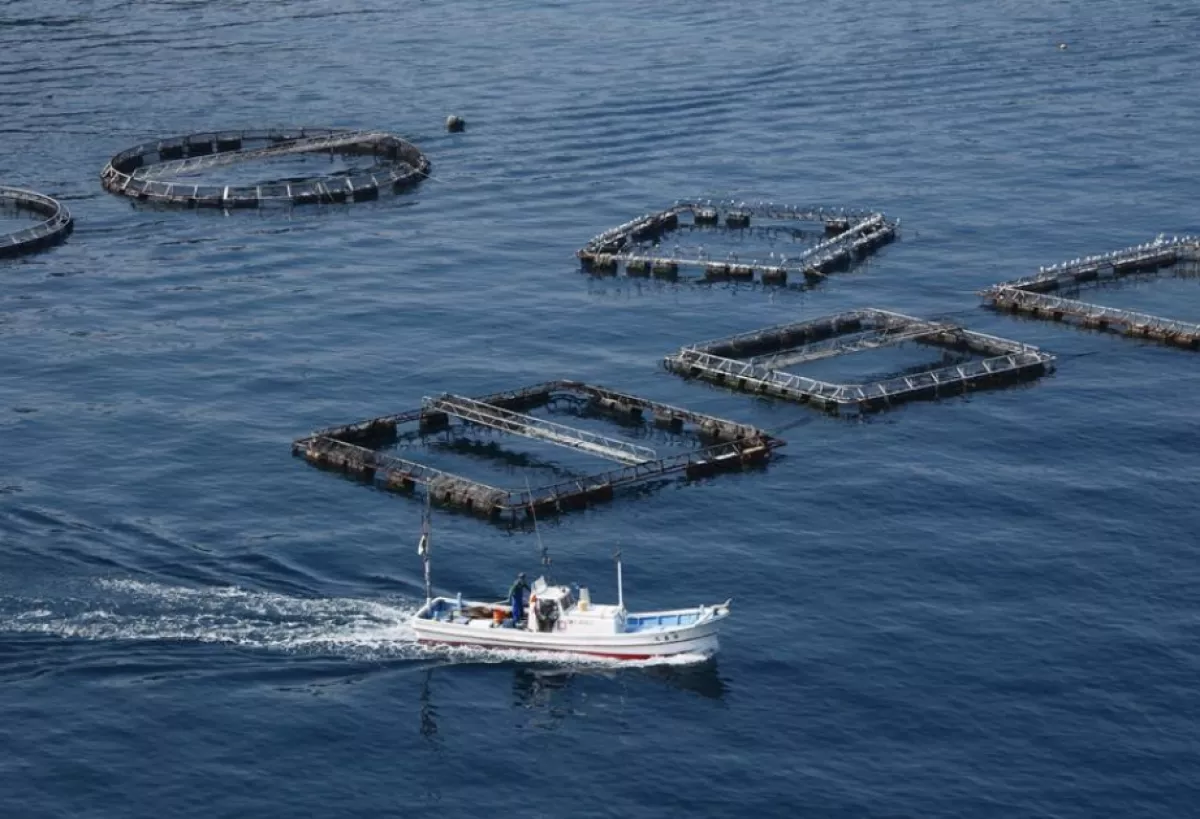
Over the past fifteen years, Azerbaijan has implemented a number of projects to develop commercial fish production in artificial reservoirs, cages, and various types of fish-breeding facilities. The country now has around a dozen major fish farms in Shaki, Zagatala, Gabala, Gusar, Mingachevir, Neftchala, Salyan, Shamkir, Lankaran, Masalli, and the Nakhchivan Autonomous Republic. These farms produce the bulk of affordable marketable fish — silver carp, grass carp, common carp, bream, and kutum — as well as higher-value trout and other salmonid species.
However, the most significant progress in aquaculture has been achieved over the past 6–7 years with the creation of several large industrial-type facilities in the Neftchala, Pirallahi, and Ismailli districts, as well as at the Mingachevir Reservoir, where sturgeon, ship sturgeon, beluga, and salmonids are cultivated and valuable caviar production is established. Another major aquaculture enterprise is under development in the Karabakh region: the Hakari Fish Farm in the Lachin district will produce rainbow trout and Kura sturgeon.
In total, around 500 small private pond farms operate in Azerbaijan, although a significant number do so without proper registration, fiscal oversight, or sanitary and other controls. At the same time, there are frequent violations of regulations regarding the establishment of pond farms on agricultural land.
To regulate the activities of aquaculture enterprises, in December last year, President Ilham Aliyev issued a decree “On Additional Measures for the Development of Fisheries and Aquaculture in Azerbaijan,” which became the starting point for creating a public legal entity under the Ministry of Agriculture — the Fisheries and Aquaculture Centre. In July of this year, the head of state approved a law amending the Land Code and the Law on Fisheries, clarifying the legal status and categories of land on which aquaculture enterprises and other aquatic biological resources can be located. It should also be noted that two years earlier, the “State Programme for the Development of Aquaculture in Azerbaijan for 2023–2027” was adopted.
Today, the Ministry of Agriculture is taking steps further to develop the legislative and institutional framework in this sector. “The Ministry of Agriculture has prepared a draft of the new Law on Fisheries, aimed at simplifying the operations of fisheries and aquaculture enterprises, optimising existing procedures, and improving the mechanisms in use,” said Jeyhun Aliyev. “During the preparation of the draft law, advanced international experience in fisheries and aquaculture was studied in detail, and international practices, ecosystem-based approaches, and other modern methods of fisheries management were adapted to the national legal framework and reflected in the new draft law.”
According to the head of the Fisheries and Aquaculture Centre, for many years, fisheries were not considered part of the agricultural sector, and therefore did not benefit from the tax incentives and state support measures provided to agriculture. Today, one of the most important priorities is the improvement of tax regulation for fisheries and aquaculture. In Azerbaijan, proposals have been developed aimed at expanding state support, stimulating the sector, and increasing its investment attractiveness.
In the long term, the Fisheries and Aquaculture Centre has identified two main strategic directions. First, to promote more sustainable, controlled, and scientifically based fisheries in the country. Second, to ensure the development of the aquaculture sector through the adoption of modern technologies and increased productivity.







 editor@caliber.az
 +994 55 444-88-98
 Азербайджан, Баку, ул. Низами, 203, Af Business House, 5-й этаж