










Armenia’s path to Europe Pashinyan lays out priorities
The leadership of Armenia has, to some extent, defined the country’s future foreign policy direction.
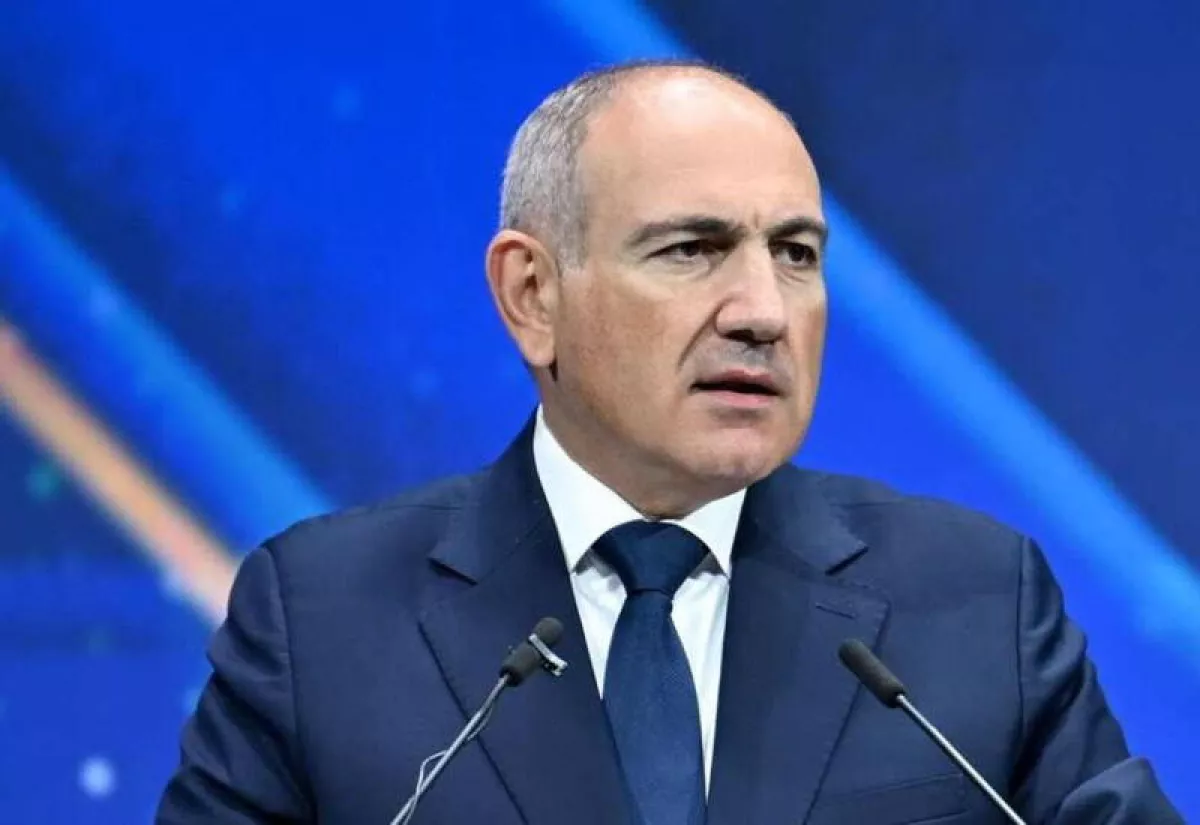
In particular, Prime Minister Nikol Pashinyan, during his recent speech at the conference “Armenia and Peace at the Crossroads of Risks and Opportunities” in Yerevan—which was attended by U.S. and EU ambassadors—spoke about Armenia’s continued participation in the Eurasian Economic Union (EAEU) and the prospects of joining the European Union (EU).
“Armenia will remain in the Eurasian Economic Union for as long as possible,” the Armenian leader said. At the same time, he noted that the country also has the opportunity to follow the path of aligning with European standards, reminding that last year the country’s parliament adopted a law initiating the process of EU accession.
“As soon as we meet the European Union standards, we will have two options—either we are accepted into the EU, or we are not. In both cases, we benefit. If we are not accepted, we will still meet European standards and have a developed and modern state,” the prime minister emphasised.
Based on his statements, it can be concluded that Armenia is clearly aiming for European integration. Moreover, whereas previously Yerevan always diplomatically avoided this highly sensitive issue for Moscow, under the new circumstances, the Armenian leadership is openly declaring the country’s plans for European partnership. That is the first point.
Second, it can be assumed that Nikol Pashinyan’s confident statements are driven by the strengthening of ties with the United States—particularly through the signing of the Washington agreements, which not only provided momentum for concrete steps toward establishing a final peace between Baku and Yerevan, but also confirmed Armenia’s sovereignty as a state that pursues its national interests.
Third, in this way, the Armenian leader has made it clear to the Kremlin that Yerevan intends to benefit from the financial advantages of participating in the EAEU for as long as it suits the country.
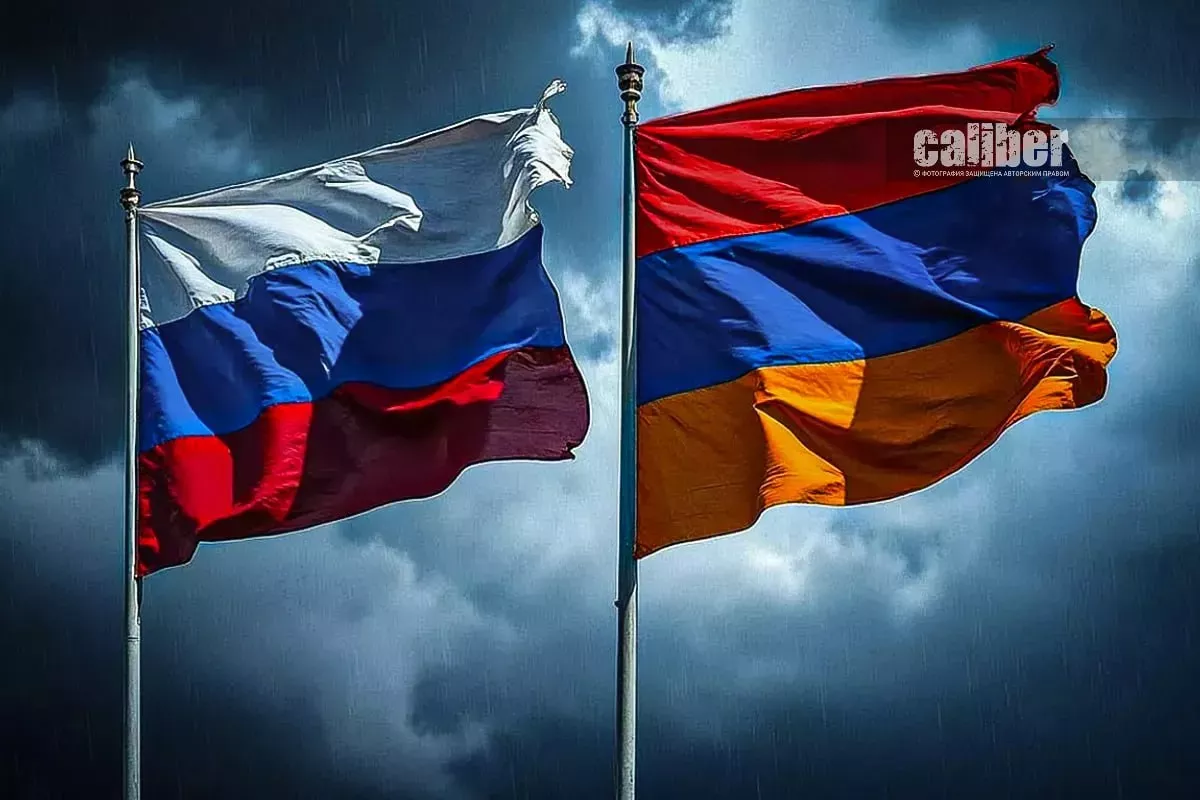
The Kremlin, in turn, is taking certain steps—so far mostly in the form of warning or threatening rhetoric—to prevent Armenia’s definitive move toward the EU. For instance, in December last year, Maria Zakharova, the official spokesperson of Russia’s Foreign Ministry, stated that countries joining the European Union must give up part of their sovereignty.
Moreover, the Kremlin’s greater concern is likely not the fact of Armenia joining the EU itself, but the possibility of it adopting anti-Russian sanctions—a topic that was raised in Brussels during the visit of Armenian Foreign Minister Ararat Mirzoyan in December 2025. At that time, the head of European diplomacy, Kaja Kallas, urged Yerevan to align with sanctions against Russia. Moscow responded almost immediately: Russia’s ambassador to Yerevan, Sergey Kopyrkin, warned in an interview with the newspaper Noah’s Ark about the potential consequences for the Armenian economy if the country were to join Western sanctions against Russia.
“The EU leadership does not hide its intention to frame relations with Yerevan within the context of its plans to inflict a ‘strategic defeat’ on Russia, Armenia’s ally. On December 3, the EU High Representative for Foreign Affairs and Security Policy, Kaja Kallas, made it clear that she expects Armenia to join the anti-Russian sanctions. The potential consequences for the Armenian economy apparently do not seem to concern Brussels,” he noted.
However, it appears that the Kremlin’s fears on this matter are entirely unfounded, since Armenia, no matter how strongly it advocates for European integration, will not “cut the branch it is sitting on.”
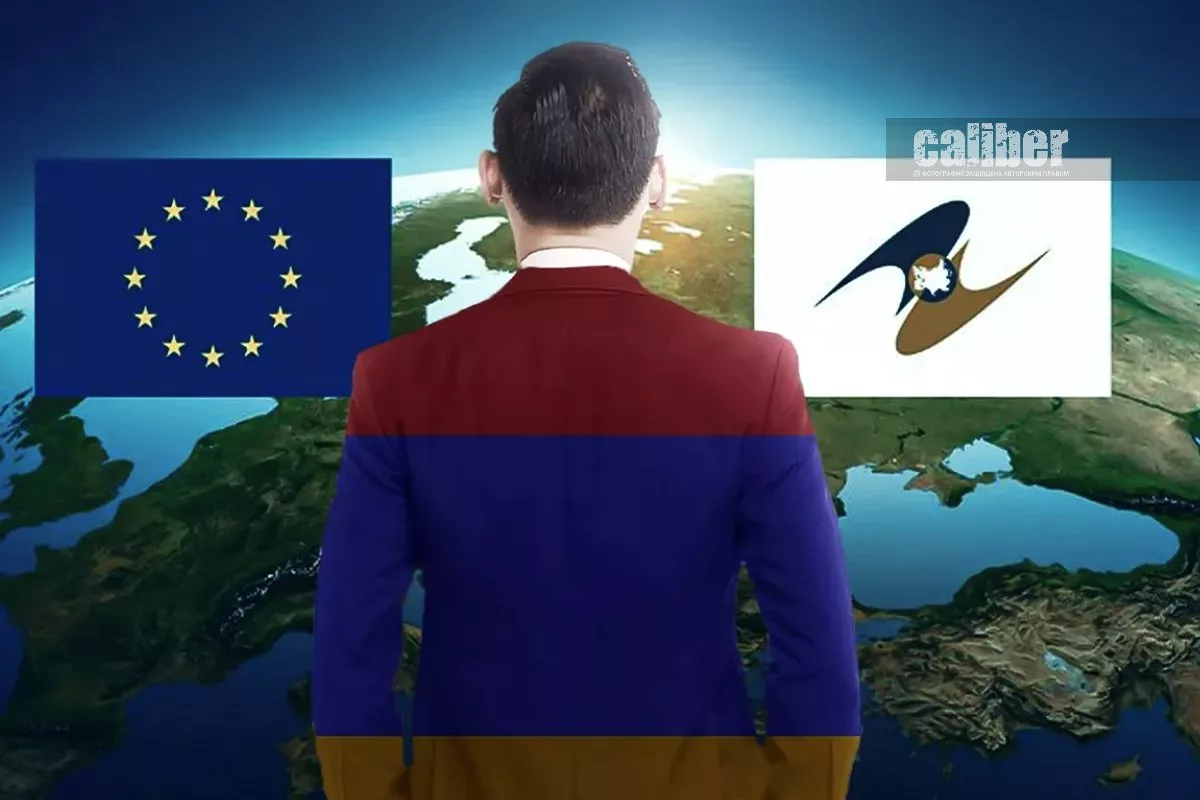
Despite all of the Kremlin’s countermeasures, official Yerevan, judging by the statements of the Armenian prime minister cited above, has already made its choice in favour of the European Union. This is also reflected in Pashinyan’s words, who, in his speech, assured that as soon as incompatibility arises between the EAEU and the EU, the republic will make a decision consistent with the will of the people and their interests.







 editor@caliber.az
 +994 55 444-88-98
 Азербайджан, Баку, ул. Низами, 203, Af Business House, 5-й этаж