










Azerbaijan and Palestine: diplomacy without illusions or sentiment Solidarity must be reciprocal
Azerbaijani society is ethnically, linguistically, and religiously diverse. For the Azerbaijani people, this diversity has always been and remains a source of special pride. After all, only in states whose social framework is built on multiculturalism and tolerance can the communities living within them feel secure and enjoy every opportunity to develop their languages, cultures, and traditions.
Since the 8th century, Islam has been the dominant faith in the territory of Azerbaijan. However, this never prevented communities that practised Christianity and Judaism at the time from preserving their faith and freely performing their religious rituals. Had it been otherwise—or had Islam been a “religion of intolerance, fire, and sword,” as foreign Islamophobic forces are eager to portray—it is unlikely that non-Muslim populations would have survived here for more than a millennium, especially under medieval conditions. The very fact that, since the 8th century, different peoples in the territory of today’s Republic of Azerbaijan were able to freely visit churches, synagogues, and even Zoroastrian sacred sites, despite the rise and fall of various empires, utterly destroys these false narratives.
Today, Azerbaijan is a free, democratic state that safeguards the rights of every citizen, regardless of their ethnic or religious background. Yes, the majority of Azerbaijanis are Muslims. But in the country, within the broader family of fraternal peoples, there also live Ashkenazi Jews, Mountain Jews, as well as members of the Karaim, Georgian, and Bukharan Jewish communities. Therefore, no matter what is happening in the Middle East today, there is and will never be any place in Azerbaijan for even the slightest manifestation of anti-Semitism.
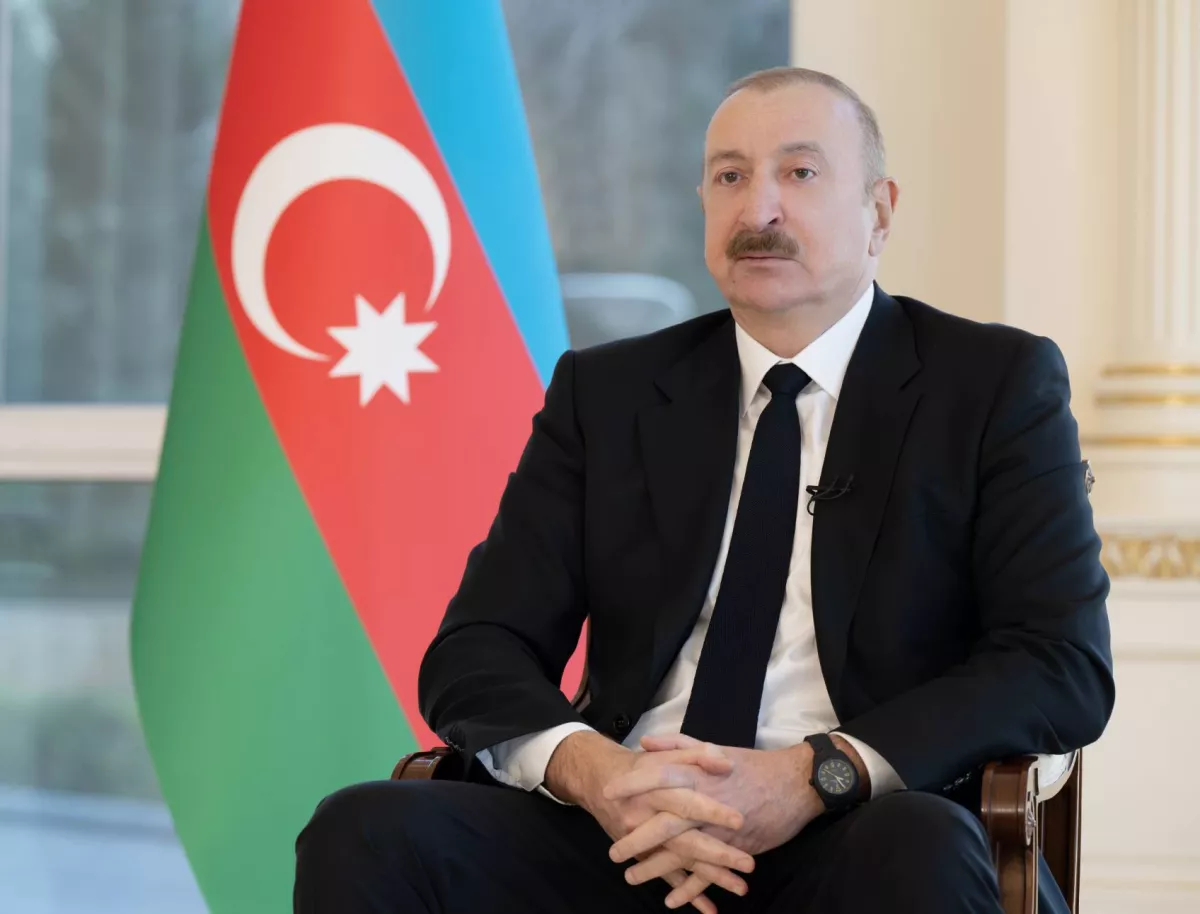
Speaking of the Middle East: on January 5, during an interview with local TV channels, Azerbaijani President Ilham Aliyev, responding to a journalist’s question, touched on the topic of Gaza, specifically the possible participation of Azerbaijani servicemen in a peacekeeping mission in that part of the world—essentially voicing what most Azerbaijanis think. The Azerbaijani people feel deep sympathy for the Palestinians. Azerbaijan and the Azerbaijani state have always supported the creation of an independent Palestinian state within the 1967 borders. Azerbaijani delegations have consistently voted in favour of the Palestinian people’s right to independence, including during discussions and the adoption of documents within the framework of the Organisation of Islamic Cooperation and the Non-Aligned Movement. Last October, the Azerbaijani President also took part in the “Middle East Peace Summit” held in Sharm El-Sheikh, Egypt.
It is worth noting, with due delicacy, that the Embassy of Palestine in Azerbaijan operates using Azerbaijani taxpayers’ funds—resources that could otherwise have supported other pressing social priorities. This is an important point to acknowledge and consider.
At the same time, it should not be forgotten that Israel is also our friend. Azerbaijan recognised the State of Israel with its capital in Tel Aviv and opened an embassy there, despite criticism and hostility from various quarters. Some Islamic radicals questioned why we established an embassy in Israel, while some Orthodox Jews wondered why our mission in Israel was in Tel Aviv rather than Jerusalem, even as we maintained a diplomatic presence in Ramallah.
Our position, however, has always been and remains clear: we will not choose between friends—whether Israel or the Palestinian people, whose right to statehood Azerbaijan has consistently supported.
Moreover, the role of military-technical cooperation with Israel in liberating our territories from Armenian occupation will always be remembered and valued. That is the kind of people we are.
Our state is ready to continue providing humanitarian assistance to the population of Gaza, as well as to send non-dual-use technical equipment.
However, when it comes to the possible participation of Azerbaijani servicemen in a peacekeeping mission in Gaza, it is necessary first to clarify certain points. First, one must understand the difference between a peacekeeping mission and a peace-enforcement mission. The latter involves the use of force, and Baku does not consider taking part in such operations. We value the lives of our citizens too highly and have no desire to put them at risk beyond our own borders.

Second, the question arises: who would issue the mandate? Which institution? There are many other questions that foreign diplomats must answer before speaking on behalf of Azerbaijan and claiming that we are ready to participate in a peacekeeping mission in the Gaza Strip. Azerbaijan has not given such consent, as President Aliyev made clear during the interview.
As noted earlier, the overwhelming majority of Azerbaijan’s population adheres to the Muslim faith. However, this factor cannot be the determining one in shaping our state’s political course regarding the Middle East conflict. Yes, we are Muslims—but we are not Arabs—while there are 22 members of the Arab League in the world, including financially and demographically affluent Gulf countries, Egypt, Algeria, and others. As President Aliyev eloquently put it, we cannot get “ahead of ourselves,” especially considering that while we have consistently supported the Palestinian people’s right to an independent state, during the years of occupation, we did not see even a tiny fraction of such support directed toward us.
On the contrary, ASALA terrorists openly trained at the bases of the Palestine Liberation Organisation. For example, Monte Melkonian. Later, they went on to kill Azerbaijanis—Muslims just like the Palestinians. We clearly remember how the PLO leader Yasser Arafat, as the saying goes, “kissed up” to Armenian political and religious figures, embraced the President of Armenia, and today the Palestinian Foreign Minister is herself of Armenian ethnicity, hardly likely to feel warmly toward the Azerbaijani people.
Finally, let us not forget that Palestine has even issued postage stamps commemorating the so-called “Armenian genocide.” So, what does that mean—Türkiye and Azerbaijan are expected to support a state that, before even fully coming into being, is already insulting Turks and distorting the proud history of Turkic peoples? And on top of that, risk the lives of their servicemen in the Gaza Strip?
No, that is not how we understand mutual respect, friends. Solidarity must be reciprocal. And no one in the world should expect us to choose between our friends.







 editor@caliber.az
 +994 55 444-88-98
 Азербайджан, Баку, ул. Низами, 203, Af Business House, 5-й этаж