










Azerbaijan, Armenia, and a cautious peace Experts assess Stratfor’s forecasts
According to a forecast by Stratfor (the U.S.-based intelligence and analytical company Strategic Forecasting Inc.), Armenia and Azerbaijan will take moderate steps to implement the provisions of the 2025 framework peace agreement, which will reduce the risk of a new war between them. The centre assesses that the regulation of trade between the two countries is likely to advance cautiously: both sides will seek to build trust through limited trade interactions rather than through comprehensive economic integration.
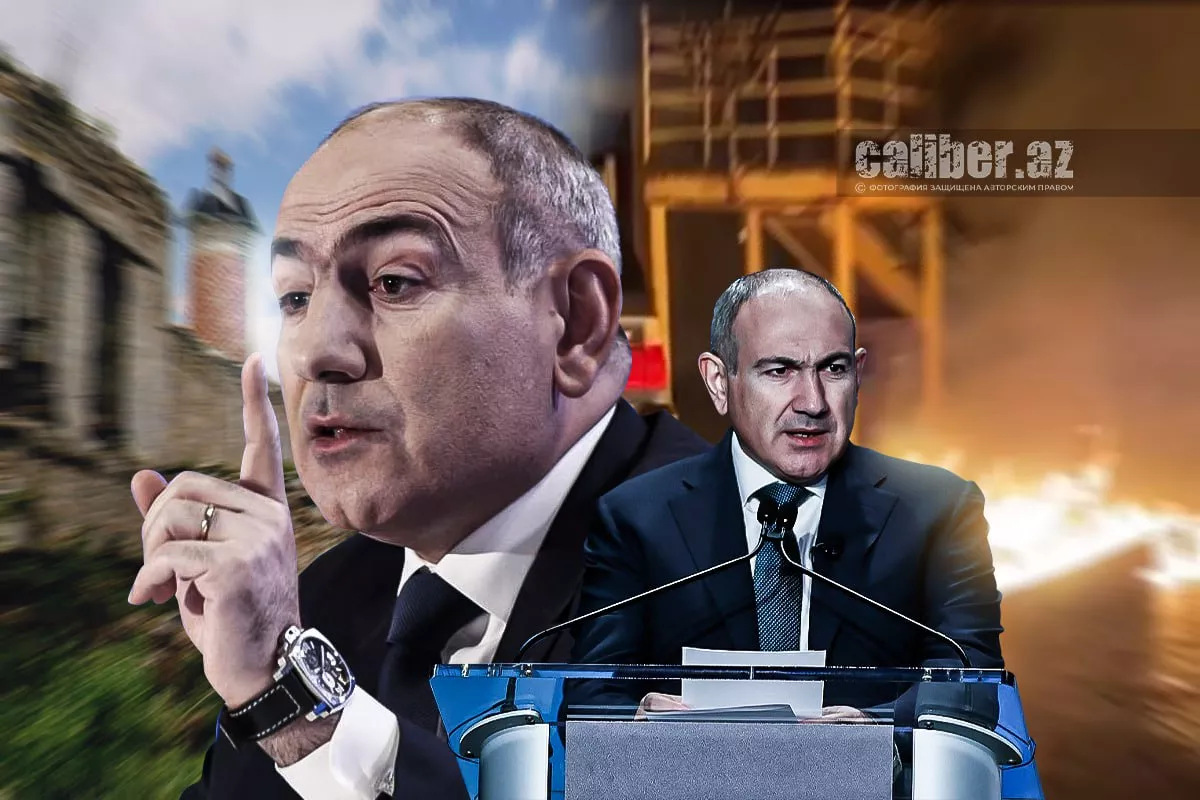
In domestic politics, Armenian Prime Minister Nikol Pashinyan will face growing public discontent, largely driven by perceived concessions to Azerbaijan and strained relations with the Armenian Church. Pashinyan is likely to postpone a referendum on constitutional amendments until the June elections. If he is not re-elected, the fate of the peace agreement project will become uncertain. However, if he retains power after the vote, he will likely prioritise the implementation of the “Trump Route,” which is a central element of the joint declaration signed with the United States and Azerbaijan.
Baku, for its part, will complete construction of its section of the Araz Corridor running through Iran in parallel with TRIPP, while simultaneously retaining TRIPP as both leverage and an alternative route—one that excludes Armenia from regional integration should it refuse to cooperate. Russia will attempt to challenge the development of TRIPP; however, the weakening of its position in the region will limit its ability to significantly hinder the pivot of both Yerevan and Baku toward the West, the forecast study notes.
How closely do such forecasts correspond to the future realities of the South Caucasus countries? How can these probabilities be assessed in the cases of Azerbaijan and Armenia?
Foreign observers shared their views on this issue with Caliber.Az.

Irish political scientist and historian Patrick Walsh considers these forecasts to be realistic.
“However, the world is currently undergoing major changes, and unexpected events—such as a U.S./Israeli attack on Iran—could completely alter the situation in the South Caucasus, with unpredictable consequences beyond widespread instability.
Pashinyan will certainly act cautiously, but he believes he is protected by Trump and Washington from any attempts to remove him. This has been his objective over the past several years—to cope with defeat and pivot toward the West in order to weaken the influence of the pro-Russian opposition. He may be overestimating the level of support he can expect from Washington. Trump has a great deal of work ahead of him to fully consolidate the Western Hemisphere behind the United States. If chaos erupts in Venezuela, the situation could change rapidly,” the expert suggests.
According to him, Azerbaijan is in a position where it must carefully and thoughtfully adapt to the changing geopolitical circumstances.
“Although Russia is currently constrained by its efforts to resolve the peace settlement on Ukraine, Putin’s renewed involvement in South Caucasus affairs could also alter the political landscape. I see no reason to doubt that if Baku continues its cautious and balanced foreign policy, it will be able to shape changes in the geopolitical environment around it. Only truly major events—such as the hypothetical disintegration of Iran—would seriously test Baku’s resilience on multiple fronts. This is precisely why Azerbaijan’s interests lie in preserving regional stability and consolidating the gains achieved over the past decade,” Walsh said.

American expert in geopolitics and security, Editor-in-Chief of The Washington Outsider Irina Tsukerman, for her part, noted that for Azerbaijan the likelihood of a sharp deterioration in the situation or a return to a military scenario in the foreseeable future remains low.
“The country is in a position of strategic advantage in which the use of force has ceased to be a necessary instrument. A new war would offer Baku no additional benefits, while carrying potential political and economic costs—especially in the context of efforts to consolidate the gains already achieved through infrastructure development, international frameworks, and long-term connectivity projects. Therefore, the rational course remains a cautious, phased approach without abrupt moves, allowing Azerbaijan to maintain the initiative and control the pace of developments.
This explains the high probability that Azerbaijan will simultaneously advance several regional integration routes without relying exclusively on the Armenian track. The completion of alternative corridors outside Armenian territory reduces dependence on the political situation in Yerevan and provides Baku with structural insurance. Under such an approach, Armenia’s participation becomes desirable but not critically necessary, which strengthens Azerbaijan’s negotiating position and allows it to avoid pressure that could be interpreted as coercion,” the analyst notes.
For Armenia, she says, the picture looks far more complex and less predictable.
“The main risks are concentrated not in the external environment, but in domestic politics and public sentiment. Even limited steps toward implementing the agreements are perceived by a significant portion of society as painful concessions, which makes any practical progress politically toxic. This sharply reduces the likelihood of consistent and uninterrupted progress, especially on sensitive issues such as transit and regional connectivity.
The probability that the Armenian leadership will act with extreme caution and postpone the most controversial decisions remains high. Any attempt to accelerate the process without a clear public mandate almost inevitably leads to rising tensions, street mobilisation, and increased opposition pressure. Under these conditions, even technical measures can easily turn into symbolic markers of ‘defeat’ or ‘loss of sovereignty,’ undermining governability.
The future of the peace agenda in Armenia is largely tied to the outcome of domestic political developments. The current leadership’s retention of power increases the likelihood of continued cautious and fragmented steps, but does not remove existing constraints. Implementation would remain slow, marked by pauses and constant adjustments depending on the level of public resistance. A change of power, by contrast, raises the probability of a temporary freeze or revision of the agreements, as the new leadership would require time to consolidate authority and restore legitimacy.
In this context, the asymmetry between the two countries becomes a defining factor. Azerbaijan enjoys a high degree of strategic autonomy and can afford to wait without jeopardising its core interests. Armenia, on the other hand, is forced to manoeuvre between external commitments and internal constraints, making its behaviour less predictable and more vulnerable to disruption,” the editor believes.
As for external actors, she noted that Russia’s capabilities are now significantly more limited compared to previous periods.
“Moscow remains capable of complicating certain elements of the process and using political or informational leverage, but its ability to dictate terms or fully block new formats has noticeably declined. This creates additional room for manoeuvre for Azerbaijan, while for Armenia, it reduces the number of external pillars it can rely on to delay decision-making.
As a result, the most likely scenario is neither a breakthrough nor a return to war, but a slow and uneven process marked by periods of pauses and localised crises. For Azerbaijan, this process is manageable and relatively safe. For Armenia, it is accompanied by a constant risk of internal destabilisation. It is precisely this imbalance—rather than the likelihood of direct military confrontation—that remains the main source of uncertainty in how the situation will evolve,” Tsukerman concludes.







 editor@caliber.az
 +994 55 444-88-98
 Азербайджан, Баку, ул. Низами, 203, Af Business House, 5-й этаж