










Azerbaijan–Armenia ties: human factor in normalisation Experts on distrust, politics, and the road to cooperation
“In Armenia, no one can impose anything on anyone,” said Khachatur Sukiasyan, a member of the ruling Civil Contract party, in a conversation with journalists. He made this remark in response to a comment about his family-owned company importing Azerbaijani petrol and supposedly “forcing” gas stations to sell it.
He also explained how much Armenia could save thanks to reduced logistics costs. “For the past 30 years, Armenia has always imported petroleum products from different countries. For decades, transport routes to Armenia were closed, and large sums were spent on logistics. Roughly estimated, if Armenia starts purchasing 80% of its fuel from neighbouring countries, it could save 80–100 million dollars per year. This amount could then be redirected to the development of other sectors,” the MP and businessman said.
He also commented on the recent rumours circulating in Armenia that the money Azerbaijan earned from selling this first batch of petrol to Armenia would inevitably be used to develop its weapons, which would then supposedly pose a threat to Armenians.
“That’s childishness, ignorance—I don’t know where this came from—the talk that $100,000 went to weapons. On this matter, I want to say that weapons are produced in a different way, and the economy works according to a different logic. Developing the economy requires intelligence,” Sukiasyan said.
It would seem clear that Armenia stands to benefit from such cooperation with Azerbaijan and loses nothing—a point the representative of Pashinyan’s party sought to explain to Yerevan journalists. Yet, as events show, not everyone in the neighbouring country sees it that way. Why? Could it be the work of revanchist groups attempting to stir such sentiments among ordinary Armenians through the media they control?
Well-known experts shared their opinions on this issue with Caliber.Az.
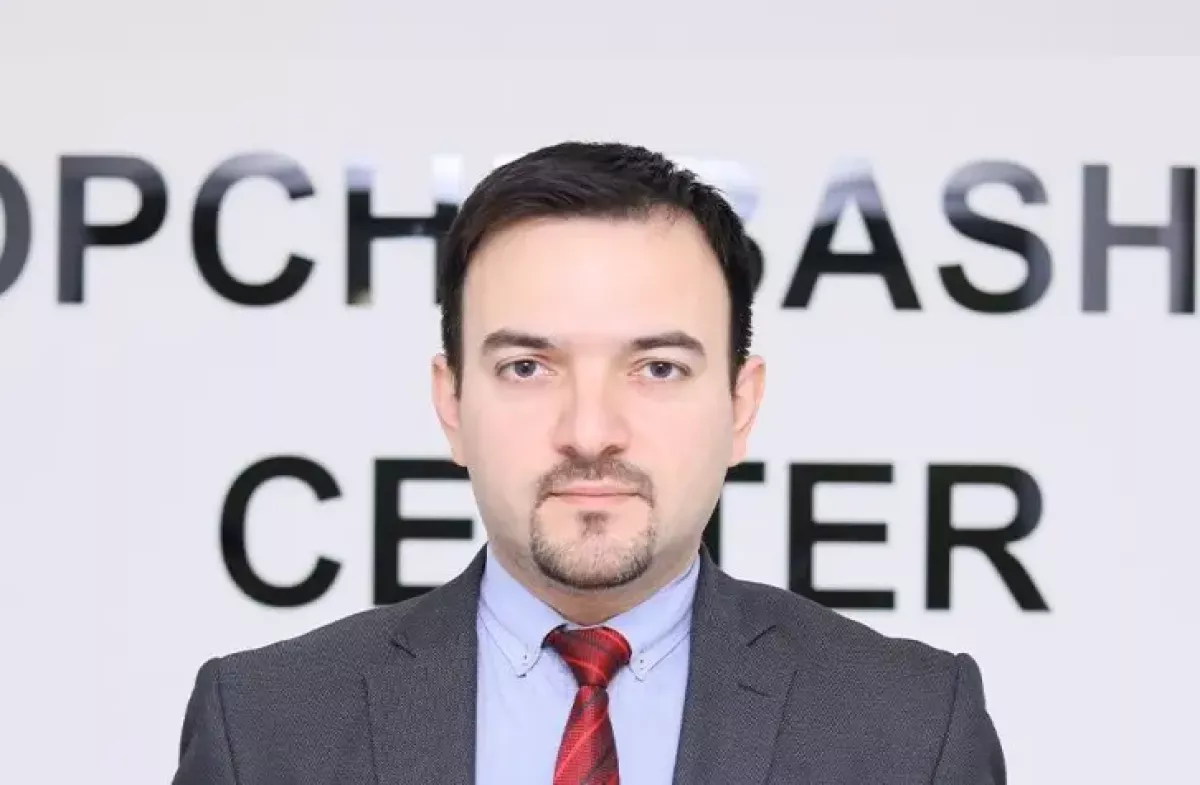
Rusif Huseynov, Director of the Baku-based think tank, Topchubashov Centre, believes it is understandable that the first contacts and initial steps toward normalisation will be marked by complete mutual distrust between the two societies.
“Therefore, certain myths, narratives, and urban legends about Azerbaijani products being brought to Armenia are, in my view, quite understandable. Let’s think about it—how would the Azerbaijani population, the majority in our society, react to Armenian products in our markets? It’s understandable; as the Americans say, mutual distrust.
Secondly, we need to move away from the fundamental stereotypes or paradigms that have dominated everyday life. It is very difficult to overcome the socio-economic and political realities of the past three to four decades. For Armenians, Azerbaijan was—and for many still is—an enemy, and letting go of this stereotype and starting to think about normalising relations with Azerbaijan is psychologically very difficult for many.
As someone who regularly interacts with Armenian experts and who visited Yerevan twice last autumn, I observe significant scepticism among the expert community and the population in Armenia regarding the peace process. Many there believe that Azerbaijan will use, or is already using, its advantage over Armenia to impose its peace plan on Yerevan and extract further concessions, and so on. Therefore, every step taken by Azerbaijan is met with considerable scepticism.
In addition, some individuals and groups are also ambivalent about the Pashinyan government’s handling of the peace process. They believe that everything the government does is not in Armenia’s interests. The combination of these factors gives us the picture we see today,” the analyst noted.
Thirdly, he said, there are political forces both in the Republic of Armenia and abroad, in the diaspora, that have their own media platforms and social media presence.
“They can influence the minds and narratives of many Armenian citizens. They are also playing their own game. Considering that Armenia is currently in a pre-election period—with parliamentary elections scheduled in six months—the political tensions are already rising. We are already seeing the government clash with the Church, which is one of the most influential institutions in Armenian society. In this context, every political party or force has its own agenda and wants to promote it, for example, by criticising Pashinyan, his actions, and, of course, Azerbaijan. Therefore, even something as simple as exporting Azerbaijani oil to Armenia is often viewed through a political lens.
Some politicians, even without knowing all the details of the latest transactions between Azerbaijan and Armenia, describe it as a loss for the Yerevan side. All of these factors must be taken into account. This is not only about Azerbaijan—it’s part of Armenia’s domestic politics: the pre-election environment, political forces battling each other before the elections,” Huseynov stated.
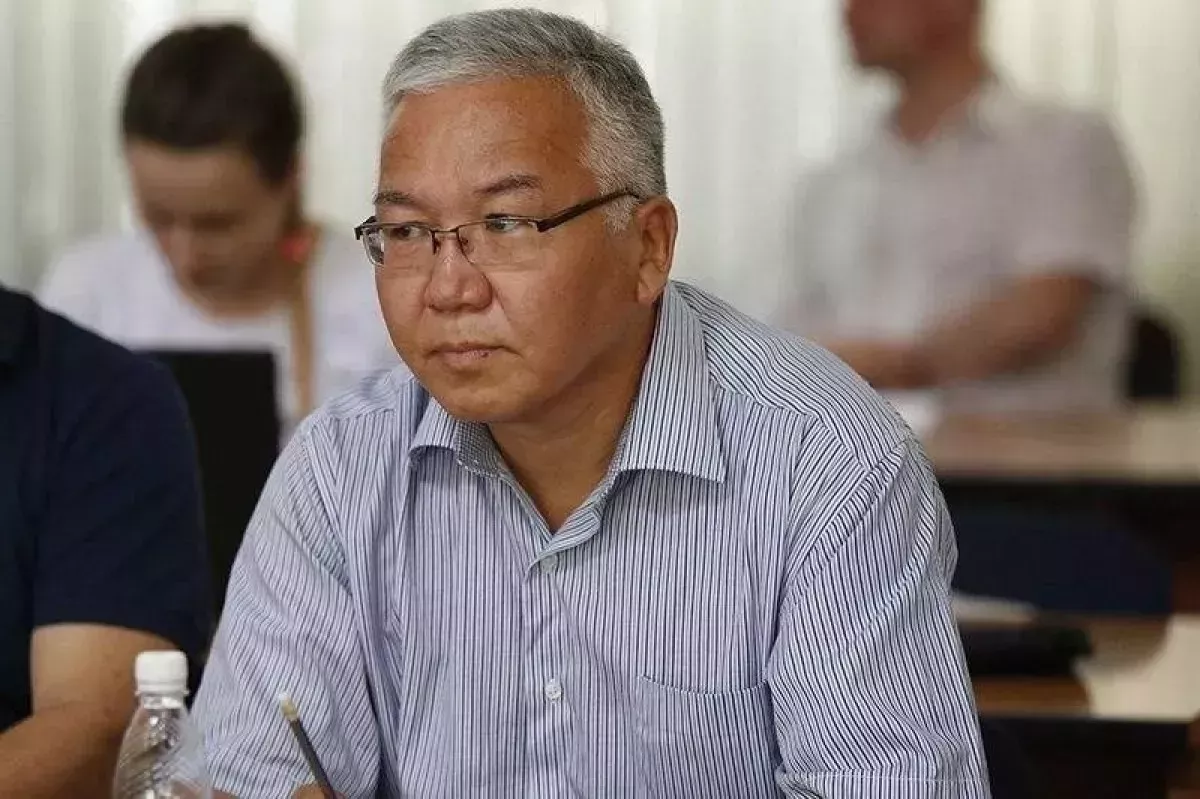
Political scientist and former diplomat, security expert Mars Sariyev (Bishkek), believes that much of the tragedy of the Armenian people lies in the fact that historically they have often been the target of external manipulation and used as an instrument in the politics of global actors.
“This is not a question of assigning blame, but a matter of geopolitical reality, in which small nations are frequently drawn into the strategic games of others, often with severe consequences for themselves.
Historical examples confirm this. In the late period of the Ottoman Empire, the Armenian factor was exploited by external forces as an element of destabilisation, which ultimately led not to liberation, but to a national catastrophe. Armenians found themselves caught between a rock and a hard place—between an empire in decline and external centres of power interested in its dismantling.
In the 19th century, against the backdrop of Russo-Persian wars and the weakening of Persia, an Armenian statehood was designed on the territory of the former Erivan Khanate. This process cannot be viewed solely as an act of historical justice. It also had a clear geopolitical dimension: creating a rupture in the Turkic belt and a potential hotspot of instability in the Caucasus. As a result, the traditional, albeit complex, coexistence of Armenians and Azerbaijanis was institutionally disrupted, and the Armenian factor increasingly became a channel for the interests of external actors.
The logic of using the Armenian question as a tool was also evident in the late Soviet era. The Karabakh conflict became the first serious internal crisis, triggering a chain reaction that contributed to the disintegration of the USSR. It was from Karabakh that the process began, later spreading to the Baltic states and other republics. In this sense, the Armenian issue was once again integrated into a broader scenario of global order transformation.
Today, the political line of Nikol Pashinyan and his inner circle largely represents an attempt to break away from this historical paradigm—a paradigm in which Armenia was an object, rather than a subject, of international politics. It is an attempt to stop being a tool of others’ strategies and to move toward a pragmatic, painful, yet independent reassessment of Armenia’s place in the region.
This helps explain the resistance faced by the current government within Armenia itself. A significant portion of society still operates within the logic of historical trauma and does not fully recognise that many tragic episodes of the past were the result of external manipulation, rather than solely the actions of neighbouring states.
It is also noteworthy that in the new geopolitical context, the positions of external actors themselves are changing. The recent visit of the Pope to Istanbul and his meeting with President Erdoğan can be seen as a signal of the Vatican’s reassessment of its traditional stance on the Armenian issue. Apparently, in the current realities, the Holy See is interested not in perpetuating conflict narratives, but in adopting a more constructive position aimed at stabilisation and the long-term development of the South Caucasus,” Sariyev suggests.







 editor@caliber.az
 +994 55 444-88-98
 Азербайджан, Баку, ул. Низами, 203, Af Business House, 5-й этаж