










Azerbaijan restores the full cycle of justice Accountability instead of oblivion
In Azerbaijan, a court case is nearing its conclusion, likely to be remembered as a rare instance in modern international law of a state securing full justice on its own. In the coming days, the Baku Military Court is expected to issue verdicts against citizens of the Republic of Armenia—Arayik Harutyunyan, Arkadiy Ghukasyan, Bako Sahakyan, David Ishkhanyan, David Babayan, Levon Mnatsakanyan, and others—accused of war crimes, crimes against humanity, genocide, terrorism, and numerous other offences committed against the Azerbaijani people.
This trial, which began in January 2025, represents the final stage of a consistent strategy that Azerbaijan has been pursuing over the past years. After regaining control over its territories, the country has ensured that those responsible for crimes against its sovereignty and citizens are brought to justice and held accountable for their actions.
Azerbaijani President Ilham Aliyev had long before the Patriotic War of Autumn 2020 and the anti-terrorist operation in September 2023, made it clear that the organisers and perpetrators of the Khojaly genocide and other crimes would inevitably face punishment. By bringing this trial to its conclusion, the head of state has fulfilled the pledge he made to the Azerbaijani people.
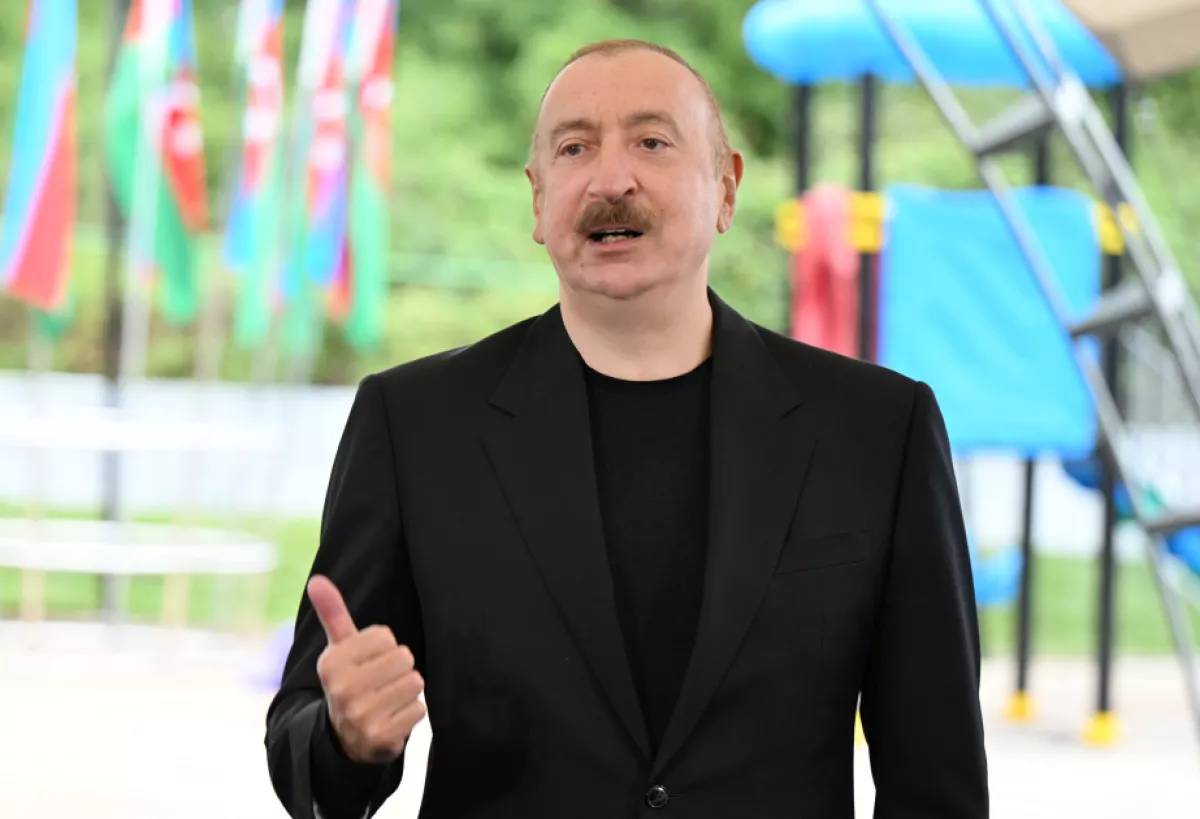
Azerbaijan has created a unique historical situation, as contemporary conflict-resolution practices rarely offer examples in which a single country, independently and without external assistance or the direct intervention of major powers or international coalitions, restores its territorial integrity and then successfully prosecutes those accused of war crimes. Typically, such processes remain unfinished or are transferred to international tribunals. The Republic of Azerbaijan has demonstrated the ability to complete the full cycle—from battlefield victory to judicial accountability.
Recent decades are full of examples of incomplete justice. Conflicts end, peace agreements are signed, yet those responsible for the deaths of civilians, ethnic cleansing, and mass killings often remain outside the reach of justice. This creates a situation of partial conflict resolution, where hostilities formally cease but justice for victims is not restored. A notable example is Israel, which for decades pursued Nazis responsible for the extermination of millions of Jews across the globe. The Jewish state’s intelligence services tracked them in Latin America, Europe, and the Middle East, brought them to Israel, secured extraditions, and conducted public trials. Yet, even with such extensive efforts, not all perpetrators were found or punished. Many died, living out their lives under new identities, thus escaping justice.
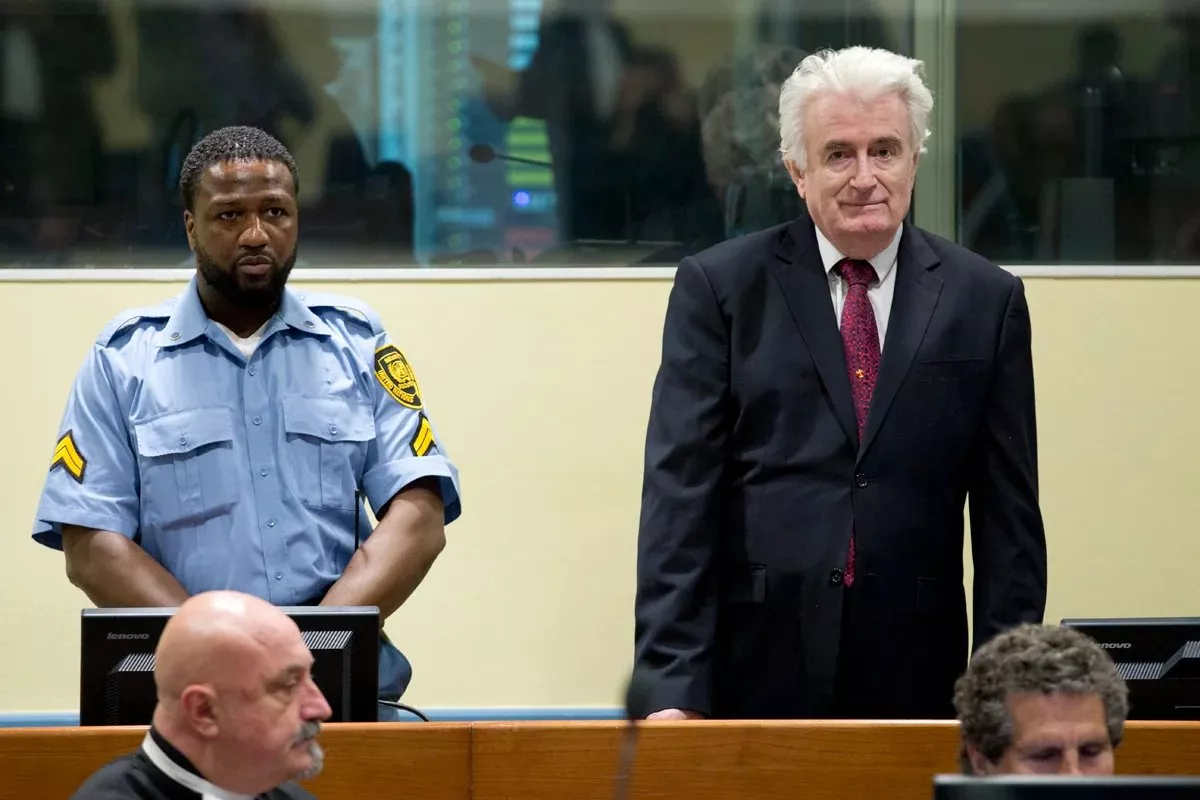
Here is another example: after the bloody wars in the Balkans, the international community established a special tribunal. Some of the war criminals were held accountable, high-profile trials took place, and verdicts were issued. However, this was only possible due to the collective efforts of the global community, pressure on the Balkan governments, and the work of international investigative bodies. Without this external mechanism, most of the accused would never have faced justice. Even then, the process dragged on for many years, and some accused were never found or died before verdicts could be delivered.
Azerbaijan acted differently. The country did not wait for the international community, did not rely on the creation of special tribunals, and did not delegate the responsibility for justice to external structures. The state relied on its own strength, legal system, and determination to see the process through. This required military victory and the political will to withstand external pressures. Azerbaijan has demonstrated that a sovereign state is capable of protecting the rights of its citizens and ensuring punishment for those accused of crimes against them.
The court proceedings revealed the systemic nature of the crimes committed against the Azerbaijani people and the direct responsibility of the Armenian state for these acts. Testimonies from victims and witnesses, along with those of the accused, documentary evidence, and video materials, together formed a clear picture of how the occupation apparatus functioned for nearly three decades.
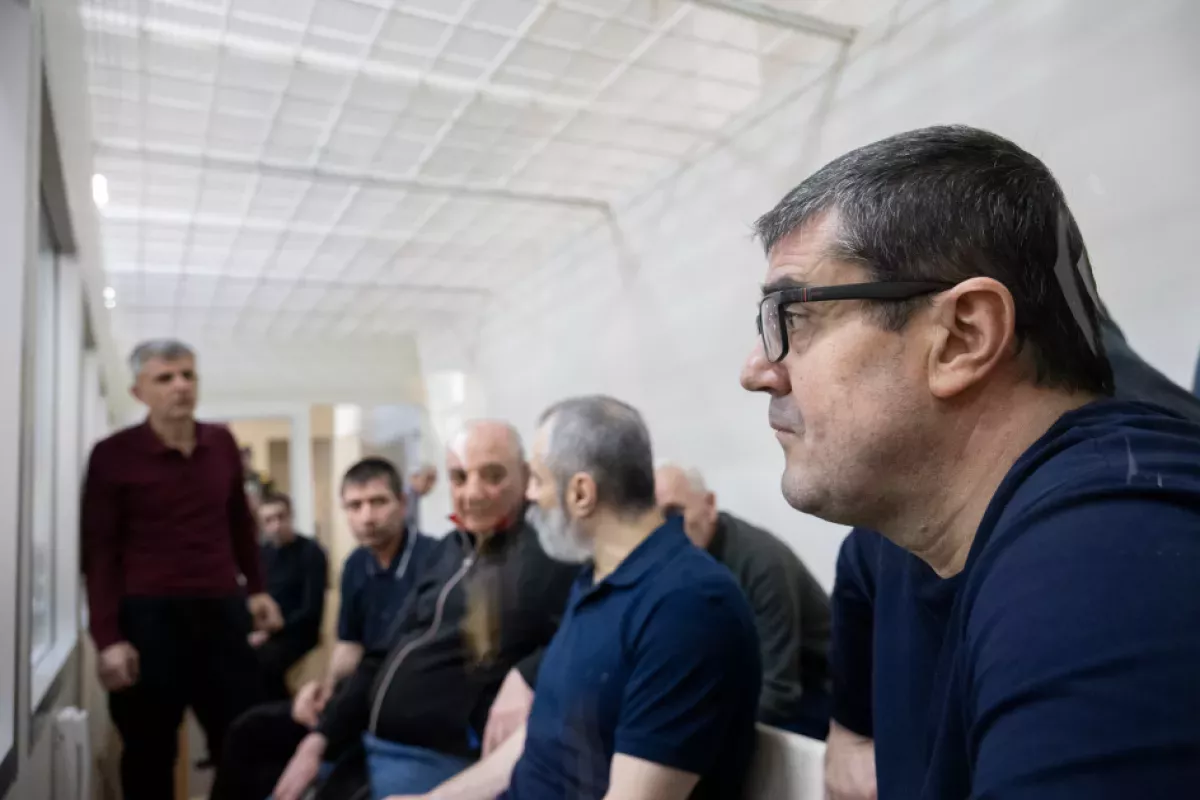
One of the key points was the admission by former commander of the Armenian occupation corps, Levon Mnatsakanyan, that the so-called “army” of the now-defunct separatist regime in Karabakh was never an independent military force. It was a military formation of Armenia, disguised as an “independent” structure. Appointments to senior command positions were approved in Yerevan, logistical and material support was organised within the Armenian armed forces, and command was exercised by Armenian generals. In reality, these were regular troops of the Armenian state, operating under the pretence of an independent military formation to absolve Yerevan of direct responsibility for the occupation.
The court proceedings presented video footage documenting Araik Harutyunyan’s service in the Armenian army, Bako Sahakyan’s participation in the occupation of Shusha, and the activities of other accused as key figures in the occupation regime. These materials dismantled the carefully constructed myth of any independence of the structures that existed in Karabakh.
The leaders of the puppet regime were central executors of Yerevan’s strategy, acting as agents of the Armenian state’s policy and as a façade behind which Armenia’s real power resided. The judicial process recorded this reality through the testimonies of the accused themselves, through documents, and through eyewitness accounts.
Armenia’s responsibility as a state for the occupation, crimes, genocide, urbicide, and ecocide has been confirmed by all the evidence presented in court. This concerns a systemic state policy carried out over decades—a deliberate campaign of extermination of the Azerbaijani population, the destruction of cities and villages, and the deportation of hundreds of thousands of people. The Khojaly genocide, which became the apex of this policy, was part of a broader strategy of ethnic cleansing.
Testimonies from victims during the court proceedings reconstructed the events in vivid detail. People recounted losing loved ones, fleeing under fire, witnessing the destruction of their homes, and living for years as internally displaced persons with no possibility of returning to their family homes. These testimonies speak for themselves. They document the scale of the tragedy endured by the Azerbaijani people and underscore the necessity of fair punishment for those accused of organising and carrying out these crimes.
The court proceedings were conducted in full compliance with all procedural norms. The accused had the right to a defence, to an interpreter, and their lawyers presented arguments. This was a fully-fledged judicial process, during which facts were established, evidence examined, and the positions of all parties heard. That is why its outcome carries such significance—the verdicts will be based on circumstances proven in court. This will serve as a logical conclusion to the process. The court will make its decision independently, guided by the law and the facts established. No one can interfere with this—that is a fundamental principle of justice.
However, the significance of this moment goes beyond specific charges or sentences. Its importance lies in the very fact that justice has prevailed, that the state has fulfilled its duty to the memory of the victims, and that those accused of crimes against the Azerbaijani people will be held accountable.
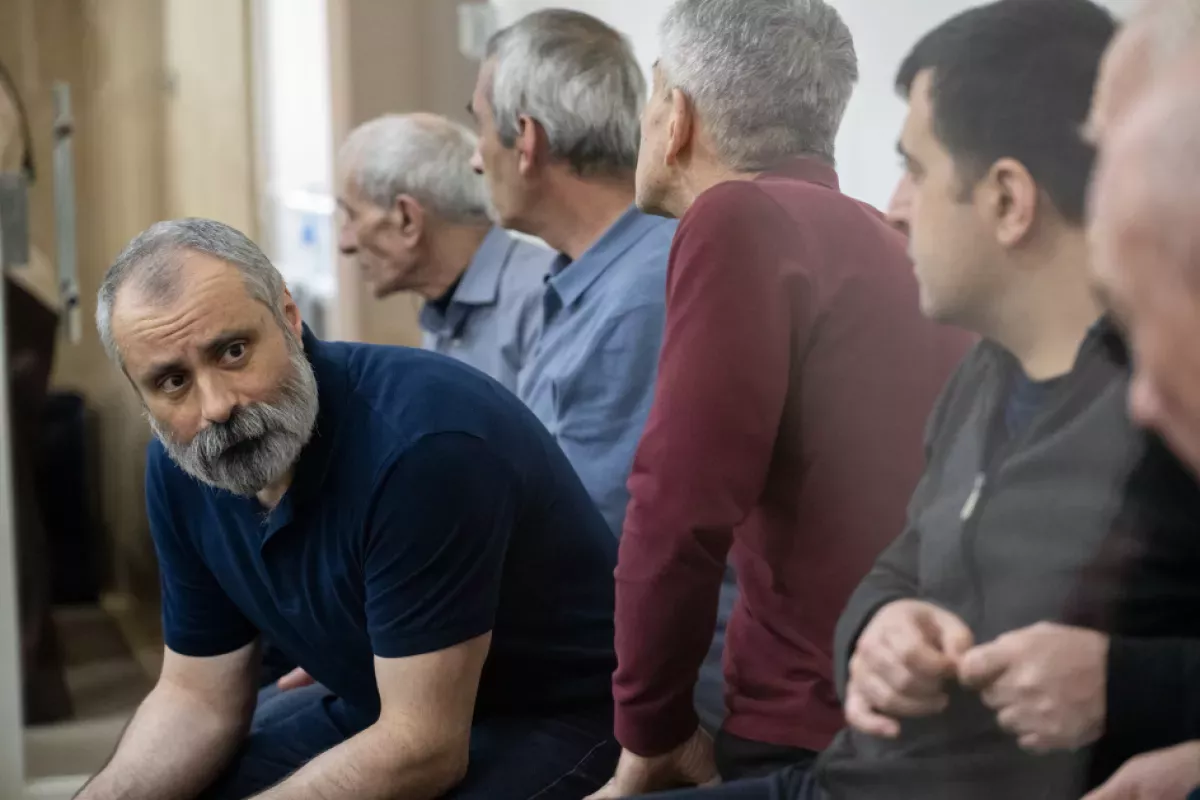
The external political pressure on Azerbaijan in connection with this court case was significant. Various international bodies, human rights organisations, and individual states sought to influence the proceedings, expressed concern, demanded the release of the accused, and even threatened sanctions. This pressure was fundamentally unfounded—a sovereign state has the full right to hold accountable those accused of committing crimes on its territory against its citizens. International law presumes that war criminals must be punished. Yet political logic often diverges from legal logic, and Azerbaijan faced attempts to use human rights rhetoric to protect individuals accused of egregious violations.
It should be emphasised once again: President Ilham Aliyev did not yield to this pressure. The head of state’s position remained firm—justice must be restored, and the pledge made to the people must be fulfilled. Achieving this required political will and the readiness to withstand international pressure, and it was precisely this determination that ensured the result. In an era when many states easily compromise under external pressure, sacrificing national interests to fleeting political convenience, such steadfastness commands special respect.
The court proceedings in Baku set an important precedent for international practice. They demonstrate that a state is capable of ensuring justice on its own. International justice plays a vital role in cases where national systems do not function or cannot provide a fair trial. However, Azerbaijan’s experience shows that, with political will, a functioning legal system, and a solid evidentiary basis, a state can—and should—carry out justice itself for crimes committed against its people.
This precedent has significance for many other conflict situations around the world. In numerous regions, unresolved conflicts persist, where war crimes go unpunished, victims receive no justice, and perpetrators live freely, confident that they will face no consequences. Azerbaijan’s example shows that this situation can be changed, that justice is attainable, and that a state is capable of protecting the rights of its citizens and holding wrongdoers accountable. This achievement will go down in history as a rare instance of a country completing the full cycle of restoring both national sovereignty and justice.







 editor@caliber.az
 +994 55 444-88-98
 Азербайджан, Баку, ул. Низами, 203, Af Business House, 5-й этаж