










Azerbaijan’s resilience strategy: navigating new economic reality Insights from President Aliyev’s local TV interview
The beginning of the year is a traditional time to summarise achievements and outline upcoming tasks. On January 5, in an interview with local TV channels, the President of Azerbaijan, Ilham Aliyev, highlighted the key directions for the development of the national economy. He discussed the advantages of strategic relations with the United States and China for attracting investment, assessed the development of transport corridors and the growth of freight traffic, examined prospects in the field of green energy and initiatives to export electricity, and noted achievements in the revival of the Karabakh region, including the important role of tourism. This is by no means a complete list of the economic areas covered by the head of state during his discussion with the media.
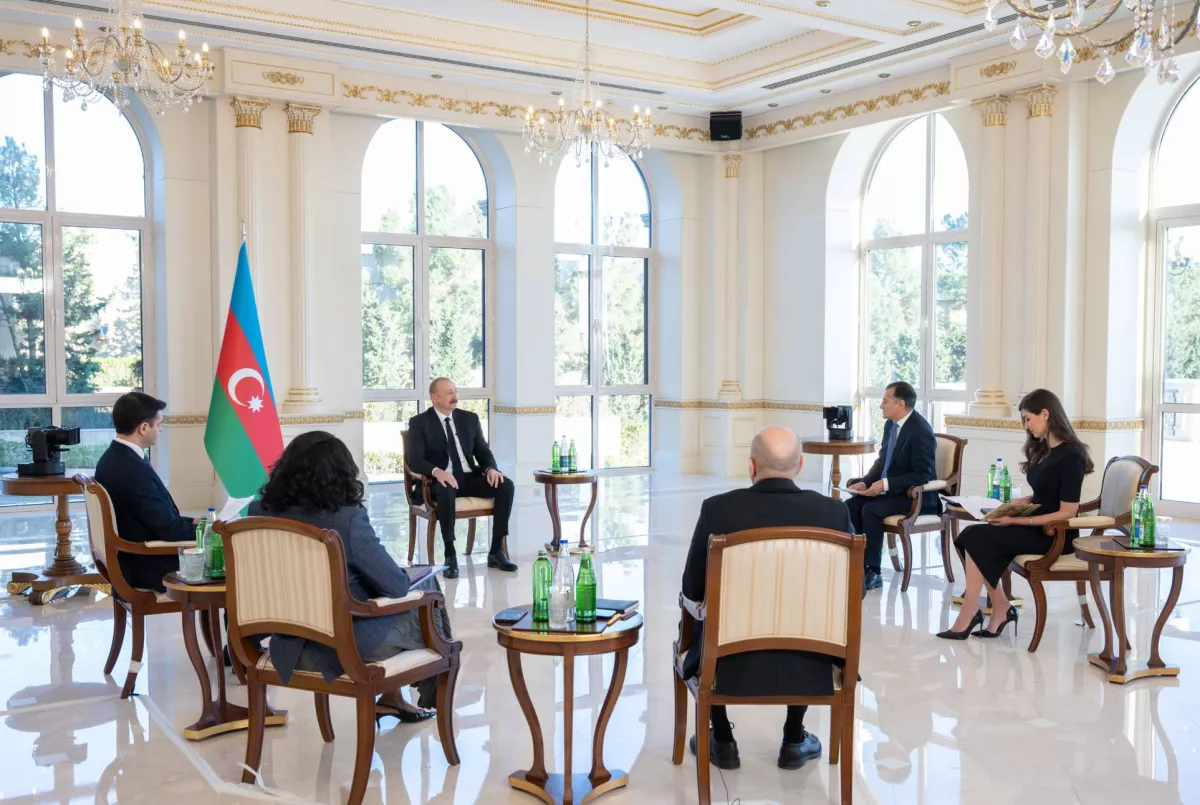
Highlighting the most significant events of the past year, the head of state particularly emphasised the historic breakthrough in Azerbaijan–U.S. relations last August. He noted that during a ceremony at the White House with President Donald Trump, Section 907 of the Freedom Support Act, which had hindered the development of bilateral partnership, was repealed. In addition, an agreement was signed to establish the Trump Route for International Peace and Prosperity (TRIPP) transport corridor, the implementation of which will accelerate the development of the Zangezur Corridor and help connect the main territory of Azerbaijan with the Nakhchivan Autonomous Republic (NAR).
“A document was signed to establish a strategic working group between America and Azerbaijan. The main direction of activity for this working group will be the preparation of a strategic partnership charter, and active work in this direction has already begun,” President Ilham Aliyev stated. “Since October, I have dispatched four delegations to America – consisting of ministers, representatives of the private sector, and other senior officials. It is possible to say that the preparation of a strategic charter in the main directions and the organization of mutual investments, the coverage of the economic, trade, transport, and military-industrial directions of our relations are on the agenda. In other words, we have high hopes, and the results are fairly impressive.”
Notably, the State Oil Company of Azerbaijan (SOCAR) and the American company ExxonMobil have agreed to collaborate on the development of a major hydrocarbon field in Azerbaijan. Discussions are also underway regarding potential partnerships with ExxonMobil in developing Azerbaijan’s renewable energy potential and in technology transfer initiatives aimed at reducing methane emissions, optimising operational costs, and implementing modern technologies to increase oil and gas production.
Baku and Washington see the need to establish direct contacts between the business communities of the two countries and to organise reciprocal business delegations in a B2B format. They also aim to develop cooperation in tourism, expand collaboration in transport and logistics within the framework of the Middle Corridor, and explore opportunities to bring American know-how to Azerbaijan. This includes expertise from technology vendors and chipmakers, software developers — particularly in artificial intelligence (AI) and cybersecurity — as well as the construction of data centres.
“One of the aspirations of Azerbaijan is to become a regional AI hub, an IT hub, and I think we have the potential to do that. We are working now with partners with respect to the creation of data centers. As you know, data centers need a lot of energy. Today, the only country in the broader region which has extra capacity of electric power is Azerbaijan,” President Ilham Aliyev noted. “Today, we have 2,000 megawatts or 2 gigawatts of extra capacity, which we do not use for our domestic purposes, and which can be exported or can be consumed here.”
Another important international achievement of the past year is the development of Azerbaijan–China business cooperation.
“ I believe that one of the events of great importance is our strategic partnership with China. Last year, during my state visit to China, a Joint Statement on Comprehensive Strategic Partnership was signed, and this can also be considered a great success,” President Aliyev emphasised. “Both our side and the People's Republic of China have given a very strong impetus to businesses and government agencies to step up our contacts as much as possible, and we are seeing this even in the number of reciprocal visits by delegations and the contracts signed, including investment ones.”
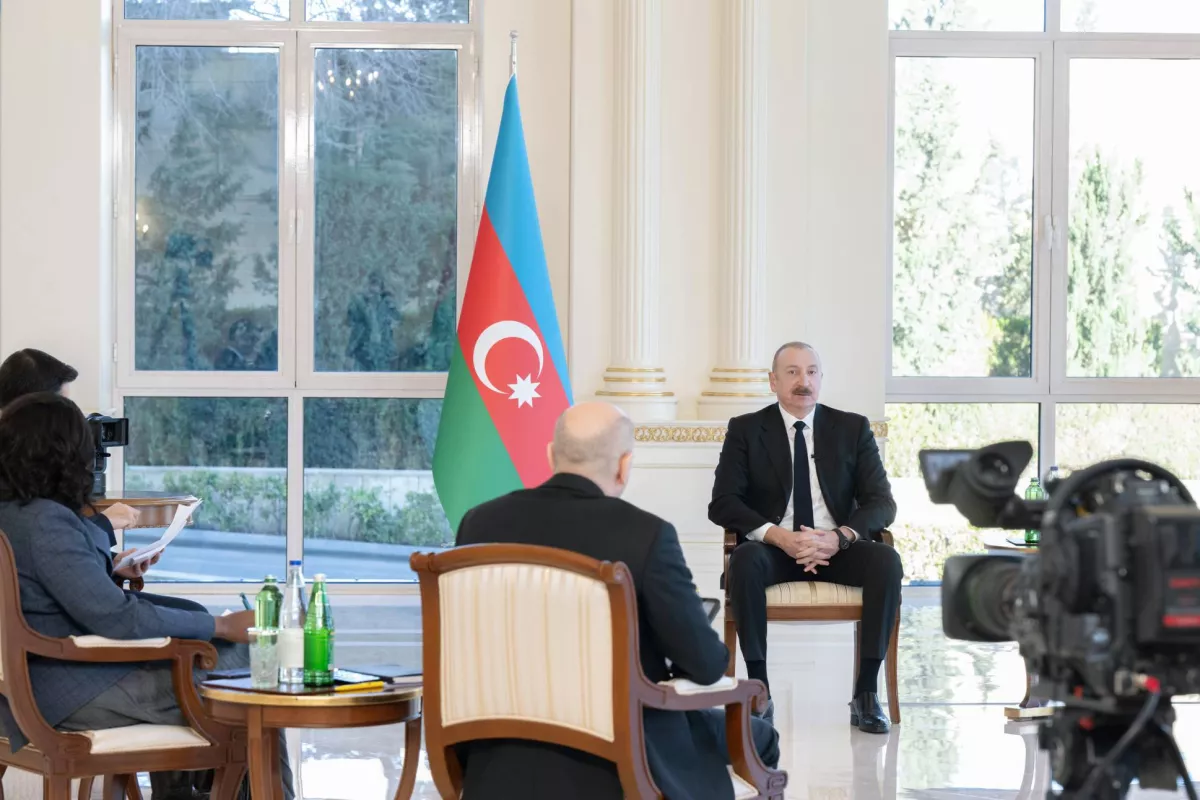
The head of state highlighted the growth of bilateral trade, which has surpassed a record $4 billion with an increase of over 20%, as well as the signing of investment contracts. Chinese companies are actively investing in Azerbaijan’s renewable energy sector, with the construction of solar and wind power plants, and there is a demand to increase the number of such facilities. Construction has also begun on a solar panel manufacturing plant, electric buses are being assembled, and localisation of production is planned to expand further.
“In this case, I must say that this was a strategic decision by the Azerbaijani side because when we decided to develop not only green energy but also green transport, we had to choose a strategic partner, and the choice fell on Chinese companies,” President Ilham Aliyev emphasised.
Another important aspect of Azerbaijan–China partnership is military-technical cooperation. This is not limited to the acquisition of military equipment — the countries are working on establishing joint production in the defence industry.
In the interview, the head of state touched on the active development of Baku–Beijing cooperation in the transport sector. China is seen as a key source of growing freight traffic alongside Central Asian countries, and the additional cargo from China will naturally make the East–West route, the Middle Corridor, fully in demand.
“China is currently funding the construction of another railway to the Caspian Sea via Kyrgyzstan and Uzbekistan, investing billions [...] Of course, we expect cargo from China and Central Asian countries to travel along the Zangezur Corridor as well,” President Ilham Aliyev emphasised. “Therefore, Azerbaijan should play the role of a facilitator, so to speak—a country that contributes to the increase in cargo flows, a country that invests in its infrastructure and in the infrastructure of neighboring countries, and a distributor of flows, based, of course, on commercial viability and many other factors.”
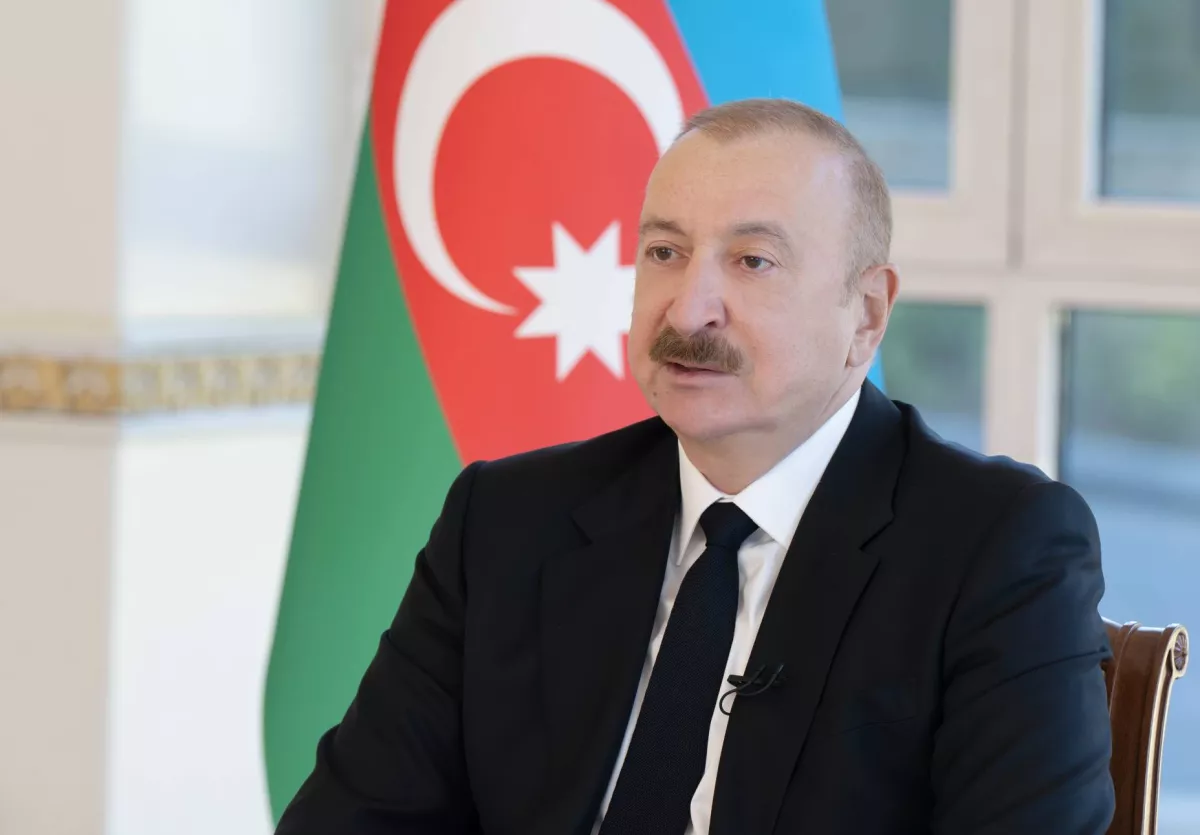
Notably, the past year was marked by active development of trade, economic, and transport-logistics ties with the countries of Central Asia (CA), including through the Organisation of Turkic States (OTS).
“Another important achievement in foreign policy is our election as a full member of the Consultative Meeting of the Heads of State of Central Asia. I do believe that this can also be considered a fairly rare occasion. Because, from a geographical point of view, of course, we are not in Central Asia, we are in the South Caucasus. However, we have such close relations with countries of Central Asia, both in bilateral and multilateral formats. So many projects have been implemented in recent years that these countries have unanimously elected us as a full member,” the head of state said, emphasising that today the union of Central Asian countries and Azerbaijan, and the transformation of the C5 into C6, are of great importance not only for the region but for the world as a whole. Economic connectivity, transport, and logistics are now crucial for many leading international actors, and the most reliable country that can geographically connect the Central Asian region with the West is Azerbaijan.
President Aliyev noted that the volume of cargo transiting through the country is growing, and for the first time last year, 100,000 containers passed through Azerbaijan. “This is just the beginning, their number will increase many more times, and we are currently actively working to expand our transport infrastructure. We had thought that the infrastructure we were creating would be sufficient for us for many years, but we see that it is not,” he said. Additional funds are therefore being invested in infrastructure, and this extends beyond freight transport: in November 2024, the presidents of Azerbaijan, Kazakhstan, and Uzbekistan signed an agreement in Baku to lay an energy cable along the bottom of the Caspian Sea. A project to lay an underwater fibre-optic cable is also underway, among others.
Overall, the development of green energy has been identified as a long-term goal in cooperation with international investors. According to current plans, by 2030, 6,000 MW of solar, wind, and hydroelectric power will be integrated into the national energy system, and by 2032 — 8,000 MW. As the head of state noted, Azerbaijan’s main current investor is Masdar from the United Arab Emirates, which built the first solar power plant with a capacity of 230 MW. The second plant, with a capacity of 240 MW, will be commissioned in the coming days; its investor is ACWA Power from Saudi Arabia. A third major plant has begun construction in the Jabrayil district by BP, also with a capacity of 240 MW.
“Currently, our main goal is to expand the capacity to receive this energy [...]In other words, in order to accept and absorb this, we need to strengthen our energy system. This is called the energy grid. In parallel with this, battery storage systems must also be built,” President Aliyev emphasised.
During his meeting with the media, Ilham Aliyev also highlighted the country’s economic achievements and outlined the key directions for development in both the near and long-term future.
“We can be satisfied with today's status when the country is absolutely economically independent and does not depend on any support, any loan or whatsoever,” the head of state said. “Today, our foreign debt is at historically low level, 6.3, 6.4, depending on calculations. And we can repay our foreign debt because the reserves exceed foreign debt 16 or 17 times.”
Today, the country’s gold and foreign exchange reserves amount to around $84 billion, and in terms of reserves per capita, this is among the highest levels in the world. The president also recalled that last year a strategic decision was made to increase the country’s gold reserves: given the geopolitical developments, there was absolute confidence that the price of gold would rise. As a result, the increase in gold reserves allowed the State Oil Fund of Azerbaijan (SOFAZ) to earn over $10 billion solely from this move. The growth of reserves and reduction of debt dependence occurs alongside large-scale investment projects, the restoration of Karabakh and East Zangezur, and multi-billion-dollar funding for social and defence sectors — clearly demonstrating the high resilience of the national economy.
“Two major rating agencies upgraded our credit rating. There were Moody's and Fitch – upgraded to investment level, with a prognosis also upgraded from stable to positive,” President Aliyev noted. “It's not only a matter of prestige, though it is, it also allows us to borrow at a better rate, especially now when we decided to borrow. So when I instructed the government to stop borrowing, my target was to bring foreign debt to below 10% of GDP, and now it's 6.3, 6.4.”
Given the high stability of external debt, a decision has been made to borrow relatively modest amounts — $3–4 billion — to finance transport projects, initiatives to improve water supply and sewage systems, and enhance connectivity. Very soon, in response to strong demand, a large-scale water supply and sewage programme will be implemented for Baku, Sumgayit, Khirdalan, and the entire Absheron Peninsula. This involves water resource management, including the construction of a desalination plant — the first in Azerbaijan — which will cover a significant portion of the demand for drinking water, the creation of new channels to supply more water for agriculture, and, of course, addressing transport issues in Baku.
“We have already adopted a program for additional 10 metro stations in Baku. Seven have been built during my term, but it is not enough. So, 10 more will be built – more bridges, more tunnels,” the head of state said, noting that the country will need borrowed funds for all this, as it will save considerable resources that are needed for the revival of Karabakh.
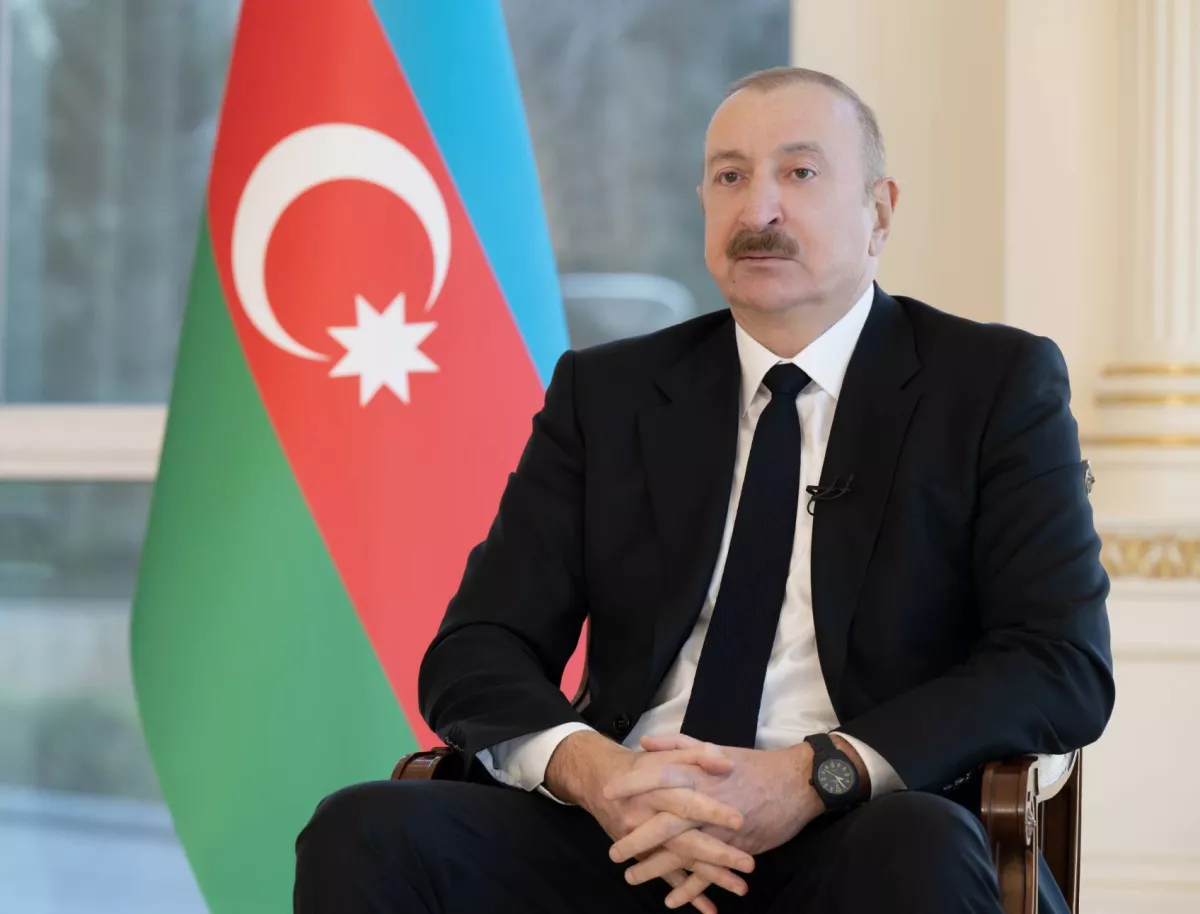
For five years, the State Strategy for the Development of Azerbaijan’s Territories Liberated from Occupation has been implemented, achieving significant progress. Transport, energy, and utility infrastructure are being rapidly restored, housing is being built, and social and industrial facilities are under construction.
“[In Karabakh], a circular energy system was put in place, and today energy flows from there to the center, not the other way around. We have created hydroelectric power stations with a capacity of 307 megawatts in five years, and of course, consumption in the liberated regions is much lower,” the head of state noted. “No one will move or live there without a water supply. This issue is also being addressed. The reservoirs – we have rebuilt several reservoirs, and built some from scratch, for example, the Zabukhchay reservoir, Sarsang, Sugovushan, and three on the Kondalanchay and Khachinchay, which were overhauled.”
Roads and bridges are also being built, including 70‑kilometre tunnels, most of which are already completed. Priority has been given to railways — Barda–Aghdam and now Aghdam–Khankendi — and the railway and highways of the Zangezur Corridor are being laid. Work is ongoing on transport junctions connecting Jabrayil, Hadrut, Lachin, Kalbajar, and other areas.
The president stated that the main goal is to return former internally displaced persons to the territories liberated from occupation. Today, including construction workers, around 70,000 people already live in thirty-two towns and villages. This year, the population in these areas is expected to grow significantly. Considering plans to settle residents in at least 30–50 localities, by the end of the year the number of permanent residents and workers could exceed 120,000.
One of the drivers of the revival of the Karabakh region, according to President Aliyev, is the development of the tourism sector: “Garabagh and Zangezur, it's a heaven. It's really a natural heaven. So, the development of tourism there is one of the priorities. There are already several hotels in Shusha, and Lachin. One is being built in Zangilan. Soon, a hotel will be opened in Istisu, Kalbajar. A new hotel will open in Khankendi probably next year or even this year.”
The head of state also noted that there are considerable prospects for business and medical tourism across the country. Recreational tourism already exists, for example, in Naftalan, Duzdagh, and many other locations. Furthermore, in February, the World Cup in skiing will take place in Shahdag for the first time, enhancing the resort’s status to the highest international level.







 editor@caliber.az
 +994 55 444-88-98
 Азербайджан, Баку, ул. Низами, 203, Af Business House, 5-й этаж