










Baku’s Balkan strategy Azerbaijan and Serbia strengthen partnership
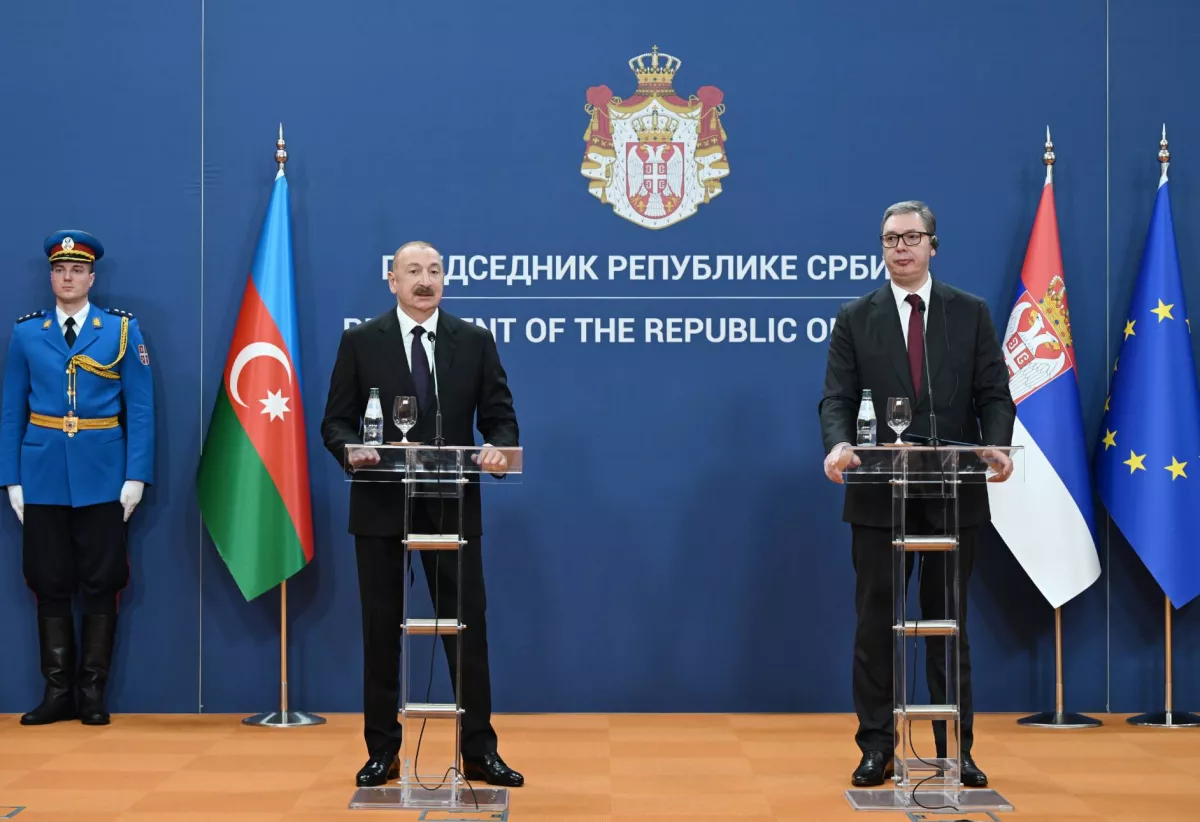
On February 15, a significant day for Serbia — Statehood Day — Belgrade welcomed a very special guest: President of Azerbaijan Ilham Aliyev. The choice of this date for the official visit was more than a diplomatic gesture. It sent a clear signal: Baku is among the partners with whom Belgrade is willing to share the symbolic space of national memory.
The meeting between Ilham Aliyev and President of Serbia Aleksandar Vučić marked a new stage in the institutionalisation of an already established political trust. The signing of the resolution at the first meeting of the Strategic Partnership Council elevated bilateral relations to a format that Serbia applies only to a select group of countries. This in itself underscores Baku’s significance within Serbia’s foreign policy architecture.
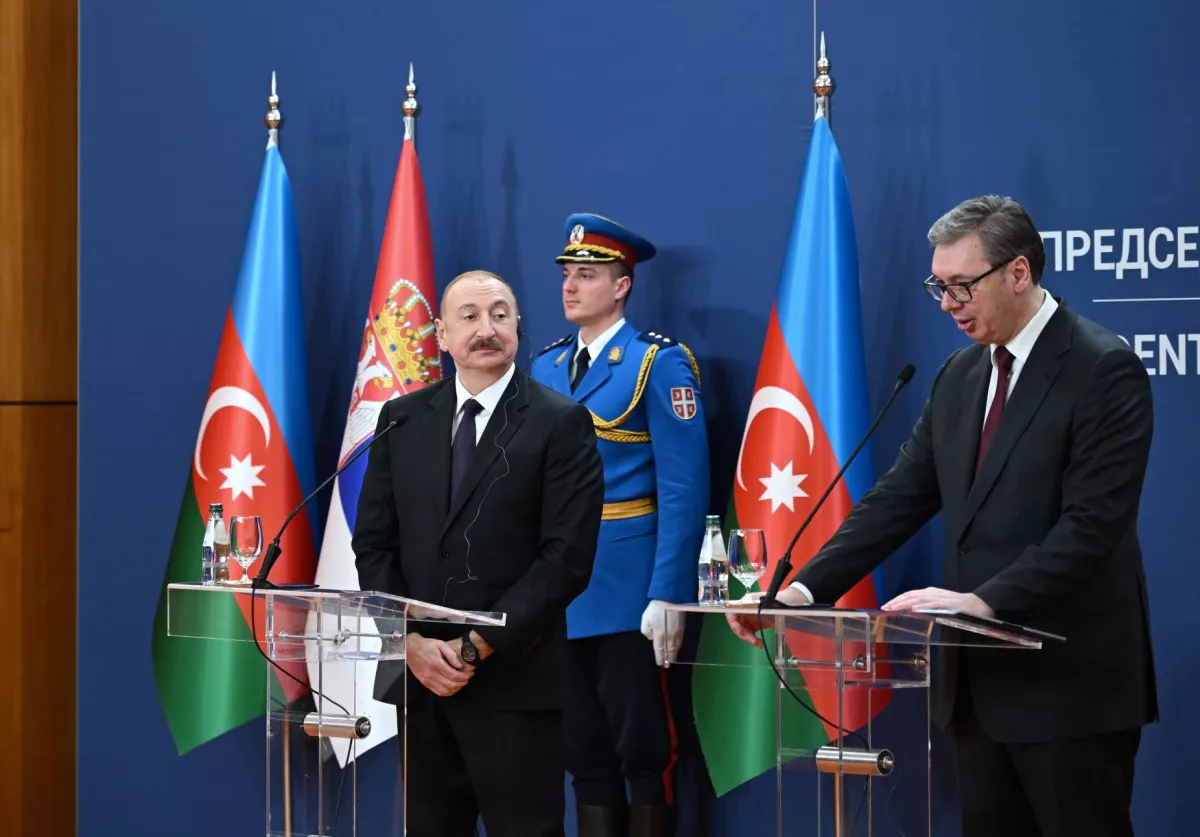
The Azerbaijani–Serbian dialogue in recent years has been marked by stability and mutual support on key issues, including territorial integrity and sovereignty. Both Baku and Belgrade have a deep understanding of the sensitivity of such matters — each country has faced its own crises and external pressures. This is why the political solidarity between them is not merely declarative, but pragmatic.
By emphasising the symbolism of the meeting on Statehood Day, Aleksandar Vučić effectively reinforced Azerbaijan’s special status within Serbia’s foreign policy priorities. The Strategic Partnership Council format is not a one-off event, but a mechanism for long-term coordination. It provides for regular meetings, concrete roadmaps, and personal accountability of the relevant agencies in implementing the agreed commitments.
Once the political foundation is in place, energy becomes the axis around which the practical dimension of the partnership is built. In the context of the transforming European energy market, Serbia is keen on diversifying its supplies, while Azerbaijan — having strengthened its position as a gas supplier to Europe — is naturally expanding its cooperation geographically to the Balkans.
This cooperation is not limited to traditional energy resources; it also includes renewable energy. For Baku, this is a way to establish a foothold in a new segment of the European agenda, while for Belgrade, it presents an opportunity to modernise its infrastructure. The figures announced in Belgrade speak for themselves: a 16-fold increase in trade in the services sector compared to 2012 reflects systematic, sustained work. Importantly, this growth concerns the service economy — tourism, transport, and investment projects.
Speaking of tourism, direct Baku–Belgrade flights will commence in May. At first glance, this may seem like a minor technical detail. In practice, it is an infrastructural solution that creates a new density of connections: business, humanitarian exchanges, and tourist flows. Direct air links always accelerate processes that previously depended on transit routes and logistical constraints.
The investment dimension is also coming to the forefront, as Azerbaijan has traditionally shown interest in infrastructure projects — from construction to the modernisation of facilities.
The geopolitical context deserves special attention. Both Azerbaijan and Serbia pursue multi-vector foreign policies, seeking to avoid rigid alignment with any single centre of power. In this sense, their partnership appears natural: both countries value strategic room for manoeuvre and aim to strengthen ties where it serves their national interests. The Strategic Partnership Council is an effort to give these relations a durable institutional framework — not just friendly meetings between leaders, but a mechanism designed to withstand any political cycle.
The personal dimension of the relationship was clearly evident in the statements of both presidents. Vučić spoke of a “shared vision” and agreements with Aliyev, emphasising the special character of the ties. Aliyev referred to Vučić as “my dear friend.” In diplomacy, such formulations are rarely accidental. Personal trust between leaders often accelerates projects that might otherwise drag on for years at the bureaucratic level.
Today, Azerbaijani–Serbian relations can no longer be described as merely friendly; they now form a solid framework of partnership.
The visit on Statehood Day was not only a gesture of respect toward Serbia, but also a demonstration that Baku views Belgrade as a long-term partner in Europe. If the current momentum is maintained, in the coming years this partnership could become one of the most stable bilateral formats in the Balkans and the wider Eurasian space.
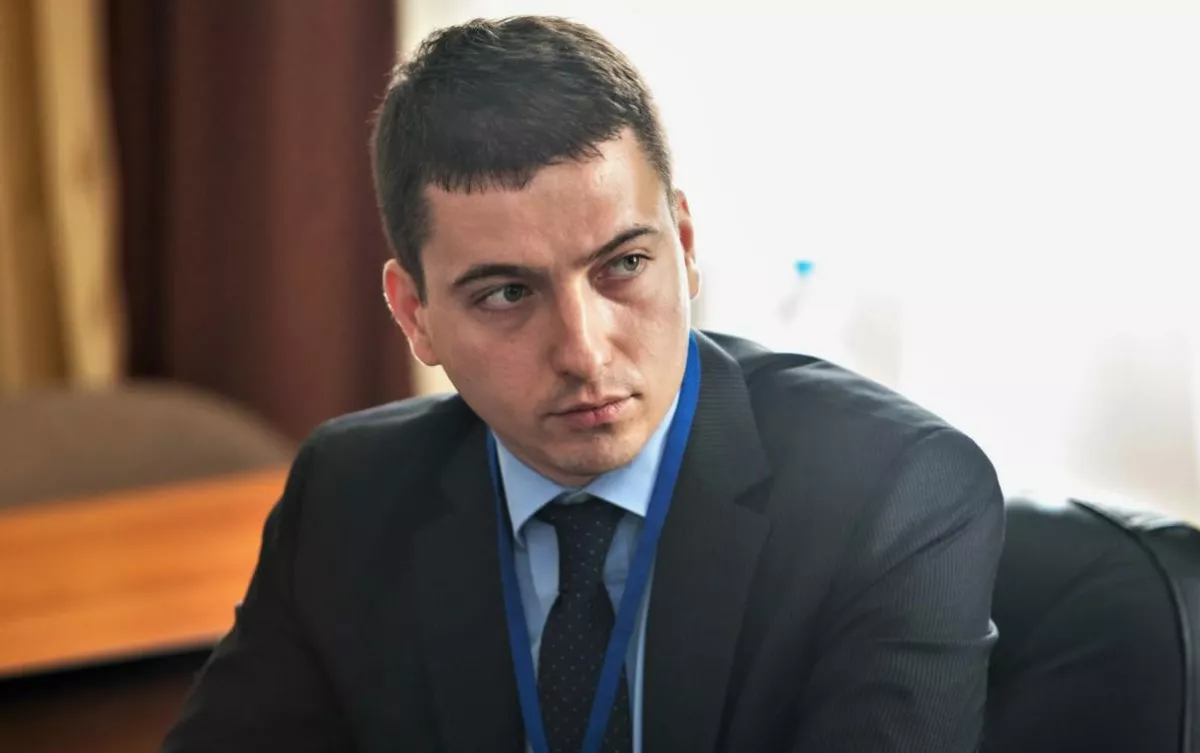
In an interview with Caliber.Az, Serbian political analyst and Research Fellow at the Belgrade-based Institute of European Studies, Stevan Gajić, noted that President Aliyev’s official visit to Serbia on Statehood Day carries significant symbolic weight.
“Beyond political solidarity regarding the importance of upholding international law, Azerbaijan and Serbia have been actively developing bilateral relations since the presidency of Boris Tadić. Today, the level of these relations is very high. This applies not only to energy or defence industry cooperation, but also to the economy and logistics. I would like to remind that an Azerbaijani company once built a highway in Serbia, which is considered one of the country’s key infrastructure projects.
It is also important to highlight a very significant recent development in logistics, which matters to citizens of both Serbia and Azerbaijan. This is the opening, in the coming months, of a direct Baku–Belgrade flight, which will actively promote tourism,” Gajić said.
He also highlighted the positions of Baku and Belgrade regarding mutual support for each other’s territorial integrity.
“As you know, the Kosovo issue is one of the most sensitive for the Serbian people. Following NATO’s aggression against Serbia in 1999, Western countries have not recognised the sovereignty of our state. Unlike them, Azerbaijan has always supported Serbia’s territorial integrity. This support is not only based on respect for international law, but also because Azerbaijan itself has experienced violations of its own territorial integrity. Baku unconditionally backs Serbia on the Kosovo issue, even though some of Azerbaijan’s closest allies hold a different view. We greatly value this principled stance of the Azerbaijani authorities,” Gajić said.







 editor@caliber.az
 +994 55 444-88-98
 Азербайджан, Баку, ул. Низами, 203, Af Business House, 5-й этаж