










Baku's multi-vector strategy: Foreign policy achievements, 2026 prospects Expert opinions on Caliber.Az
The intensification of global political turbulence has led to adjustments in Azerbaijan’s policy. In this regard, 2025 has become a serious test for the country’s resilience and the flexibility of its foreign strategies.
Azerbaijan’s defining characteristic lies first and foremost in its geopolitical position—at the crossroads of Europe and Asia, between the conflict-prone Middle East and its major neighbour, Russia.
Each of these centres plays a crucial role in global politics, and amid this complex web of diverse interests, Azerbaijan, according to many analysts, is assigned a special role. It is increasingly viewed as a moderator of major regional processes and a key pillar of stability and balance between the global North and South, as well as between the West and the East.
Meanwhile, as experts confirm, Baku knows how to craft a skilful multi-vector strategy. In this respect, many countries have much to learn from Azerbaijan.
What was 2025 like for Azerbaijan’s foreign policy, and what challenges and positive trends await the country in 2026? To answer these questions, Caliber.Az reached out to foreign analysts and pundits, inviting them to share their views.

Thus, Turkish-Kazakh politician and pundit, founder of the “Great Turan Union” Foundation, Serikzhan Mambetalin, believes that 2025 was a successful year for Azerbaijan in terms of strengthening its agency in international geopolitics.
“Today, Azerbaijan is a key country for both the Middle Corridor and the North–South Corridor, as well as for the stakeholders involved in these international transit projects. At the same time, the tragedy involving an AZAL Azerbaijani aircraft at the end of 2024 and the Kremlin’s inadequate response clearly affected relations with Russia. In this sense, Moscow appears to have lost a long-standing partner in the South Caucasus.
Meanwhile, the restoration of trade relations with Armenia—which is also definitively leaving the Kremlin’s orbit—contributes to peace and security in the region. The launch of grain shipments through Azerbaijani territory and the supply of Azerbaijani petroleum products to Armenia is a positive sign. Armenian citizens must see tangible economic benefits from improved ties both with Azerbaijan and with the broader Turkic world,” he said.
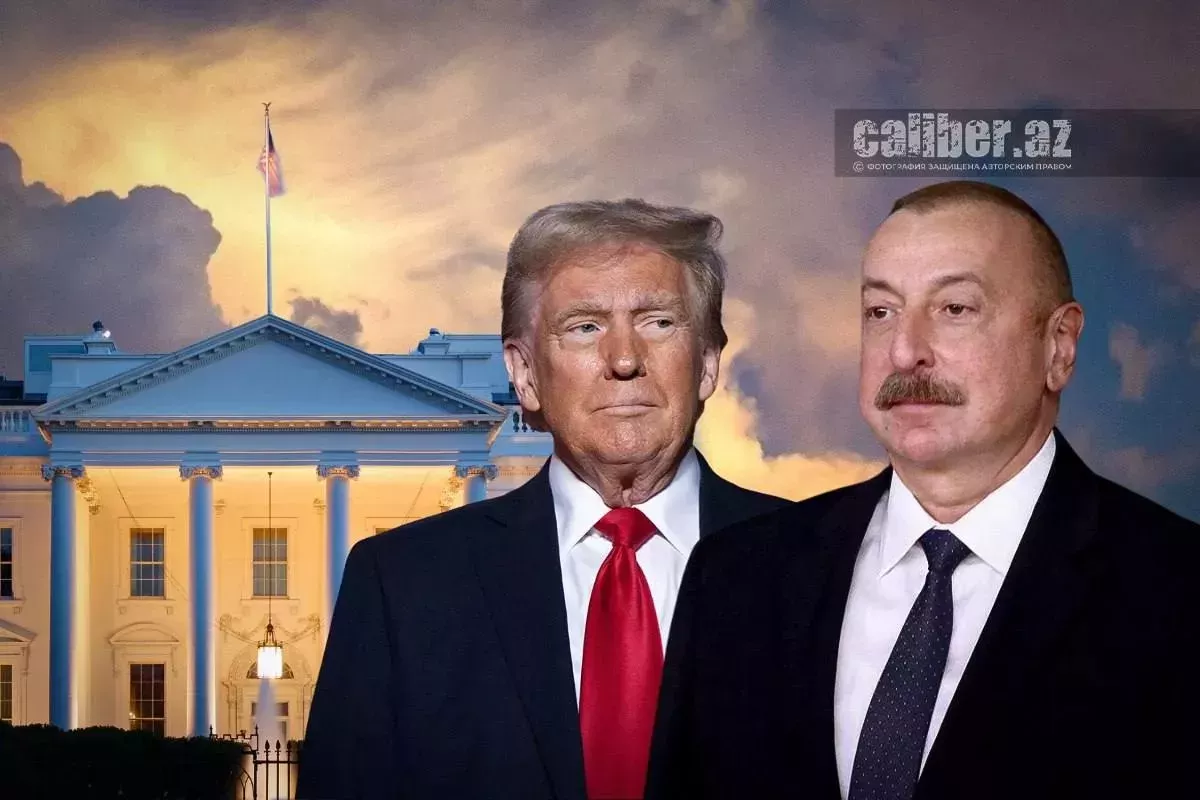
The pundit emphasized that the symbolic keys to the White House presented by U.S. President Donald Trump to Ilham Aliyev signal substantial support for Baku’s initiatives, and that this support should be used wisely—not only by Azerbaijan, but by all countries of Turan.
“While Türkiye is deeply engaged in the problems of the Middle East and is in confrontation with Israel, Azerbaijan should assume the role of an integrator of the Turkic world. I wish the entire brotherly Azerbaijani people peace, happiness, and prosperity in the New Year!” Mambetalin said.

According to German pundit Yevgeny Kudryats, the outcomes of 2025 for Azerbaijan were overwhelmingly positive. He stresses that it is particularly important that Baku focused on strengthening its foreign policy influence both in the West and in the East. A clear trend in this regard has been the significant expansion of cooperation with the United States and China.
“As for the achievements of regional policy, these naturally concern first and foremost relations with Armenia. Despite notable improvements, they have not yet evolved into a full-fledged peace, although there has been substantial progress in dialogue with Yerevan. A tangible trend toward peacebuilding is emerging through economic cooperation—specifically, grain supplies from Kazakhstan and Russia transiting Azerbaijani territory, and energy exports from Azerbaijan to Armenia,” he said.
In addition, the political analyst noted that Baku’s role as an energy hub is strengthening amid ongoing energy instability in Europe.
“As for economic indicators, we are observing moderate Gross Domestic Product [GDP] growth of around 3.5 per cent, with the main drivers being hydrocarbon exports, state investment in infrastructure, and the reconstruction of Karabakh. Baku is also intensifying its transition to so-called ‘green’ energy and digital technologies, keeping pace with global trends.
Looking ahead to 2026, I would note that Azerbaijan has every opportunity to continue its successful multi-vector policy and economic modernisation, particularly in the liberated territories, which offer significant potential for foreign investment. In addition, in my view, pressure on Yerevan should not be eased with regard to signing a final peace agreement.
I have no doubt that in 2026, Azerbaijan will continue its course of strengthening its influence in the South Caucasus and maintaining a political balance between East and West. The main areas that Baku is likely to significantly reinforce next year include expanding cooperation with the United States.
In this regard, beyond the launch of the Trump Route for International Peace and Prosperity [TRIPP], I expect interesting proposals for Baku from Donald Trump, as well as new joint projects involving American participation. Meanwhile, the EU, given its growing need for energy resources from the South Caucasus, will seek a more productive and constructive dialogue with Baku. The Southern Gas Corridor remains a powerful trump card for Azerbaijan.
In addition, Baku will actively strengthen cooperation with China, Türkiye, and Israel, while establishing a new network of political and economic contacts with countries in the Arab world.
The Middle East represents a new and promising direction for Azerbaijan; there is a sense that it is welcomed and trusted there. As for Russia, I see no grounds for any significant strengthening of ties, and any deterioration in these relations rests entirely on the Kremlin,” said Kudryats.
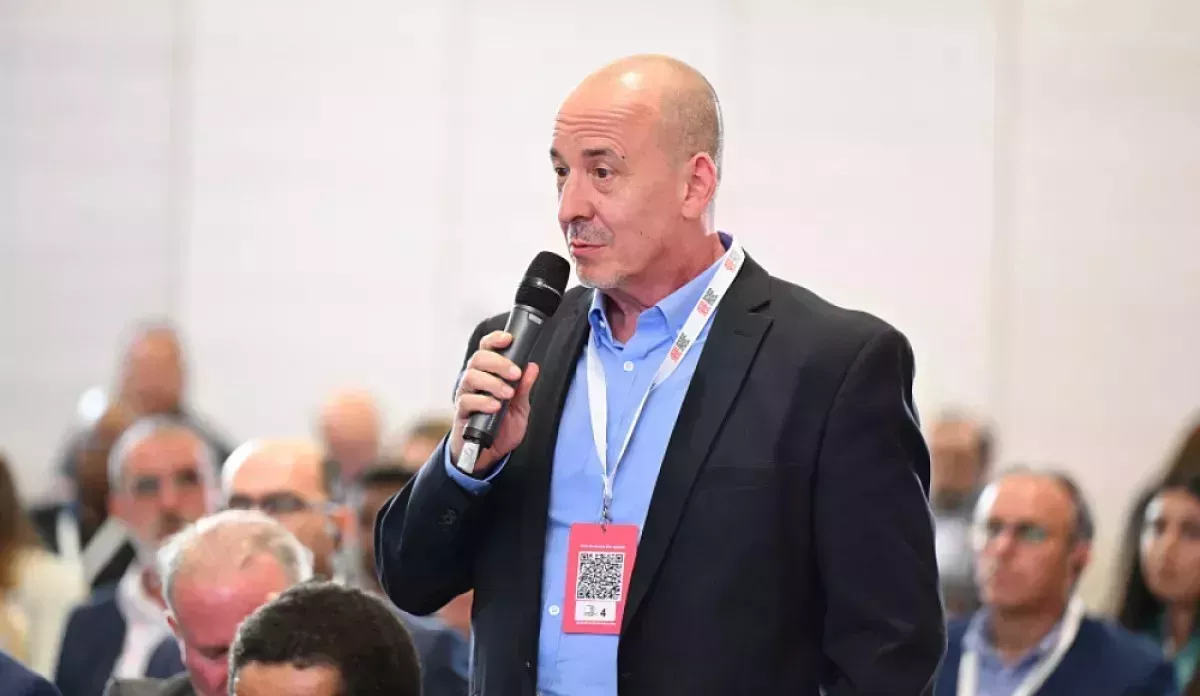
Honorary Ambassador of the World Jewish Agency Sochnut, Israeli pundit and journalist Roman Gurevich is confident that in 2025, Azerbaijan definitively secured its status as a state whose international presence and political weight extend beyond the traditional regional scale.
“The country is steadily shaping its role as an independent centre of power and influence, capable of making autonomous decisions, maintaining a balance of interests, and contributing constructively to the formation of a new architecture of international relations in a multipolar world.
A defining feature of the past year has been the consistent growth of Azerbaijan’s international authority among a wide range of states and political centres, including those often in complex and even conflictual relations with one another.
In an era of global fragmentation, Azerbaijan has managed to preserve a rare quality—trust and respect from diverse, sometimes competing, actors. This has been made possible by a consistent policy of sovereignty, a rejection of bloc dependence, and a clear defence of national interests, all while remaining open to dialogue,” he said.
The pundit noted that Azerbaijan’s strengthening influence in 2025 was structural and strategic rather than confrontational. The country demonstrated the ability to firmly defend fundamental principles—territorial integrity, sovereignty, and the right to independently choose partners—while respecting international law and the interests of other states. This approach reinforced Azerbaijan’s image as a responsible, rational, and predictable actor in global politics, whose position is increasingly seen as a stabilising factor.
“Particular importance in this context is the model of tolerance and mutual respect that Baku has consistently demonstrated for many years, both domestically and on the international stage. The multinational and multi-confessional structure of Azerbaijani society, along with traditions of peaceful coexistence among different cultures and religions, has become an integral part of the state’s identity and an important element of its ‘soft power.’
In a world of growing conflicts and ideological divides, Azerbaijan offers a practical example of how tolerance, mutual respect, and dialogue can serve as the foundation for sustainable development and security.
Active and substantive participation in international and regional organisations has played a significant role in strengthening Azerbaijan’s international standing. In 2025, Baku increasingly acted not merely as a participant in global processes but as a source of initiatives and solutions in the fields of energy security, transport connectivity, humanitarian cooperation, and intercultural dialogue.
Its geographic location, economic resources, and internal stability have consistently become long-term diplomatic capital and a source of influence,” the pundit said.
In his view, the growth of Azerbaijan’s international weight must be accompanied by the preservation of national identity and the strategic coherence of its course.
Respect in the international system has been earned not through compromises on key issues, but through consistency and a willingness to bear political responsibility for its own decisions. It is precisely this combination of firmness and openness that builds the country’s enduring authority in a multipolar world.

According to the political analyst, in this context, the goals and strategic directions for 2026 appear to be a logical continuation of the trajectory already established. The focus will be on further strengthening Azerbaijan’s sovereignty and foreign policy independence, expanding the country’s role in international organisations and multilateral formats, and institutionally consolidating the authority it has achieved.
“One of the key priorities remains enhancing international influence through active participation in shaping the global and regional agenda. Azerbaijan consistently positions itself as a state capable of offering constructive, balanced, and pragmatic solutions in a world of growing polarisation, including on issues of security, economic cooperation, and humanitarian engagement.
In 2026, the development of energy and transport diplomacy will continue to hold strategic significance. Azerbaijan is steadily reinforcing its status as a reliable partner in energy security, logistical connectivity, and resilient supply chains, while simultaneously expanding its participation in new projects and avenues of international cooperation. The country’s geographic location and accumulated experience are consistently being transformed into instruments for building long-term interregional ties.
Alongside this priority, domestic development remains fundamental to international influence—economic resilience, social stability, institutional modernisation, and the strengthening of national unity.
Thus, 2026 is seen as a stage for further consolidating Azerbaijan’s position as one of the centres of global power and influence—a state whose stance will not only be considered but, in some cases, become decisive in shaping key political, economic, and humanitarian processes in the contemporary world.
And finally, a few personal words: ‘As an Israeli and as a Baku native, I sincerely wish for the continued strengthening of friendship, trust, and human connections between our countries and peoples. May cooperation between Israel and Azerbaijan continue to develop on the basis of mutual respect, shared values, and strategic partnership,’” concluded Gurevich.







 editor@caliber.az
 +994 55 444-88-98
 Азербайджан, Баку, ул. Низами, 203, Af Business House, 5-й этаж