










Bundeswehr at the starting line Germany prepares for a new military era
Men aged 17 to 45 must obtain permission for long-term stays abroad, according to the new military service law in Germany. The corresponding legislative amendment came into effect on January 1, 2026, but the media only reported it three months later. So, what are Germans being prepared for?
Military service vs. freedom of movement
Since ordinary citizens of the Federal Republic of Germany (FRG) only learned about this at the beginning of April, many initially took the news as an April Fools’ joke. However, the harsh reality leaves little room for laughter, even on the day of pranks…
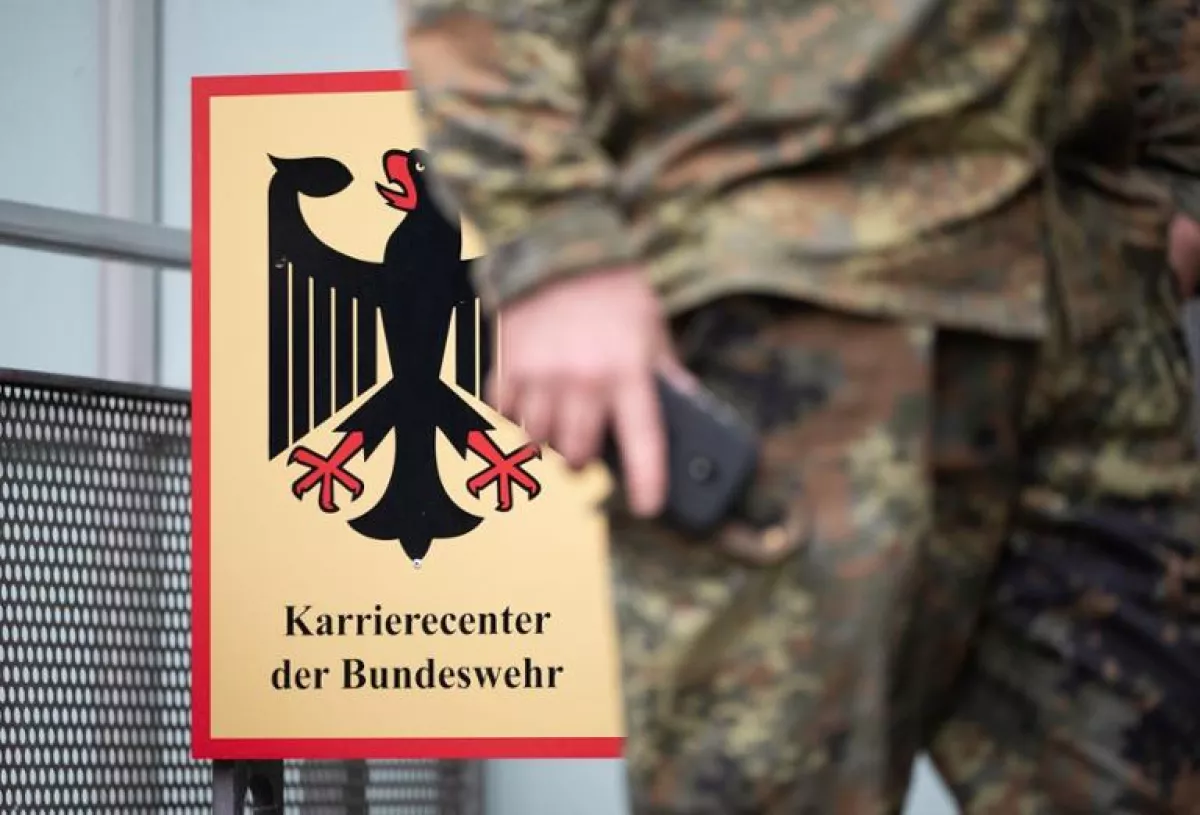
As of the beginning of 2026, a new amendment to the modernized Military Service Act obliges every man aged 17 to 45 to request permission for trips abroad lasting more than three months at a special Bundeswehr center. This rule applies without exception to all types of travel—whether for study, work, or personal reasons. Registration with the military authority is also provided for women, but on a voluntary basis. The new version of the law also introduces mandatory military medical examinations for all young men. In emergency conditions, the mobilization age will be raised to 60.
Previously, according to paragraph 3 of Article 2 of the former Military Service Act, permission to travel abroad was required only in exceptional cases—such as an external threat or armed attack on the country. Now, these exceptional measures are effectively becoming the standard.
“The primary goal and guiding principle of this provision is to create a reliable and informative military registry for times of necessity,” the German Ministry of Defense states.
At the same time, the military has not yet been able to clearly explain how the new law will be applied in practice and admits that the corresponding procedure is still under development. It is also not specified what penalties will be imposed on those who leave the country without permission.
Meanwhile, the ministry assures that travel permits will be issued to anyone who requests them—at least while service in the Bundeswehr remains voluntary. However, the current Military Service Act provides that voluntary recruitment will continue only until target numbers for army personnel are met. It is highly likely that, with the planned increase of the Bundeswehr from 180,000 to 260,000 contract soldiers, voluntary enlistment alone may not be sufficient.
As early as autumn 2025, the ruling CDU/CSU proposed introducing mandatory conscription by lottery. So far, part of the Social Democrats—the junior partners in the conservative-led coalition—oppose this measure.
In this context, many in Germany are asking whether this provision contradicts the right to freedom of movement enshrined in the 1948 UN Universal Declaration of Human Rights (Article 13), the guarantees of freedom of movement in Article 11 of the German Basic Law, and Directive 2004/38/EC of the European Parliament and Council of April 29, 2004. However, in the current climate of escalation and growing emergency measures enveloping Europe’s so-called “citadel of democracy,” such questions remain unanswered.
Meanwhile, the Cabinet meeting at which the restriction on the movement of German men was discussed took place back in August 2025. Notably, the German government gathered for the first time since the end of the “Cold War” in the Ministry of Defense—in the protected bunker of the military headquarters building (the “Bendlerblock”). There, the regulations for the newly established Security Council were approved.
In addition, a draft law on strengthening military security in the Bundeswehr was considered at the Bendlerblock. According to this draft, the Military Counterintelligence Service (MAD) will receive expanded powers, including for operations abroad.
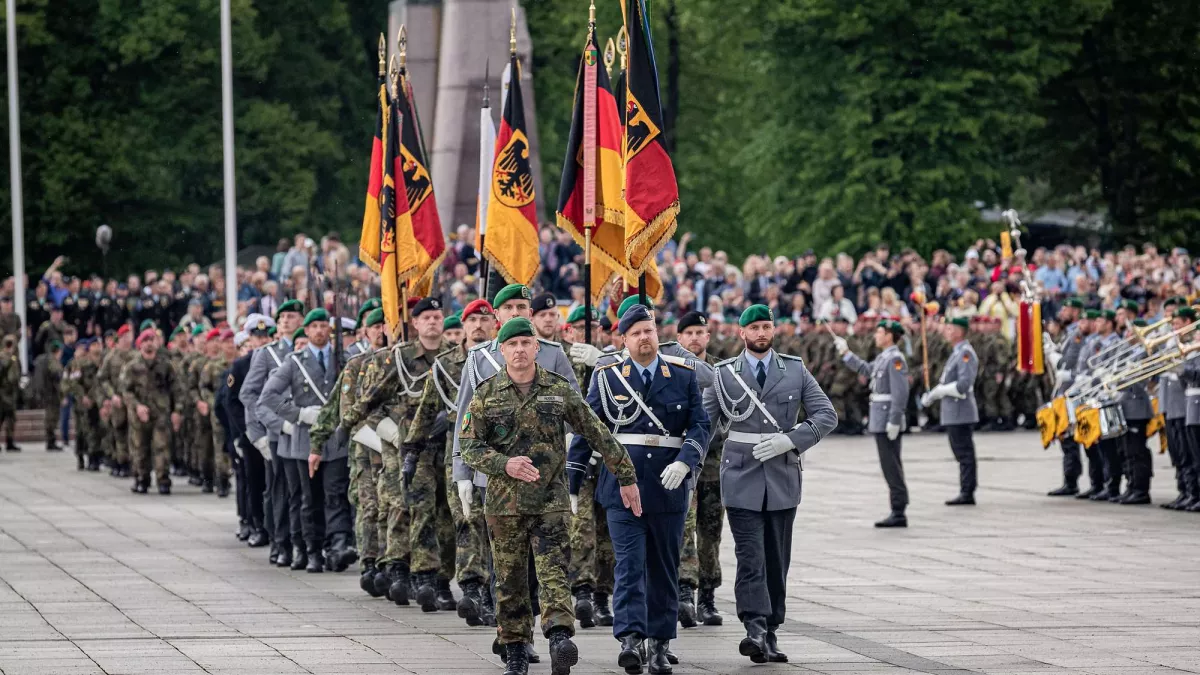
Germany is deploying its troops abroad on a permanent basis for the first time since 1945. The military police (Feldjäger) and other special services will be responsible for screening suspicious individuals during army recruitment.
In December 2025, the new version of the Military Service Act was adopted by the Bundestag.
Back to the Eastern front?
However, the travel restriction, as well as the broader trend toward militarization, has already sparked sharp disagreement and protests within German society. One of the first to speak out against it was Sahra Wagenknecht and her party (BSW).
“The fact that men must obtain permission to travel abroad with the Bundeswehr is reminiscent of the German Democratic Republic (GDR) and the time of the Berlin Wall. This has nothing to do with democracy and the liberal democratic order,” Sahra Wagenknecht told the AFP news agency. In this context, she also called for the resignation of Defense Minister Boris Pistorius.
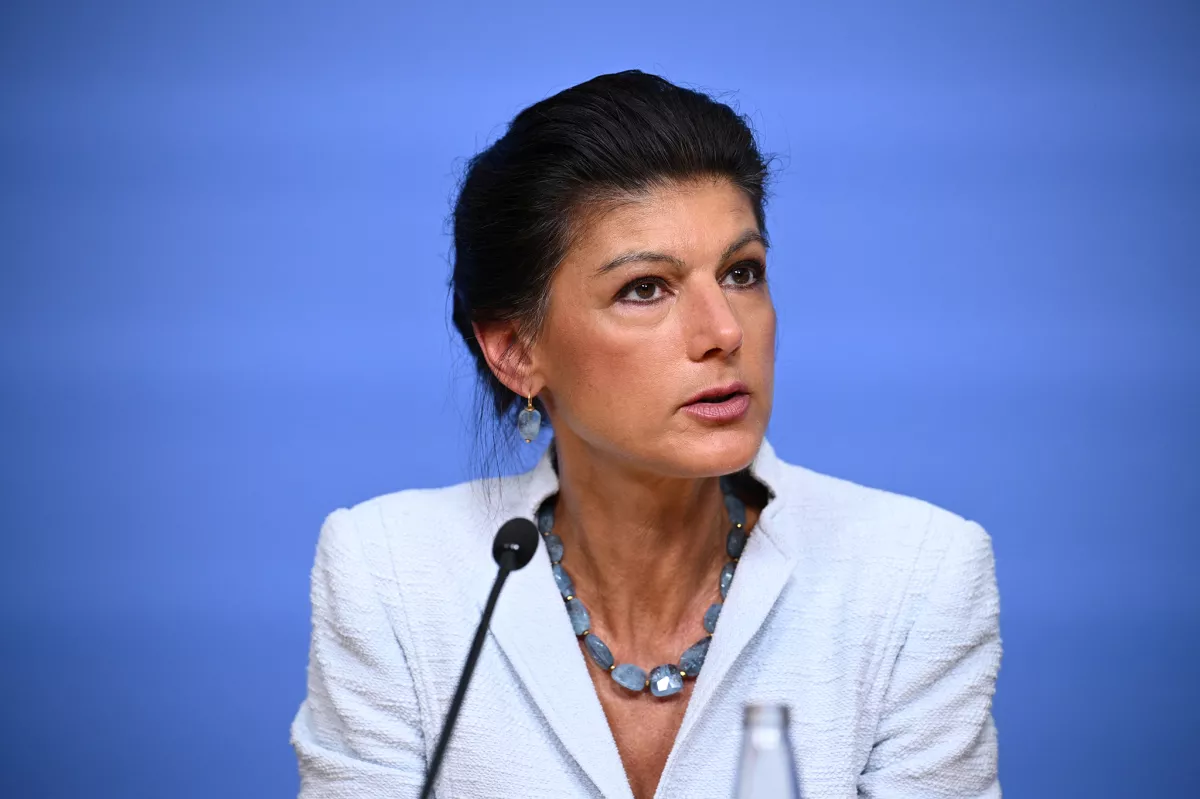
According to Wagenknecht, the travel restriction for potential conscripts indicates that the decision to introduce mandatory military service has already effectively been made. She, in turn, advocates holding a referendum on the issue.
Polls show that 58 per cent of German citizens, concerned about the potential threat of a Russian attack on NATO countries, support the return of military conscription. However, among young people—the very group expected to serve—support is significantly lower, at around 30 per cent. Only 14 per cent of young Germans overall express willingness to serve. Moreover, German youth are actively opposing militarization.
As early as March, a nationwide student strike and demonstrations against military conscription took place. Around 55,000 people participated in the protests. Following this, the police launched an investigation into a 13-year-old who had carried a sign reading, “Merz, die on the Eastern Front.”
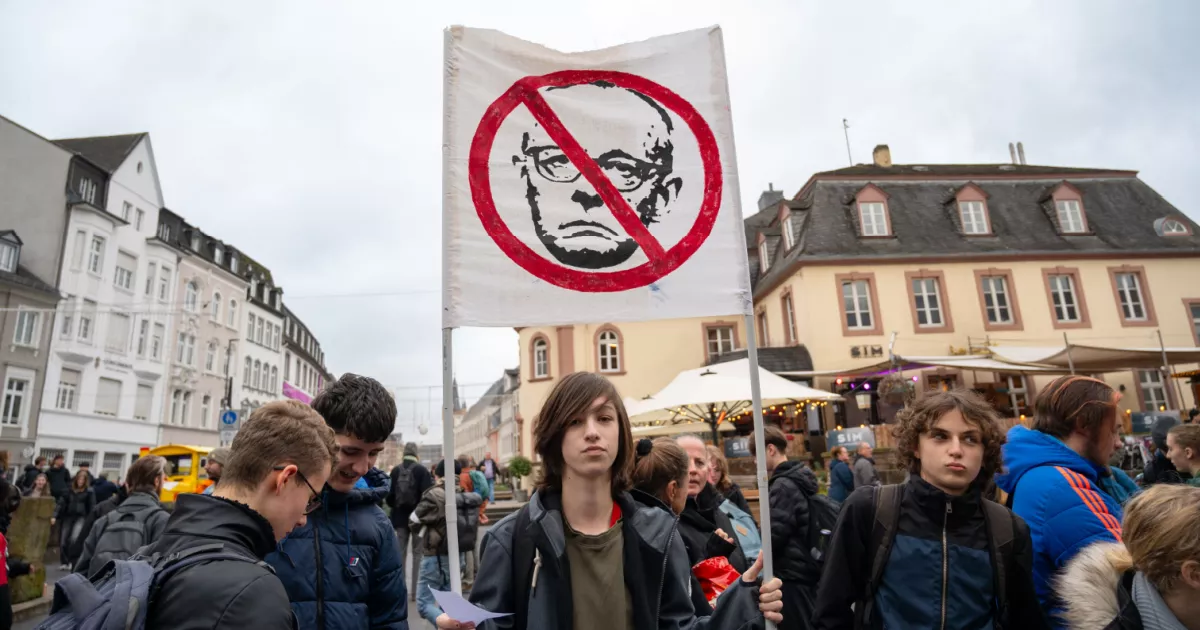
In early April, tens of thousands of people took to the streets for the traditional “Easter Peace Marches” in over 100 German cities. Protesters carried banners reading, “International law instead of the law of the fist,” “Together for peace and justice!,” and “Good education instead of military conscription.”
These demonstrations have become a “pressing and uncomfortable counterpoint to a world heading toward catastrophe,” as noted by the Berliner Zeitung. The “Easter Marches” movement is internally diverse: it includes religious activists and leftists, populists and pacifists. At the same time, the position of the Evangelical Church of Germany—effectively supporting the deployment of nuclear weapons—has drawn serious criticism.
The Left Party (Die Linke) described the Military Service Modernization Act as “poorly drafted.” Opposition to the possible introduction of mandatory conscription also comes from the German Peace Society – United Anti-Military Service Opponents (DFG-VK). The Federal Student Association (BSW) protests against Bundeswehr recruitment in German schools and has developed a special app for conscientious objectors.
Meanwhile, the far-right Alternative for Germany (AfD) party, despite its traditionally loud rhetoric, has largely remained silent on this issue. The Green Party, which previously positioned itself as pacifist, now actively supports the West’s militarization policies.
At the same time, beyond global geopolitical ambitions—which are largely linked to economic competition—there are also very pragmatic reasons behind the accelerated war preparations. Several sectors of the German economy are experiencing a serious crisis. Owners of large corporations, particularly in the automotive industry, view a shift toward military production as one possible way out.

Former NATO Secretary General Anders Fogh Rasmussen told Die Welt: “European economies will have to be converted to a military economy.” However, unlike business leaders and political elites, a significant portion of German workers feel differently. In January 2026, the IG Metall union at the Ford plant in Cologne adopted a resolution stating: “No to a military economy! We will not send our children to war!”
A new student strike against militarization is planned for May 8. In Germany, this date is commemorated as Liberation Day—from Nazism. And yet, one wants to believe that war and aggression will never again start from German soil…







 editor@caliber.az
 +994 55 444-88-98
 Азербайджан, Баку, ул. Низами, 203, Af Business House, 5-й этаж