










Canada between two giants Why Ottawa is recalibrating toward Beijing
The visit of Canadian Prime Minister Mark Carney to the People’s Republic of China, which concluded on 17 January, continues to draw close attention from global media.

Following their meeting, Carney and Chinese President Xi Jinping announced the launch of a “new Strategic Partnership”, which the Canadian prime minister said would deliver “historic gains” by leveraging each other’s strengths. The two sides also reached a preliminary agreement to reduce tariffs on Chinese electric vehicles and Canadian agricultural products. In addition, President Xi pledged to introduce visa-free entry for Canadian citizens—a step expected to revitalise tourism and strengthen business ties between the two countries.
“It has been a historic and productive two days. We have to understand the differences between Canada and other countries, and focus our efforts to work together where we’re aligned,” the Canadian prime minister said in Beijing.
Carney’s trip to China took place against the backdrop of an ongoing trade dispute between Canada and the United States—an aspect that did not escape the attention of leading international media. Japan’s Asahi Shimbun, for instance, pointed out that the Canadian prime minister’s visit was aimed at restoring relations with the world’s second-largest economy and reducing Ottawa’s dependence on Washington. Other global outlets noted that, following the talks, Xi Jinping proposed four guiding principles for the future partnership with Canada: mutual respect for sovereignty; shared development through mutually beneficial trade; trust built via people-to-people diplomacy; and coordination through international institutions such as the UN, the G20 and APEC.

Carney’s visit to Beijing is not the only instance of Canada seeking to reorient itself towards Asian markets during periods of strained relations with the United States. As far back as the 1990s, under Prime Minister Jean Chrétien, Ottawa actively promoted ties with China through trade missions conducted under the Team Canada banner. However, relations cooled sharply in late 2018 after Canadian authorities detained Huawei Technologies’ chief financial officer, Meng Wanzhou, at Washington’s request. The United States sought her extradition to face charges there, prompting China to retaliate by arresting two Canadian citizens—Michael Kovrig and Michael Spavor—on espionage charges. It was only in 2021, under a negotiated arrangement, that all three were released.
Following these incidents, a modest thaw in relations between Ottawa and Beijing began in June last year, when diplomatic contacts were restored. In November 2025, Canada’s foreign minister, Anita Anand, stated that the two countries were seeking to conclude a trade agreement.

However, in the current climate of geopolitical turbulence, Carney’s visit to China appears to have carried particular strategic significance, especially against the backdrop of deteriorating relations with Washington. These tensions were fuelled by statements from U.S. President Donald Trump, who openly declared his intention to pursue Canada’s accession to the United States as its 51st state. During that period, the White House occupant repeatedly referred to then–Canadian prime minister Justin Trudeau as a “governor.”
Such remarks triggered an unequivocally negative reaction across much of Canada’s political establishment. Trudeau firmly rejected the idea, stressing Canada’s sovereignty and independence, and likewise dismissed Trump’s accompanying promises of lower taxes and enhanced protection during trade disputes as unacceptable and unrealistic.
According to a January 2025 survey conducted by the Angus Reid Institute, one-third of Canadians believe that Trump is seriously considering such a scenario. At the same time, only 10% of respondents said they would support a merger with the United States. Meanwhile, a YouGov poll conducted during the same period showed that unification was backed by a minority in both countries—36% of Americans and just 15% of Canadians.
Data from a more recent online survey, carried out after the U.S. operation in Venezuela, further suggest growing public concern in Canada. Many Canadian respondents expressed the belief that the United States may in the future seek to assert control over other countries, including Greenland, Cuba, Colombia, Panama and Iran. Notably, 31% of Canadian respondents said they believed the United States could eventually take direct action to seize control of Canada itself, while 20% of American respondents stated that they considered it plausible their government might take concrete steps to establish control over the country.
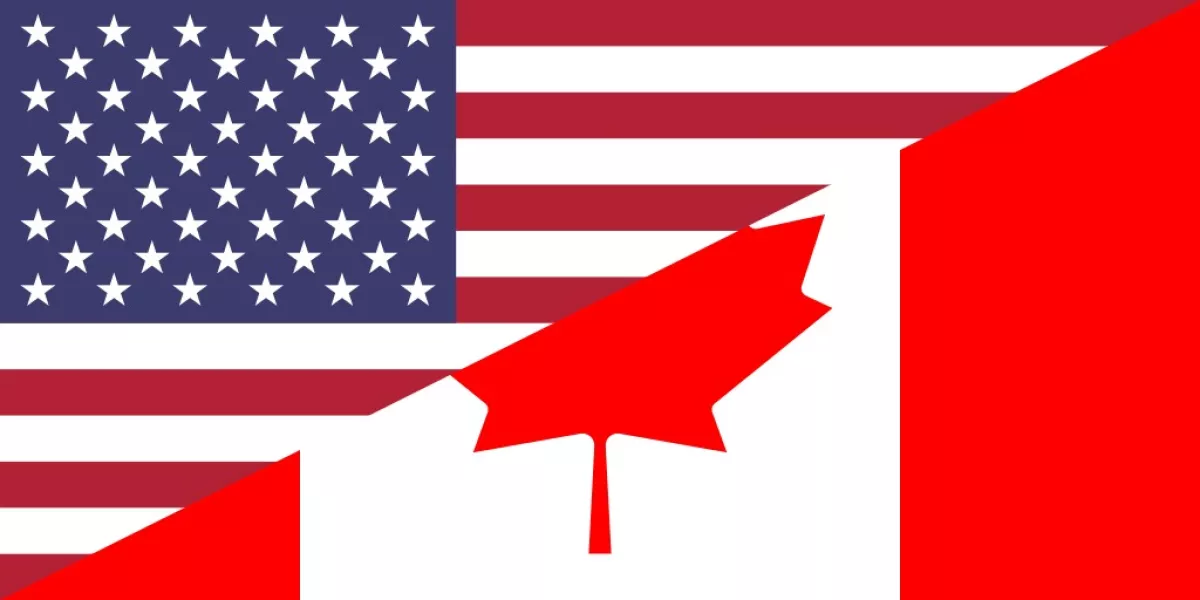
However, such concerns appear somewhat exaggerated and are unlikely to materialise for several reasons. First, despite their shared historical ties to the British Empire, Canada and the United States are two distinct countries that have followed fundamentally different paths of development. Over time, Canada has forged a strong national identity and a political system that differs markedly from that of its southern neighbour. It is a stable, resource-rich state with a well-developed economy, one that has no need to seek incorporation—even into a power as formidable as the United States.
Second, as noted above, the Canadian government has unequivocally declared any notion of accession to the United States unacceptable and has made clear its determination to defend this position to the very end. This stance was reaffirmed by Carney himself, who categorically stated: “America isn't Canada, [and] will never, ever be part of America in any way, shape, or form.” Moreover, against the backdrop of Donald Trump’s statements regarding the need to bring Greenland under U.S. control, Carney used his visit to Beijing to underscore Ottawa’s firm commitment to NATO’s collective defence principles.
“The future of Greenland is a decision for Greenland and for the Kingdom of Denmark. We are NATO partners with Denmark, and so our full partnership stands. Our obligations on Article 5, Article 2 of NATO stand, and we stand full-square behind those,” the Canadian prime minister stressed—thereby sending a clear message to Washington that Canada’s position will remain unchanged, both with regard to its own sovereignty and the situation surrounding Greenland.
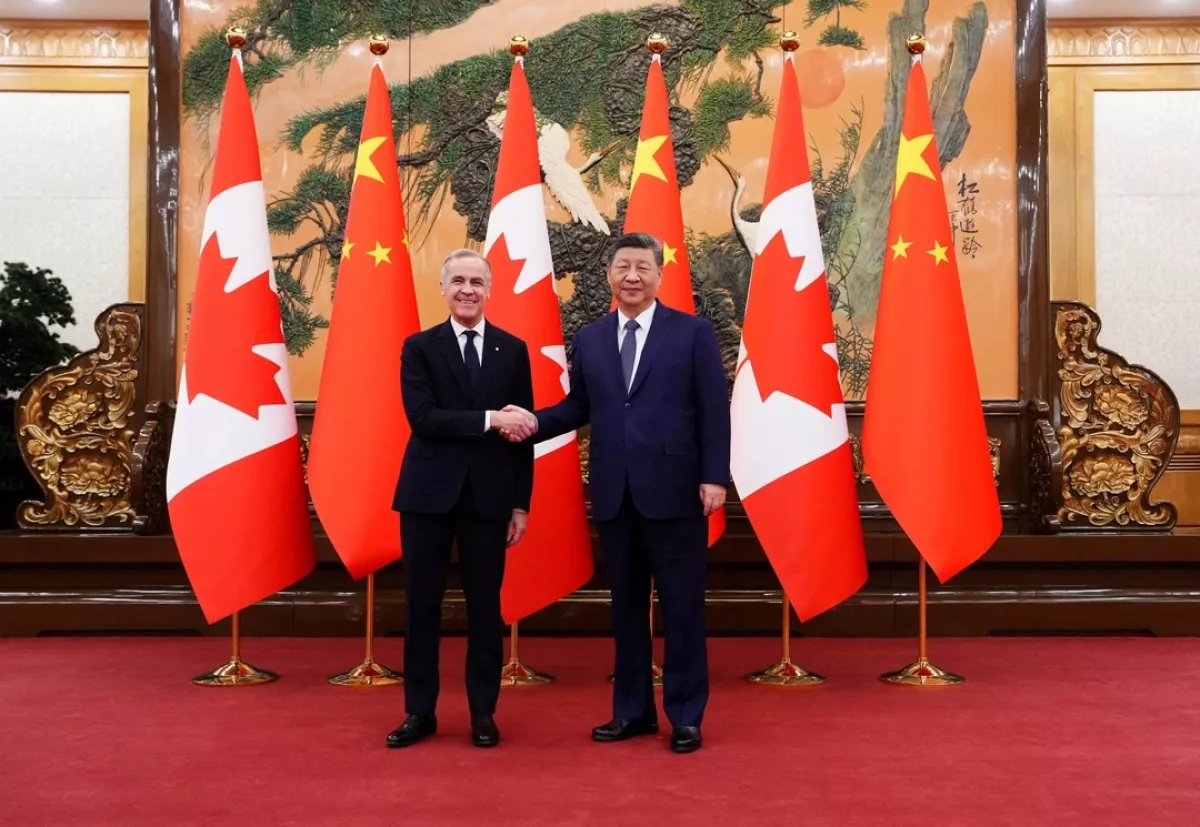
Third, assumptions that the current rapprochement between China and Canada is intended to counter the United States appear unsubstantiated. Even in a hypothetical scenario in which Washington were to exert pressure on Canada through military means, China’s direct involvement would remain unlikely, given Beijing’s established preference for non-interference in the internal affairs of other states.
In practical terms, Canada can expect cooperation with China primarily in the economic sphere, particularly with regard to diversifying export destinations for hydrocarbons and other natural resources. As Ottawa seeks to broaden its access to global markets, China represents one of the world’s largest and most significant consumers of energy and raw materials.
At the same time, against the backdrop of China’s growing role in the international system, closer ties between Beijing and Ottawa may not align with Washington’s strategic preferences. Nonetheless, there is no indication that Canada and China are moving towards the formation of a military alliance or any form of security arrangement directed against the United States.







 editor@caliber.az
 +994 55 444-88-98
 Азербайджан, Баку, ул. Низами, 203, Af Business House, 5-й этаж