










Davos 2026 as a turning point Real debate returns to the world stage
The 2026 World Economic Forum will go down in history not only for its vibrant schedule of events but also because its discussion panels finally saw real debate once again.
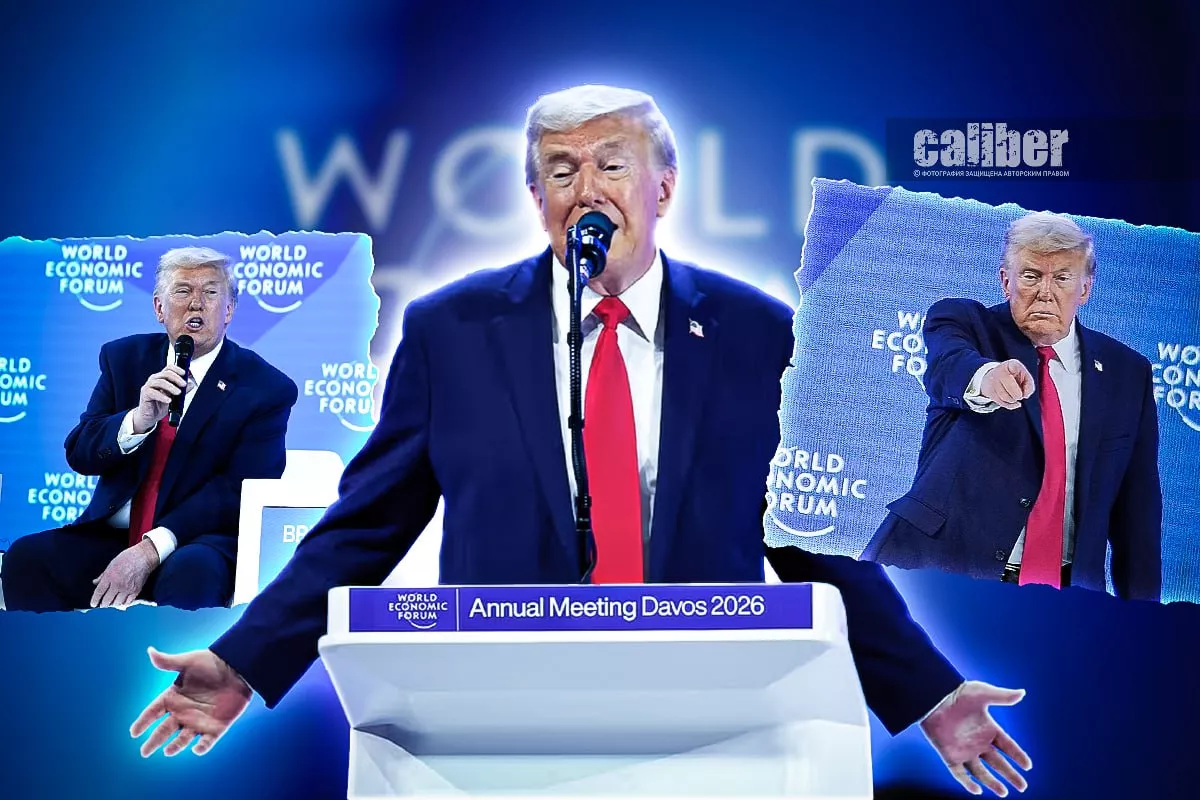
In all the years of the World Economic Forum (WEF) in Davos, hardly any of its events could compare in political tension and media intensity to the recently concluded annual meeting. This time, flashes of information lit up the Alpine town with such intensity and brightness, attracting global attention to the forum, that even its organisers were likely less than pleased. And rightly so, since they had little to do with it. The cause—or blame, depending on one’s perspective—once again fell squarely on Donald Trump.
Just before departing for the WEF, the 47th head of the White House loudly marked the first anniversary of his second presidential inauguration. The main outcome of Trump’s year at the helm of the United States is likely acknowledged both by his devoted supporters and his most irreconcilable opponents. It was a year of shocks and changes in global politics of unprecedented scale and historical significance. Not all of these events actually happened because of Donald Trump, but almost all are now closely associated with his name.
“Trump revived the WEF”
In this respect, Davos 2026 proved especially symbolic. Had the U.S. president and senior members of his administration declined to attend, the annual WEF session would have passed far more mundanely. And despite the fact that the processes unfolding around the world have little in common with mundanity, the forum would not have been nearly as striking or provocative.
Trump’s hour-and-a-half speech from the main stage alone shook the customary Swiss calm of the World Economic Forum. The image of high-ranking politicians and business leaders crowded in the hall, eager to see and hear the American president rolling over global norms like a steamroller and a hurricane, serves as a vivid illustration of a historic moment.
But the U.S. president and his team’s contribution to the Davos 2026 event did not end with this speech. On the sidelines of the forum, possibly decisive meetings took place on Greenland and Ukraine, which could have far-reaching implications for many other global developments. Standing apart in this lineup was perhaps the most ambitious initiative of the current Trump administration—the “Board of Peace.” Many questions remain around it, but in Davos, the idea of the new organisation was not merely announced; its Charter was formally ratified in a ceremonial event.
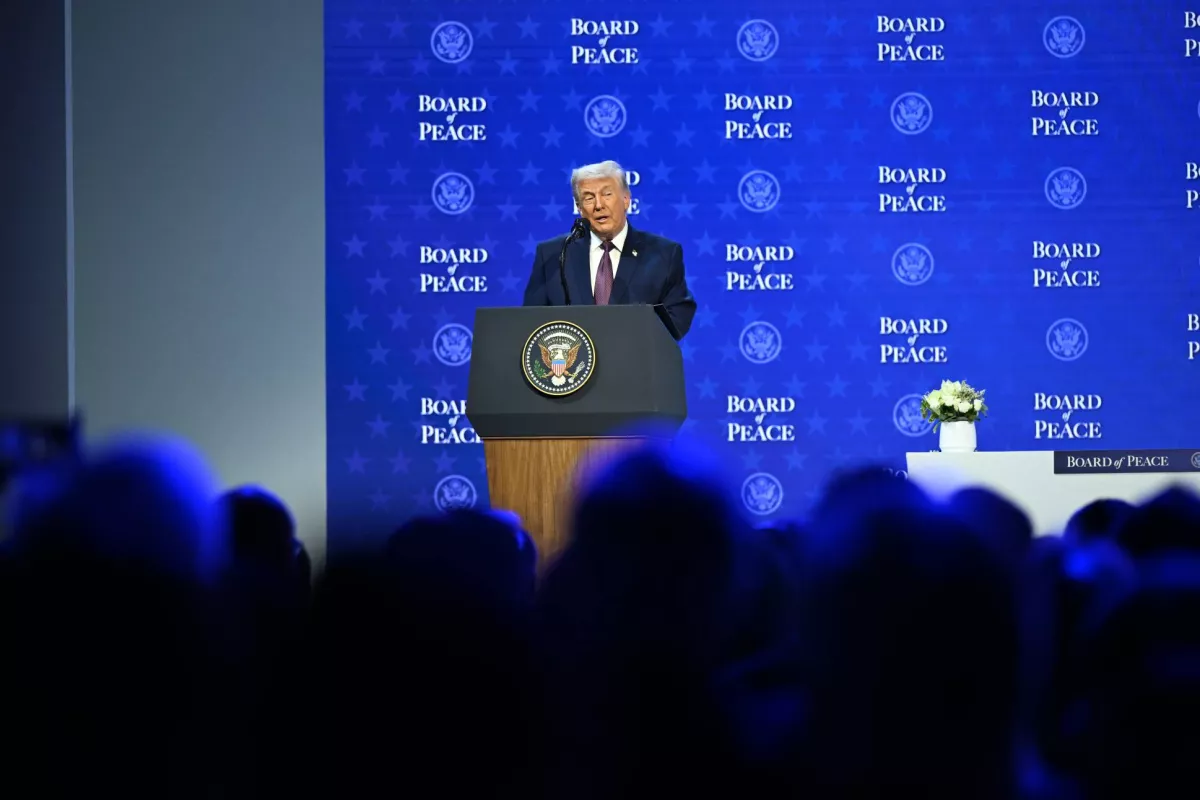
Against this backdrop, one can agree with journalists who summarised the forum with the headline: “How Trump stole the show at Davos and revived the WEF.” Until now, the main political highlights in the forum’s history were the productive negotiations between representatives of Greece and Türkiye in 1988, and between Nelson Mandela and Frederik de Klerk in 1992. Now, it is likely that Donald Trump’s 2026 showcase will join that list. At the very least, he has disrupted the WEF’s typically measured political rhythm for a long time.
People are finally… actually debating
Despite Trump’s political and media centrality at Davos—and on the world stage more broadly—it is worth reiterating a point we have made before: Donald Trump embodies and drives much of what is happening on the planet, but he is not its sole cause. Substantively, the World Economic Forum in Davos is beginning to lose its trademark monotony not only because of the American president, but because such monotony is increasingly irrelevant to a rapidly changing world.
In this sense, the main outcome of Davos 2026 lies not in the loud media headlines, but in the increasingly visible evolution of the forum’s substance and content. The ongoing transformations can be summarised briefly as follows: at events that bring together the international political elite and the brightest minds on the planet to discuss the most pressing global issues, people are finally… actually debating.
When the World Economic Forum was founded in 1971, its purpose was clear, important, and even noble: to create a platform for in-depth discussion and debate on the most pressing questions of the global economy, involving the most influential players. Meaningful discussions among representatives of diverse interests and viewpoints were intended to help develop optimal policies in the interest of global development.
The founders of other international discussion platforms were guided by similar approaches and motivations. For example, the Munich Security Conference (originally under a different name) emerged even earlier—in 1963. Its mission was declared as creating “an independent venue for policymakers and experts for open and constructive discussions about the most pressing security issues of the day – and of the future.” The need for such platforms in an increasingly globalised world over the past decades cannot be overstated. It is therefore natural that similar forums and conferences have gradually emerged in many countries, covering a wide range of thematic areas.
However, after the end of the “Cold War” and especially at the peak of the “unipolar moment” in international relations, most of these platforms began to drift away from their original mission—to serve as places for meaningful discussions and debates among holders of different viewpoints. Gradually, they turned into clubs of like-minded individuals, where it became increasingly difficult to find even a semblance of diversity in opinion. Instead of genuine debate and critical analysis, speakers from different countries and sectors began simply repeating the same mantra-like statements and agreeing with each other on everything.
In their charters, the organisers of such events continued to proudly state their high purpose: to help politicians and business leaders develop optimal solutions through open and critical dialogue. But in reality, instead of platforms for genuine discussion and debate, they increasingly became so-called “echo chambers,” where speakers not only said the same things but did so using the same words, tones, and emphases.
The World Economic Forum in Davos and the Munich Security Conference, unfortunately, became the most striking examples of such transformations. On the sidelines of these events, multiple closed-door meetings and discussions continued to hold appeal and meaning for participating politicians, experts, and business representatives. Yet over the years, the main programmes of these forums turned into a strange, and most importantly, utterly uninteresting show due to their banality. Organisers repeatedly invited the same people to speak on the same topics, and, for reasons no one fully understands, some participants repeatedly agreed to do so.
And all of this was happening far beyond Davos or Munich, far beyond Europe or North America, whose representatives dominated the most prestigious forums. The same trends began to appear everywhere. “Echo chambers” started to proliferate across the globe. Within them, like-minded individuals pleasantly converse with one another about how good they are and how bad everyone else is, further reinforcing increasingly isolated informational bubbles and, through the efficient work of media, enclosing entire societies within them.
“Echo chambers” have no place in the new world
Today, a whole conference industry exists on the planet. Out of hundreds—if not thousands—of such events worldwide, only a handful can genuinely be called platforms for debate, where representatives of different ideologies and schools of thought can engage in civilised dialogue aimed at finding common ground, avoiding conflicts, and developing compromise solutions to complex international issues. In recent years, such platforms have mostly been forced to move into closed, exclusive formats, operating in “no media” or “off-the-record” modes.

As a result, a new branch of this activity has emerged, commonly referred to as “Track-2 diplomacy.” Unlike public forums and conferences, such meetings take place quietly and without media fanfare. In many cases, they genuinely help to untangle complex problems and establish critically important channels of communication. However, by definition, these meetings are highly focused and have a limited agenda, and therefore cannot—and should not—replace large-scale discussion platforms such as the WEF or the Munich Security Conference.
This is precisely why the shake-up that has so clearly begun in Davos is so important. The World Economic Forum—and the very concept of “discussion”—is returning to its original purpose. The notion of a single correct point of view no longer exists and will not exist in the coming years, because global changes present challenges that do not have a single, universally suitable answer. For this reason, it can be confidently predicted that a similar evolution will soon affect the majority of other international conferences and platforms.







 editor@caliber.az
 +994 55 444-88-98
 Азербайджан, Баку, ул. Низами, 203, Af Business House, 5-й этаж