










EU: Economic abyss and ideological overreach Europe’s deepening crisis unveiled
Endless discussions by top EU officials about the war in Eastern Europe have created a dense “smoke screen” that hides transformations taking place within the European Union itself. Meanwhile, Brussels has begun systematically implementing repressive measures to rein in entire countries such as Poland, Hungary, or Slovakia, while also trying to strip national states of ever more massive powers and resources.
At the same time, EU leadership representatives admit that their foreign policy has led the Union into an economic quagmire and, in effect, suggest that people accept a lower standard and quality of living while preparing for war. And to further cover up their failures, the EU elite continues to insist on a “small victorious” expansion, which could ultimately undermine the EU entirely.
LGBT priority
Ideological contradictions within the EU are intensifying, as opponents of liberal ideology are clearly encouraged by Donald Trump’s rise to power in the United States and his criticism of the global liberal establishment as having drifted away from basic “common sense.”
Brussels is attempting to manage internal contradictions through repression and to defend liberal ideology as the core principle of the EU. Recently, it became known that Poland may be punished for its disregard for LGBTQ+ values, expressed in its firm refusal to recognise same-sex marriages.
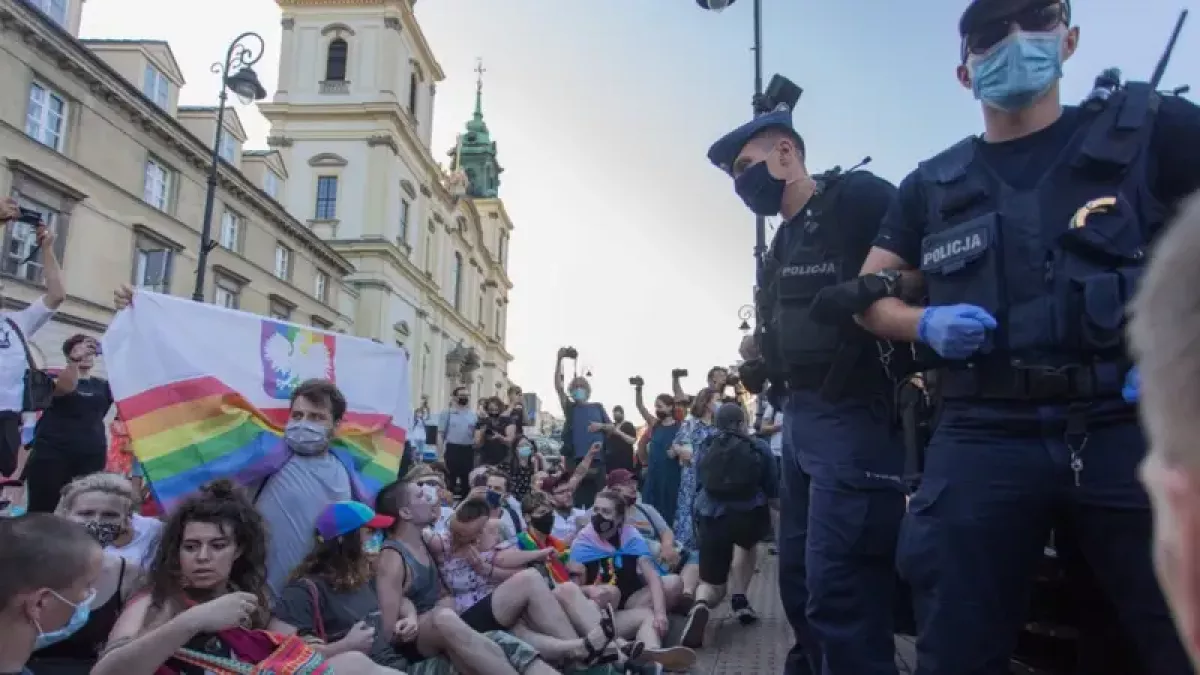
Warsaw, of course, acted lawfully within the framework of national sovereignty, but the European Court of Justice—whose decisions are binding for EU members—ruled that all EU members are obliged to recognise same-sex marriages. Therefore, Polish sovereignty and the will of the Polish people (whether justified or not, which here is irrelevant) carry no weight in this matter.
This is a fundamental issue for the EU’s liberal elites. Recently, the European Commission, led by Ursula von der Leyen, initiated proceedings against Slovakia for violating EU law after Slovakia adopted amendments to its constitution in September. These amendments emphasise national “sovereignty” in cultural and ethical matters, recognising only two sexes and prohibiting adoption by same-sex couples.
Of course, contradictions within the EU are not limited to a single issue; there are many—ranging from border control to the willingness to participate in a “strange war” against Russia. On November 25, the European Parliament adopted resolutions once again demanding that Hungary be stripped of its voting rights in the EU Council due to its policy towards Russia. The Hungarian government, elected by its people, refuses to participate in a confrontation that is destroying the European economy, yet EU institutions consider themselves entitled to demand (!) a different policy from Budapest.
How serious is all this, and will Brussels break the resistance of these defiant countries? On one hand, the European Commission has for years demanded that countries comply with the dictates of liberal ideology—for example, in the area of LGBTQ+ rights. Romania itself has been sabotaging the implementation of such rulings by the EU’s highest courts since 2018. Hungary and Slovakia have also faced threats of losing their voting rights since last year.
On the other hand, the EU liberals have genuinely succeeded in “testing” the very idea of punishing an independent country for its stance; it no longer seems like an extravagant measure, as it did in the early 2020s. Moreover, the EU leadership is clearly concerned that if dissent is not suppressed at the outset, member states opposing the mainstream line—backed by support from the US leadership—could push for a revision of EU ideological dogmas formulated by liberals and seek a redistribution of power, which at the EU level remains firmly in the hands of left- and right-leaning liberals, even as it is rapidly slipping from their grasp at the level of individual countries.
Economy passes judgment on foreign policy
It is the economy itself that opposes preserving the EU in its current form. On November 28, the German parliament approved the new annual budget of the EU’s economically strongest country, featuring a record deficit of €180 billion (against total expenditures of €525 billion). This was driven in part by another record high in Germany’s military spending. Such are the priorities of the German elite. Berlin, it turns out, is finalising plans to deploy an 800,000-strong army eastward within a few days; air raid sirens recently wailed across German cities, and last week drills were conducted on using the subway in wartime conditions. A rather timely exercise, given the economic downturn felt by the general population.
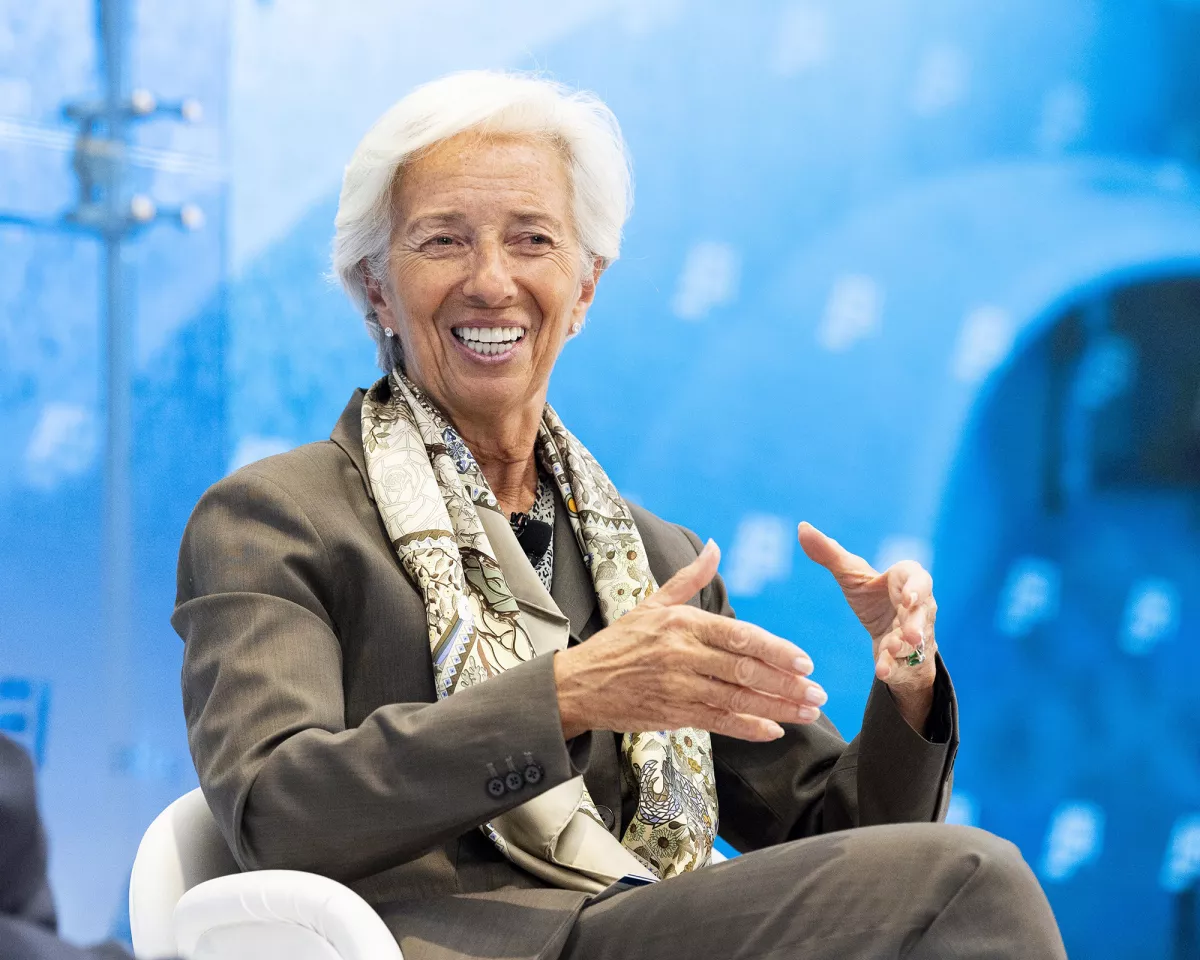
A week ago, European Central Bank chief Christine Lagarde essentially admitted that the EU’s foreign policy had led it into a dead end and that the only solution was to gradually lower the bloc’s socio-economic standards to the level of the so-called Balkans and Eastern Europe. According to her, the EU economy is currently “geared towards a world that is gradually disappearing.” The union relied too heavily on international trade and now finds itself vulnerable as major partners turn away from the bloc.
She identified Donald Trump and his tariffs and protectionist policies as the primary culprit, with China second, allegedly abusing its control over the production of critical materials and products.
It is difficult to agree with this. The EU’s alleged problems with the US and China are in fact caused by the policies of the EU itself and some of its member states. It was the liberal elites ruling the EU who clashed with Trump during his first presidential term. They, together with the US Democratic Party, undermined relations with China, in some cases even allowing the establishment of de facto diplomatic missions of Taiwanese separatists. Similarly, other areas of EU foreign policy also faltered—for example, the long-standing intrigues of EU liberals with Armenian revanchists in the South Caucasus, to the detriment of cooperation with Caspian and Central Asian countries.
Lagarde did not acknowledge any of this, but she did agree that the EU has long, through the tacit indulgence of politicians, entered an era of effective economic stagnation, particularly in innovative sectors. That is, technology and capital have flowed out of the bloc, and the EU has fallen into a “vicious circle,” where even Europeans themselves and European firms invest their money in American stocks, fueling faster growth of the US economy compared to the EU and leaving “stagnating productivity at home and growing dependence on others.”
The level of absurdity in the statements of EU officials never ceases to amaze. Among the three “strengths” of EU economic policy, Lagarde listed increasing military spending by member states, which, it should be noted, not only diverts funds from other sectors but even indirectly fails to promote innovation, since the EU increasingly invests in American weaponry.
But the most interesting part is the solutions proposed by the EU liberal elite to emerge from the current crisis. According to Lagarde, the solution lies in reorienting the EU toward the internal market, which is to be improved by reducing barriers to trade in goods and services between EU countries. The idea is that eliminating these obstacles could compensate for losses caused by new US tariffs. In addition, it is proposed to introduce mutual recognition of licensed companies and banks, allowing them to operate throughout the EU as long as they hold a licence in one member state.
Lagarde also calls for unified taxation, adopted by a majority vote in the EU rather than by consensus, which would give additional influence to herself and her Euro-bureaucratic colleagues.
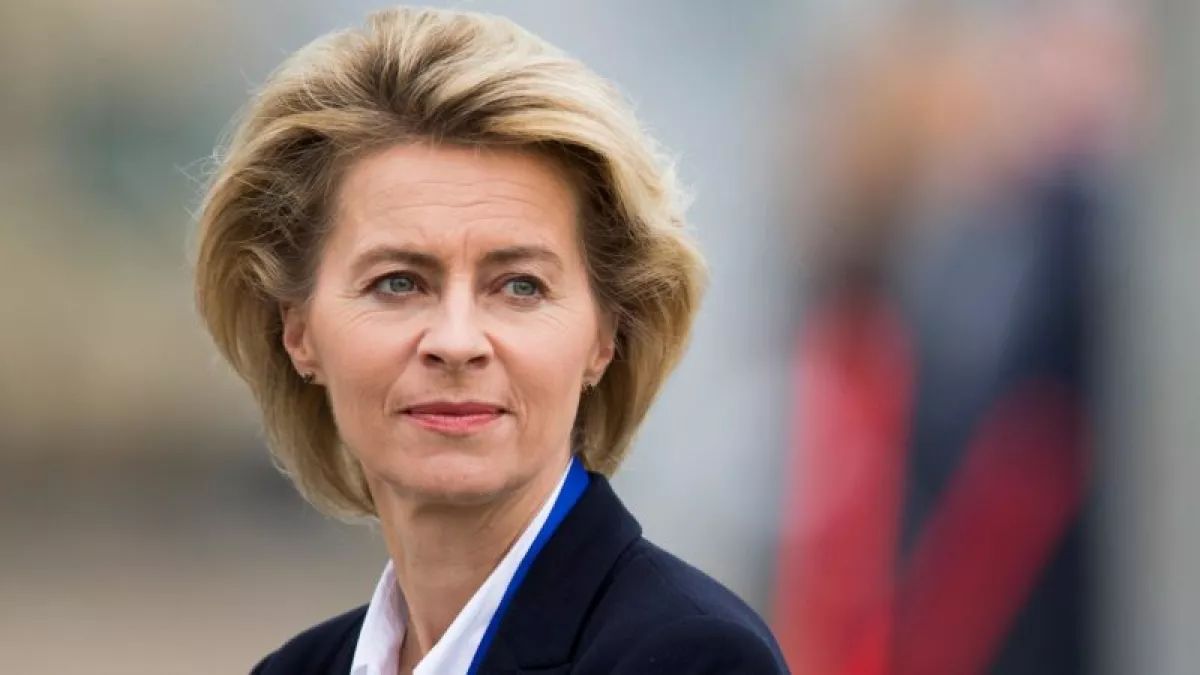
Right now, von der Leyen’s team is reshaping the new EU budget, merging segments of agricultural policy and regional structural support in a way that gives Brussels more levers of influence. These are astronomical sums, as these segments make up a large portion of the EU budget (currently around €2 trillion). In the struggle for such funds, the entire European Commission could easily fall. For this reason, it is considering forceful support for such ambitions; indeed, Ursula von der Leyen and her colleagues outlined in early November plans to create an EU intelligence service under their aegis, which would help deal with the opposition—naturally, framed as having a “Russian connection.”
Armenia’s hypothetical “European integration”
From the EU’s perspective, it would be one thing if the issue were limited to a redistribution of power and money within the EU elite. But the problems for the EU stem from the adventurism, incompetence, and strategic absurdity of the political plans of its liberal leadership. Even after implementing the recommendations of the chief banker, other extremely harmful consequences can be expected beyond bureaucratic power reshuffles.
To begin with, the quality of goods and services will inevitably plummet. Remember how people praised the liberalisation of the aviation market through the admission of low-cost carriers? It is now clear that, in the long term, legalised dumping and deregulation first led to a decline in transport quality, then to the disruption of established air-communication networks and the destruction of high-quality “legacy” companies, and now even to rising costs for services, including those provided by low-cost carriers registered in so-called “tax haven” countries. The same outcome is expected if trade in licensed goods and services is fully liberalised.
At the same time, such liberalisation and the EU’s reorientation toward the internal market will devastate the bloc’s largest economies—the German construction sector has already been distorted by unfair competition from Eastern European firms operating “under the table,” without quality standards and with extreme exploitation. The same is expected to happen in licensed sectors such as telecommunications, banking, and insurance.
Finally, and no less importantly, the proposed measures will further diminish the EU’s global role, as its inward focus will leave little room for interaction with other countries. Even worse, the accession of new countries will become even more destructive. Recall that the EU once imposed a strict choice on Eastern European countries: either an Association Agreement with the EU or a Customs Union with post-Soviet states—no combination allowed. This has now become standard practice. Today, the accession of any country will further “pull” it away from its historical region, as EU bureaucrats clearly prioritise the internal EU market.
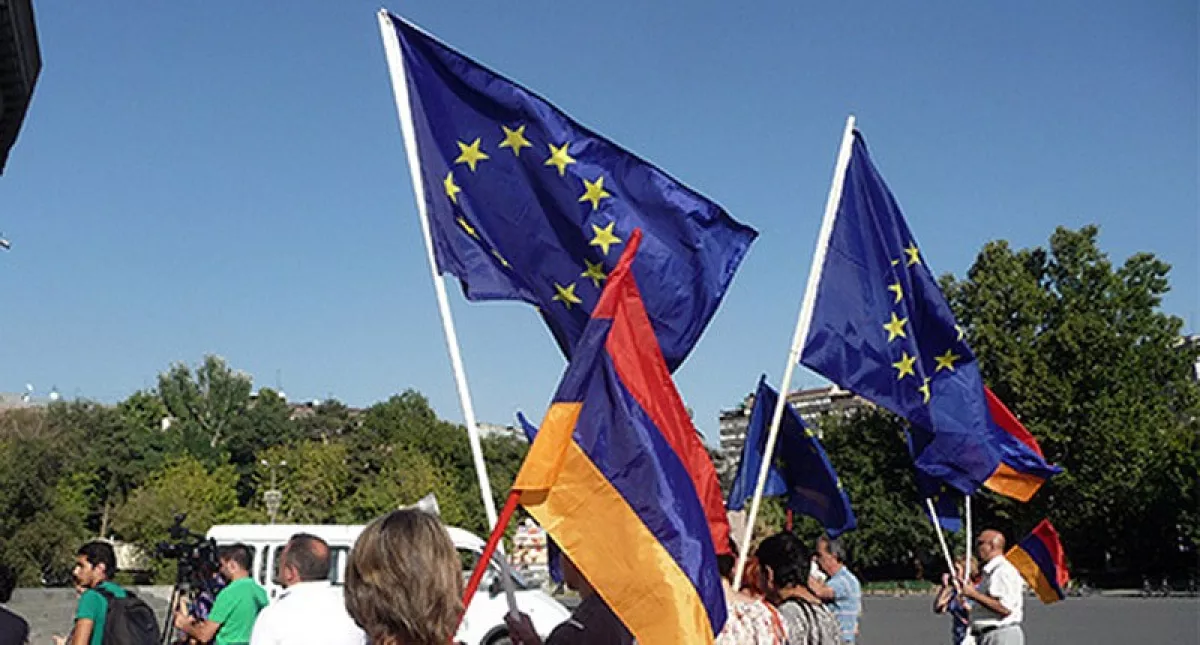
It therefore makes sense to consider how Armenia’s “European integration” could affect the interests of regional countries, which will undoubtedly not sit idly by while Yerevan and Brussels pursue their own agendas.
European integration and anti-Turkish pogroms
Against this backdrop, the EU has begun preparing for a new expansion. After Croatia’s accession in 2013, the question of enlargement largely receded: sensible observers understood that there were no realistic options for expansion—candidate states were either too underdeveloped and would become hopeless burdens, or were mired in conflicts, while Türkiye was excluded from the EU due to plain racism.
The new European Commission, led by Ursula von der Leyen, came to power in 2019 and ended this indecisiveness. Its Commissioner for Enlargement, Marta Kos, has recently openly set a goal of admitting as many as ten new states (a group that Armenia hopes to join). Considering the level of competence in this Commission—filled with party appointees and politicians who have blundered in their own countries of all stripes and genders—one can only conclude: the less you know, the easier it is to make decisions.
In a recent EU report on enlargement, the goal was explicitly stated: decisions on the accession of new countries are to be made before the current European Commission’s mandate expires. The most serious candidates are Albania, Montenegro, Ukraine, and Moldova. The latter two were added to this group only recently, largely as a reaction to Trump’s attempts to strike a deal with Russia. Brussels elites have already indicated that Ukraine will be admitted bypassing the usual procedures, allowing the EU to sidestep the rhetorical question of whether Ukraine meets EU criteria. In the case of the Balkan states, this question remains, but not for Brussels, which has made clear its intention to admit these countries as quickly as possible.
Montenegro is expected to join the bloc by 2028, and Albania no later than 2030. The latter has become the “champion” of EU integration. In mid-November, its government began negotiations with the EU on the final thematic cluster, having completed the other clusters in just one year.
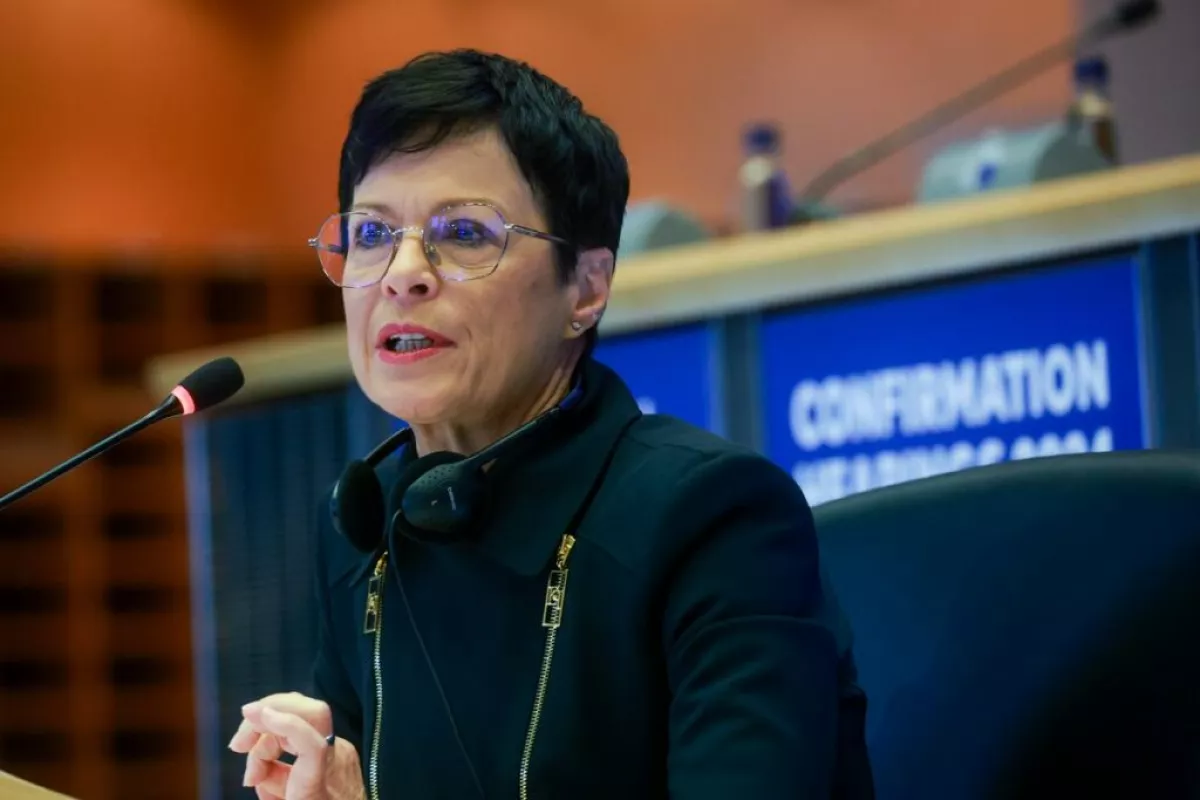
“This success would not have been possible without the commitment of Albania and the support of all member states to support Albania. We are committed to bringing Albania into the EU. The success is Albania's, the result of the work of the authorities to implement important reforms,” EU Enlargement Commissioner Marta Kos recently stated.
Indeed, Albania not only adopted a law encompassing all LGBT values, but its prime minister even apologised to the EU for the opposition daring to criticise this “noble law.” Against this backdrop, Euro-bureaucrats do not miss the chance to attack Georgia, which, despite years of reforms and a functioning state, has been declared a poor candidate. Justifications include Tbilisi’s measures to combat foreign interference in Georgian politics and… restrictions on LGBT rights and values.
The accession of Albania and other countries governed by liberals makes sense for strengthening the EU’s liberal dogma, as it creates a counterbalance to states that resist attempts to impose ideological frameworks by directive. However, admitting these countries will come at a huge cost for the EU. It is not just the legacy of the Balkan wars, which remains unresolved. It is also the ultra-radical approaches being tested in the region under Brussels’ guidance, disguised as “reforms.”
For example, as part of its “preparation” for European integration, Albania’s Socialist Party assigned the portfolio of Minister for Public Procurement in its government to a female AI bot named Diella—a precedent-setting move in global politics. This is, to put it mildly, a controversial decision from the standpoint of democracy and accountability, since it essentially involves a set of algorithms developed opaquely, allowing a rudimentary, opaque scheme of avoiding responsibility to be disguised as cutting-edge technology. Given the current immaturity of AI, it is impossible to take such a step seriously. But for the liberals, Albania is a playground for such experiments.
As for Montenegro’s readiness for European integration—allegedly a process of moving toward democracy and human rights—the evidence is telling. Brussels continuously praises the country’s government, especially its willingness to implement visas and sanctions at the EU’s behest. But the manner in which visas for Turkish citizens were introduced on October 30 raises some questions.
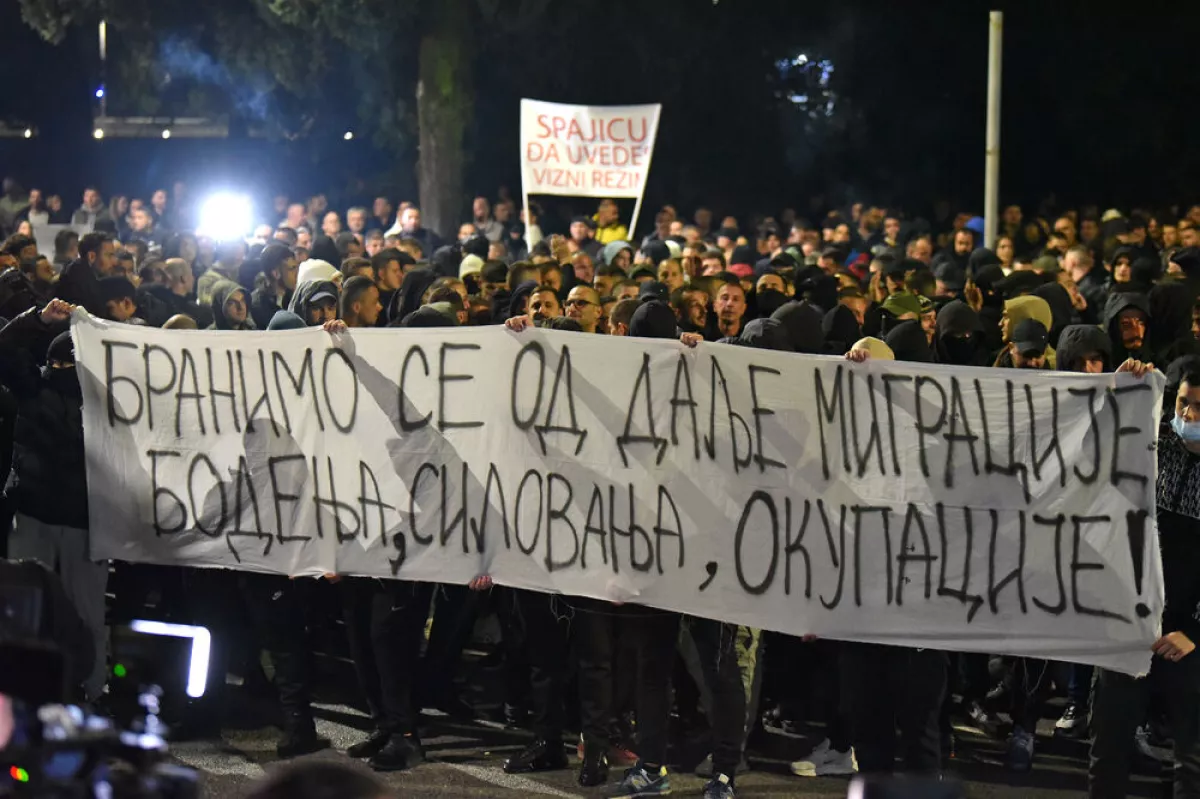
In fact, just before, there was an incident with signs of a likely provocation—a fight involving Turks and Azerbaijanis. Following this, for three consecutive nights, Turkish-owned sites were vandalised and street riots erupted with slogans such as “Turks out” and “Kill the Turk.” None of this matters to Brussels, and Montenegro—unlike Türkiye (allegedly responsible for the events of 1915) or Georgia—is considered ready to join the EU as a democratic, tolerant country. As for the riots in Montenegro, the blame has been placed on pro-Russian Serbia!
Time will put everything in its place. The new wave of EU expansion will only bring that moment closer. The vain ambition of the current EU leadership to go down in history as the annexers of the Balkans and Eastern Europe, along with their desire to reinforce liberal dogma within the bloc by admitting liberal regimes, will require a rapid and substantial increase in spending on integrating new members—or the acceptance of collective degradation of all members to the level of the worst. The EU has long since run out of money. Ideology cannot be eaten, and the Euro-establishment, through such arbitrary steps, only reduces the bloc’s chances of economic survival.







 editor@caliber.az
 +994 55 444-88-98
 Азербайджан, Баку, ул. Низами, 203, Af Business House, 5-й этаж