










Exports of Armenian goods to Azerbaijan: utopia or a real prospect? Expert opinions on Caliber.Az
As 2025 drew to a close, Armenia’s Minister of Economy Gevorg Papoyan made a statement about the possibility of exporting Armenian goods to Azerbaijan. Among the potential export items, he mentioned aluminium and aluminium foil, agricultural products—including livestock, fruits and vegetables—certain types of beverages, as well as textile products.
It remains unclear which specific beverages are being referred to, but it is most likely that Armenia is considering the export of its wines and brandies to Azerbaijan, along with mineral water, natural juices, and canned compotes.
Azerbaijan has already delivered supplies of its high-quality premium-grade motor petrol to Armenia. As Armenian Foreign Minister Ararat Mirzoyan stated, queues are forming at Yerevan petrol stations, with motorists eager to refuel specifically with Baku-produced fuel.
It is therefore logical to expect reciprocal exports from the Armenian side as well. And this is where questions arise: is Azerbaijani society ready to see Armenian goods appear on store shelves tomorrow? Has the psychological barrier—shaped, at the very least, by the human losses of the 44-day war—already been overcome? It is also interesting to consider how competitive Armenian products could be on the Azerbaijani market, which is already saturated with foreign goods from both post-Soviet states and many other countries around the world. Or perhaps, despite everything, mutual trade is the only reliable path leading to the gradual building of peaceful relations between our countries?
Well-known experts shared their views on these questions with Caliber.Az.
As Ihor Semyvolos, Executive Director of the Centre for Middle Eastern Studies (Kyiv), noted in his commentary, this is indeed a deep and multifaceted issue.

“Trade after decades of conflict is not only about economics, but also about highly complex social engineering. We need to be realistic: the psychological barrier remains very high. The memory of losses suffered in the wars is still too fresh. The appearance of products bearing Armenian labels on the shelves of shops in Baku or Ganja could initially provoke mixed reactions—from curiosity and irony to protest flash mobs on social media. Most likely, during a transitional period, businesses will resort to ‘neutral’ packaging (export versions in English or Russian) or rebranding.
When it comes to food and beverages (wines, brandies), trust is critically important. Some consumers may develop irrational concerns about product safety.
On the other hand, supplies of Azerbaijani petrol to Yerevan already represent a colossal ‘icebreaker’. If Armenian society has accepted Baku-produced fuel—even if for pragmatic reasons of price and quality—this creates a precedent of an ‘economic truce’ that makes movement in the opposite direction easier,” the researcher believes.
He notes that the Azerbaijani market is indeed saturated and highly competitive.
“Armenian producers will have to compete with Turkish, Russian, and local brands. Armenian brandies and wines enjoy strong brand recognition across the post-Soviet space, which is one of Armenia’s key advantages. However, Azerbaijan has a very strong domestic winemaking industry that is actively subsidised by the state. Armenian products will therefore have to look for a narrow niche—either in the ‘premium’ or ‘exotic’ segments.
Logistics will be a key factor here. If transport corridors (including the Zangezur route and other links) become fully operational, delivery costs will be minimal. Fresh vegetables and fruits from Armenia’s border regions could be cheaper and of higher quality than imports from distant countries.
There is a concept known as ‘liberal peace’, which holds that countries that trade actively with one another are less likely to go to war, because war becomes economically unprofitable. Trade forces people to communicate—to sign contracts, discuss logistics, and resolve disputes in courts rather than on the battlefield.
In my view, the process will follow a scenario of ‘quiet normalisation’. Industrial goods (aluminium, construction materials) will come first, followed by textiles and processed products marketed under neutral brands.
The appearance of Armenian brands with their authentic names in Azerbaijan (and vice versa) is not a matter of months, but rather of five to ten years of sustained peace. Yet the launch of fuel supplies to Armenia is a powerful signal that pragmatism is beginning to prevail over ideology,” Semyvolos believes.
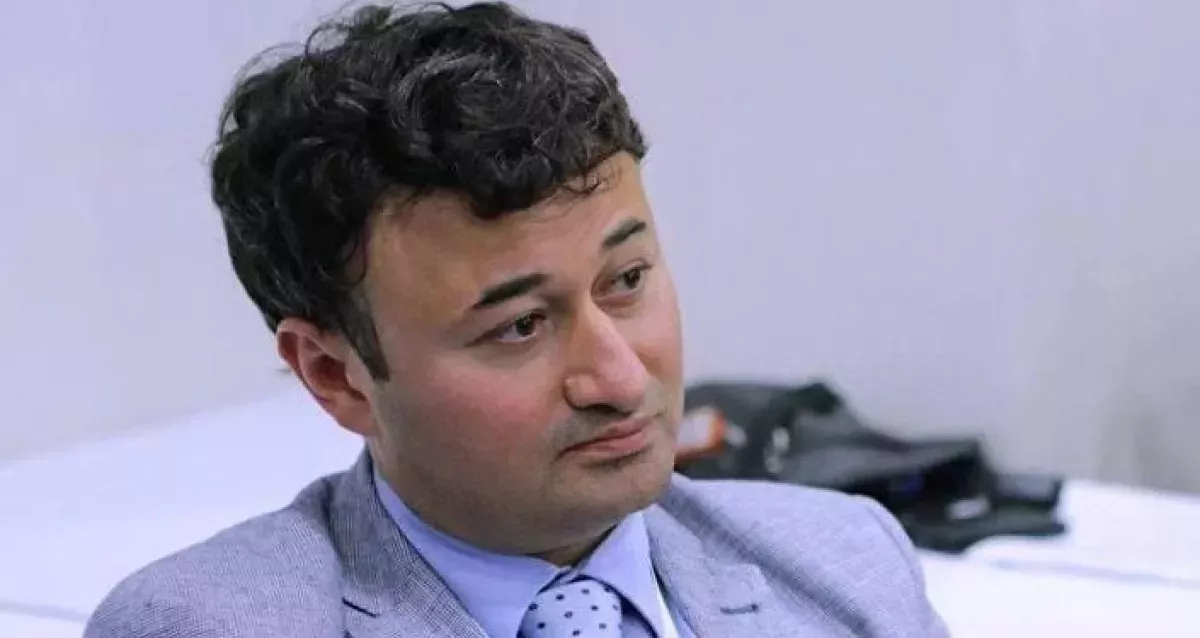
Professor Rovshan Ibrahimov, a political scientist at Hankuk University of Foreign Studies (South Korea), noted that a truly comprehensive answer to this question would require conducting public opinion surveys.
“Expert and specialist opinions contribute little in this regard, because what really matters here is keeping a finger on the pulse of public sentiment. And even public opinion itself cannot fully reflect how events might unfold, because until people encounter certain realities in practice, it is hardly possible to accurately predict the situation that will emerge as a result.
Overall, however, the answer is fairly clear. Society is not ready for recognisably Armenian products to appear on the shelves of Azerbaijani shops. There have been cases in the past when Azerbaijani products ended up on Armenian markets and, conversely, Armenian goods appeared on Azerbaijani markets—and those instances led to scandals. At the same time, Armenian products may initially be mistaken for Georgian ones. But in any case, sooner or later they will become easily recognisable,” the professor says.
He believes that no concrete steps in this direction will be taken for the time being.
“But both sides are now demonstrating political will to move forward. Clearly, fuel is not the same type of product as, for example, finished agricultural goods. In the latter case, the consumer directly encounters the product’s labelling, which will contain information in the Armenian language. And it is obvious that if Armenia exports such goods to the Azerbaijani market, the labelling must also include Azerbaijani, as required by Azerbaijani legislation.
It is also clear that not everyone is ready at this stage to accept the idea of having a product at home with text written in Armenian. I believe it is still far too early for that.
On the other hand, if we look at examples of other conflicts and their resolution, we see that sooner or later all wounds heal. In this context, political will is important, as are public expectations. And without any doubt, everyone wants peace—but the way it will be achieved is a different question altogether,” Ibrahimov concluded.







 editor@caliber.az
 +994 55 444-88-98
 Азербайджан, Баку, ул. Низами, 203, Af Business House, 5-й этаж