










Finance of trust: Azerbaijan is exploring Islamic banking tools Overview by Khazar Akhundov
Over the past decade, Islamic finance has emerged worldwide as an effective financial instrument, and the volume of the global financial industry based on Sharia-compliant principles is currently estimated at approximately $4 trillion. In Azerbaijan, where the monetary and credit system has been undergoing reforms for several years, alternative financial mechanisms are also in demand, one of which is seen in the development of Islamic banking.
The prospects for integrating Islamic credit instruments into the architecture of the country’s financial and banking system are in the focus of participants of the Islamic Development Bank (IsDB) Group meetings held in Baku on June 16–19, including the 20th Global Forum on Islamic Finance, which took place recently.

The Islamic finance system is based on the principles and rules of Sharia law and corresponding ethical standards, which prohibit usury, the charging of interest on loans, gambling, and overly risky or uncertain transactions. Instead, Islamic financial institutions operate on the principle of profit-and-loss sharing between borrower and lender, where money is regarded as a medium of exchange and a measure of value, and cannot be used as an asset to generate profit on its own. In essence, the capitalisation of Sharia-compliant financial structures is ensured through profits generated from investment income.
On a global scale, the development of Islamic banking began after 1975, and over the past decade, Sharia-compliant credit, leasing, and insurance institutions have evolved into a rapidly growing segment of the global financial system, successfully expanding into capital markets far beyond the Islamic world. Today, more than 2,000 credit, insurance, and other financial institutions operating under Sharia principles function in around 80 countries, and the market is expected to grow to $6.67 trillion by 2027. More than 70% of these institutions are Islamic banks, followed by Islamic investment funds, insurance companies (takaful), and market participants specialising in securities operations (sukuk).
As stated by the Acting Director General of the Islamic Development Bank Institute (IsDBI), Sami Al-Suwailem, during the 14th Private Sector Forum of the Islamic Development Bank Group, “the total volume of the global Islamic financial industry is currently estimated at $4 trillion. The IsDBI Group’s share of this market is around $40 billion.”
In his view, despite the fact that the IsDBI Group accounts for only 1% of the global Islamic finance industry, its influence on the market, its strategic vision, and the innovative approaches underpinning its activities define its leadership role, which significantly exceeds the scale of its financial footprint. He also stressed that IsDBI experts are in continuous engagement with stakeholders, seeking innovative solutions to the economic challenges faced by member countries, and helping them utilise advanced Islamic finance instruments.
This experience is also in demand in Azerbaijan, which has been a leading regional beneficiary of financial support from the Islamic Development Bank Group since 1992. Together with the Group, the country is actively engaged in the development of the halal economy, support for small and medium-sized enterprises (SMEs), and infrastructure initiatives. Caliber.Az has previously examined the prospects of Azerbaijan’s cooperation with Islamic Development Bank partners in detail in the article “From Islamic finance to halal economy: Baku brings together Global South.”
Notably, in recent years, with the participation of IsDB partners, the Republic of Azerbaijan has been developing the foundations of Islamic banking, insurance, and capital markets. It is worth mentioning that several years ago, a dedicated working group was established in the country to implement international experience in the field of Islamic banking. At the same time, the Central Bank of Azerbaijan (CBA) has developed a roadmap for introducing the “Islamic window” model in order to apply Islamic banking products in the country.
According to Moody’s, the planned introduction of “Islamic windows” in Azerbaijan would help diversify banks’ income structures, expand the range of products and services, and thereby improve the credit profile (“credit positive”) of the banking sector.
“Islamic finance is an important instrument of inclusive economic development, and Azerbaijan is committed to integrating Islamic finance into the architecture of its financial system. We expect our reforms to contribute to the deepening of financial markets and the attraction of foreign investment,” said Chairman of the Central Bank of Azerbaijan (CBA), Taleh Kazimov, during the 20th Global Forum of the Islamic Development Bank on Islamic Finance.
“Islamic finance, acting as a unifying financial language for different regions, facilitates cross-border investment and the development of the private sector, and our country is ready to contribute to the realisation of this vision,” he added.
He also noted that the global economy is currently undergoing a period of profound structural change, and increasing trade fragmentation, along with growing uncertainty, makes it necessary to establish adaptive and inclusive financial systems. In this regard, Islamic finance fully meets the criteria of sustainable development, prioritising risk-sharing, public welfare, and ethical investment, while helping to avoid speculation and debt bubbles, which is fully aligned with the goals of the state.

“Azerbaijan is preparing to issue its first sukuk — the Islamic equivalent of bonds, and in order to create a favourable environment for its implementation in the country, a joint project is being carried out with the IsDB,” said CBA Chairman Taleh Kazimov.
It is expected that this project, developed with the participation of experts from the Islamic Development Bank Institute, will establish the conditions for creating a robust legal and regulatory framework, monitoring and assessment mechanisms, and, in general, for diversifying the financial sector, as well as strengthening the capacity of financial institutions in the field of Islamic finance.
In essence, the development of financial instruments focused on sustainability, transparency, and innovation is a key priority for the regulator. In this context, the Central Bank chief noted that Azerbaijan has integrated ESG criteria (environmental, social, and governance) into its national development strategy.
As a reminder, ESG criteria, in their basic ethical orientation, are aligned with the principles of Islamic finance: green finance prioritises concessional lending for projects that contribute to environmental balance, reduce carbon footprints, and promote waste-free production, among other objectives.
The Chairman of the Central Bank also emphasised that the successful development of Islamic finance in Azerbaijan requires progress in two key areas: “First, improvement of the legal framework and ensuring transparency of the regulatory environment. In addition, it is necessary to develop human capital in the field of Islamic finance.”
At the same time, in order to expand the use of Islamic finance instruments in the country, amendments to the Civil Code, Tax Code, and financial legislation are being prepared. Together with international partners, seminars and training programmes are being organised, and an effective Islamic finance ecosystem is being gradually formed.
This work will continue to be refined, and according to First Deputy Minister of Finance Anar Karimov, new Islamic finance projects may be implemented in Azerbaijan in the near future. He noted that takaful services are already available in the country, and financial institutions have begun offering Islamic banking products, with some banks applying instruments such as murabaha and mudaraba.
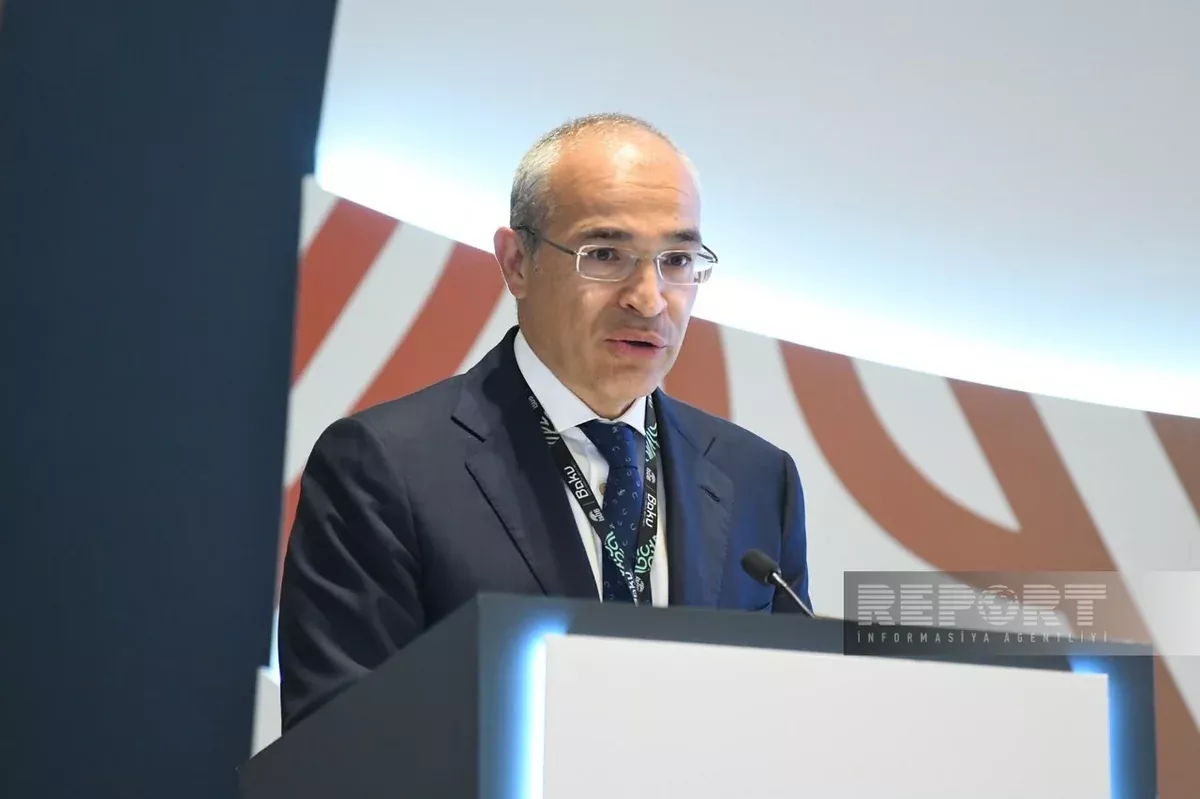
Thus, Islamic finance is an important instrument of inclusive economic development. During a dialogue session at the Baku Forum, Minister of Economy Mikayil Jabbarov emphasised that cooperation with the Islamic Development Bank plays an important role in Azerbaijan’s transition towards a private sector–driven economic model and in helping local companies adapt to international standards.
“The instruments provided by the IsDB expand the opportunities for Azerbaijani companies to enter foreign markets and contribute to strengthening trade and economic ties between member countries. Cooperation with various institutions of the IsDB Group helps SMEs operate in line with international standards, covering areas such as digitalisation, adaptation to innovation, and the ability to operate at regional and even global levels,” the Minister of Economy stated.
Mikayil Jabbarov also noted that the agreements signed on June 17 cover a wide range of areas — from financial services to sectors linked to the new economy and the Fourth Industrial Revolution.







 editor@caliber.az
 +994 55 444-88-98
 Азербайджан, Баку, ул. Низами, 203, Af Business House, 5-й этаж