










Iranian crisis and the changing dynamics of Yerevan–Tehran ties New ambassador, old problems
The domestic political situation in the Islamic Republic of Iran remains tense, prompting several countries to urge their citizens to leave immediately due to reports of numerous casualties among both protesters and law enforcement personnel. At the same time, international media are speculating about potential scenarios for a military confrontation between Iran and the United States.
Against this backdrop, Baku’s official stance appears notably measured and commendable. Azerbaijan consistently adheres to the principle of non-interference in the internal affairs of other states, and this approach remains unchanged with regard to Iran.
Meanwhile, developments in Armenia are increasingly linked to the situation in Iran. During a press conference, Iran’s ambassador to Yerevan, Khalil Shirgholami, stated that Tehran is beginning to view Armenia as a hub for forces hostile to Iran. According to him, certain individuals have been allowed to approach the Iranian embassy and make disrespectful or offensive statements.
“For six consecutive days, from 6:00 p.m. to 9:00 p.m., individuals have been making disrespectful and offensive statements in front of the Iranian embassy in Armenia. Despite our complaints, this activity continues. We have submitted our complaints to the relevant Armenian authorities numerous times. During the most difficult moments, we stood alongside the Armenian government on many occasions. Today, we find ourselves in a difficult situation, and what is happening at the Iranian embassy in Armenia will remain in the historical memory of the Iranian people,” the diplomat said.
In response to this incident, Prime Minister Nikol Pashinyan stated: “We are very attentive to statements coming from Iran and have done, and will continue to do, everything possible to address the concerns of a brotherly and friendly country.” A day earlier, the Iranian ambassador was responded to by the main propaganda outlet of the current Armenian authorities, which advised Shirgholami to consult with his predecessor in this post.
This concerns Mehdi Sobhani, who became known for a series of provocative anti-Azerbaijani statements, sometimes bordering on the absurd. For example, in July of last year, at a summit held in Khankendi of the member states of the Economic Cooperation Organization (ECO), commitments were confirmed to develop regional economic integration, strengthen trade and economic ties, promote sustainable development in the region, and agreements were made to develop international transit corridors—including the Trans-Caspian corridor, rail, and road transport routes—as well as to digitalize customs procedures and simplify trade.
How could any of this possibly threaten Armenia’s territorial integrity? Of course, it could not. Yet the then Iranian ambassador to Yerevan had a different view, claiming that “some of the provisions in this ECO communiqué, particularly those involving fabricated territorial claims against the Republic of Armenia, are inconsistent with the principled stance of the Islamic Republic of Iran.” In other words, Sobhani chose at that time to defend Armenia’s interests—and perhaps that is why Armenian propagandists are now advising Shirgolami to follow his example.
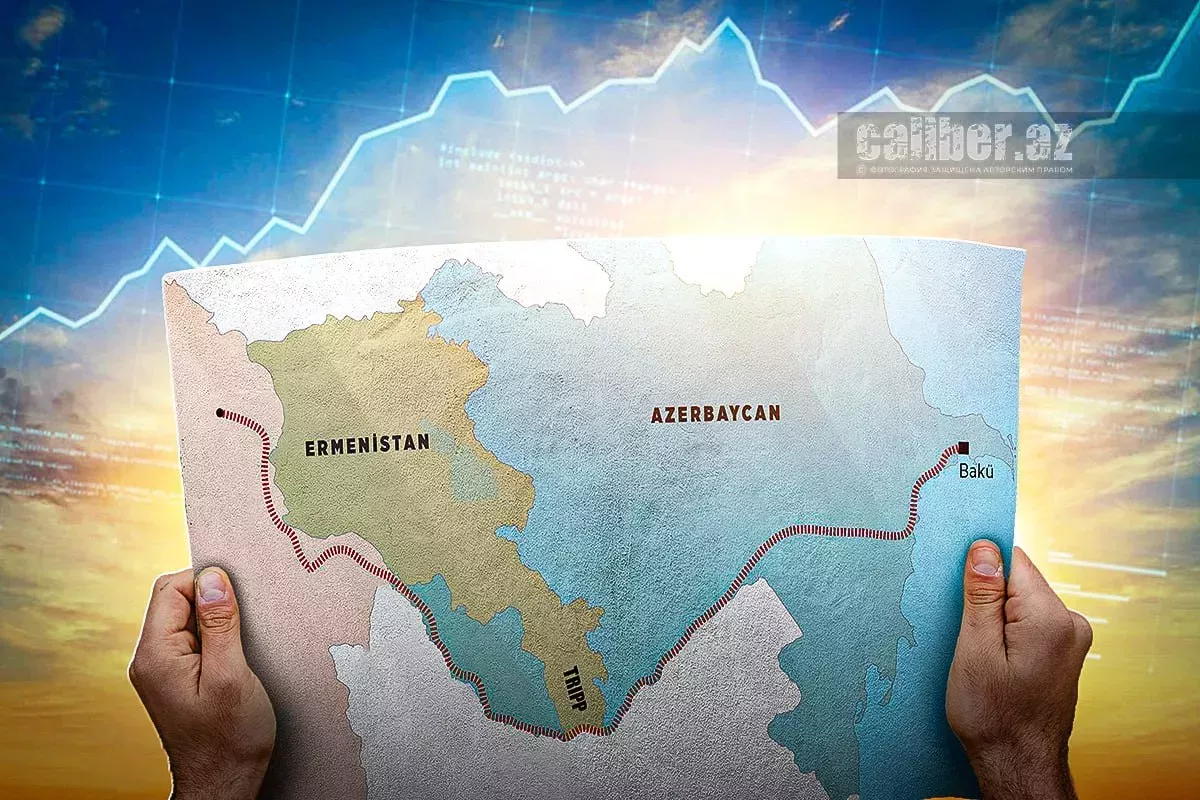
How events will unfold along the Tehran–Yerevan track remains to be seen, but it is already clear that the new realities in the South Caucasus, shaped by Azerbaijan’s military and diplomatic victories, are changing the nature of Armenia–Iran relations. It is not difficult to predict that these relations will continue to be reassessed for various reasons. One potential factor could once again be the TRIPP project, spurred by the document outlining the implementation of the “Trump Road to International Peace and Prosperity,” presented following the recent meeting between Armenian Foreign Minister Ararat Mirzoyan and U.S. Secretary of State Marco Rubio.
However, regardless of any new fluctuations in Armenia–Iran relations, the Republic of Azerbaijan will continue to consistently promote a peaceful agenda that aligns with its national interests and supports the development of the entire South Caucasus.







 editor@caliber.az
 +994 55 444-88-98
 Азербайджан, Баку, ул. Низами, 203, Af Business House, 5-й этаж