










Membership without voting rights What Ukraine and Moldova are being pushed toward
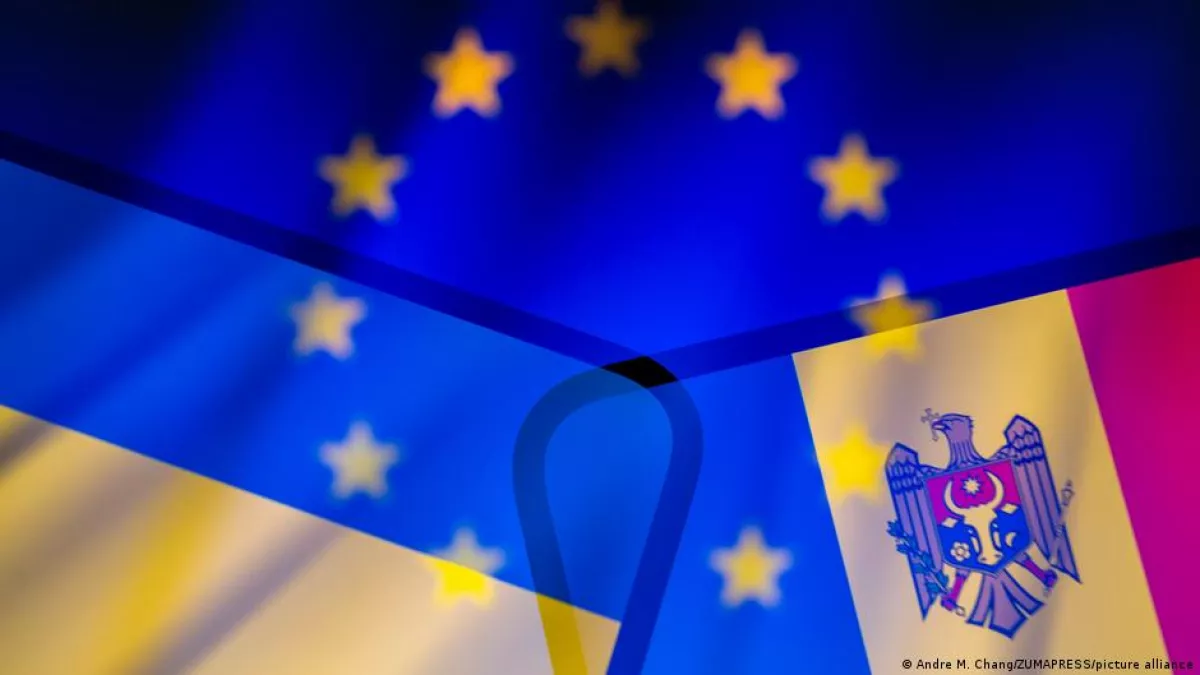
On June 15, the European Union opened the first cluster of accession negotiations with Ukraine and Moldova, marking an important milestone in the bloc’s enlargement process. European Commissioner for Enlargement Marta Kos announced the development to journalists ahead of a meeting of the EU Foreign Affairs Council in Luxembourg.
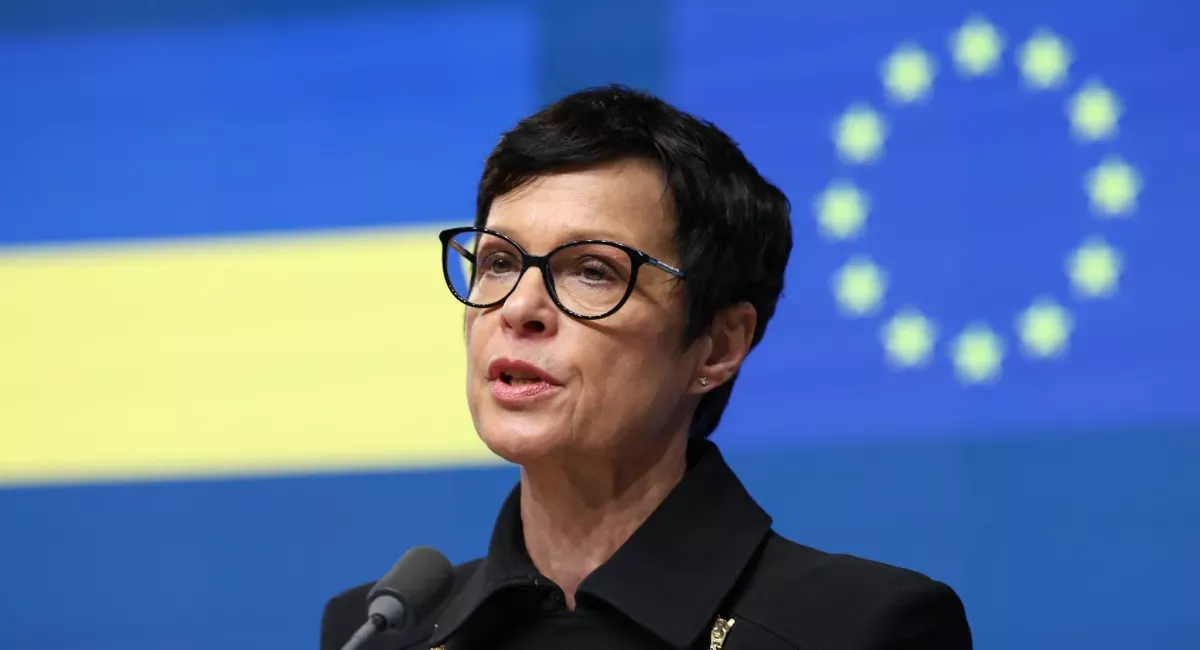
“So today it will really be or is a mega day or a mega Monday for the enlargement process,” Kos said.
According to her, the opening of the first negotiation cluster marks “the first biggest step” for Ukraine and Moldova since they were granted candidate status in 2023.
“So finally, we will be able to open cluster one for both of the countries. Why? It's because they have delivered and it was really time that we do this,” she stated.
Kos added that she expects the remaining five clusters to be opened as early as July. Asked whether the EU and Ukraine were ready to advance the negotiations further, she said that the technical preparations had been completed.
The commissioner also dismissed concerns about discussions on various forms of gradual integration for candidate countries, emphasising that full membership remains the only ultimate objective.
“So there is no half membership or quarter membership. There is only full membership,” said Marta Kos.
At the same time, it is known that the EU is preparing changes to the terms of membership for future entrants, introducing a number of significant restrictions for a period of 5–15 years, including the removal of veto rights for Ukraine and Moldova.
“This will be a new generation of accession treaties in the sense that we will have new safeguards which will do, or provide, exactly what you have mentioned: how to make sure that once we get new members on board, they will follow European rules, being a member five, ten, or fifteen years after,” Marta Kos said in response to a question about whether the EU was concerned that Ukraine might make unrestricted use of its veto power after joining the Union.
Will the EU membership of Ukraine and Moldova become incomplete due to restrictions on their veto rights? How sensitive is this issue for Kyiv and Chisinau, and will the benefits of membership outweigh the loss of one of the key political instruments?
Well-known foreign analysts shared their views on this matter with Caliber.Az.
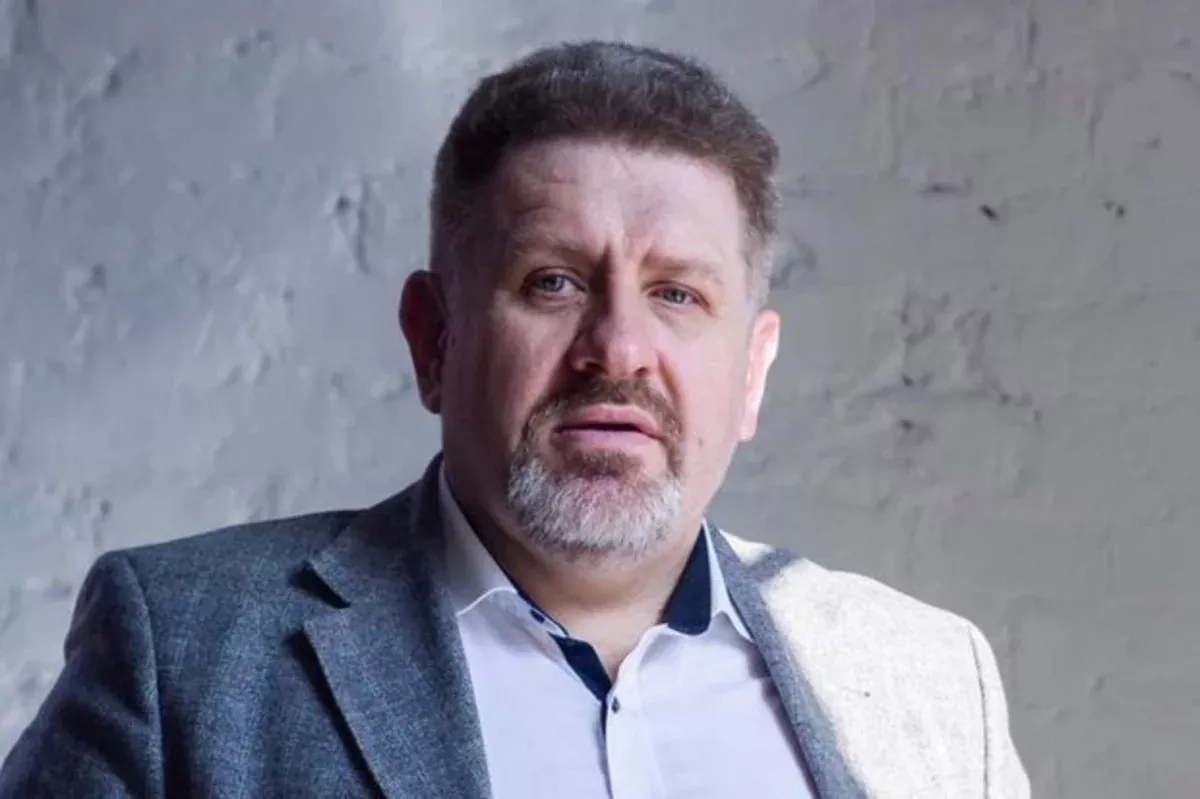
The head of the Ukrainian Policy Foundation, political analyst and historian Konstantin Bondarenko, believes that Ukraine and Moldova are interested not in symbolic membership, but in full-fledged EU membership, which is impossible without meeting all the Copenhagen criteria.
“Otherwise, it is unclear what Ukraine and Moldova actually gain. The opportunity to join the Schengen Area? That is a conditional benefit, one that is already being undermined even within the EU itself through controls at internal borders. Access to the single market? That certainly will not happen in the near future. The opportunity to sit in the European Parliament? That is also doubtful. Therefore, it is unclear how the new status would differ from the current de facto situation. As a result, it would be very difficult to sell a reduced form of EU membership to their own citizens—they would not understand what the grand vision and major victory are supposed to be,” Bondarenko explained.
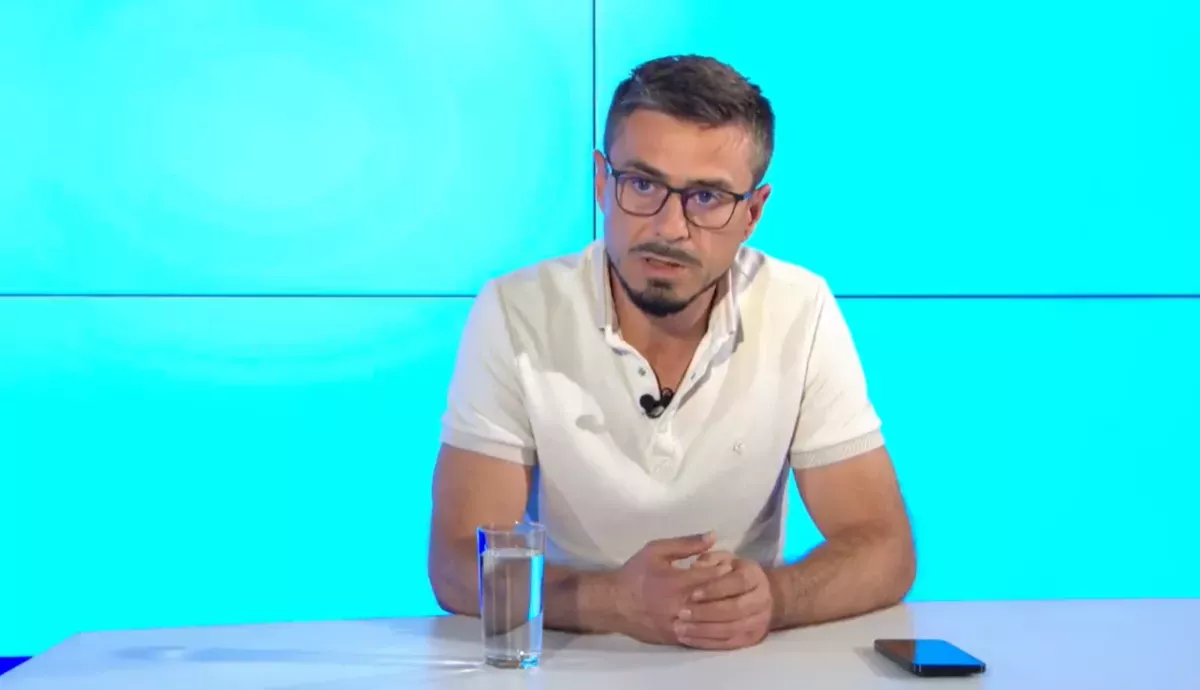
The head of the Intellect Group Analytical Center in Chișinău, Ian Lisnevschi, noted that from a pragmatic standpoint, it is important to distinguish between three different processes that are currently often conflated in public debate.
“First, the opening of the first negotiation cluster is not merely an important political event for Moldova and Ukraine, but also a serious challenge for their authorities. It means that the European Union officially recognises a sufficient level of preparation in the fundamental reform area and begins a full-fledged negotiation process aimed at aligning legislation and institutions with European standards. The pace and prospects of EU integration will depend on the competence of the authorities. This is not accession to the EU, nor is it a guarantee of accession; rather, it is a transition to the next stage of a lengthy process, the responsibility for which rests with the governments of Moldova and Ukraine.
Second, Marta Kos’s statement that full membership remains the ultimate goal formally corresponds to the current logic of EU enlargement. However, at the same time, a serious debate is indeed taking place within the European Union itself regarding the reform of decision-making mechanisms ahead of a new round of enlargement, which is expected to occur alongside the reform of the Union itself.
EU member states are only beginning to search for a new model and institutional structure that would enable the Union to become a fully-fledged geopolitical actor.
At present, European bureaucracy stands in the way of this objective, as well as of strengthening the EU’s military capabilities. Whatever the new formula may be—whether a confederation or another form of organisation—it is likely over time to limit decision-making powers not only for new members but also for smaller EU states, concentrating a large share of sovereignty and authority in a single centre.
This is precisely where the third and most interesting issue arises — the right of veto.
Historically, the veto right has been one of the most important instruments for protecting national interests within the EU. It has been actively used by countries such as Hungary, Poland, the Czech Republic, Slovakia, and a number of other states. In practice, it was a mechanism that allowed a small country to block decisions considered contrary to its national interests.
Today, Brussels is facing a different challenge. If the European Union expands to include Ukraine, Moldova, the Western Balkan countries, and potentially other candidate states, the number of member states will increase significantly, while the ability to make decisions could sharply decline — or, frankly speaking, become almost impossible.
The EU fears a situation in which a union of 35–40 states would become paralysed by constant blockages, as decision-making on crisis situations requiring unpopular measures could drag on for decades. Meanwhile, in the United States, India, China, and Russia, decisions are made within a matter of days,” the analyst noted.
Therefore, he says, the idea of a limited or delayed veto right for new members appears not as a punishment for Moldova or Ukraine, but rather as an attempt to reform the functioning of an expanded European Union and its gradual transformation into a federation or confederation.
“However, the political consequences of such a decision would be quite serious.
If a new member assumes all obligations but receives some political powers only after 5, 10, or 15 years, the question of equality among states within the EU will inevitably arise. For Moldova and Ukraine, this is especially sensitive, since the veto right remains one of the few instruments through which small states can influence decisions made by larger countries.
At the same time, even without the veto right, both countries would gain access to the EU single market, investments, structural funds, and the free movement of capital, goods, services, and labour. For most citizens, these benefits may prove more important than the ability to block a particular decision by Brussels.
However, there remains a high likelihood of destabilisation caused by a sense of injustice — something that was, incidentally, warned about at the Munich Security Conference. Moreover, this concerns not only the possible halt of enlargement but also the security of the EU itself.
The main risk lies in a different area.
If European institutions begin creating a category of ‘first-tier’ and ‘second-tier’ members, this could generate a long-term sense of inequality within the Union itself.
This is precisely why the issue of future restrictions for new members will become one of the most sensitive political questions in the coming years.
However, it is premature today to say that Moldova or Ukraine will receive ‘incomplete membership.’ For now, the discussion concerns political debates and possible transitional mechanisms. Nevertheless, the very emergence of such ideas shows that EU enlargement in the 2020s will differ significantly from the enlargements of 2004 and 2007.
If we look at it from a purely pragmatic perspective, the issue that matters far more for Chișinău today is not the debate over the future veto right, but another question: will the country be able to go through the entire negotiation process, implement thousands of pages of European legislation, and complete the reforms required for accession? This stage remains the most difficult and risky one,” Lisnevschi concluded.







 editor@caliber.az
 +994 55 444-88-98
 Азербайджан, Баку, ул. Низами, 203, Af Business House, 5-й этаж