










Route of opportunities vs. myths and misconceptions Experts explain why TRIPP isn’t a security threat
Vahagn Aleksanyan, an ally of Armenian Prime Minister Nikol Pashinyan and a ruling-party MP, has effectively confirmed the opposition’s fears that Armenian border guards will not be physically present at checkpoints along the so-called “Trump Route.”

“There will be front and back offices. In some cases, the front office may not have any personnel at all — only scanners,” the MP said during a briefing for journalists, referring to the procedures planned under the TRIPP project.
According to him, he recently visited the Palestinian Authority as part of a NATO Parliamentary Assembly delegation, where at one airport, “where you simply scan your ID, then your face, and the device handles everything a person would normally do.”
“The same goes for cargo — scanning systems are widely used worldwide. There might be such an option here too, with robots or machines on-site without any nationality. It’s not a concern but rather progress we should embrace,” Aleksanyan emphasised.
Meanwhile, since the signing of the TRIPP Implementation Framework (TIF), Armenian officials — including the foreign minister — have repeatedly assured that the border would remain fully controlled by Armenian border guards, with Armenian customs officers present at the checkpoints.
However, Aleksanyan’s remarks suggest a different reality: at key sections, customs officers and border guards could be replaced by scanners and automated systems, eliminating the need for Armenian personnel to be physically present along this stretch of the border.
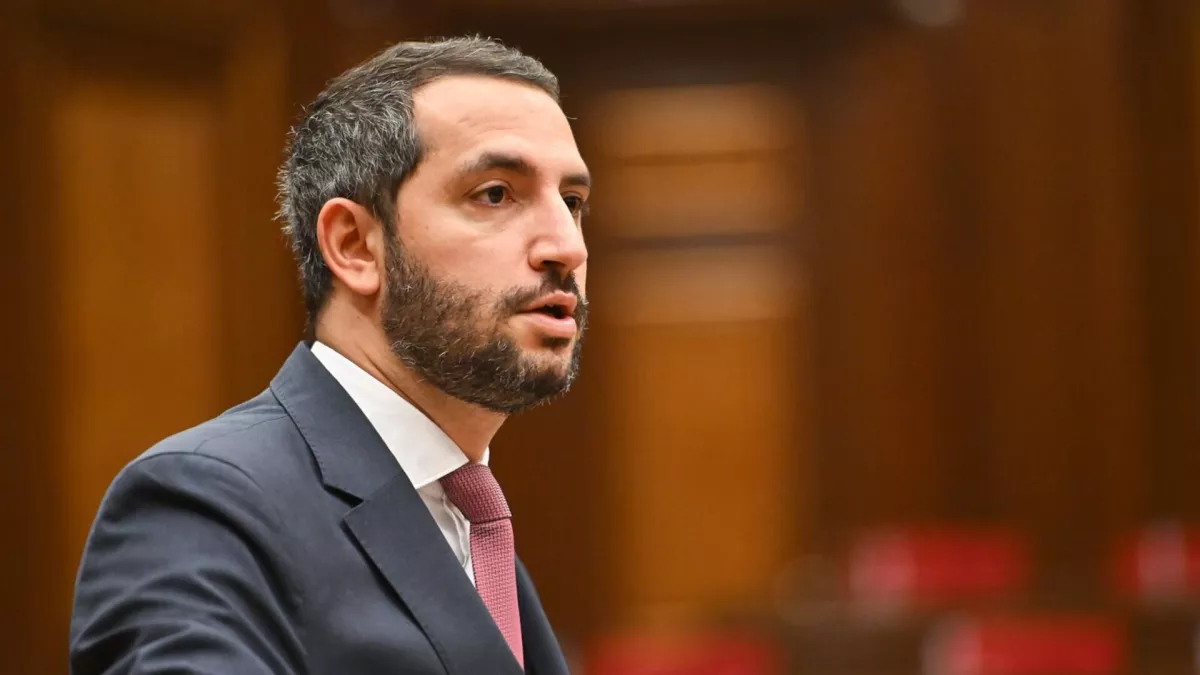
At the same time, Armenia’s top leadership continues to reject the possibility of such a scenario, which is known to align with Baku’s requirements. For instance, Ruben Rubinyan, Vice Speaker of the Armenian National Assembly, responded to journalists asking whether Azerbaijanis would see Armenian customs officers at the checkpoints: “This document clearly states in black and white that security will be maintained by the relevant Armenian authorities, that proper passport and customs procedures will be implemented, and that Armenian border guards, along with representatives of other relevant agencies, will be physically present at the respective passport and customs posts.”
So, what can be expected in practice?
Prominent political analysts have agreed to comment on the situation for Caliber.Az.
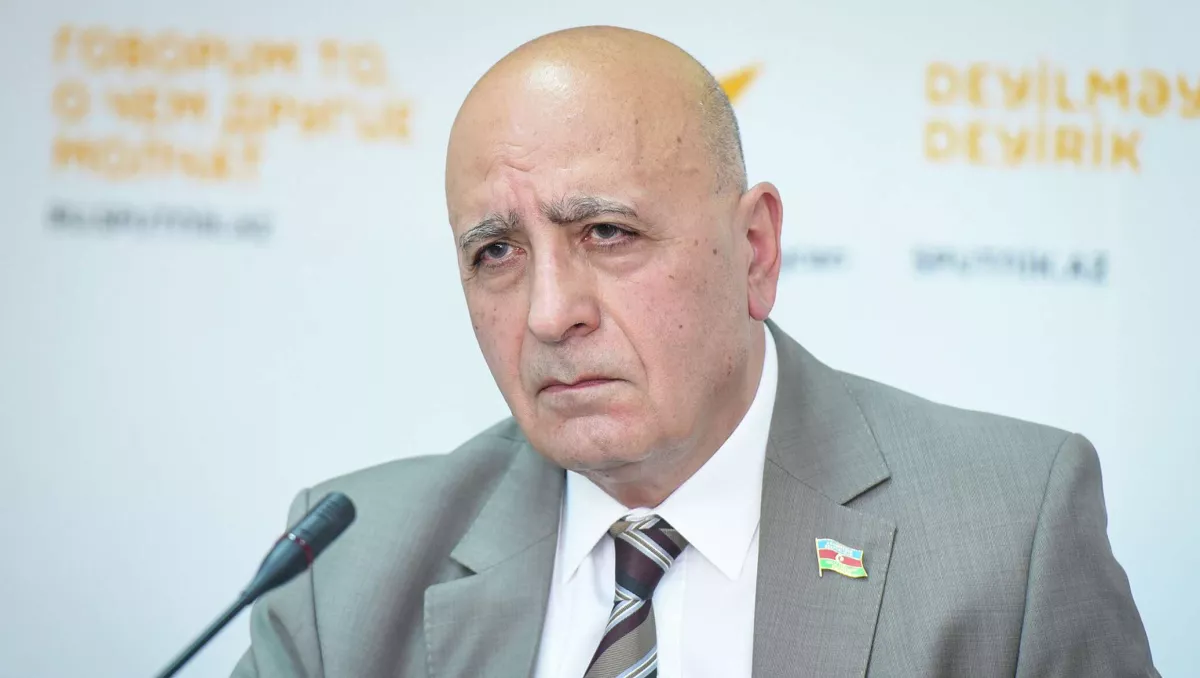
An Azerbaijani MP and political analyst, Rasim Musabayov, says it is quite understandable that the Armenian opposition interprets — and actively amplifies — every action of Prime Minister Nikol Pashinyan’s government as “betrayal, subordination, and the undermining of Armenian interests.”
“In my view, Armenian voters and the general public are far less concerned about the physical presence of customs officers at the checkpoints or their direct interaction with Azerbaijanis than the opposition suggests. On the contrary, Armenian society is already feeling the tangible benefits of normalising Armenian-Azerbaijani relations. For instance, grain now transits through Azerbaijani territory into Armenia. Azerbaijani gasoline entering the Armenian market has driven down fuel prices at gas stations by roughly 15–20 per cent. This has even forced suppliers, who previously earned excessive profits selling Russian or Romanian fuel, to lower their prices,” the parliamentarian emphasised.
According to him, using technical systems for contactless checks and handling customs and passport procedures is a common practice worldwide and across Europe, and there is nothing unusual about it.
“Some people, figuratively speaking, are uneasy, even though this is simply a transit crossing.
Regarding the opposition’s concerns about whether Armenian goods will pass through Azerbaijani territory under similar conditions, it’s important to keep the scale in mind. The 42 kilometres through Meghri — which trains and convoys pass in 30–40 minutes without stopping — cannot be compared to nearly 1,000 kilometres of transit through Azerbaijani territory. These are fundamentally different logistical situations.
Such manufactured arguments will continue to circulate, but in my view, Armenian society is pragmatic enough not to fall for these political games,” Musabayov stressed.

Dr. Tatyana Poloskova (Russia), Doctor of Political Science, PhD in philosophy, and diplomat, cited Boston’s Logan Airport in the United States as an example, where initial passenger identification is handled by scanning devices, yet border officers are also physically present.
“If any issues arise during the scanner-based check, further measures — including additional inspection and, if necessary, questioning — are carried out by a border officer. Regarding customs control, officers are always physically present, both upon entry and exit from the country.
If I am not mistaken, cargo will transit through Armenian territory en route to Nakhchivan — which is Azerbaijani territory — and its passage is monitored by Azerbaijani border and customs authorities.
Borders and customs on a state’s territory are controlled by the relevant agencies of that state — unless alternative arrangements are established through official intergovernmental agreements. I would not rule out the possibility that appropriate U.S. structures could also be involved in this process,” the diplomat noted.
She explained that the reasons for such an arrangement are quite clear.
“As is known, the route will pass through Armenian territory, and a 42-kilometre section will be managed by a joint U.S.-Armenian consortium. A private American company will lease this corridor for 99 years to manage its infrastructure and digital systems. This, in turn, inevitably entails participation in ensuring the security of both the corridor itself and the surrounding borders.
This is not only about the risks of smuggling illegal goods, but also the potential infiltration of criminal and terrorist elements. I have serious concerns that such threats could originate from Armenia. However, I want to emphasise again that all such issues should be addressed strictly within the framework of contractual obligations,” Poloskova stressed.
In her view, the Zangezur Corridor is already an objective reality.
“The project is important for all participants. Armenian officials and lawmakers should avoid over-politicising this issue. It would be far more productive to focus on the benefits and opportunities that the TRIPP project can bring to Armenian society — particularly in economic and social terms. And there are plenty of such opportunities.
The Zangezur Corridor has the potential to transform Armenia from a ‘perpetual aid-seeker’ into a meaningful international partner. In light of this, perhaps Armenia owes a word of thanks to Azerbaijan and its president,” Poloskova concluded.







 editor@caliber.az
 +994 55 444-88-98
 Азербайджан, Баку, ул. Низами, 203, Af Business House, 5-й этаж