










Syrian cauldron Caliber.Az international panorama
A new outbreak of civil war has flared up in Syria, this time in Aleppo. In the fighting between the Kurdish Syrian Democratic Forces (SDF) and government troops, the government deployed up to 80 armoured vehicles along with significant infantry forces. They managed to advance into the Sheikh Maqsoud and Ashrafiyah districts. The government is demanding the withdrawal of Kurdish forces from these areas, but the Kurds refuse.
On January 9, the Syrian Ministry of Defence announced a ceasefire. Damascus stated that it would “escort fighters leaving for northeastern Syria,” allowing them to take light weapons with them. However, Kurdish local authorities and military leadership rejected the evacuation call after the ceasefire announcement. On January 9, they declared that they would not evacuate the districts under their control. In a statement published by Syrian Kurdish media, local authorities in Ashrafiyah and Sheikh Maqsoud said that calls to leave Aleppo were a “call for surrender” and that Kurdish forces were instead “defending their districts.” Soon after, clashes resumed.
Causes of the conflict
Before the outbreak of the Syrian civil war, Aleppo and its surrounding areas were home to around 4 million people, and the city housed roughly half of Syria’s industrial capacity, primarily export-oriented enterprises. During the war, which began in 2011, the city suffered extensive destruction. Part of its population fled, and as a result, Aleppo largely lost its economic significance. Nevertheless, it remains one of the largest cities in Syria.
At the end of November 2024, Aleppo was attacked by forces of Hayat Tahrir al-Sham (HTS) under Ahmed al-Sharaa. After seizing the city, they began their march on Damascus, capturing the Syrian capital on December 8, just 11 days later.
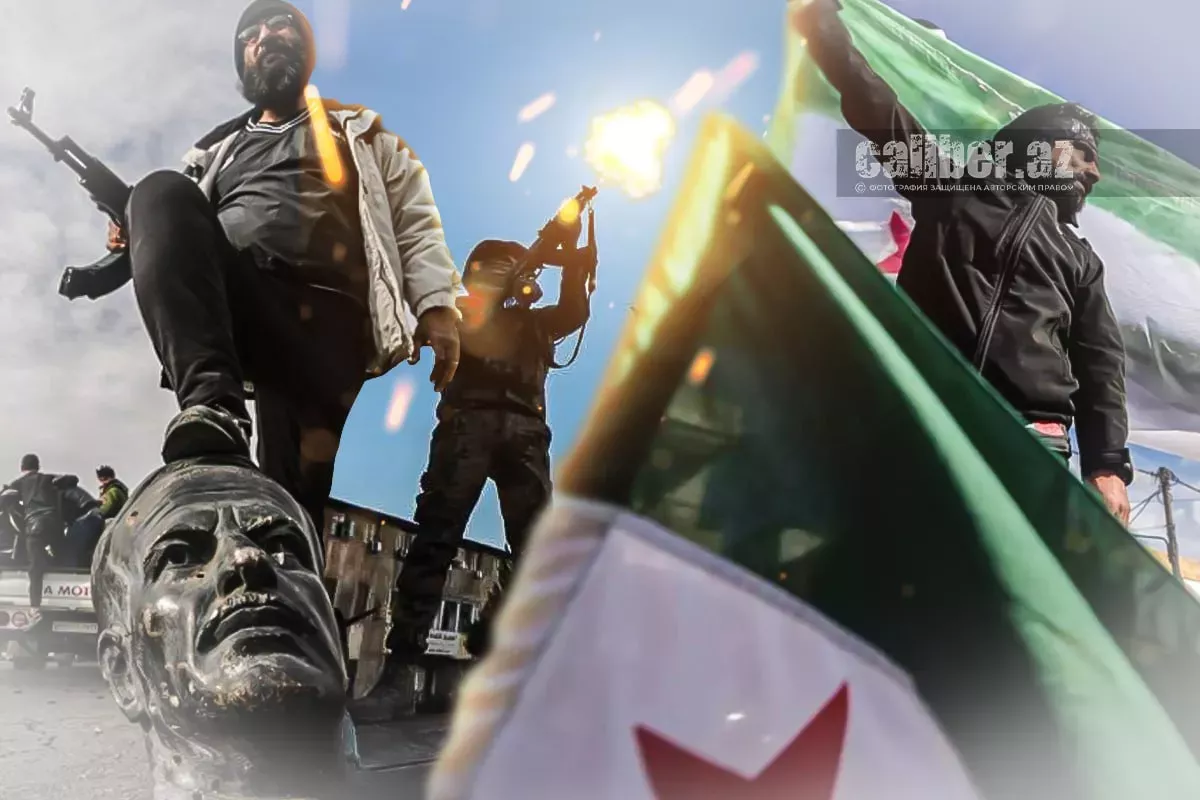
Today, Aleppo has once again become a site of heavy fighting, and these events are directly linked to the power shift in Syria.
Although President al-Sharaa has managed, with the help of forces loyal to him, to establish control over much of the country, his authority faces serious challenges. He has declared himself the interim president, relying on military power and the loyalty of the HTS leadership. The core HTS fighters—around 30,000—may be the most effective military force in the country, but there are other groups as well. Between 100,000 and 200,000 armed fighters from various Sunni militias nominally recognize al-Sharaa’s authority. Some have joined units within the Ministry of Interior and Ministry of Defence under the new regime, but in practice, they remain under the command of their own field leaders.
Many members of ethno-religious minorities—including Druze, Alawites, and Kurds—fear these formations. In March 2025, following the defeat of an Alawite uprising in the Latakia region, Sunni militias flooded the area and carried out a massacre. In July, after clashes between Druze and armed Bedouin groups in the Suwayda region, the situation repeated itself, with hundreds of civilians and fighters killed on both sides. At that time, Suwayda came under the control of armed Druze militias with support from the Israeli army.
The Sunni Arab majority in Syria is unlikely to have much influence over these developments; however, today they primarily pose a threat to the country’s minorities, who at times become targets of persecution and looting. Among all Syrian minorities, the Kurds are the largest.
The Syrian Democratic Forces (SDF) are their armed faction, trained and equipped by the United States. As Washington’s main ally in Syria, and relying on the network of U.S.-established military bases in the country, the SDF played a key role in defeating ISIS. As a result, with U.S. patronage and protection from American air power, they have seized control of roughly one-third of Syria’s territory in the north and east. This includes oil-rich regions, the former ISIS capital Raqqa, and power plants along the Euphrates River. Under SDF control now reside not only Kurds but also over a million Arabs, altogether accounting for about one-third of Syrian territory.
The military-political leadership of the Kurds, i.e., the SDF, consists of career party cadres and members of the PKK (Kurdistan Workers’ Party). Since the mid-1980s, this organization has waged a terrorist campaign against Türkiye and maintains its own armed units, separate from the SDF, based in the mountains of northern Iraq. From there, they carry out operations against Turkish forces, while Türkiye regularly bombs PKK and SDF positions in Northern Iraq (the Qandil Mountains) and in Syria. An important principle is the interchangeability of fighters: one day a person fights in PKK units, and the next day in the SDF.
Ankara is displeased that the PKK-SDF forces have created a large quasi-state on its Syrian border. The Syrian government under al-Sharaa is an ally of Türkiye. It is clearly interested in establishing control over the entire country, including Kurdish-populated regions. It has no intention of giving the SDF-PKK control over Syria’s oil or one-third of its territory.
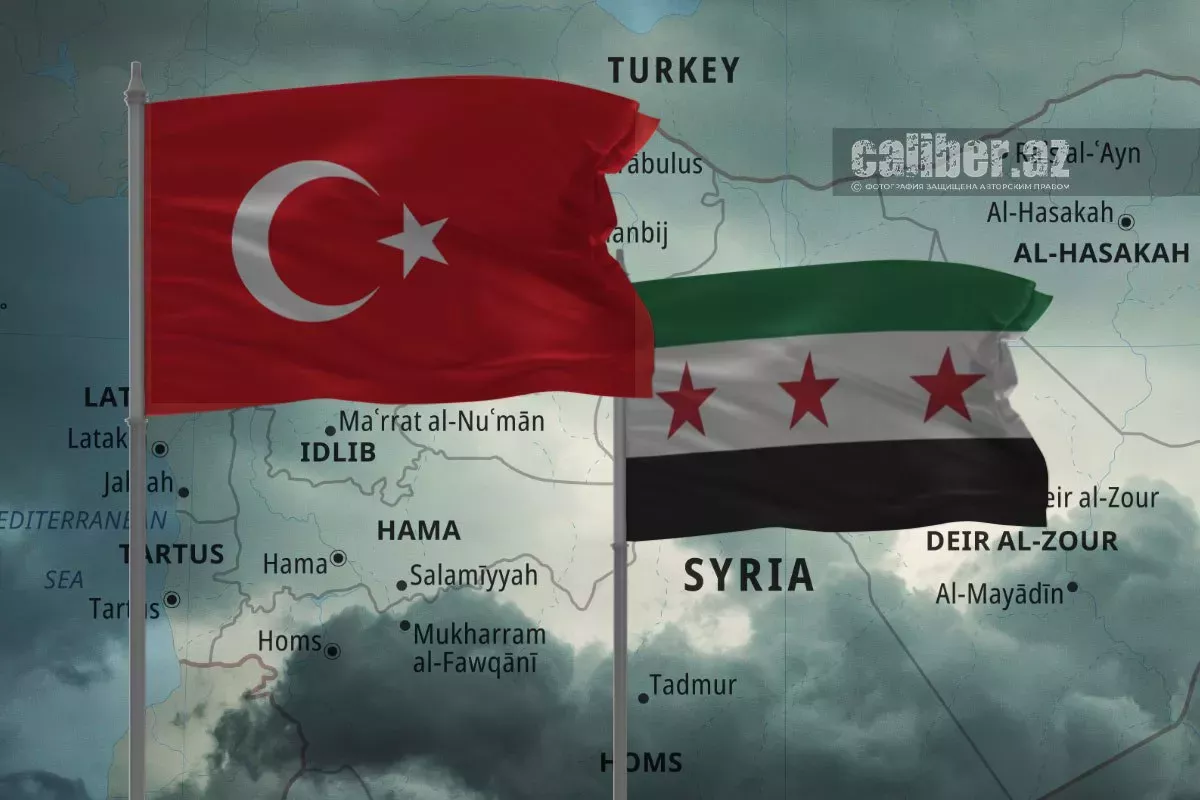
If Ankara wanted to, it could have long ago unleashed the full might of its army against the SDF together with Damascus. However, Türkiye has not done so for its own reasons. First, it is negotiating with the PKK to end hostilities. Second, the United States stands between the allies—Damascus and Ankara—on one side, and the Kurdish SDF on the other. Washington does not want attacks on the Kurds, who are its secular allies in the fight against ISIS.
Shifting the balance
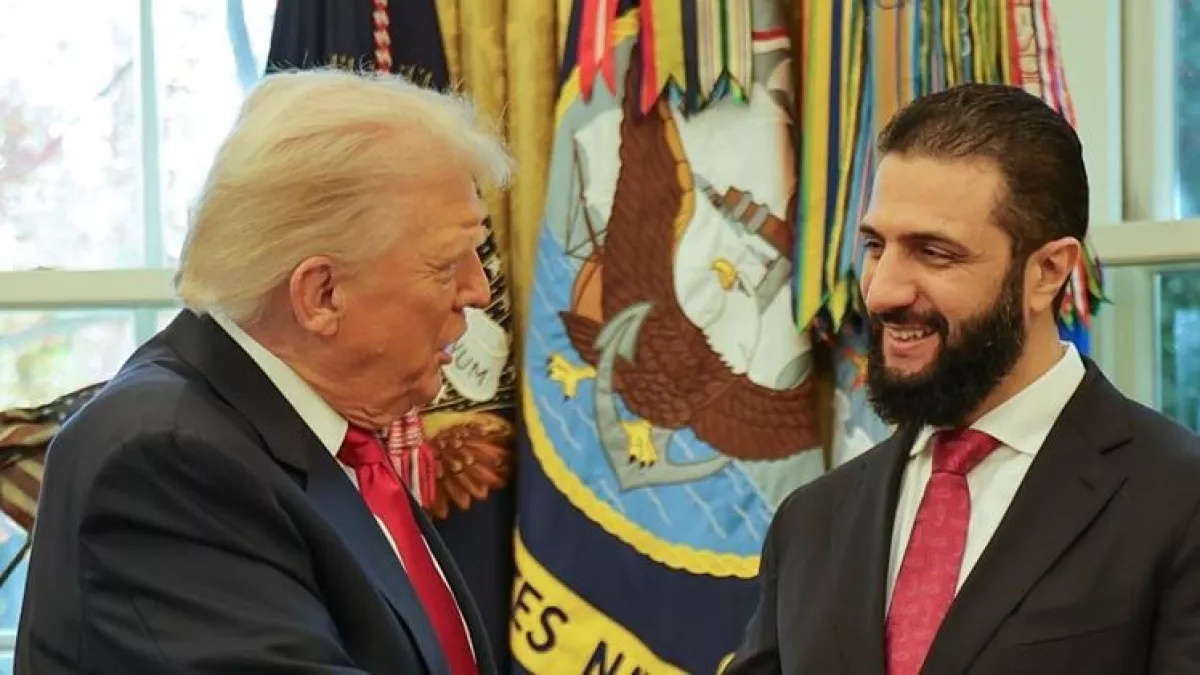
U.S. President Donald Trump takes a less ambiguous position on this issue than his predecessor Biden. He has a favourable view of Turkish President Recep Tayyip Erdoğan and his ally, interim Syrian President Ahmed al-Sharaa. Trump warmly welcomed al-Sharaa and persuaded Congress to vote for the repeal of the main sanctions package against Syria (the Caesar Act). In December, Congress complied, substantially easing life for the new leadership in Damascus. Al-Sharaa’s position strengthened, while the SDF, by contrast, became secondary in American considerations.
Moreover, Trump demanded that the SDF be officially incorporated into the new regular Syrian army, placing them under al-Sharaa’s command. A preliminary agreement was reached in March, but the SDF refuses to disband voluntarily.
The Kurdish leadership insists on the federalisation and decentralisation of Syria, following the model of Iraq. In Iraq, the Kurdistan Regional Government operates with its own armed forces (though these are hostile to the SDF). Damascus, Ankara, and their U.S. ally reject this model. The U.S. special envoy to Syria, Tom Barrack, has dismissed the idea of federalisation as unrealistic.
The SDF leadership controls 70 percent of Syria’s oil and one-third of the country’s territory. They have no intention of sharing these resources. Mazloum Abdi, the head of the SDF and a PKK member, rules the territories under his control with a firm hand, where authority flows from the barrel of a rifle. But he also has other considerations. He fully understands that if the SDF were disarmed, fighters would flood the Kurdish regions, and events similar to those in Alawite Latakia and Druze Suwayda could repeat there. The Kurds could easily become targets of attacks and looting by poorly controlled masses of tens or hundreds of thousands of Arab militias.
Moreover, the SDF-controlled areas are home to thousands of refugees from Alawite and Christian regions of Syria. The regime established by Abdi has proven to be quite tolerant of ethno-religious minorities. He allows them to run their schools, institutions, and even armed militias. Nevertheless, they also feel vulnerable.
So, the U.S. is demanding that the SDF integrate into the Syrian government army, while Mazloum Abdi is stalling. As a result, the al-Sharaa government decided to show its teeth, targeting Kurdish-populated districts in Aleppo.
The main body of SDF-controlled territory lies east of the Euphrates, where the U.S. (for now) provides protection. However, the SDF also occupies several areas west of the Euphrates, doing so at their own risk—there is no American protection there.
These areas include the large Kurdish-majority districts in Aleppo—Ashrafiya and Sheikh Maqsoud, essentially a “city within a city,” with a population possibly exceeding 100,000. The SDF is present there as well. The Syrian leadership struck at this vulnerable point at a time unfavourable for the Kurdish armed movement, when Trump’s sympathies are leaning toward Damascus.
What’s next?
A dangerous crossroads has emerged in Syria. The main armed units of the SDF is not intervening in these battles. This means that the Kurdish-majority districts of Aleppo are now surrounded and will eventually fall. If that happens, events similar to those in Latakia and Suwayda could be repeated.
In that case, it will be difficult for the SDF leadership to remain inactive. If they intervene, a full-scale war between the Kurdish SDF and the Syrian government could break out. In such a conflict, Türkiye would, in one way or another, support Damascus. The SDF leadership might then be forced to evacuate all Kurdish residents from Aleppo, numbering between 100,000 and 200,000 people. However, this would be extremely difficult, as accommodating such a large number of refugees is a very complex task.







 editor@caliber.az
 +994 55 444-88-98
 Азербайджан, Баку, ул. Низами, 203, Af Business House, 5-й этаж