










The Belarusian case: Zelenskyy meets Tsikhanouskaya Analysis by Alexander Limansky
Ukrainian President Volodymyr Zelenskyy expressed regret that a coup did not occur in Belarus in 2020 and stated that next time, the West must support the “uprising.” What kind of support is he referring to? Zelenskyy described Belarus as a “threat to Europe” and, on the same day, held a bilateral meeting for the first time with the “democratic leader” Sviatlana Tsikhanouskaya.
Words of hostility
On January 25 in Vilnius, at the Cathedral Basilica of St. Stanislaus and St. Ladislaus, Volodymyr Zelenskyy launched a series of harsh attacks against Belarus and its president, Alexander Lukashenko. In particular, he stated: “At present, Lukashenko’s white spitz enjoys more rights than the people of Belarus, unfortunately. There was a chance to change this in 2020, and I am confident there will be another opportunity. But at that time, the support was insufficient. Today, we all feel how much more complicated, costly, and dangerous the situation has become for everyone due to Belarus’s dependence on Moscow…”
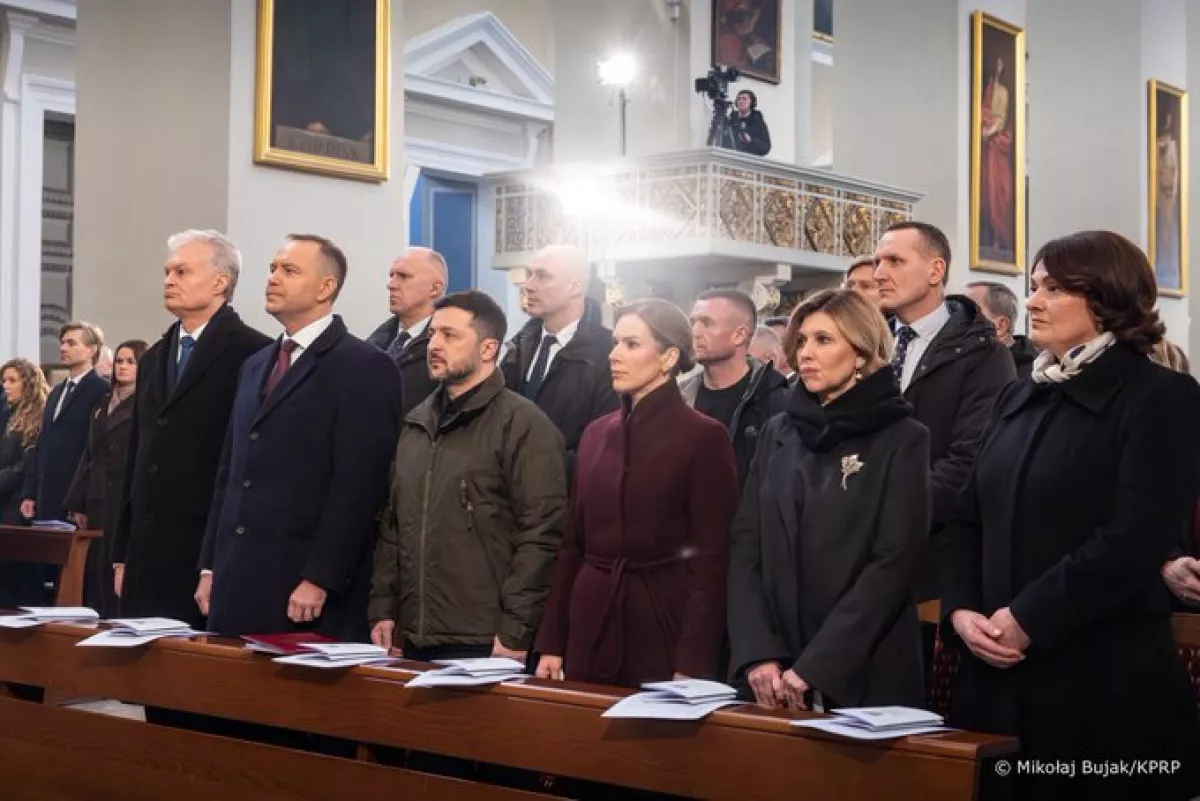
Zelenskyy further accused Minsk of allowing Belarusian territory to be used to operate Russian UAVs during strikes on Ukraine, of participating in what he described as the “blackmail of Europe and the world with Oreshnik systems,” and of placing Belarusian industry at the service of the war effort. Moreover, according to the Ukrainian president, trade routes running through Belarus “help Putin obtain the components necessary to build a threat against all of us in Europe.”
This was among the most severe and openly hostile statements Zelenskyy has ever directed at Belarus. Militant rhetoric and accusations against Minsk have been voiced from Kyiv before; however, in this address, he spoke with unusual frankness, expressing regret that Alexander Lukashenko was not removed from power during the mass unrest surrounding the August 2020 presidential election. He further stated, without ambiguity, that to achieve such an outcome in the future, the West would need to provide far more substantial support.
What, precisely, did the Ukrainian president mean by this support?
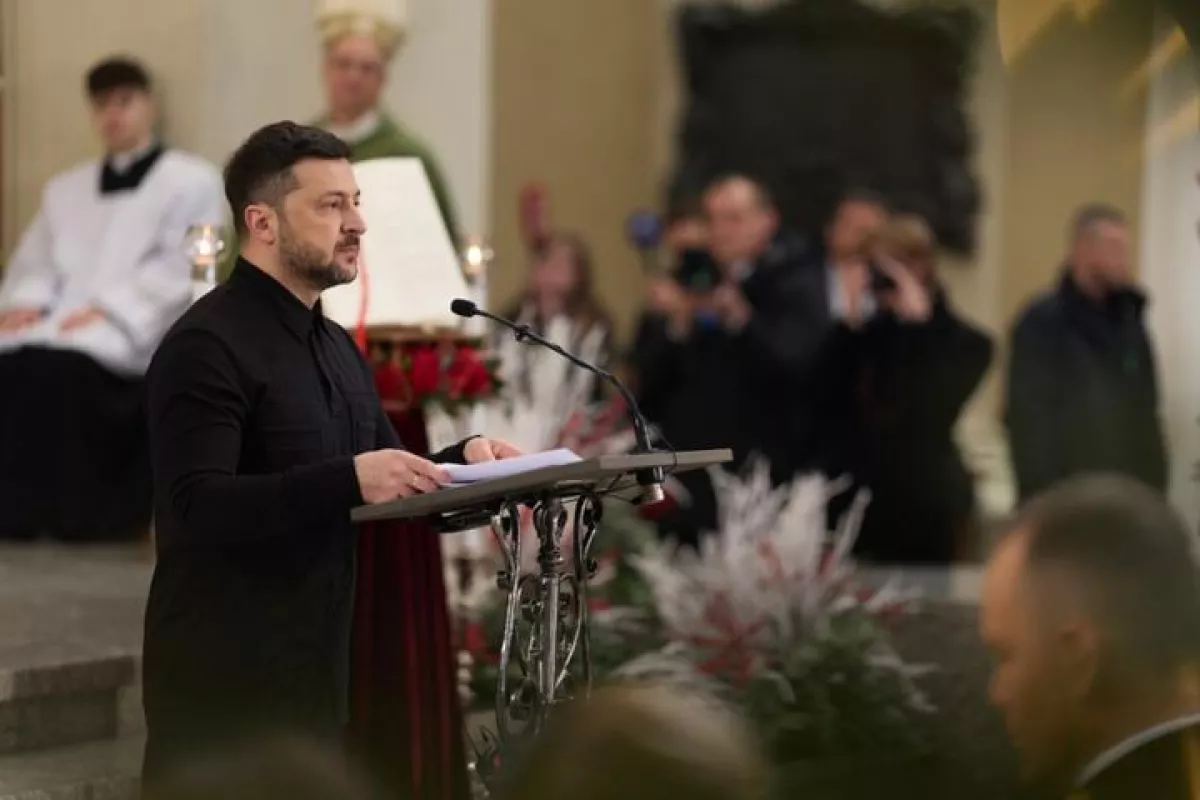
Formally, Volodymyr Zelenskyy’s speech in Vilnius was devoted to the anniversary of the 1863 uprising in Poland, Lithuania, and Belarus. In his interpretation, however, the rebels of that era were defeated because they failed to secure support from Europe. The address drew clear and deliberate historical parallels: “The Belarusian uprising should have won in 2020, so that no threat would be coming from there today. Europe and the world should have supported the rebellious people, and history would have been safer.”
Meanwhile, the organisers of the 2020 unrest in Belarus received everything typically associated with a “colour revolution” from abroad: extensive funding, political technologists, media and political support, and much more. So what, according to Zelenskyy, was missing? Essentially, only direct military intervention from the West, just as in the 1863 uprising. By extension, the logic being suggested for Belarus today is similar: new provocations, followed by ultimatums, possible military intervention, or, at the very least, another wave of sanctions and increased pressure from the West.
Distortion of historical truth
On the same day, Volodymyr Zelenskyy—together with Lithuanian President Gitanas Nausėda, Polish President Karol Nawrocki, and Sviatlana Tsikhanouskaya—visited the Rasos Cemetery, where Kastus Kalinouski and other participants in the 1863 uprising are buried. In Soviet-era Belarus, Kalinouski was honoured as a hero of the national liberation struggle against the tsarist empire. Today, however, amid the active cultivation of his image by Belarusian nationalists, increasingly critical assessments of the insurgent leader are also being voiced within Belarus itself.
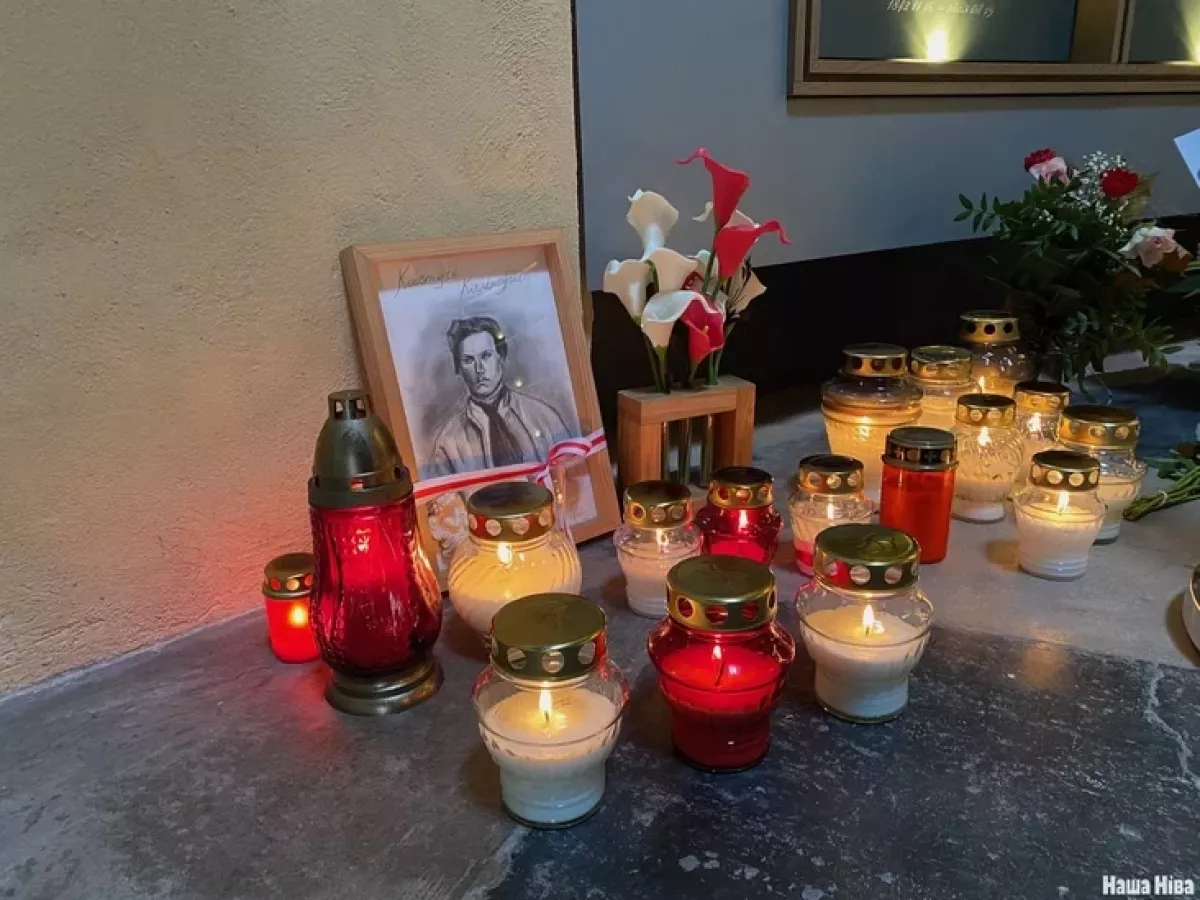
That said, Zelenskyy’s participation in events commemorating the 1863 uprising appears, from a historical standpoint, highly questionable. The reason is that no organised insurgent movement effectively existed on Ukrainian territory at the time. Isolated attempts by Polish nobles to take up arms were often thwarted not by imperial forces but by Ukrainian peasants themselves, who were hostile toward the Polish landed gentry—figures they viewed as oppressors not only economically, but also in national and religious terms.
Nevertheless, despite these historical facts, in his speech at the Catholic cathedral, the Ukrainian president claimed that the 1863 uprising had affirmed “our destiny to be together.”
The very lineup of participants—leaders of Poland, Lithuania, and Ukraine, along with the Belarusian “democratic leader”—clearly hinted at notions of a possible revival of the Polish–Lithuanian Commonwealth (Rzeczpospolita). Notably, during the cemetery ceremony, loud chants of “Karol Nawrocki” were heard, seemingly greeting the nationalist Polish president. The voices likely came from local Poles, who have often voiced complaints about discrimination by Lithuanian authorities.
The potential fate of Belarusians in a hypothetical “Polish–Lithuanian Commonwealth 2.0” is illustrated by the near-total assimilation of the Belarusian minority in Poland and the regular marches of Polish far-right groups in Hajnówka, Podlachia—held to honour nationalist militants who massacred the Belarusian population of Hajnówka and four surrounding villages in 1946.
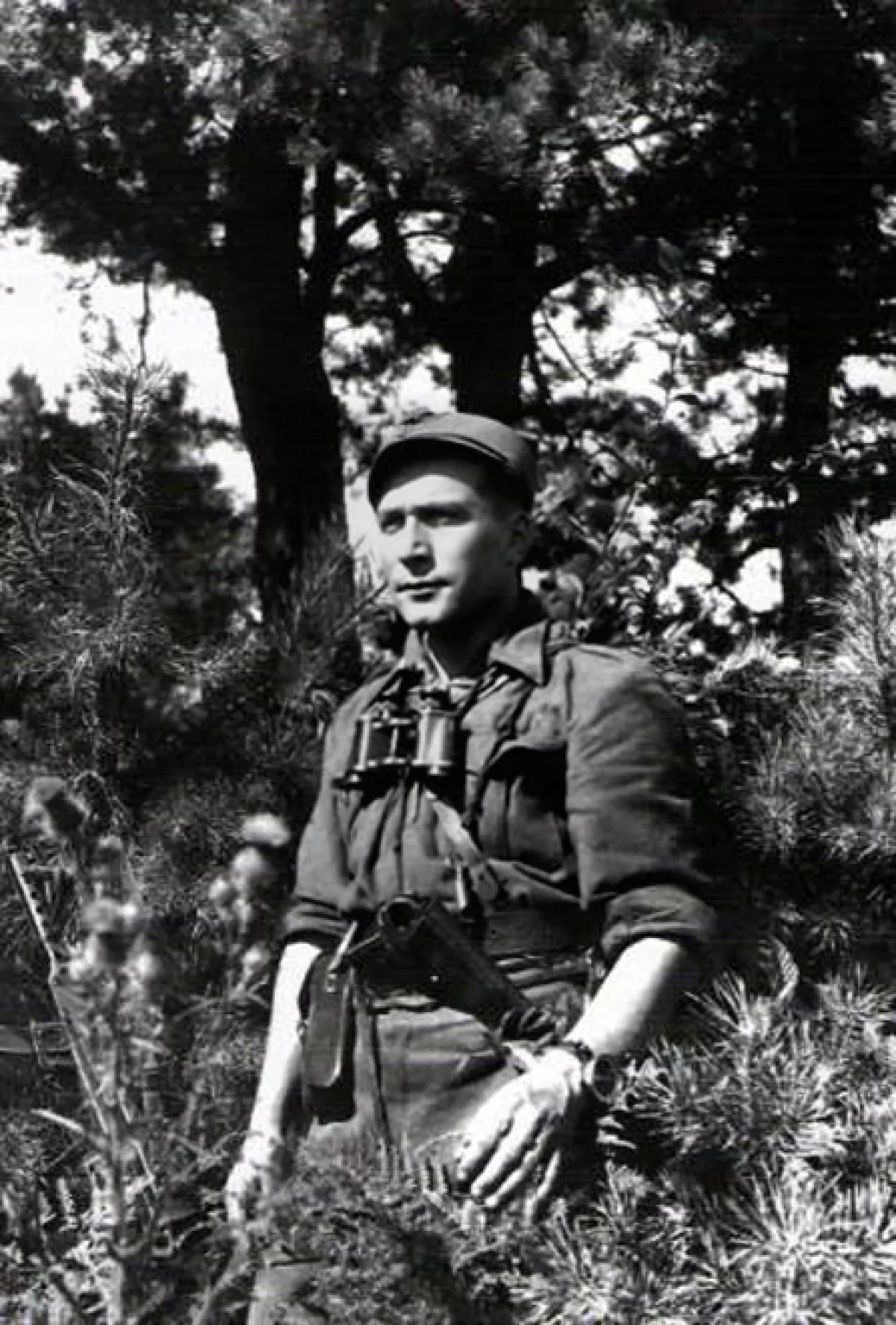
Romuald Rajs, the commander of these atrocities, was rehabilitated by a Polish court in 1995.
Adding to this, some radical Belarusian nationalists lay claim to Vilnius as an “inherently Belarusian city,” creating a politically and historically combustible mix. It is no coincidence that internal contradictions repeatedly led to the collapse of the Polish–Lithuanian Commonwealth in the past. The obvious question arises: is it prudent to tread this path once more?
Courteous talks
At Rasos Cemetery, Volodymyr Zelenskyy also spoke with Sviatlana Tsikhanouskaya. Later, an official meeting took place between Tsikhanouskaya and the Ukrainian president. Opposition media, with evident pomp, hailed it as the “first bilateral meeting.” Tsikhanouskaya’s international affairs advisor, Dzianis Kuchynski, was present at the talks—apparently to guide the former housewife and, in colloquial terms, ensure she did not “say anything awkward.”
Nevertheless, the meeting passed without incident. The “democratic leader” expressed warm gratitude for Zelenskyy’s “historical speech” and highlighted that Belarusian émigrés are fighting within the Ukrainian armed forces. The so-called “Kalinouski Regiment” is officially classified as an extremist formation in Belarus; however, Tsikhanouskaya did not mention it—likely not out of caution, but to avoid giving additional publicity to rivals with whom her office maintains strained relations.
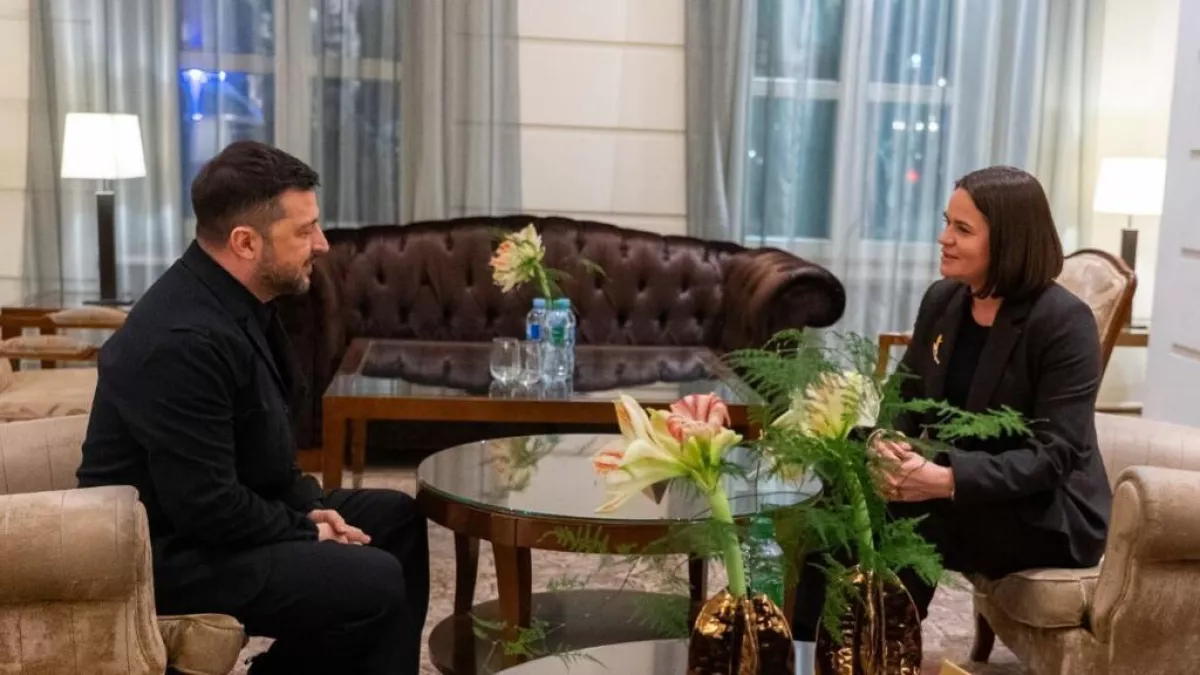
She also thanked Zelenskyy for the release of “political prisoners,” though just recently, U.S. special envoy for Belarus John Coale emphasised that the primary work on this issue was conducted by the governments of the United States and Belarus. In addition, Tsikhanouskaya requested that a special Ukrainian presidential envoy for Belarus be appointed, mirroring a practice previously used by the Trump administration.
Sanctions against Belarus were also discussed, with Tsikhanouskaya’s office consistently advocating for further tightening and calling for the “accountability” of Alexander Lukashenko and his inner circle. At the conclusion of the meeting, Zelenskyy invited Tsikhanouskaya to visit Kyiv.
According to Dzianis Kuchynski, the entire meeting was conducted in Belarusian and Ukrainian, with Zelenskyy, in his words, “tolerantly” allowing the “democratic leader” to use Ukrainian words as well.
Ihor Kyzym, Ukraine’s last ambassador to Belarus, who was recalled from Minsk in 2023, called the meeting a “long-awaited event” that, in his view, opens a window of opportunity for the Belarusian opposition: “With this meeting, the Ukrainian authorities have demonstrated their stance on the Belarusian case.”
On guard for independence
“True independence and genuine protection of life are still something Belarusians must fight to achieve,” declared the Ukrainian president. This naturally raises a pressing question: whose interests are served by drawing Belarusians into the bloody chaos of war and internal strife?
What does all this aggressive rhetoric from the Ukrainian side toward Belarus actually signal—especially amid ongoing discussions about a potential end to hostilities in Ukraine? It appears that, against the backdrop of peace negotiations and indications of a gradual easing of sanctions on Belarus—an approach supported during the Trump administration—certain hawkish circles are preparing new measures to disrupt this process. The “Belarusian case” is emerging as one such instrument.
For these “hawks,” continuing and escalating tensions provides a convenient way to maintain both political influence and steady financial flows.
At the same time, in blaming Belarus, Kyiv largely ignores the fact that it was the Ukrainian side that first embarked on a path of confrontation and escalation in 2020—openly backing an attempted coup in Minsk and later imposing anti-Belarusian sanctions.
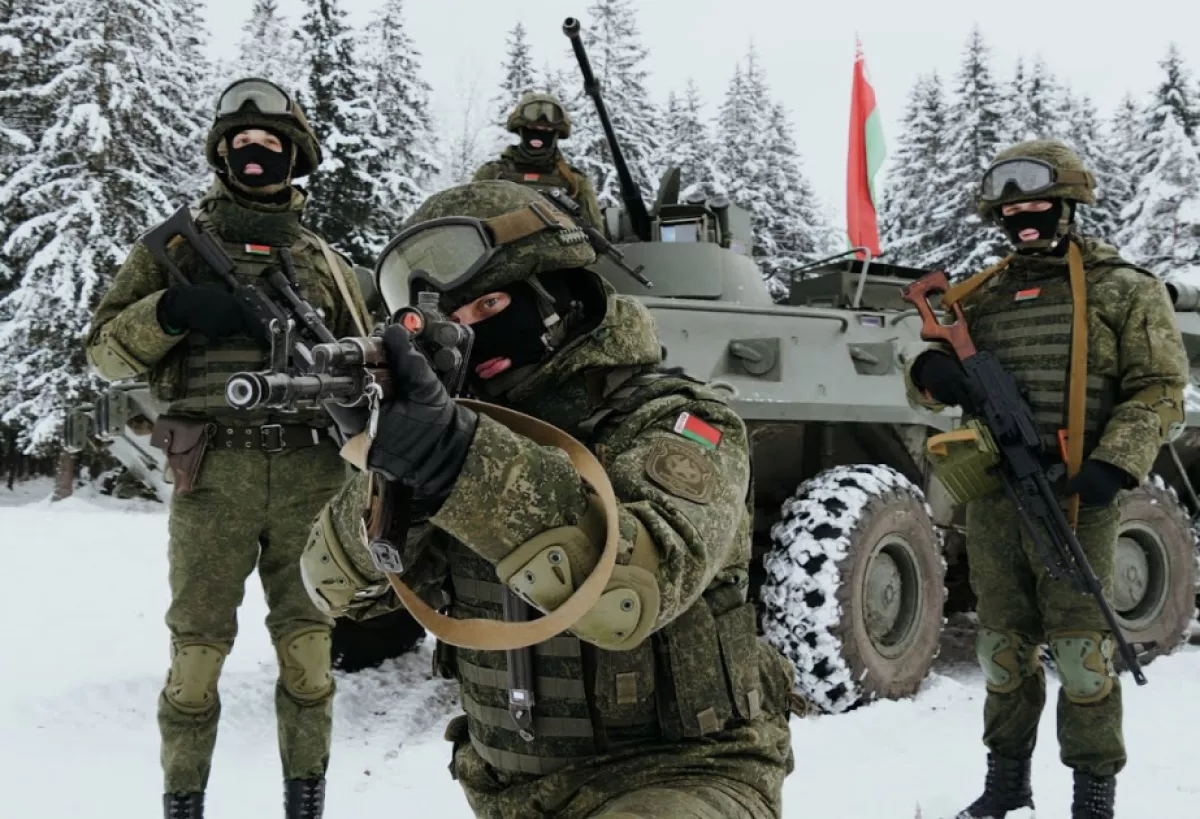
In these circumstances, Belarus cannot afford to remain passive. In mid-January 2026, the country launched a large-scale, comprehensive inspection of its Armed Forces and Internal Troops under the Ministry of Internal Affairs. Military units were abruptly mobilised, inspection teams deployed on-site, and exercises conducted to test combat readiness and counter potential UAV threats. The Supreme Commander-in-Chief personally participated in the inspections. For example, the 19th Separate Guards Mechanised Brigade in the Vitebsk region was placed on alert by a direct order from Alexander Lukashenko himself.
Unfortunately, Belarus’s consistent calls for a swift peace in Ukraine and for the establishment of good-neighbourly relations with all surrounding countries have largely gone unheard in Kyiv, Warsaw, and Vilnius.







 editor@caliber.az
 +994 55 444-88-98
 Азербайджан, Баку, ул. Низами, 203, Af Business House, 5-й этаж