










The energy of reconstruction Karabakh leads Azerbaijan’s renewable push
In recent years, Azerbaijan has made significant strides to align with the global “2030 Energy Transition” agenda. Efforts have been particularly focused on rapidly expanding renewable energy (RES) capacity. A central priority is to transform the Karabakh region into a hub for green energy and energy-efficient technologies. To achieve this, specialists from the Ministry of Energy, in collaboration with the Japanese energy company TEPSCO, have developed a dedicated strategic concept. The current status and prospects of this initiative were highlighted ahead of the 11th meeting of the Working Group on Coordination and Monitoring of the Implementation of Green Technologies in the territories liberated from occupation.
In implementing the national programme for adaptation to global climate change, the Azerbaijani government is steadily applying advanced international experience, establishing legal and administrative frameworks, and creating a favourable business climate to attract significant investment in the expansion of renewable energy generation. These efforts are also aimed at developing infrastructure for transporting renewable resources to external markets, introducing energy efficiency technologies, and establishing “green” industrial parks.
Experts estimate that Azerbaijan’s total economically exploitable renewable energy potential is around 27 GW, including 3 GW from wind, 23 GW from solar, and 520 MW from hydropower on mountain rivers. About one-third of this potential is concentrated in the Karabakh and East Zangezur economic regions. To unlock it, specialists from the Ministry of Energy, with support from the Japanese energy company TEPSCO, have developed a conceptual plan to transform the territories liberated from occupation into a “green” energy zone. According to this renewable energy development concept, the solar potential in the Gubadli, Zangilan, Jabrayil, and Fuzuli districts, along with wind generation potential in the Lachin and Kalbajar districts, is estimated at more than 9.2 GW.
To implement these opportunities, the Cabinet of Ministers approved the “Action Plan for the Creation of a ‘Green Energy’ Zone in the Liberated Territories of Azerbaijan for 2022–2026,” and these objectives are fully reflected in the “First State Programme of the Great Return.” This plan includes measures to address issues such as the establishment of transmission and distribution infrastructure, the development of renewable energy generation capacities, the promotion of energy efficiency through public-private partnerships, as well as the adoption of energy-saving technologies and tariff regulation in the “green” sector.
What specific achievements have been made so far on the “green” track in the Karabakh region?
“Currently, 38 small and medium-sized hydropower plants with a total capacity of 307 MW are operational in the liberated territories. In Jabrayil, the foundations for the ‘Shams’ and ‘Ufuq’ solar power plants, each with a capacity of 50 MW, have been laid. Construction of the ‘Shafag’ hydropower plant is ongoing, and work has been carried out to measure and monitor the wind energy potential in Kalbajar,” reported Minister of Energy Parviz Shahbazov on December 25 during the 11th meeting of the Working Group on Coordination and Monitoring of the Application of Green Technologies and Energy Efficiency in the Territories Liberated from Occupation, held in Baku.
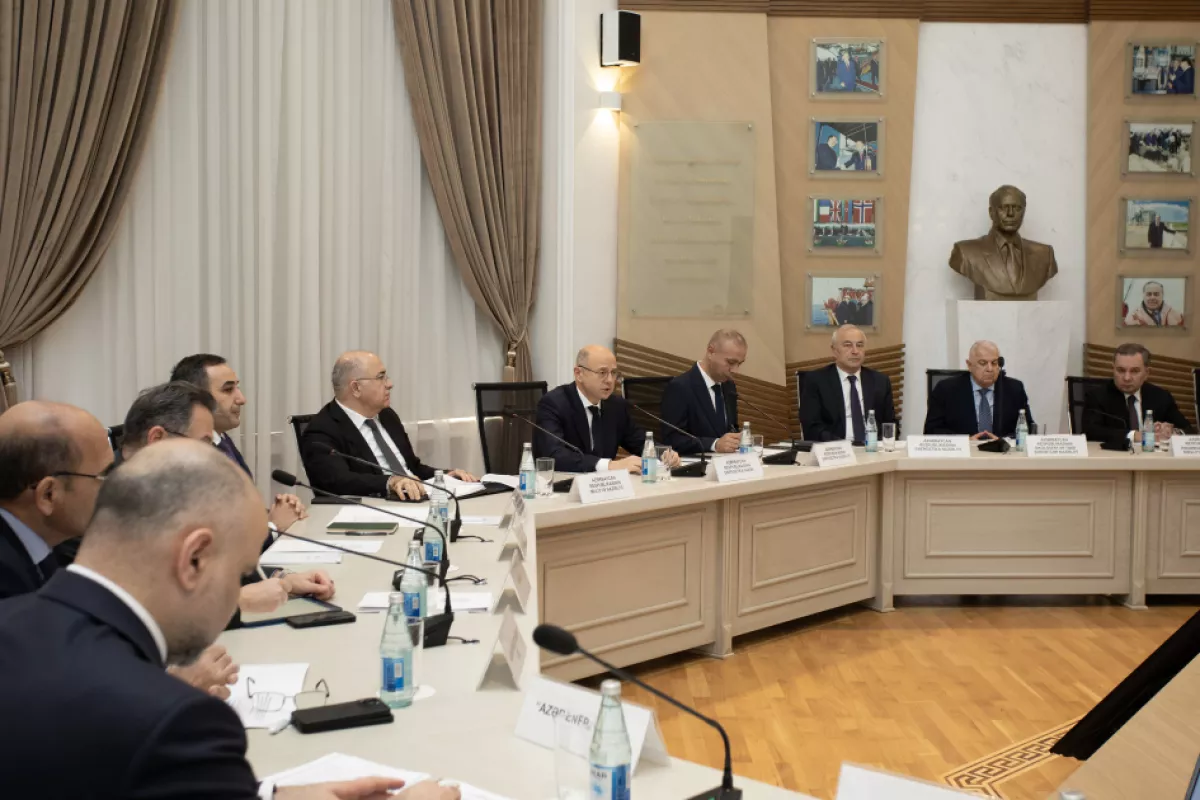
Small-scale hydropower is developing most intensively in the Karabakh region, with the efficiency of these plants ranging from 30% to 60%, depending on operating conditions. Among the major hydropower facilities in the region are the Khudafarin and Giz Galasi hydroelectric complexes on the Araz River, located along the Azerbaijan–Iran state border. Construction of these generation capacities began in May 2024 and is expected to be completed in the first half of 2026. The hydroelectric plants, with a total installed capacity of 140 MW, will operate on a parity basis: Azerbaijan is expected to produce 358 million kilowatt-hours of electricity annually, saving 80 million cubic metres of gas.
However, when discussing the development of hydropower in the Karabakh region, it should be noted that mainly small diversion-type hydropower plants and dam-adjacent hydro complexes are being constructed, which do not require significant investment. The most promising areas are the mountainous regions on the spurs of the Lesser Caucasus, with rivers and mountain reservoir and lake outflows providing an annual water inflow of around 2.56 billion cubic metres. In particular, under the plan to establish a “green energy zone” in Karabakh and the East Zangezur region, the construction of 72 small hydropower plants with a total capacity of 467 MW is planned by 2030.
At the same time, alongside hydropower, wind energy (WEP) is planned to be actively developed in the mountainous Lachin and Kalbajar districts: preliminary forecasts estimate the technical potential of wind energy at 2,000 MW. Meanwhile, the Gubadli, Zangilan, Jabrayil, Khojavand, and Fuzuli districts offer favourable conditions for solar energy, with a technical potential exceeding 7,200 MW. Work in this area is already underway: in November 2024, BP laid the foundation for the 240 MW Shafag (Sunrise) solar power plant in Jabrayil. Additionally, last year, plots were agreed with Nobel Energy in Jabrayil and with a Chinese company in Fuzuli for the construction of solar power plants.
In the Karabakh region, increasing attention is being given to the potential use of geothermal energy sources available in the Kalbajar, Aghdara, and Shusha districts. According to preliminary estimates, the Kalbajar district has an estimated 3,093 m³/day of thermal water, while Shusha has around 412 m³/day. The use of geothermal resources for energy production and consumption is a relatively low-cost initiative and could serve as a complementary element to the programme for harnessing the region’s hydropower potential.
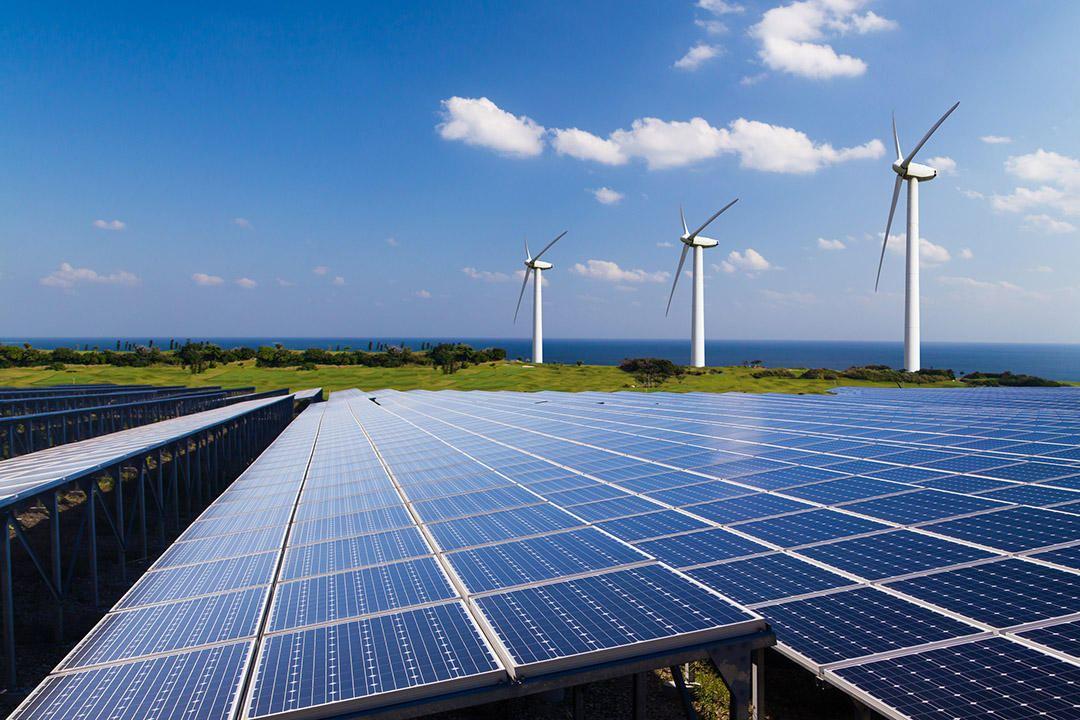
A key priority for the development of the “green energy” zone in Karabakh is also the application of modern technologies and materials to enhance energy efficiency. This includes, in particular, the expansion of public electric transport, the installation of solar panels on building rooftops, and the use of solar-powered LED lamps for street and road lighting. Various renewable energy technologies—such as solar water collectors and heat pumps—are planned for heating, cooling, and supplying homes with hot water. The programme also envisions the use of smart energy management systems and energy-oriented waste management.
Today, these technologies are being actively applied in the construction of residential and administrative buildings in the redeveloping towns and villages of Karabakh. This work was reviewed yesterday during a meeting at the Ministry of Energy, which also examined the results of a recent monitoring exercise on the implementation of energy-efficiency measures. The monitoring covered the cities of Fuzuli and Aghdam; the village of Dovlatyarli in Fuzuli district; Sarijaly, Kangarli, and Khidirli in Aghdam district; and the villages of Mahruzlu and Zilanli in Gubadli district.
Notably, in these settlements, electricity from the unified grid of Azerenerji JSC is actively combined with photovoltaic panels and solar thermal collectors. Solar-powered LED lighting and standard LED lamps are being widely implemented, and energy from alternative sources is used in “smart” parking lots and more broadly across urban and transport infrastructure. The new construction solutions applied in Karabakh have also demonstrated the effectiveness of modern insulation materials and energy-efficient approaches to heating residential complexes.







 editor@caliber.az
 +994 55 444-88-98
 Азербайджан, Баку, ул. Низами, 203, Af Business House, 5-й этаж