










US–Iran tensions spike: war on the horizon Forecasts by Mikhail Shereshevskiy
The situation in Iran and its surroundings continues to intensify. Today, Iran is the weaker side. During the 12-day war in June 2025, it suffered severe strikes from the Israeli Air Force. Israel gained full control over Iranian airspace, while Iran was unable to shoot down a single Israeli fighter. The Islamic Republic did not inflict any confirmed military losses on Israel during its retaliatory missile strikes, whereas Israel destroyed 20 to 30 high-ranking Iranian military officials and, with the help of its ally, the United States, destroyed several of Iran’s nuclear and defence facilities.
This time, the United States could strike Iran with even greater force (during the 12-day war, the Americans only carried out a few attacks at the very end), as they are openly promising support to the Iranian uprising. This would mean the destruction of decision-making centres, as well as the headquarters and bases of the Basij — the main force suppressing protests. Trump has called on the population to seize government institutions, claiming that “help is on its way.” If, after such statements, he does not strike Basij bases and command centres, his credibility both internationally and within the U.S. could be undermined, and the uprising in Iran would likely falter.
Trump also has another reason for a strike — he has long demanded that Tehran stop enriching uranium. However, Iran’s Supreme Leader Ali Khamenei refuses to comply with this demand.
Finally, and perhaps most importantly, after the successful operation to capture Venezuelan President Nicolás Maduro, Trump has definitely gained confidence and seems ready to go to war, while the position of Washington hawk Marco Rubio has clearly strengthened.
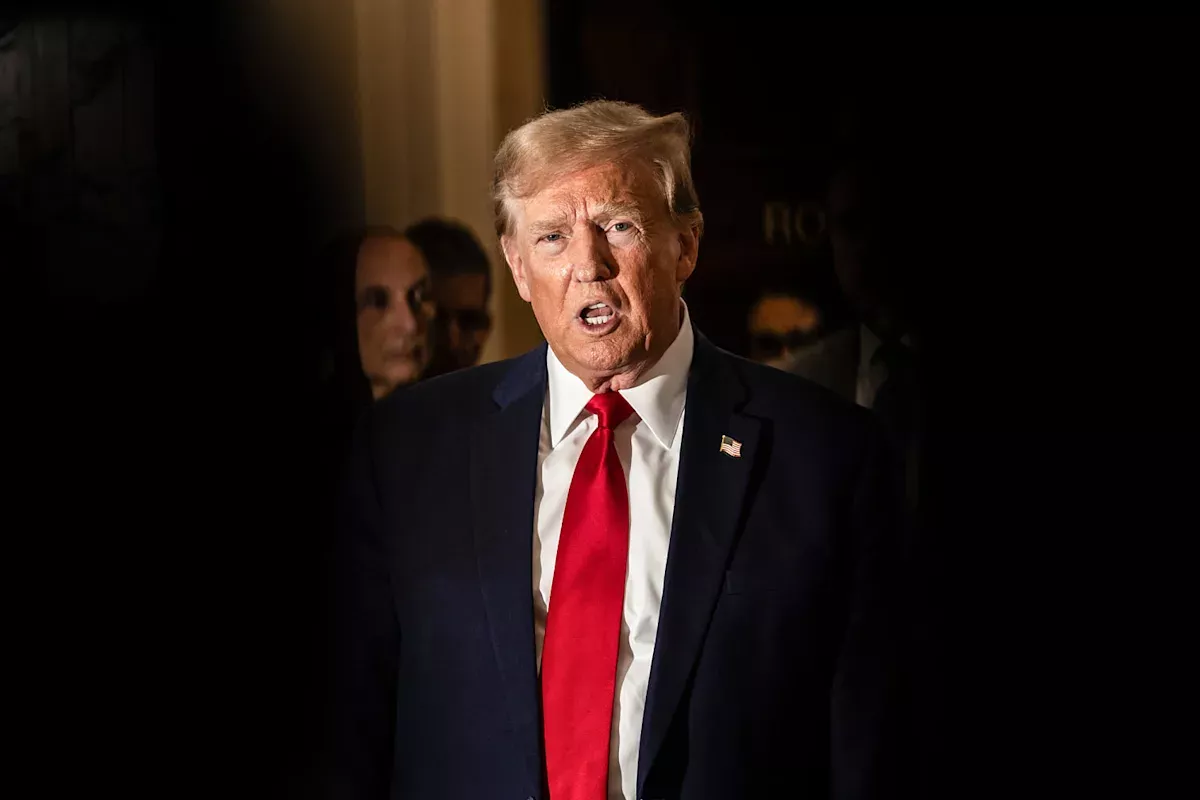
Speaking to journalists at Joint Base Andrews upon returning to Washington after a rally in Detroit, Trump said he would hold a meeting to assess the number of people killed during the protests in Iran and then make a decision. “We’ll get some accurate numbers as to what’s happening with regard to the killing. The killing looks like it’s significant, but we don’t know yet for certain [...] we’ll act accordingly,” he said.
At the same time, the U.S. president noted that executions in Iran have been halted. “They’ve said the killing has stopped and the executions won’t take place – there were supposed to be a lot of executions today and that the executions won’t take place – and we’re going to find out,” the White House chief said. According to the American leader, he received this information from “very important sources.”
It is, of course, possible that this is a diversionary tactic aimed at lulling Tehran into a false sense of security, while final preparations for a strike on the Islamic Republic are already underway at the Pentagon. NBC News, citing sources, reported that Trump would like the U.S. to carry out a swift and decisive strike against Iran that would not lead to a prolonged war. “If he does something, he wants it to be definitive,” one source said.
For another participant in the U.S.–Israel alliance, namely the Jewish state, the most important goal is to eliminate the Iranian regime, its main rival in the struggle for hegemony in the Middle East. At the same time, internal instability in the Islamic Republic of Iran increases the likelihood of Supreme Leader Ali Khamenei being removed. Moreover, for Netanyahu, this war is an important tool to boost his domestic approval ratings, as Israel has entered an election campaign. Polls showed that the 12-day war with the Islamic Republic increased Netanyahu’s popularity by several percentage points, despite dozens of Iranian rockets striking residential areas in Israel, killing dozens and wounding over 1,000 people. Therefore, the State of Israel will do everything it can to ensure that Trump fully agrees to bomb Iran — a moment that, from the perspective of opponents of the Iranian regime, is extremely favourable.
It is unlikely that this will inspire participants in the Iranian protests to rally around the flag or side with the government.
First, according to sociological surveys conducted by the Netherlands-based organisation Gamaan, the 12-day Iran–Israel war not only failed to trigger a surge of patriotism among Iranians, but in fact increased the number of supporters of regime change — which was already a majority — by 6 per cent.

Secondly, Crown Prince Reza Pahlavi, who is living in exile and whose name is chanted by many (though not all) Iranian protesters, openly supported Israeli air strikes on Iranian military and nuclear facilities at the time. Since then, participants in the Iranian protests have been chanting his name far more frequently. This fact speaks for itself.
However, Iran’s response could take a different form — Tehran may begin attacking international oil tankers in the Persian Gulf, as well as U.S. military bases in the Middle East. It is difficult to say how effective such strikes might be, but they would undoubtedly intensify escalation in the region.
It is also possible that, in the event of U.S. strikes, Iran could launch a pre-emptive attack on Israel. A statement by a senior Israeli source, circulated by the media, already warns: “If Iran resorts to missile attacks, there will be no next round of war. We will simply move to overthrow the regime.”
At the same time, there is a high likelihood that Israel intends to join the United States regardless and pursue the overthrow of the Iranian regime by military means. This could include, for example, isolating the country through the bombing of the capital, destroying military and civilian decision-making centres, and ensuring the fragmentation of Iran — breaking it into enclaves where a struggle for power would unfold between insurgent forces and the ruling groups.







 editor@caliber.az
 +994 55 444-88-98
 Азербайджан, Баку, ул. Низами, 203, Af Business House, 5-й этаж