










US vs EU: Greenland sparks transatlantic tensions Expert opinions on Caliber.Az
US President Donald Trump announced on the social media platform Truth Social that, starting February 1, he will impose a 10% tariff on imports from France, Germany, the United Kingdom, Denmark, Norway, Sweden, the Netherlands, and Finland to the United States if they do not support his plan to purchase Greenland. Trump’s statement sent shockwaves across Europe, and now the Old Continent is scrambling to respond to Washington with a united front.

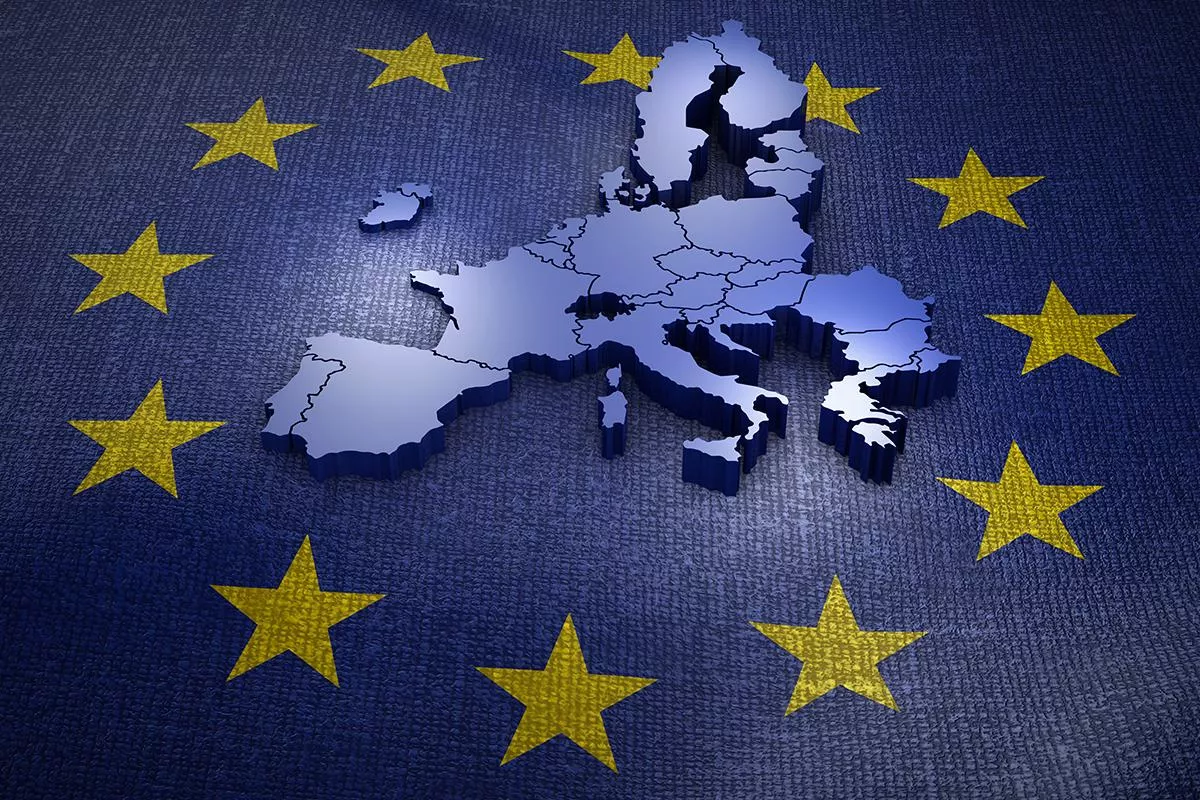
According to Politico, citing diplomats and officials, at an urgently convened meeting in Brussels, representatives of the 27 EU member states emphasized the “the importance of readying tangible options to fight back against Trump in case talks with Washington over the coming week don't lead to a swift resolution,” with a €93 billion tariff being proposed as a possible retaliatory measure.
However, European experts believe that the EU’s response is unlikely to have a significant impact on the United States, as divisions within Europe are emerging, and each country is likely to handle the situation independently.
So what could this crisis mean for the US–EU relationship? How likely is it that Trump and European leaders will find common ground and reach some form of compromise? Caliber.az sought the views of experts from the United States and Hungary.

American geopolitical and security analyst Irina Tsukerman, editor-in-chief of The Washington Outsider, argues that the worsening relationship between the Trump administration and the European Union should be viewed as part of a broader shift in transatlantic relations, rather than a temporary dispute over specific issues. Greenland and the new US tariffs are more triggers than causes, exposing long-standing differences in US and EU approaches to security, economics, and sovereignty—differences that have been building for years and have become more direct and outspoken under Trump.
“From the US perspective, the key factor is a redefinition of national security. The Trump administration sees economic and technological dependence—even on allies—as a potential strategic vulnerability. Security is no longer confined to the military sphere; it now includes supply chains, control of critical infrastructure, access to rare resources, and the resilience of industrial production during crises.
This is precisely why trade policy and the Greenland issue are treated by Washington as a single strategic package. From the US perspective, the island is a critical component of the Arctic security architecture, encompassing early warning systems, space and missile defence capabilities, and future control over Arctic routes and resources. For the United States, this is not about territorial expansion in the traditional sense, but about preventing strategic lag in a region that is rapidly militarising and gaining economic significance. In American logic, greater presence or control equals lower risk.

For the EU—and Denmark in particular—the situation is viewed very differently. Here, the priority is less about security per se and more about maintaining the rules of alliance governance. The EU operates on the principle that even strategic issues must be resolved through consultation, agreements, and institutional mechanisms. Any unilateral action by Washington is seen as eroding trust within the alliance and setting a dangerous precedent that could be invoked in other regions in the future,” the expert explained.
According to her, the trade tariffs have heightened tensions because they strike at the very foundation of the postwar economic order, in which allies were treated as part of a shared space of mutual benefit. For the Trump administration, this approach is outdated. In its view, economic globalisation has gone too far, eroding the American industrial base. The tariffs, in this sense, are a tool of domestic restructuring rather than an attempt to punish Europe. They are intended to encourage the relocation of production to the United States and strengthen American economic resilience.
“The EU, in turn, sees these measures as a departure from allied solidarity. European countries have spent decades shaping their economic models around access to the US market and mutual predictability. A sudden shift in the rules creates serious political and social risks within Europe, especially in industrially dependent regions. That is why Brussels’ response combines indignation with caution. The EU is preparing retaliatory measures but is not rushing to implement them, leaving room for negotiations,” the analyst noted.
According to the expert, the situation is likely to follow a path of managed tension. Neither the United States nor the EU is interested in a full-scale trade war or a complete political rupture. Mutual dependence remains substantial, and external challenges are too serious. The dispute is more about hard bargaining over new rules of engagement than about destroying the relationship itself.
Still, Tsukerman sees room for compromise: “Regarding Greenland, a possible solution could give the United States expanded involvement in infrastructure and defence projects without formally altering sovereignty. This would allow Washington to mitigate strategic risks while enabling the EU to uphold the principle of territorial integrity for its allies. Such a compromise could be implemented through NATO or bilateral agreements with Denmark, but with full European transparency.
In the trade sphere, reaching an agreement is also possible, though it will be challenging. This could involve temporary exemptions, sector-specific arrangements, and joint investment programs in the United States, allowing the Trump administration to showcase progress in reshoring production, while European companies maintain their positions without a severe economic hit. Such an approach would require complex negotiations, but it serves the interests of both sides.
I believe that, in the near term, tensions will persist, rhetoric will remain tough, and dialogue will be difficult. However, balance and mutual understanding are achievable precisely because neither the United States nor the EU has an interest in turning this dispute into a long-term rift,” Tsukerman concluded.

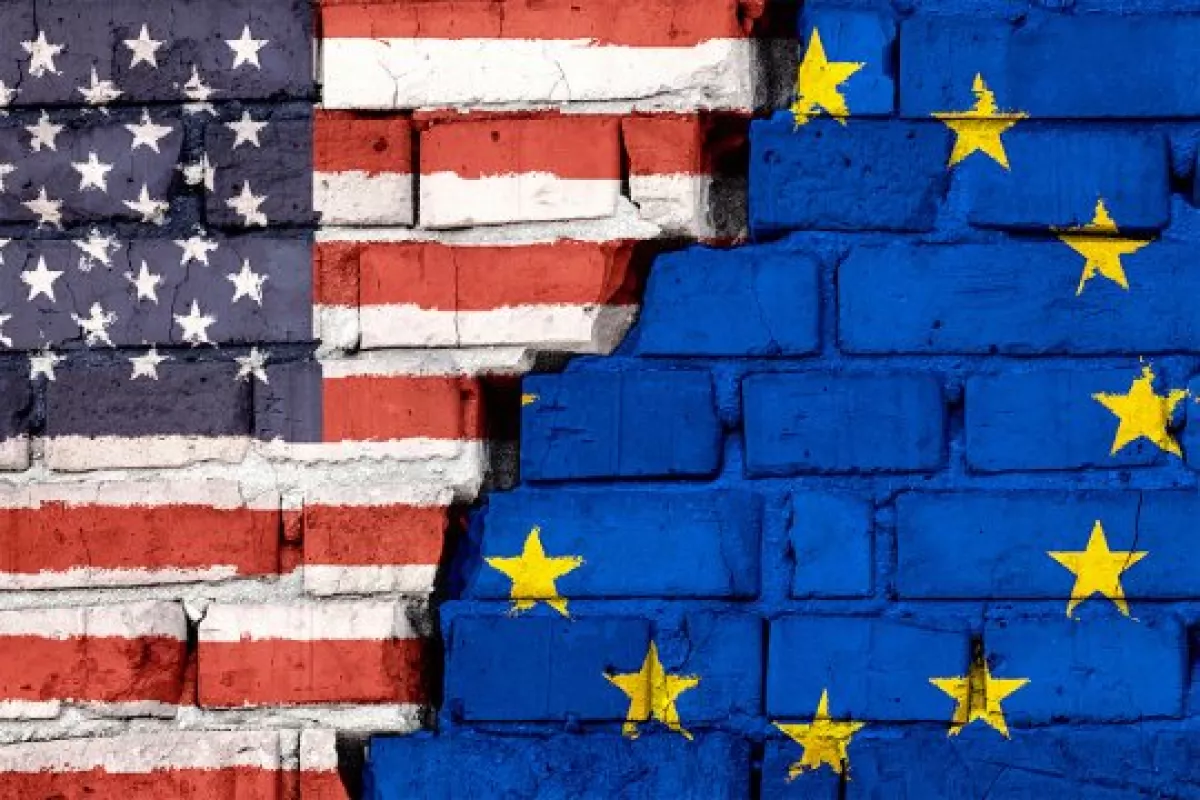
Meanwhile, László Vasa, chief advisor and senior researcher at the Hungarian Institute of International Relations, also views the confrontation between Trump and the European Union as more structural than personal. In his view, the root of the conflict lies in fundamentally different perspectives and approaches to sovereignty, economic power, and global leadership. The White House sees the EU less as a strategic partner and more as an economic competitor, while Brussels perceives the US president’s unilateral approach as a direct challenge to the rules-based international order.
“The risk of an economic war is very real. Trade disputes, tariffs, and threats of retaliatory measures fit neatly into Trump’s political logic, especially in an election-sensitive environment. The conflict over Greenland, while largely symbolic, underscores a deeper problem: the gap between American strategic thinking and European political perspectives. What Washington may view as geopolitics or security, Europeans often interpret as a breach of sovereignty and norms. This misalignment increases the likelihood of further escalation if it is not managed carefully,” the expert emphasised.
Nevertheless, in Vasa’s view, a full-scale crisis is not inevitable. Economic interdependence continues to act as a strong stabilising factor. Both sides would suffer significant losses in a protracted trade war, and key players in the American business community and within the EU have no interest in such an outcome.
“Reaching a compromise will require mutual de-escalation: the United States will need to soften its confrontational rhetoric and recognise the European Union as a strategic actor, while the EU will need to show greater flexibility on trade and the distribution of defence burdens. Quiet diplomacy and solutions that allow all parties to save face will be critical.
From the Hungarian perspective, the situation is viewed pragmatically. Hungary has traditionally maintained strong transatlantic ties while emphasising national sovereignty and economic realism. In the event of an open conflict, Budapest is unlikely to fully side with either camp; instead, it would prioritise de-escalation, wary that an economic war between the United States and the European Union would most harm small, export-oriented, open economies like Hungary. At the same time, Hungarian policymakers understand and accept much of Trump’s criticism of the EU,” Vasa concluded.







 editor@caliber.az
 +994 55 444-88-98
 Азербайджан, Баку, ул. Низами, 203, Af Business House, 5-й этаж