










War by contract and France’s evasion of responsibility From the Foreign Legion to private military companies
For decades, France has sought to cultivate the image of a predictable actor in international relations, relying on multilateral security mechanisms. It is precisely for this reason that the changes introduced into national legislation in the autumn of 2025—effectively legalising the activities of private military companies (PMCs)—appear to be a symptom of the degradation of military policy. Behind this move lies an attempt to legitimise the evasion of political responsibility for participation in armed conflicts.
Background note: Paris has legalised the activities of PMCs, which will be able to support or fully replace national armed forces in carrying out international missions, including in zones of armed conflict. This follows from Decree No. 2025-1030 of October 31, 2025, published in the Journal Officiel de la République Française (Official Journal of the French Republic).
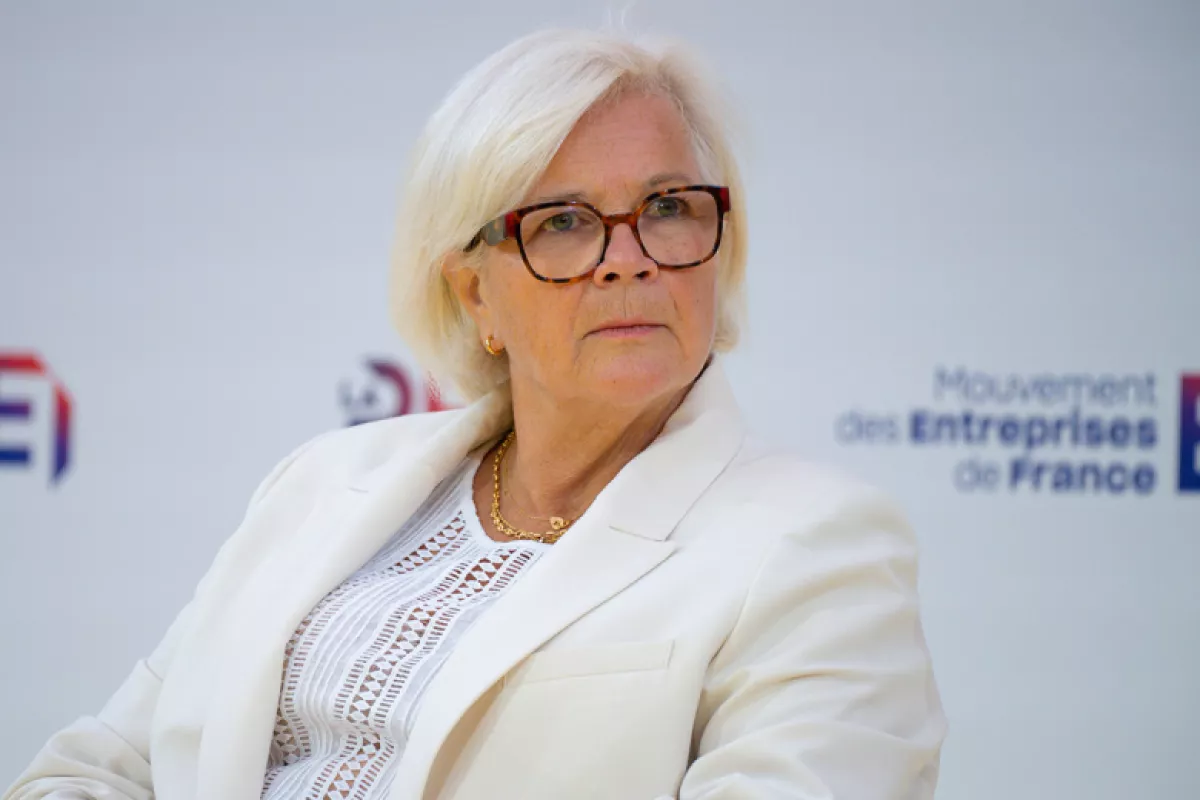
The initiative of France’s Minister of the Armed Forces, Catherine Vautrin, grants the ministry the authority to engage private entities (designated as a “trusted operator”) to carry out overseas missions, including participation in military operations in the interests of third states. Formally, this is presented as an instrument of international military cooperation; in practice, however, it amounts to the transfer of key functions of the use of force to commercial organisations.
Contracts with terms of up to ten years, covering the land, maritime, air, and cyber domains, entrench the systemic nature of this approach and take it far beyond the bounds of an auxiliary role.
In turn, the choice of the term “trusted operators” is overtly manipulative in nature. It is intended to soften the negative perception of private military companies, which in global practice have repeatedly been associated with human rights violations, opaque command structures, and the absence of genuine accountability mechanisms. The French authorities have opted to replace a substantive discussion of risks with a cosmetic change in terminology, hoping to dampen public reaction and avoid uncomfortable questions in parliament and the media.
The new decree appears particularly problematic in the context of the Russian–Ukrainian conflict. President Macron’s statement of November 17, 2025, on his intention to sell up to one hundred Dassault Rafale fighter jets to Ukraine was accompanied by demonstrative rhetoric of support; however, the practical dimension of this decision points to a far more cynical approach. Training Ukrainian pilots and technical personnel to operate such sophisticated aviation equipment inevitably requires the involvement of French specialists, and the use of “trusted operators” staffed by retired pilots and officers would allow Paris to participate de facto in the conflict while preserving a formal alibi of non-involvement.
In this configuration, France gains the ability to claim that its nationals present in the combat zone are not members of the armed forces and are not acting on behalf of the state. This represents a deliberate attempt to blur the line between official and unofficial intervention and thereby avoid political and military consequences. Such practices undermine the very logic of international security, which is based on the principle of state responsibility for the actions of its citizens and structures operating in its interests.
France’s experience with the Foreign Legion is often cited as an example of a distinctive yet still legitimate military instrument. As part of the Army, the Legion operates within a clear hierarchy and under the national flag, making Paris’s responsibility explicit and unambiguous. The format of “trusted operators” is fundamentally different in that it is designed from the outset as a mechanism for evading direct responsibility. This represents a deliberate political choice in favour of grey zones and legal uncertainty.

The domestic political dimension also plays a significant role. French society has become increasingly critical of Macron’s foreign policy adventurism, especially amid the country’s socio-economic difficulties. Transferring part of military functions to private companies makes it possible to reduce the visibility of losses and minimise public backlash. In effect, this amounts to pushing war beyond the boundaries of public oversight, where decisions are made within a narrow circle and their consequences do not become the subject of broad debate.
Moreover, the expansion of this practice beyond the Ukrainian direction poses no lesser threat. Given France’s active role in supporting Armenia, it cannot be ruled out that “trusted operators” may also be used in the South Caucasus. The presence in a neighbouring country of its own private paramilitary structures, such as the terrorist organisation VOMA, creates fertile ground for informal interaction. In such a scenario, Paris would be able to provide military support to Yerevan and influence the regional balance of power while officially denying its involvement and evading responsibility for a possible escalation.
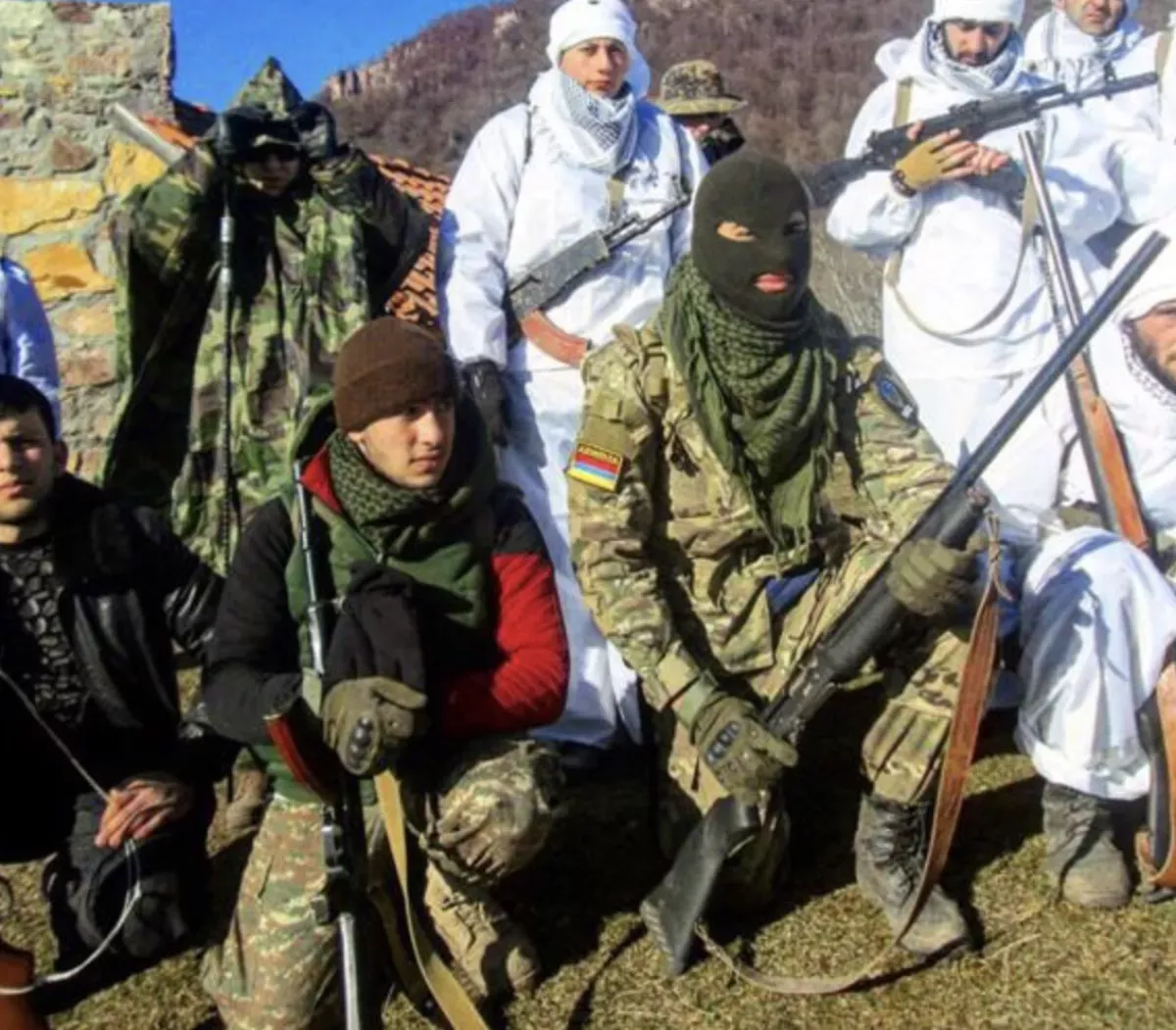
Such a strategy exacerbates instability in regions where the balance is already extremely fragile. For France, which aspires (albeit unsuccessfully) to the role of one of the moral arbiters of global politics, this means the loss of what remains of its political capital.
More broadly, the legalisation of private military companies in France represents a step toward normalising the delegation of war to the market. A state possessing one of the most powerful armies in Europe is, in effect, acknowledging that it prefers to act not directly, but through commercial proxy structures. This is a sign of an unwillingness to take responsibility for the consequences of its own foreign policy. Ultimately, the French model of “trusted operators” appears as an attempt to institutionalise irresponsibility. Behind the careful wording and legal constructs lies a desire to participate in armed conflicts without calling things by their proper names and by shifting risks onto private entities. Such an approach undermines the foundations of international law and creates a dangerous precedent whereby a state, behind the screen of commercial contracts, effectively removes the use of military force from the sphere of public accountability.







 editor@caliber.az
 +994 55 444-88-98
 Азербайджан, Баку, ул. Низами, 203, Af Business House, 5-й этаж