










Washington – Minsk: diplomacy backed by pragmatism Expert opinions on Caliber.Az
A new round of Belarus–U.S. talks recently took place in Minsk, the results of which, according to analysts, indicate a significant warming of relations between the two countries.

Thus, following meetings with President Alexander Lukashenko, the U.S. Special Envoy for Belarus, John Coale, announced that sanctions on the Belarusian potash industry have been lifted, and this process may possibly continue. This is highly significant for Belarus, as experts note that after the sanctions were imposed in 2021, Minsk was forced to redirect its potash fertiliser exports through Russia, increasing its economic and political dependence on Moscow. The deal with the U.S. allows Belarus to partially regain manoeuvrability and reduce this dependence.
In turn, Alexander Lukashenko released 123 political prisoners, including one of the leaders of the Belarusian opposition, Maria Kolesnikova, and human rights activist Ales Bialiatski, who was awarded the 2022 Nobel Peace Prize.
Why has a noticeable warming on the Washington–Minsk track occurred precisely now? And how is this Western “pivot” viewed in Moscow? Belarusian political analysts provide answers to these questions for Caliber.Az.
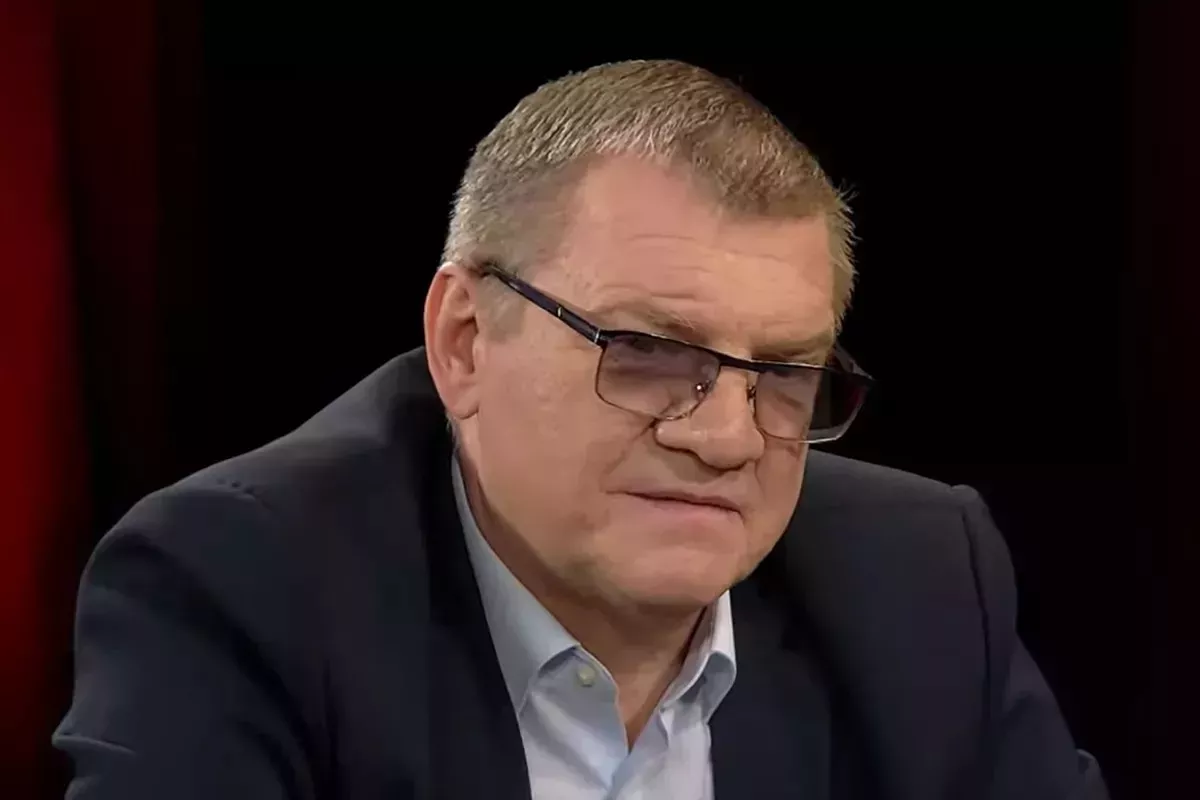
For instance, Professor Alexander Tikhansky, a Belarusian military-political analyst at the Russian Academy of Military Sciences, noted that increased engagement between the United States and Belarus has been observed since early 2025, raising numerous questions and speculations. Progress became particularly noticeable after the start of direct talks between the leaderships of Russia and the U.S. on resolving the conflict in Ukraine and the broader security dialogue.
“Washington sees Minsk as a mediator for communication with and influence over Russia due to Lukashenko’s trusting relationship with Russian President Vladimir Putin. Trump even appointed a special envoy for Belarus. A key event signalling the start of pragmatic steps was the pardon by the Belarusian president of a group of prisoners convicted of crimes related to espionage, extremism, and terrorism, as part of agreements with the Trump administration. For Belarus, which finds itself in a challenging geopolitical situation, the normalisation of relations with the U.S. offers an opportunity to diversify foreign policy and stabilise foreign trade. The pardoning of prisoners and release of political prisoners is not only a humanitarian act but also an important signal to the West of the country’s readiness for dialogue,” he said.
According to the analyst, a factor undoubtedly influencing Minsk’s willingness to engage in dialogue with the U.S. is the economic situation, and in this context, the lifting of American sanctions on Belavia and potash-producing enterprises is very important for Belarus’s export-oriented economy:
“Potash fertilisers are one of the stable sources of hard currency inflow. And although European sanctions remain a significant obstacle, the removal of American restrictions opens up certain financial and logistical opportunities. However, there is no real ‘pivot’—this is a pragmatic attempt by Minsk to use the current situation to advance its national interests. Belarus’s goal is the lifting of all unlawful sanctions and the reduction of military-political tensions in the region, particularly in relations with Poland and Lithuania.”
The political analyst also noted that viewing the pardon of prisoners, including opposition leaders, as a key element of a “deal” between Lukashenko and Trump is an oversimplification—it involves a broader range of issues, including regional security and economic cooperation. Moreover, the release of protest movement leaders could aim to disrupt the opposition in exile. As experience with Sergei Tikhanovsky has shown—whose actions caused divisions among the exiled opposition—the emergence of new “leaders” often leads to their fragmentation.
“Minsk’s steps do not contradict Moscow’s interests. First, Belarus has repeatedly affirmed its commitment to allied relations with Russia and stated that these relations are not subject to revision. At the same time, the Belarusian factor can be leveraged by Russia in the peace process with the U.S. on the Ukrainian track. According to the press secretary of the Belarusian president, some of the pardoned prisoners were exchanged for wounded Russians and Belarusian prisoners of war involved in the Special Military Operation, meaning Minsk acts as a mediator, advancing a position coordinated with Moscow. The decisions Belarus seeks from the U.S. aim to reduce escalation and remove barriers for transcontinental Eurasian logistics. This fully aligns with Russia’s strategic interests on its western borders,” the expert stated.
In his view, the warming of relations between the U.S. and Belarus is a complex and multifaceted process, driven by a range of both internal and external factors. Trump is currently trying to strengthen ties with Minsk by implementing ideas proposed by U.S. experts in the field, such as Mark Episkopos from the Quincy Institute, who in mid-June published an article in The National Interest titled “Can Belarus Be Turned Around?”
“In this piece, the idea was promoted that establishing relations between Washington and Minsk would have a beneficial effect ‘for security and stability in Eastern Europe as the United States prioritises Asia.’ Beyond efforts to resolve the situation in Ukraine, Trump’s ‘administration should remain keen on exploiting shorter-term opportunities to advance US interests’ in the region, and ‘the biggest such window is a potential normalization deal with Belarus, a critically positioned swing player between Russia and the West,’ which can be described as a ‘balcony’—a foothold between Moscow and NATO.
At the latest meeting with Coale, not only regional issues were discussed, but also matters of international security, in particular the rising tensions between the U.S. and Venezuela. The Belarusian president spoke very openly with the American delegation on this topic, warning that dragging America into such a war would mean a repeat of Vietnam, which is of no interest and completely unnecessary for the American or Venezuelan people, nor for the international community.
Interestingly, John Coale came to Minsk with his wife, Greta Conway Van Susteren, who hosts a signature program on the U.S. channel Newsmax TV. After the talks, she conducted an interview with Alexander Lukashenko,” said Tikhansky.
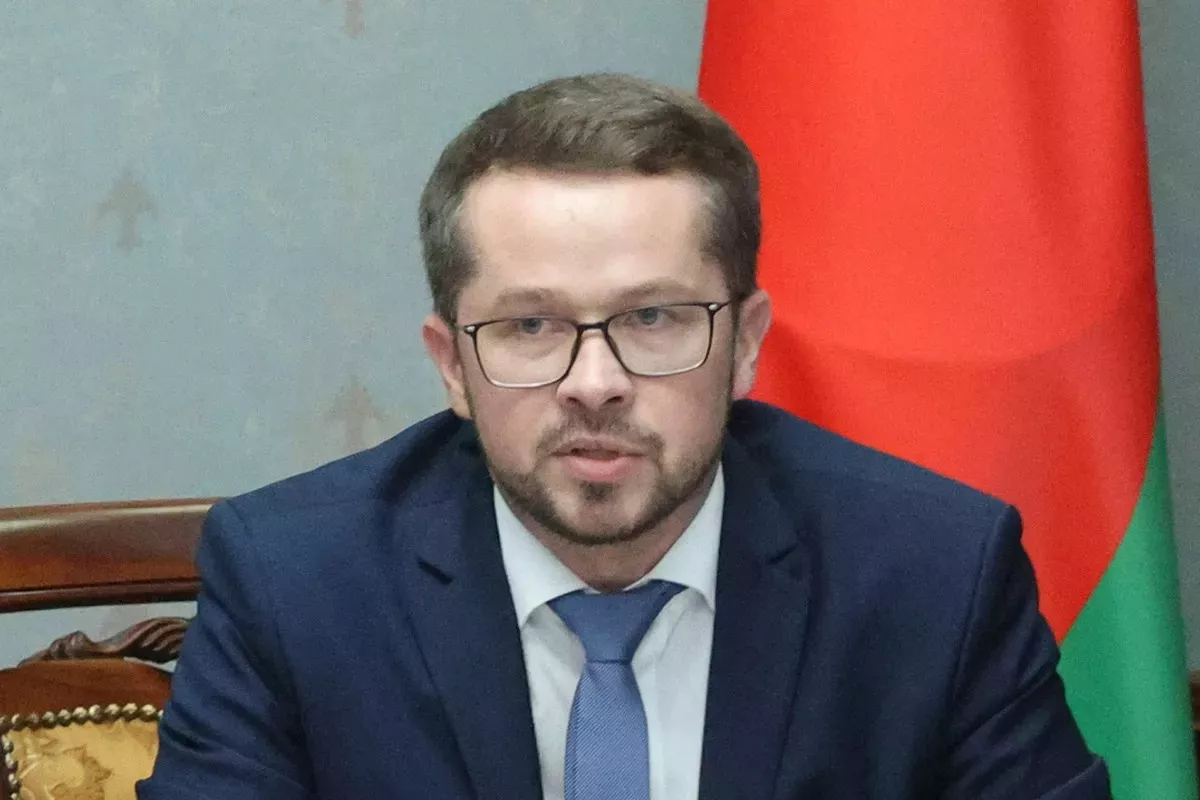
Meanwhile, Belarusian political analyst and expert of the Permanent Commission of the CIS Interparliamentary Assembly, Oleg Leshenyuk, believes that the restoration of communication and the lifting of sanctions on major Belarusian enterprises indicate that the United States has recognised the failure of a policy of complete isolation of Belarus.
“Attempts to pressure the country’s official authorities in past years did not lead Minsk to revise its foreign policy orientations, as the U.S. had hoped. On the contrary, the United States effectively lost access to primary information, which ultimately increased the risk of strategic miscalculations by the West in Eastern Europe.
With the development of a new national security strategy, based on the concept of long-term strategic competition, there came an understanding that the U.S. needs access to the region. The document declares that even in conditions of confrontation, it is necessary to maintain working diplomatic channels with regional actors that play a significant role in ensuring security. Belarus plays exactly such a role and therefore serves as a crucial strategic contact.
Minsk is seen as part of a broader regional configuration, where the absence of communication and direct information increases the likelihood of uncontrolled escalation. The resumption of engagement between the U.S. and Belarus does not indicate a change in the strategic course of either side—it is a pragmatic and functional step. It is about restoring minimal channels of communication to manage risks amid prolonged geopolitical confrontation. In this context, direct dialogue with Minsk allows Washington to monitor risks on NATO’s eastern flank and discuss humanitarian and infrastructure issues,” the expert stated.
In his view, the Belarusian side is interested in reducing the negative effects of international isolation and diversifying its foreign policy communications.
“It should be emphasised that Belarus does not intend to reconsider its strategic alliance with Russia, and the United States understands this well. One of the provisions of the strategy involves pursuing a policy of ‘soft power,’ and the document elevates the concept of national security to a new level, as it now encompasses issues of resilience, crisis management, and nuclear and energy security.
Dialogue with the U.S. is an element of diplomacy aimed at preserving Belarus’s sovereignty in a challenging geopolitical environment, and the release of prisoners became a pretext for restoring contacts with the country. The rapprochement reflects not a détente, but an adaptation of U.S. foreign policy to a new model of global competition, in which dialogue with Belarus is a necessary tool for maintaining strategic stability,” the political analyst assured.
In his view, with regard to the EU, the focus will also be on attempts at partial normalisation and the restoration of functional communication channels, rather than a complete “reset.” The main objective is to reduce external risks. Forms of engagement will be structured around overlapping interests in depoliticised areas: cross-border security, environmental and nuclear safety, transport, logistics and infrastructure, as well as humanitarian and consular issues. Energy diplomacy remains a significant instrument, including transit, electricity, and the stability of regional markets. At the same time, a lifting of sanctions or the establishment of institutionalised Belarus–EU dialogue is not expected in the near future.
“In Belarus’s foreign policy along the western vector, one can expect dialogue, possible participation in certain economic projects, and the restoration of humanitarian cooperation. At the same time, official Minsk upholds principles that cannot be compromised in relations with the West—namely, its strategic alliance with Russia, obligations within the Union State, CSTO, and EAEU, the preservation of sovereignty, and the inadmissibility of external influence,” the expert emphasised.
He also believes that a strategic pivot is not anticipated, as Minsk does not view the western vector as an alternative to its eastern orientation. The West will attempt to adapt its sanctions policy to the new reality, and the question of lifting coercive measures should also be considered from a pragmatic perspective.
“Non-political and technical sectors are likely to benefit from easing measures—enterprises related to nuclear safety, transport and logistics companies, and firms involved in humanitarian, medical, and environmental projects. These may be temporary exemptions rather than a full lifting of sanctions, and will likely occur without public political statements. In other words, restrictions will first be lifted for entities whose activities are important for EU supply chains (fertilisers, potash, transit) or where sanctions cause more harm to European countries than to Belarus itself. However, it is unlikely that personal sanctions will be reconsidered. The West will seek to reshape the sanctions framework regarding Minsk as a risk-management tool, since sanctions policy is part of the broader strategy to contain Russia,” Leshenyuk concluded.







 editor@caliber.az
 +994 55 444-88-98
 Азербайджан, Баку, ул. Низами, 203, Af Business House, 5-й этаж