










What are the risks of piling NATO arms into Chisinau? A reality that requires readiness
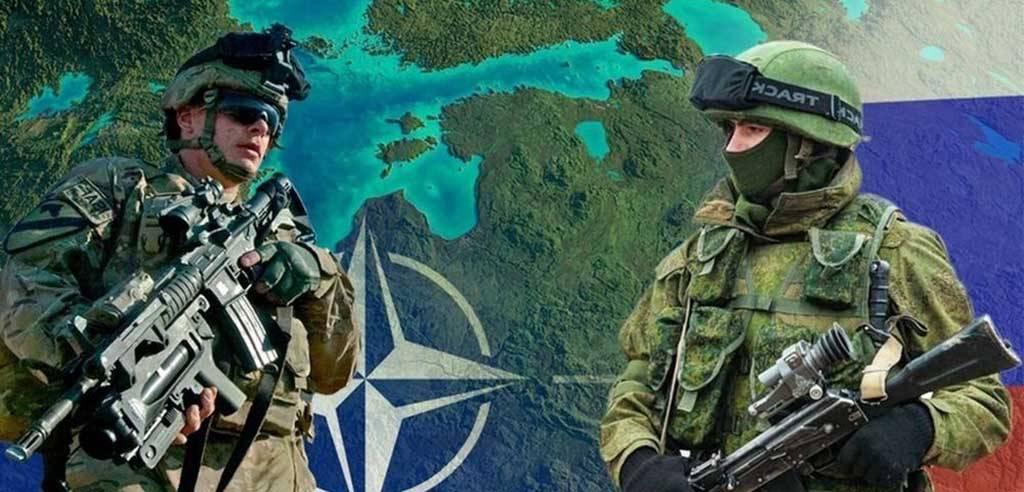
Russia is concerned about the tendencies of Chisinau to give up its neutrality and move closer to NATO. Aleksey Polishchuk, head of the second department of CIS countries of the Russian Foreign Ministry, made the remark in the Federation Council during a discussion about the Russian Federation's participation in a peacekeeping operation in Transnistria.
Polishchuk said that while the Russian Federation is conducting a "special military operation" in Ukraine, Chisinau is trying to present the situation in Transnistria as dangerous for Moscow. As an argument, a high-ranking diplomat reported on the detention of Russian peacekeepers at the Chisinau airport, regarding the incident as an unfriendly action of the Moldovan authorities.
Meanwhile, amid the protracted war in Ukraine, Moscow's tougher rhetoric towards Chisinau is increasingly alarming for the international expert community. If we call it as we see it, Russia actually threatened Moldova by reminding it that ignoring its red lines, i.e. constitutional neutrality, is not in its interests. In approximately the same context, the Russian position was voiced earlier (on June 16) by Russian Foreign Ministry spokeswoman Maria Zakharova about Moldova's rapprochement with NATO. Zakharova argued that Moldova was being aggressively pushed toward rapprochement with NATO under the cover of the military operation in Ukraine.
Apparently, Moscow is severely annoyed by the possibility of upcoming arms deliveries to Chisinau from the alliance countries and sees this as a fundamental divergence from Moldova's neutral status. However, the government circles in Chisinau do not share this opinion, on the contrary, earlier Moldovan Parliament Speaker Igor Grosu said that rearming by the NATO member countries does not violate the status of a neutral state, provided that all international treaties are observed.
However, the Moldovan authorities have repeated many times that the country has no plans to join NATO and does not set such a goal, unlike Ukraine and Georgia. But, nevertheless, Moscow is not pleased with the initiatives of the government aimed at strengthening the Moldovan army. Last week, President of Moldova Maia Sandu, just in case, voiced the reason for the army strengthening on the air of the capital TV channel. The head of state said that the European Union provides Chisinau with "non-lethal weapons," although the republic "needs ammunition, too."
"As we see what Russia is doing in Ukraine, it would be completely unconscionable not to think about how we can defend ourselves if such a tragedy happens to us. I hope very much that it will not come to that, but it does not depend on us," Sandu said, noting that Chisinau does not want to be drawn into the conflict, but this is "a reality for which the republic must be prepared."
Judging by the statements of the Moldovan leader, at this stage of the war in Ukraine, official Chisinau does not completely rule out an escalation of a new conflict on its territory. In this regard, it is logical that Moldova started talking about the need to re-equip the national army. As the president noted, despite the fact that the Constitution enshrines neutrality, the country should still have a strong army.
But as it is known, the North Atlantic block has not given Moldova any weapons so far, although there have been discussions about it since May of this year. It is clear that this is a rather long process that requires time and comprehensive preparation, but it is precisely this time interval that Moscow is trying to take advantage of by making threatening statements.
However, it must be stated that the issue of military supplies to Chisinau is in the active phase in Europe, as indicated by the messages coming from the Old World. The fact that the United Kingdom and other NATO countries are discussing the possibility of arms supplies to Moldova was first announced in May by British Foreign Secretary Liz Truss in a conversation with The Telegraph. The British minister explained the decision as a measure aimed at protecting Chisinau from the threat of Russian invasion and a desire to see Moldova equipped to Western military bloc standards. The fact that the European Union was studying the possibility of providing additional military assistance to the country was also reported by the head of the European Council, Charles Michel. Naturally, this point was not left out of the Kremlin's foreign policy picture. But one way or another, against the background of the European initiatives, according to Polishchuk, Moscow's current concern is caused by Moldova's actions to blockade Transnistria, which could lead to an unfreezing of the conflict, which is a priori not in Russia's interests.
Finally, one more symbolic detail. In April of this year, the Moldovan leader signed a law prohibiting the use of the St. George ribbon, as well as the demonstration of the symbols Z and V, which was a reaction to Russia's invasion of Ukraine. Such actions by the Moldovan authorities have undoubtedly strained relations with Russia, but at the same time, it is obvious that amid the war in Ukraine, the EU and NATO are trying to keep Moldova in their zone of influence as opposed to Russia. Meanwhile, the Kremlin hints that the rapprochement of Chisinau with the alliance and the rejection of the constitutional principle of neutrality threatens to seriously worsen Moldovan-Russian relations.







 editor@caliber.az
 +994 55 444-88-98
 Азербайджан, Баку, ул. Низами, 203, Af Business House, 5-й этаж