










A step forward on the corridor of trust TRIPP begins to take shape
Following the meeting on January 13, in Washington between Armenian Foreign Minister Ararat Mirzoyan and U.S. Secretary of State Marco Rubio, Yerevan and Washington unveiled a framework programme for implementing the Trump Road to International Peace and Prosperity (TRIPP) project—a large-scale initiative designed to ensure unhindered transit from mainland Azerbaijan to the Nakhchivan Autonomous Republic, while also linking Central Asia, the Caucasus, and Europe through a single multimodal route, thereby forming a key segment of the Trans-Caspian trade corridor.
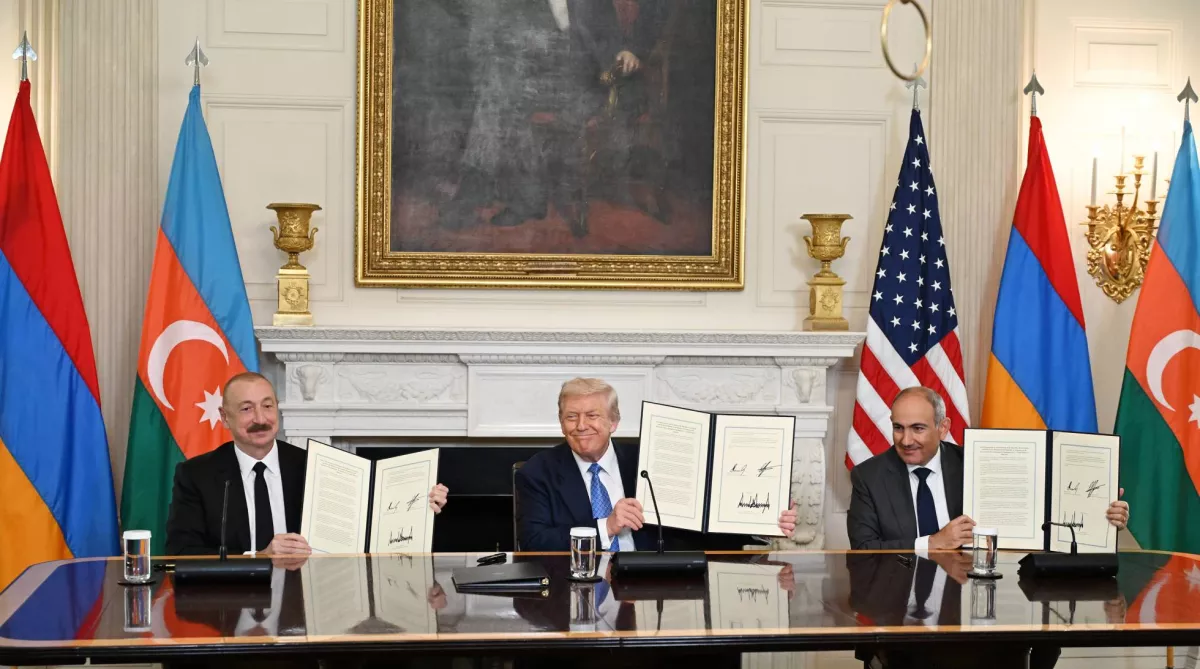
The programme is based on the Washington Declaration of August 8, 2025, signed by the leaders of Azerbaijan, the United States, and Armenia, and clearly reflects the positive momentum generated by that historic meeting. At the time, the parties affirmed their readiness to open transport links and lay the groundwork for lasting peace. The new document, titled the TRIPP Implementation Framework (TIF), builds on that declaration and outlines, in broad terms, how the project will be implemented in practice.
The document emphasises that TRIPP does not impose any legal obligations on the United States or Armenia. It serves as a framework within which the parties will coordinate further steps.
To manage the project, the TRIPP Development Company will be established—an American-Armenian company in which the United States will hold 74% of the shares and Armenia 26%. The agreement is set for 49 years, with the possibility of extension for another half-century, during which Armenia’s share would increase to 49%, while the U.S. retains a controlling stake.
The project envisages large-scale digitisation and modernisation of borders, including, among other measures, the implementation of electronic document management and a “single window” system. The United States is prepared to provide technical assistance, including the deployment of advanced IT systems and specialist training.
Particular attention is given to preserving Armenia’s full sovereignty. All TRIPP facilities and routes will remain under its jurisdiction. The state retains legislative, regulatory, and judicial authority, as well as control over security, border, and customs operations.
From this perspective, the most critical issue for Baku remains the “unimpeded connectivity between the main part of the Republic
of Azerbaijan and its Nakhchivan Autonomous Republic through the territory of the Republic of Armenia,” as outlined in the Joint Declaration.
In this context, one of the most interesting elements of the TIF is the “front-office–back-office” model.
"To enhance efficiency while maintaining Armenia’s sovereignty and jurisdiction, TRIPP is expected to employ a “front office – back office” model, using digital tools to facilitate unimpeded connectivity," the relevant section notes.
It goes on to explain that private operators hired by the TRIPP Development Company will work “on the front line”—receiving documents, advising participants, coordinating flows, and processing payments—that is, providing, as the document itself puts it, “customer-facing services.” At the same time, all final decisions—from customs clearance and security control to migration issues—will be made by Armenian state authorities.
This can be interpreted as a way to ensure unimpeded transit while fully preserving Armenia’s national sovereignty. The core idea of this format is expressed in the programme with the phrase: “Front office operators facilitate; they do not decide.”
The document itself states that: "The TRIPP is intended to establish unimpeded, multimodal transit connectivity on the territory of Armenia, contributing to regional peace, stability, and integration based on respect for sovereignty, territorial integrity, and jurisdiction of the states," which also reflects the commitment of the parties involved to the principles set out in the Joint Declaration.
Notably, the document represents only one milestone on the path to implementing the project, outlining its general framework and providing a key to understanding the overarching principles of its implementation. Many operational details of the “Trump Road” are expected to be discussed and agreed upon in the future.
Baku, for its part, will be closely monitoring developments in this regard, particularly with respect to compliance with the Joint Declaration’s provision on unimpeded transit from mainland Azerbaijan to the Nakhchivan Autonomous Republic.
Commenting on the programme, Aykhan Hajizada, Press Secretary of the Azerbaijani Ministry of Foreign Affairs, stated that the document once again demonstrates the U.S. commitment to the agreements reached at the Washington summit on August 8 and represents an important step toward beginning practical work in this direction.
"It is also important in terms of fulfilling the obligations undertaken by Armenia. Ensuring unimpeded connectivity between the main part of Azerbaijan and its Nakhchivan Autonomous Republic is one of the main priorities of our country," Hajizada added.
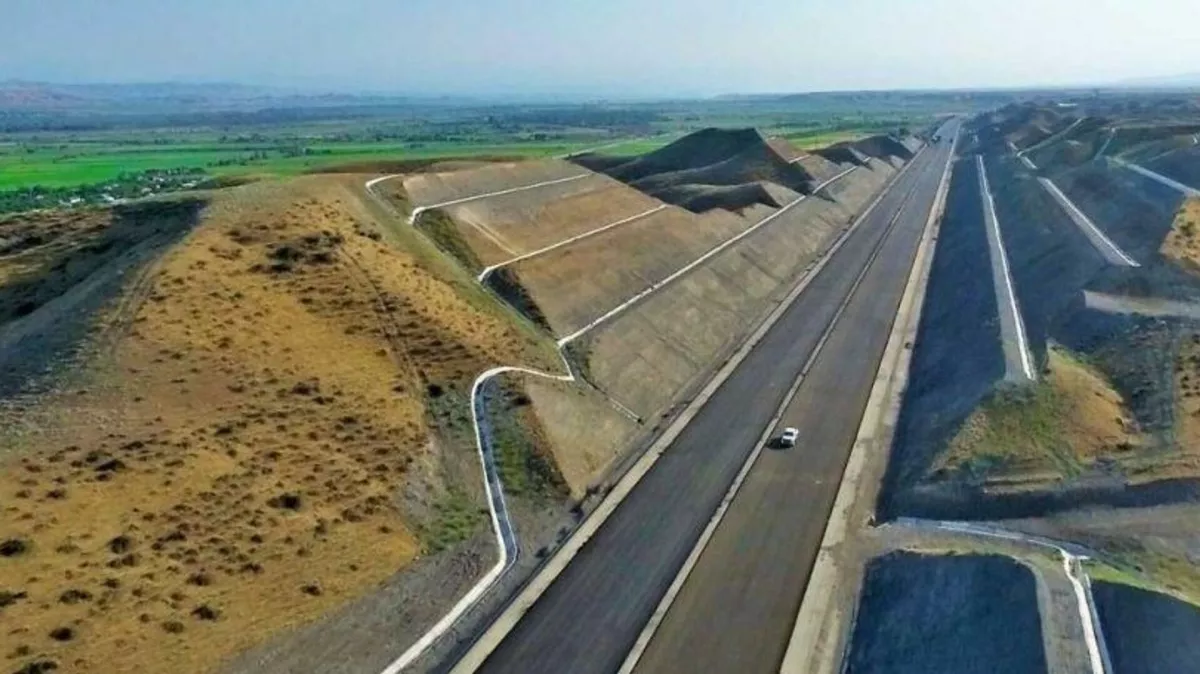
The meeting between Senator Rubio and Armenian Foreign Minister Ararat Mirzoyan in Washington can be seen as another step toward advancing the implementation of the Zangezur Corridor. In this context, it is worth recalling President Ilham Aliyev’s interview with local TV channels on January 6, in which he expressed optimism about the corridor’s prospects, noting that work on the Azerbaijani side—specifically the roads leading to the Armenian border—would soon be fully completed.
One quote from Aliyev’s interview is worth highlighting: "I do not believe that Armenia will be able to evade it, this would be tantamount to suicide, especially considering that US President Trump has given his name to this road, and this is already his road. News coming from Armenia also suggests that the physical construction of this road is planned for this year."
Indeed, the fact that the Armenian section of the corridor bears President Trump’s name, and that the United States and Armenia are currently demonstrating full commitment to its implementation, provides grounds for optimism regarding the sustainability of this process.
TRIPP is becoming more than just a transport route; it represents a new model of mutually beneficial cooperation for all parties involved. Azerbaijan will gain a road connecting its mainland with Nakhchivan, simultaneously strengthening its position as a transit power. Armenia will have a chance to integrate into a key South Caucasus transit hub linking East and West. The United States will secure the status of a reliable partner supporting sustainable development and peace in the region.







 editor@caliber.az
 +994 55 444-88-98
 Азербайджан, Баку, ул. Низами, 203, Af Business House, 5-й этаж