










Aliyev–Trump meeting at Davos as a marker of Realpolitik A dialogue of partners
The 56th World Economic Forum in Davos, held this week, once again confirmed its role as the premier stage where global politics and economics converge. It is here that schedules are aligned, signals to markets and partners are sent, and geopolitical priorities are set. This year, attention on the forum was especially heightened by the presence of U.S. President Donald Trump.
Over sixty heads of state and government attended Davos this year. For any leader—particularly someone as pragmatic as Trump—it is simply impossible to hold full bilateral meetings with all of them. As a result, the leaders chosen for direct discussions are always seen by politicians and the media as a key signal. This time, the list was exceptionally selective: alongside the presidents of Ukraine, Switzerland, and Poland, it included Azerbaijan’s President Ilham Aliyev.
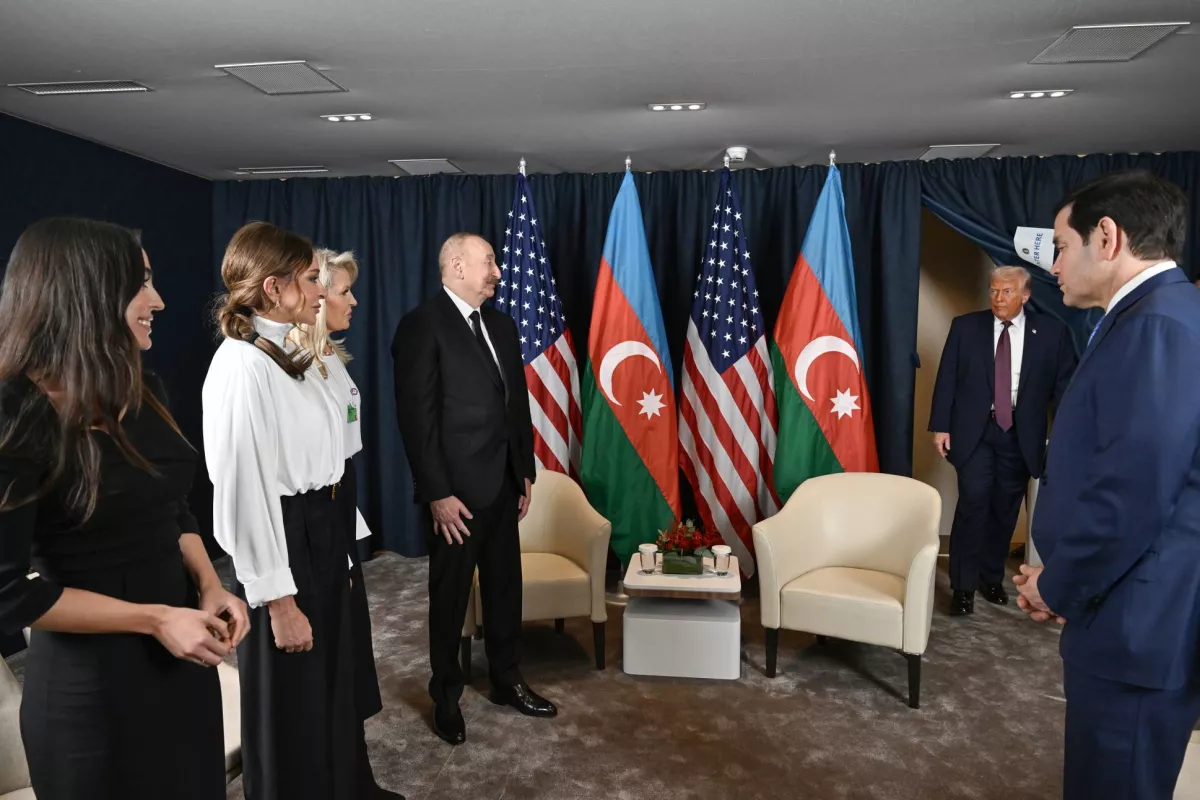
The very fact of this meeting deserves separate analysis. Davos is not a place for ceremonial politeness just for the sake of appearances. In this context, the dialogue between Trump and Aliyev became a marker of the level of relations between Washington and Baku, as well as a reflection of Azerbaijan’s role in the broader architecture of American foreign policy.
Donald Trump has long earned a reputation as a politician who values straightforwardness, strength, and predictability. He is not inclined toward diplomacy for form’s sake and prefers to deal with leaders who are capable of making independent decisions and taking responsibility for them. In this sense, Ilham Aliyev naturally fits into the circle of leaders whom Trump and his team in Washington perceive as autonomous actors.
President Aliyev enjoys immense respect among influential world politicians as a leader who keeps his word, consistently defends his country’s interests, and at the same time knows how to balance between different centres of power. It is precisely this quality—a combination of firmness and rationality—that becomes key for the United States in regions where the interests of major powers intersect. The South Caucasus has become a pivotal point where energy routes, transport corridors, and security concerns converge. In this configuration, Azerbaijan occupies a central position.
For Washington, Baku is of interest not as an abstract partner, but as a real regional leader. Azerbaijan consistently implements projects that have significance far beyond its own borders. Its energy infrastructure, linking the Caspian Sea with Europe, has become part of the European energy security system. Transport initiatives passing through Azerbaijani territory create alternative routes between East and West. These factors are also firmly on the radar of the current U.S. administration.
The Trump–Aliyev meeting in Davos demonstrated that the United States views Azerbaijan as a country worth engaging with directly. The exchange of views on the prospects for bilateral relations, the emphasis on the importance of mutual visits, and contacts at different levels—all of this signals a desire to maintain and deepen political dialogue. For the White House, such formulations are never accidental.
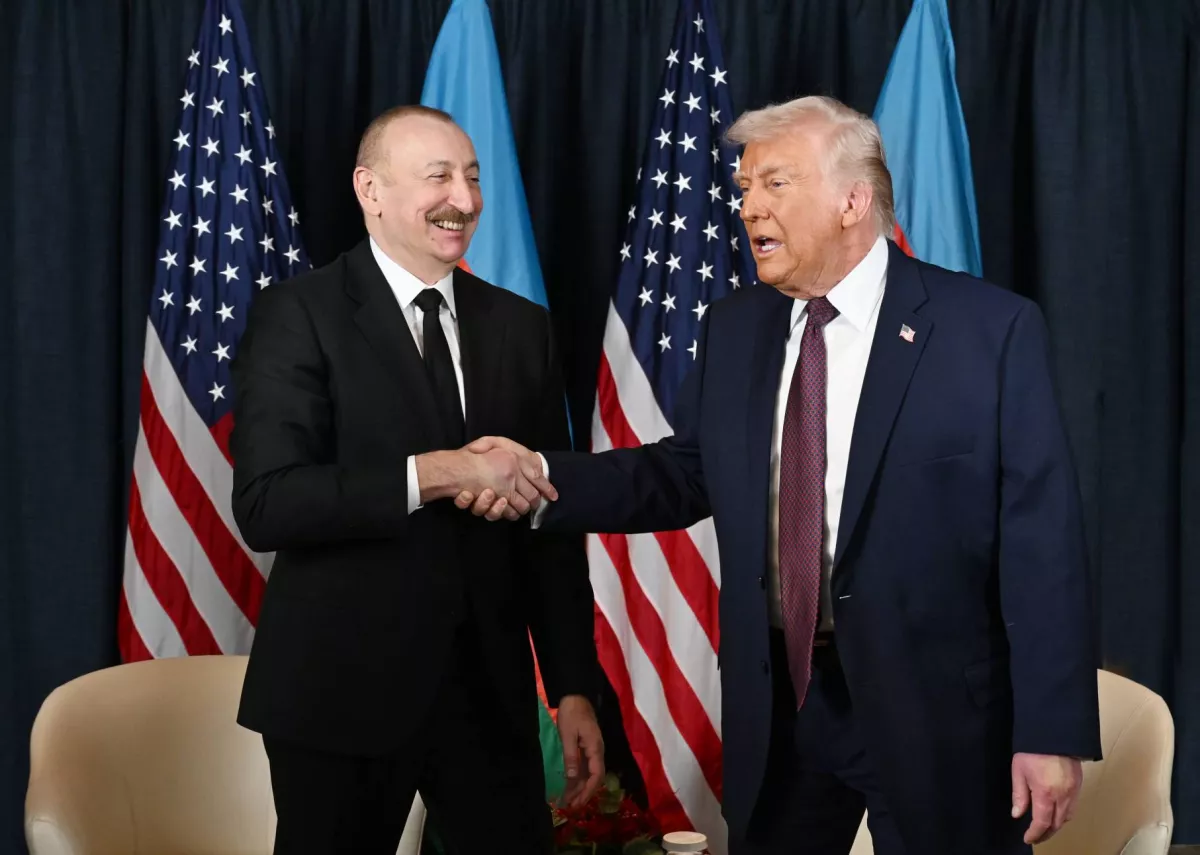
Again, in the case of Trump, it is important to consider the personal factor. The 47th President of the United States places a strong emphasis on personal relationships between leaders. His diplomacy largely revolves around direct communication, where trust is built not through lengthy memoranda, but through personal agreements. In this format, Aliyev proves to be a reliable partner: he represents a state with a stable political system and clearly defined priorities.
Indeed, Trump deemed it necessary to meet Aliyev in person. This choice automatically underscores the interlocutor’s status. For Azerbaijan, it signifies recognition of its political weight and independence. In a context where many countries continue to seek external support, Baku demonstrates the ability to engage with global centres of power on an equal footing.
From Washington’s perspective, such a partnership offers several immediate advantages. First, the United States gains a reliable partner in a strategically important region, one that is not prone to sudden foreign policy shifts.
Second, Azerbaijan serves as a connecting link between different geopolitical spaces—from the Caspian to the Black Sea.
Third, Baku has experience in implementing large-scale infrastructure projects in a complex international environment.
It is also important to remember that under Trump, American foreign policy is guided by pragmatism. Ideological slogans have become a thing of the past. In this logic, partners are evaluated based on their ability to ensure stability and advance mutually beneficial initiatives. Azerbaijan fits into this model as a state that prioritises concrete results over abstract declarations.
The Davos meeting between the leaders of the United States and Azerbaijan also sent a signal to other centres of power. It demonstrated that the path to Washington’s attention lies through consistent policy. Formal status or grandiose statements do not work here; what matters is the ability to be a useful and predictable partner.
In a broader context, the Trump–Aliyev dialogue reflects a transformation in international relations. The world is gradually moving away from rigid bloc structures. Bilateral formats and personal agreements are coming to the fore. In such a system, those who can combine national interests with engagement in global processes succeed. Over the past years, Azerbaijan has been precisely doing this.
Thus, the meeting of the Presidents of Azerbaijan and the United States on the sidelines of the World Economic Forum in Davos goes far beyond a mere ceremonial event. It became an indicator of the level of trust between the two leaders and a reflection of Azerbaijan’s place in global politics. In a world where the attention of major players is increasingly selective, the very fact of such dialogue speaks louder than any declarations.







 editor@caliber.az
 +994 55 444-88-98
 Азербайджан, Баку, ул. Низами, 203, Af Business House, 5-й этаж