










Anatomy of the crisis in Etchmiadzin Garegin II as a source of instability
The events that unfolded in Etchmiadzin the day before have definitively underscored a fundamental reality: Armenia is grappling with a deep-seated systemic crisis in which politics, security institutions, revanchist narratives, nationalism, and accountability for the tragic consequences of a long-standing ideological project are inextricably linked.
Against this backdrop, it is particularly revealing that yet another confrontation between supporters and opponents of the incumbent Catholicos, Garegin II, coincided with—and effectively framed—a high-profile statement by Armenian Prime Minister Nikol Pashinyan.
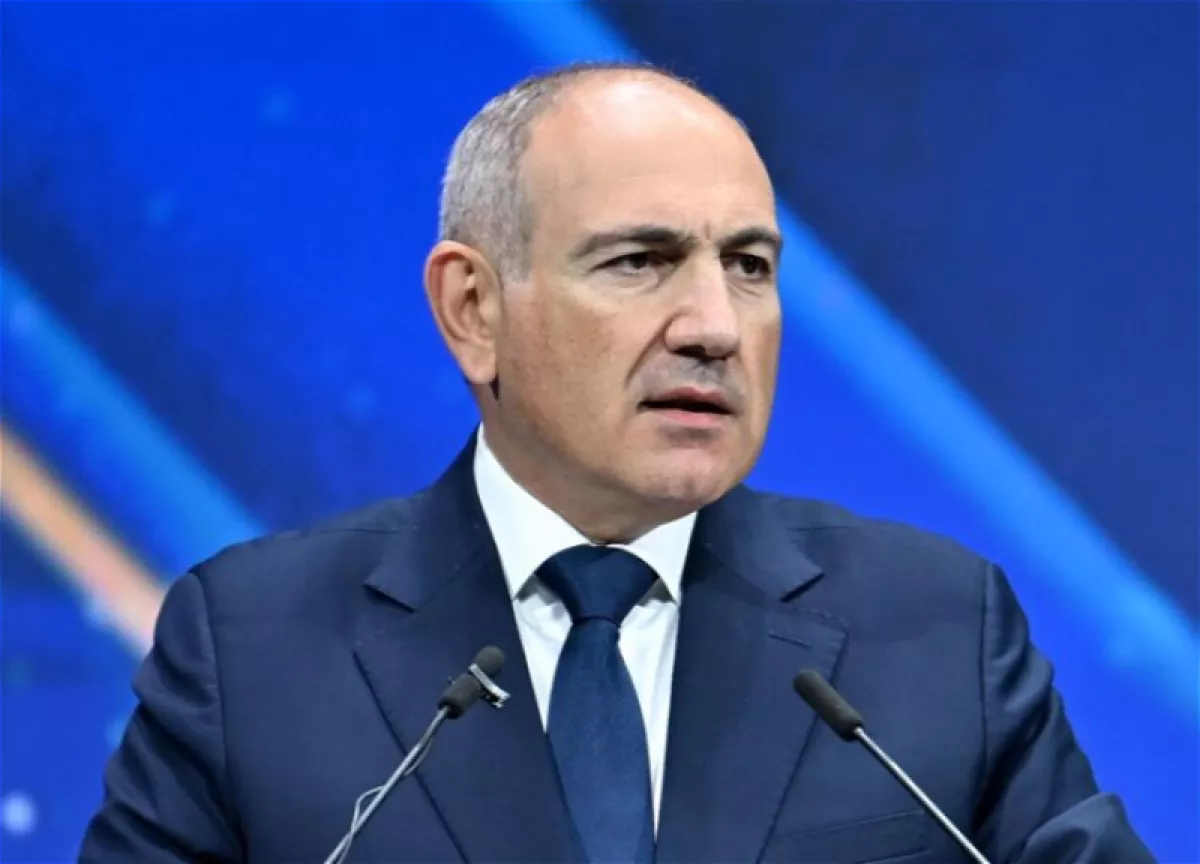
Thus, in response to journalists’ questions, he confirmed that Ktrich Nersisyan (Garegin II) had previously been arrested in Germany as a KGB agent and extradited to the USSR in handcuffs. According to the Armenian Prime Minister, this information is corroborated by the Armenian National Security Service. Equally telling was the leader’s reaction to a follow-up question: “Why, in that case, is no criminal case being opened?” Pashinyan’s answer was remarkably frank: “It is impossible to initiate criminal proceedings for cooperation with the KGB, since this concerns a period when these individuals were citizens of the USSR.” However, the crucial point lies elsewhere: “Is cooperation with foreign intelligence services ongoing today?”—to which the Prime Minister replied that operations are being conducted within the framework of intelligence and counterintelligence activities, which are not always accompanied by public criminal cases.
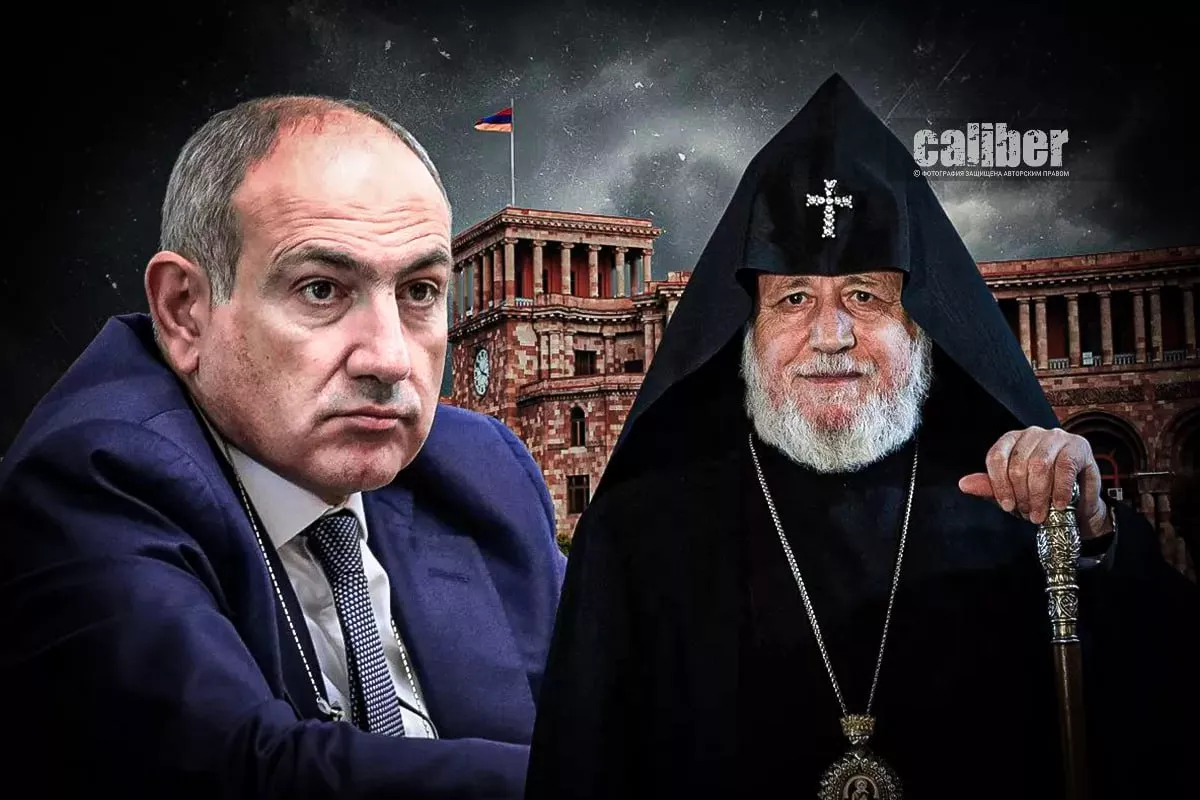
These statements make it clear that the issue of Garegin II has long surpassed matters of church ethics and has assumed a dimension of national security. Earlier, Prime Minister Nikol Pashinyan publicly made an accusation with potentially devastating implications for a spiritual leader of such stature—alleging that the Catholicos has an illegitimate child. To date, the Armenian Church has not issued a clear, explicit, or unambiguous denial. This prolonged silence, lasting several months, has only intensified suspicions and internal tensions within the ecclesiastical community.
In this context, it is highly symbolic that, for the first time in nearly 30 years of Garegin II’s leadership, ten bishops staged an open protest on the grounds of Etchmiadzin. They demanded a “cleansing of the church from arbitrariness” and called for the resignation of the incumbent Catholicos. The significance of this unprecedented event cannot be overstated: it reflects a profound schism within the church hierarchy.
The presence of Armenian National Security Service special forces near the protesters provoked a strong reaction from Garegin II’s supporters. Authorities were quick to clarify that the security deployment was solely intended to prevent potential provocations—a concern that was far from unfounded. The stakes for the incumbent Catholicos are extremely high, and without broad support—even within the church—the risk of radical developments is significantly heightened.
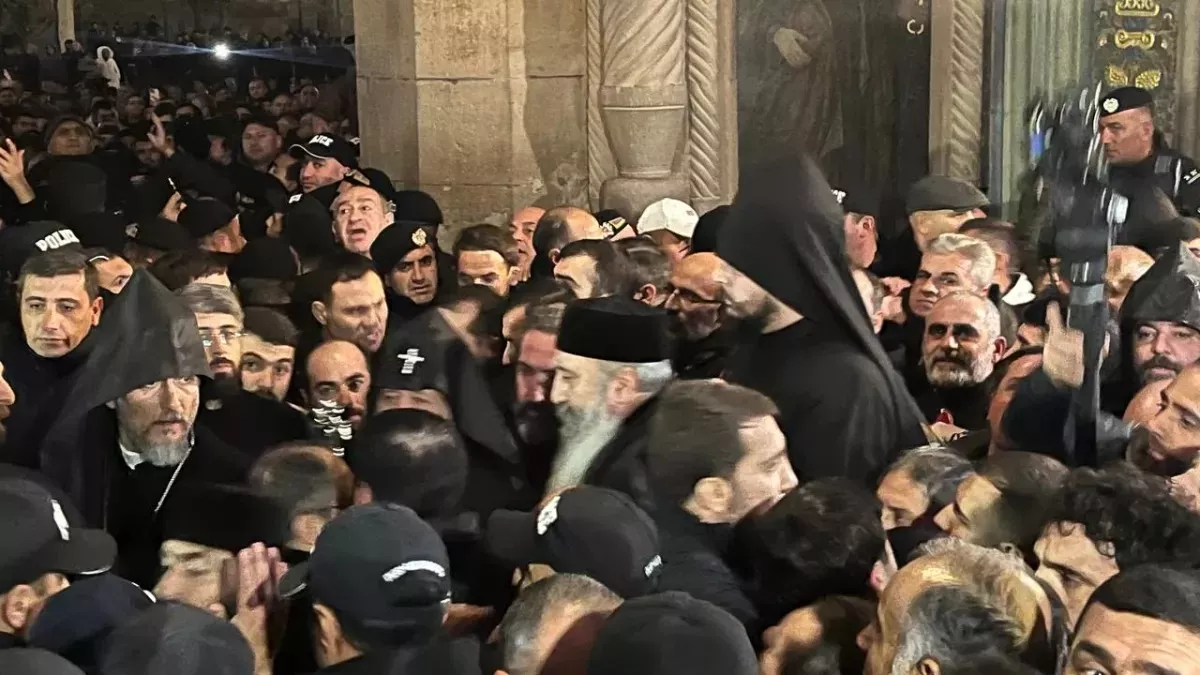
Incidentally, even before the protest began, the Armenian Prime Minister stated that he ruled out the possibility of clashes in Etchmiadzin, noting that law enforcement agencies have all the tools and capabilities to neutralise provocations within the framework of the law. This proved accurate: several hundred supporters of the Catholicos attempted to provoke disorder, but they were unsuccessful. Five individuals, who displayed openly inappropriate and aggressive behaviour, were removed from the premises, as officially reported by the spokesperson of the Republic’s Ministry of Internal Affairs, Narek Sargsyan.
It is worth noting the individuals who attempted to exploit the events in Etchmiadzin for political self-promotion. Among the so-called “defenders of the Catholicos” were Avetik Chalabyan, coordinator of the opposition movement Hayakve; Ishkhan Sagatelyan, a deputy of the Armenia parliamentary faction and representative of the Supreme Body of the ARF; Narek Karapetyan, coordinator of the Our Way movement; and Arman Tatoyan, former Armenian Ombudsman and head of the Wings of Unity initiative. Notably, as we can see, neither of Armenia’s second or third presidents—Robert Kocharyan and Serzh Sargsyan—were among them.
A separate place in this fiasco must be given to the statement by Samvel Shahramanyan, who, promising to appear in Etchmiadzin, said: “We share the position of the Catholicos of all Armenians on the issue of Artsakh and the rights of the Armenians of Artsakh.” This statement reveals the essence of what is happening and is an open admission that the Armenian Church, for decades, has acted shoulder to shoulder with the Dashnaks and radical nationalists, instilling in the public consciousness myths about “historical lands” and thereby fostering territorial claims against neighbouring states. The means of bringing these myths to life have invariably been violence and terror—against Azerbaijanis and Turks, as well as against Armenians who refused to participate in these doomed ventures.
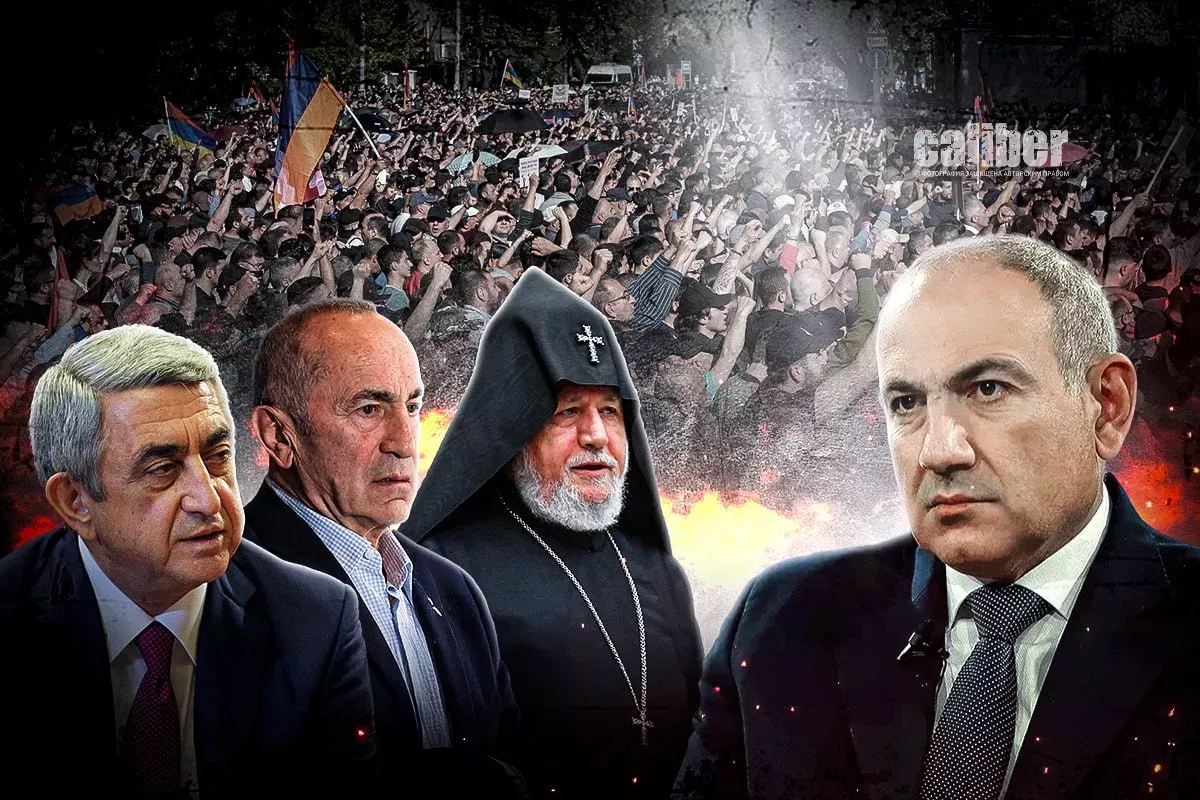
Garegin II is desperately clinging to his position, despite being rejected from within his own church. However, the stakes for his allies are far higher: their objective is to return Armenia, at any cost, to the logic of revanchism and prepare the ground for a new war with Azerbaijan. This is precisely why the crisis in Etchmiadzin is not merely a church issue, but a state-level challenge, the outcome of which will have profound implications for the future of the neighbouring country.







 editor@caliber.az
 +994 55 444-88-98
 Азербайджан, Баку, ул. Низами, 203, Af Business House, 5-й этаж