










Azerbaijan and Türkiye explore new paths to economic growth From oil to industry
As key partners in major international energy and transport projects, Baku and Ankara continue to steadily expand their trade ties. Türkiye has long ranked among the top three investors in Azerbaijan’s economy. Today, however, the main priority is attracting large Turkish industrial companies to further develop and capitalise on Azerbaijan’s domestic industry.
These issues were the focus of discussions at the Azerbaijani–Turkish Joint Intergovernmental Commission (JIC) meeting held in Baku on December 22–23, chaired by Türkiye’s Vice President Cevdet Yılmaz and Azerbaijan’s Prime Minister Ali Asadov. The second bilateral investment forum was also held as part of the JIC framework.
As strategic partners, Baku and Ankara have been closely cooperating in the oil and gas transit and logistics sectors for three decades. Türkiye is also Azerbaijan’s second most important trading partner. The two countries have set a goal of gradually converging their markets, introducing a preferential trade regime in March 2021, under which zero customs duties were applied to mutual supplies of around fifteen categories of goods.
Against this positive backdrop, trade between Türkiye and Azerbaijan has shown steady growth: while the Azerbaijani–Turkish trade turnover amounted to $5.842 billion in 2022, it reached $7.9 billion in 2024. Azerbaijani exports dominate the bilateral trade, mainly consisting of oil and gas raw materials, fuel, petrochemical products, electricity, agricultural raw materials, and so on. In turn, Turkish supplies to Azerbaijan are almost entirely from the non-oil sector, primarily consumer goods, as well as equipment, cargo and construction machinery, and to some extent defence technology. The growth of Turkish imports over the past two years has also been significantly reinforced, partly due to the depreciation of the Turkish lira against the Azerbaijani manat.
The decline in energy prices observed this year has somewhat affected the dynamics of Azerbaijan–Türkiye trade. “Trade between Azerbaijan and Türkiye has recently decreased for objective reasons,” said Azerbaijan’s Prime Minister Ali Asadov during the 12th session of the Joint Intergovernmental Commission (JIC). “From January to November 2025, the volume of bilateral trade fell by 7.5% to $5.2 billion.”
A significant part of the 12th JIC session was devoted to discussing measures to increase trade turnover to the target level of $15 billion, as well as further simplifying trade procedures and expanding customs preferences.
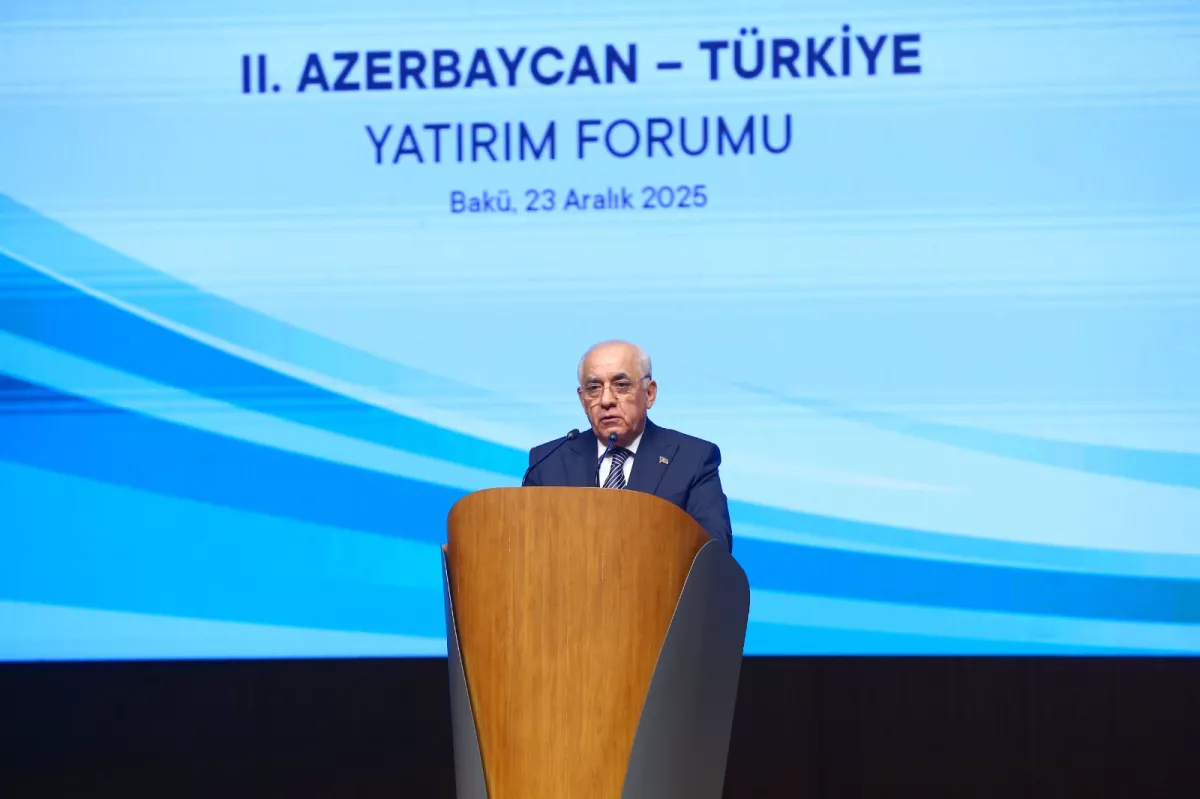
An equally important objective of the Joint Intergovernmental Commission (JIC) is to promote business initiatives, primarily through the establishment of joint ventures (JVs). In line with this goal, the 2nd Azerbaijan–Türkiye Investment Forum was held in Baku to strengthen economic ties and explore joint investment opportunities. Investment cooperation has consistently been a cornerstone of the bilateral partnership. Azerbaijani investments in Türkiye have reached nearly $21 billion, while Turkish investments in Azerbaijan’s economy are estimated at $18 billion. Today, around 7,000 companies with Turkish capital operate in Azerbaijan, while approximately 3,100 Azerbaijani companies are active in Türkiye.
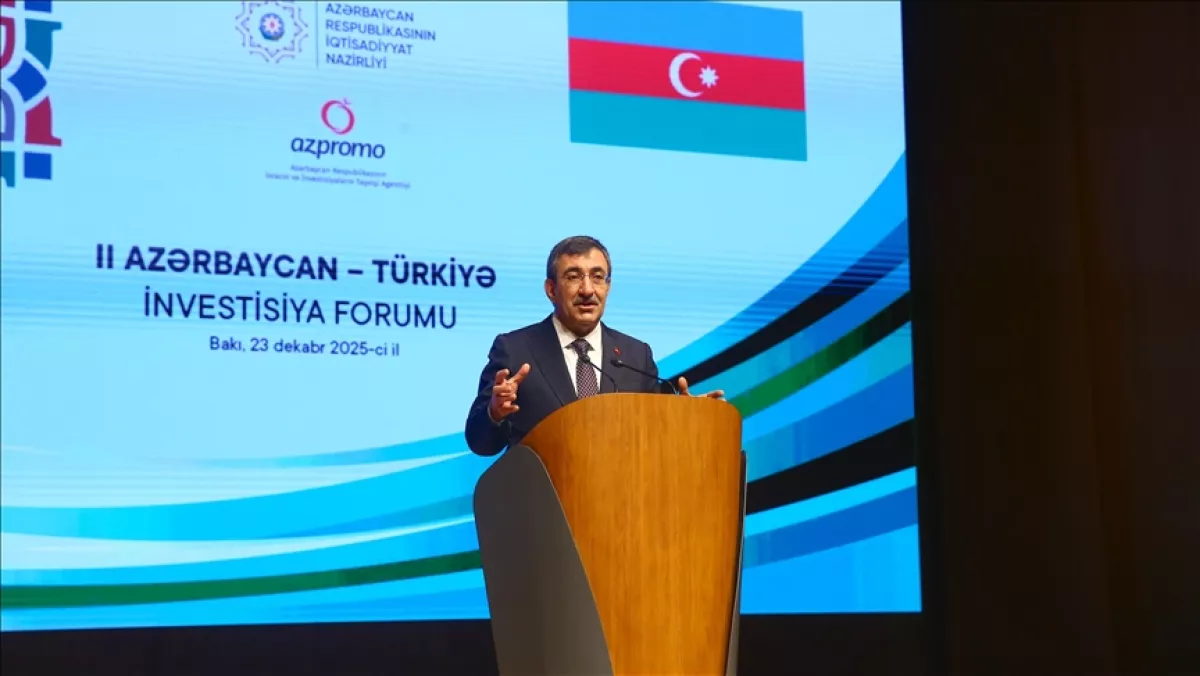
“Today, the main goal of Türkiye and Azerbaijan is the development of joint production, mutual investments, and the implementation of projects in third countries,” said Türkiye’s Vice President Cevdet Yılmaz at the JIC meeting. “In pursuit of this goal, we are steadily removing bureaucratic barriers for business and accelerating customs and logistics processes.” The Vice President also emphasised the importance of bilateral cooperation in transport, particularly the development of the Middle Corridor through the Caspian region: “We can transform the potential of the East–West corridor into a sustainable logistics infrastructure.”
The development of joint production and logistics initiatives has been identified as a long-term priority in Azerbaijan–Türkiye business cooperation. However, when addressing the most pressing aspect of the partnership—attracting investment into the real sector of the economy—it is important to note the sectoral imbalance in investment flows. The majority of Azerbaijan’s investments in Türkiye are concentrated in the industrial sector.
For instance, the State Oil Company of Azerbaijan (SOCAR) has invested $19 billion in Türkiye’s petrochemical and fuel industries, including the Petkim Petrokimya Holding complex in İzmir, the STAR refinery, a container terminal, a power plant, and gas infrastructure projects such as Kayserigaz and Bursagaz. Recently, SOCAR signed a new agreement to acquire 100% of the 870 MW Gama Enerji İç Anadolu power plant for $225 million. According to the Central Bank of Azerbaijan (CBA), Azerbaijan’s direct investments in the Turkish economy reached $288.613 million in the first three quarters of 2025, representing a 64.5% increase.
Turkish investors continue to play a leading role in developing several segments of Azerbaijan’s non-oil sector, even though their share of total investments in the Azerbaijani economy fell slightly from 20.2% to 19.3% in the first three quarters of 2025. Most Turkish investments remain concentrated in trade and services, including shopping centres, hospitality—restaurants, hotels, and leisure businesses—and logistics. Only a relatively small portion of direct Turkish investment is directed toward furniture manufacturing, organic fertilisers, construction materials, agricultural products, and food production.
Large portfolio investments have primarily come through the Turkish state oil company, Türkiye Petrolleri Anonim Ortaklığı (TPAO). TPAO holds a 5.73% stake in Azerbaijan’s offshore Azeri–Chirag–Gunashli (ACG) field and, in June 2025, acquired a 30% stake in the Shafag–Asiman field.
Notably, large Turkish businesses in Azerbaijan have so far been relatively inactive in directly investing in the non-oil industrial sector; instead, they primarily operate as contractors, suppliers of industrial equipment, and providers of construction, design, consulting, and other services. Türkiye’s Minister of Trade, Ömer Bolat, recently highlighted the scale of Turkish contracting activity in Azerbaijan: “To date, Turkish companies have participated in nearly 600 contracting projects in Azerbaijan, with a total value of $21 billion.”
Specifically, around 20 Turkish companies are currently implementing approximately 50 projects worth $5 billion to revitalise the Karabakh region, including roads and infrastructure, as well as residential and social facilities. Engaging Turkish firms as contractors in the territories liberated from occupation is both necessary and justified, reflecting the strategic and allied relationship between the two countries.
At the same time, it is crucial—also within the framework of the Joint Intergovernmental Commission (JIC)—to develop new incentive mechanisms that facilitate Turkish investment in Azerbaijan’s industrial sector. While Turkish investments in Central Asia are comparatively smaller, their composition is more focused on manufacturing, offering valuable lessons for Azerbaijan.
For instance, in Uzbekistan’s agricultural sector alone, Turkish investments have reached $401 million across 66 projects since 2019. Planned investments include $630 million in JSC Uzmetkombinat and around $4 billion for the development of the Almalyk Mining and Metallurgical Complex. In Kazakhstan, Turkish investments have exceeded $5.8 billion over the past 20 years, focusing on key sectors such as agriculture and food processing—including grain deep processing, fertilisers, and greenhouse construction—energy, construction, and the establishment of logistics hubs and agrochemical complexes.
In Turkmenistan, Turkish companies have been involved in contracting and investment projects worth approximately $55 billion, making Turkmenistan the second-largest foreign market for Turkish firms after Russia.
The experience of Central Asian countries is extremely important for developing new directions of investment cooperation between Baku and Ankara. It is time to change the long-established model of exchanging Azerbaijani oil and gas for Turkish consumer goods. The focus should shift to industrial projects, including in the Karabakh region, where Turkish capital has already successfully invested in the “Dost” livestock and processing complex, and potentially in mining enterprises in the future.
Many of these points are reflected in the 110-point economic cooperation plan approved by Azerbaijan and Türkiye during the JIC meeting. The document covers joint initiatives in investment, energy, transport, the development of the Middle Corridor, and the implementation of joint infrastructure projects. Special attention was given to energy initiatives, including expanding the capacity of the Southern Gas Corridor, supplying Azerbaijani gas to Europe and the Middle East, as well as the İğdır–Nakhchivan gas pipeline project.







 editor@caliber.az
 +994 55 444-88-98
 Азербайджан, Баку, ул. Низами, 203, Af Business House, 5-й этаж